Ryan M. Nefdt - Böcker
Visar alla böcker från författaren Ryan M. Nefdt. Handla med fri frakt och snabb leverans.
9 produkter
9 produkter
Language, Science, and Structure
A Journey into the Philosophy of Linguistics
Inbunden, Engelska, 2023
780 kr
Skickas inom 5-8 vardagar
What is a language? What do scientific grammars tell us about the structure of individual languages and human language in general? What kind of science is linguistics? These and other questions are the subject of Ryan M. Nefdt's Language, Science, and Structure.Linguistics presents a unique and challenging subject matter for the philosophy of science. As a special science, its formalisation and naturalisation inspired what many consider to be a scientific revolution in the study of mind and language. Yet radical internal theory change, multiple competing frameworks, and issues of modelling and realism have largely gone unaddressed in the field. Nefdt develops a structural realist perspective on the philosophy of linguistics which aims to confront the aforementioned topics in new ways while expanding the outlook toward new scientific connections and novel philosophical insights. On this view, languages are real patterns which emerge from complex biological systems. Nefdt's exploration of this novel view will be especially valuable to those working in formal and computational linguistics, cognitive science, and the philosophies of science, mathematics, and language.
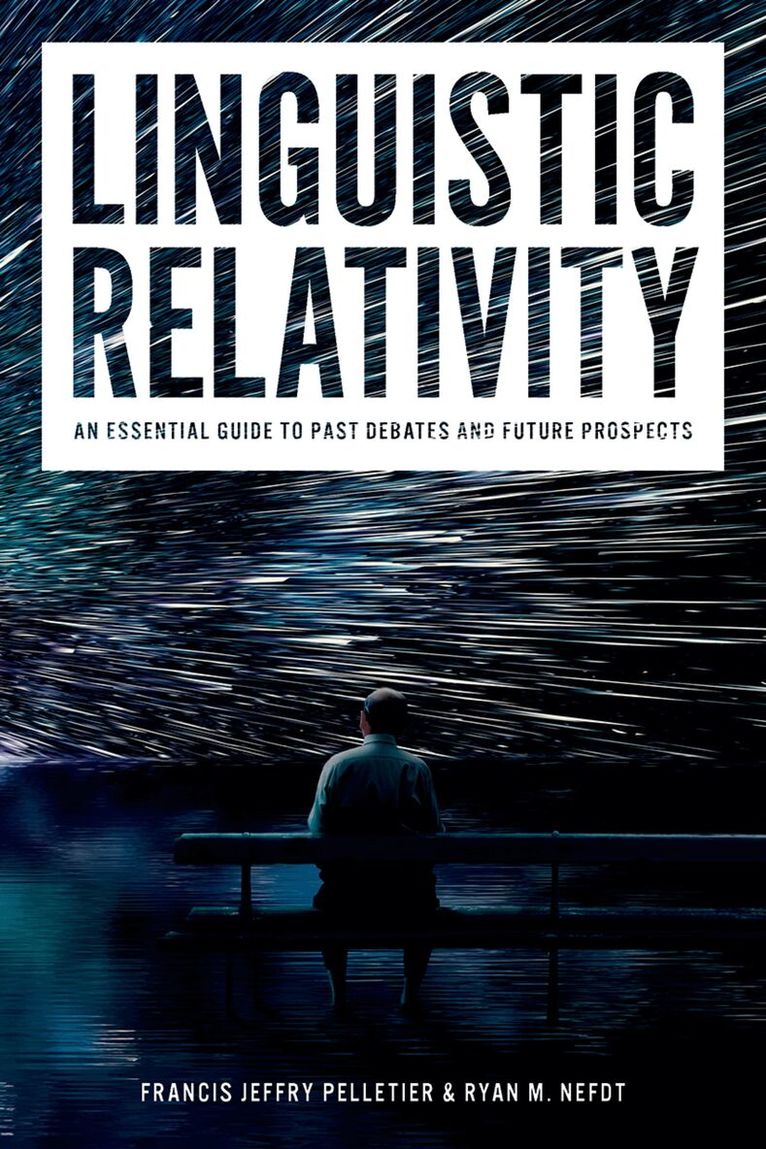
Linguistic Relativity
An essential guide to past debates and future prospects
Inbunden, Engelska, 2025
875 kr
Skickas inom 7-10 vardagar
The concept of linguistic relativity (or Whorfianism) has its roots in the linguistic anthropology of Edward Sapir and his student Benjamin Whorf in the early twentieth century. However, questions over the relationship between natural language and human cognition go much further and deeper. Unfortunately, linguistic relativity has about as many misinterpretations as it does labels (linguistic relativity, linguistic relativism, linguistic determinism, Whorfianism, Sapir-Whorf hypothesis - weak and strong). The idea that language determines thought through an environmentally constrained feedback system is at the heart of most concepts associated with linguistic relativity. The real philosophical questions, however, only seem to present themselves at a level beyond the trivial truism that linguistic structure has an effect on thought, i.e. different languages might encode environmental information differently resulting in variation in things like processing times, measured in psycholinguistic experiments.These questions are important for a number of related disciplines, yet the concept itself is one of the most misunderstood in modern anthropology, sociology, philosophy of language, linguistics, and cognitive science. This book contributes much needed clarity to a theoretical landscape at the centre of insights into what makes us human, both linguistically and cognitively.
237 kr
Skickas inom 5-8 vardagar
The concept of linguistic relativity (or Whorfianism) has its roots in the linguistic anthropology of Edward Sapir and his student Benjamin Whorf in the early twentieth century. However, questions over the relationship between natural language and human cognition go much further and deeper. Unfortunately, linguistic relativity has about as many misinterpretations as it does labels (linguistic relativity, linguistic relativism, linguistic determinism, Whorfianism, Sapir-Whorf hypothesis - weak and strong). The idea that language determines thought through an environmentally constrained feedback system is at the heart of most concepts associated with linguistic relativity. The real philosophical questions, however, only seem to present themselves at a level beyond the trivial truism that linguistic structure has an effect on thought, i.e. different languages might encode environmental information differently resulting in variation in things like processing times, measured in psycholinguistic experiments.These questions are important for a number of related disciplines, yet the concept itself is one of the most misunderstood in modern anthropology, sociology, philosophy of language, linguistics, and cognitive science. This book contributes much needed clarity to a theoretical landscape at the centre of insights into what makes us human, both linguistically and cognitively.
2 330 kr
Kommande
This Handbook presents cutting edge articles on the present state-of-the-art in the philosophy of linguistics. It features prominent linguists, philosophers, and cognitive scientists investigating foundational issues across subdisciplines of linguistics, cognitive science, and computational approaches to the study of language. In addition to providing a broad overview of the field, it offers novel interpretations and accounts of pressing issues across the interdisciplinary landscape of the language sciences. With chapters on the foundations of syntax, metasemantics, phonology, computational linguistics, developmental linguistics, and cognitive neurolinguistics, the Handbook will be a valuable resource for those interested in the origins of language, its formal underpinnings, its cognitive implementation, and its social manifestations. The collected chapters both introduce a wide range of related fields and identifies core philosophical assumptions and implications. Previously neglected topics in philosophy of language and philosophical reflections on linguistics covered here include field linguistics and research, sociolinguistics, and the intersecting history of the philosophy of language and linguistic theory. The Handbook aims to inspire new research by thoroughly investigating, analyzing, and clarifying the foundations of linguistics while promoting unique avenues for future collaborations.
753 kr
Skickas inom 7-10 vardagar
The philosophy of linguistics reflects on multiple scientific disciplines aimed at the understanding of one of the most fundamental aspects of human existence, our ability to produce and understand natural language. Linguistics, viewed as a science, has a long history but it was the advent of the formal (and computational) revolution in cognitive science that established the field as both scientifically and philosophically appealing. In this Element, the topic will be approached as a means for understanding larger issues in the philosophy of science more generally.
234 kr
Skickas inom 7-10 vardagar
The philosophy of linguistics reflects on multiple scientific disciplines aimed at the understanding of one of the most fundamental aspects of human existence, our ability to produce and understand natural language. Linguistics, viewed as a science, has a long history but it was the advent of the formal (and computational) revolution in cognitive science that established the field as both scientifically and philosophically appealing. In this Element, the topic will be approached as a means for understanding larger issues in the philosophy of science more generally.
1 160 kr
Skickas inom 7-10 vardagar
What is the remit of theoretical linguistics? How are human languages different from animal calls or artificial languages? What philosophical insights about language can be gleaned from phonology, pragmatics, probabilistic linguistics, and deep learning? This book addresses the current philosophical issues at the heart of theoretical linguistics, which are widely debated not only by linguists, but also philosophers, psychologists, and computer scientists. It delves into hitherto uncharted territory, putting philosophy in direct conversation with phonology, sign language studies, supersemantics, computational linguistics, and language evolution. A range of theoretical positions are covered, from optimality theory and autosegmental phonology to generative syntax, dynamic semantics, and natural language processing with deep learning techniques. By both unwinding the complexities of natural language and delving into the nature of the science that studies it, this book ultimately improves our tools of discovery aimed at one of the most essential features of our humanity, our language.
1 381 kr
Skickas inom 10-15 vardagar
This volume brings together a diverse range of scholars to address important philosophical and interdisciplinary questions in the study of language. Linguistics throughout history has been a conduit to the study of the mind, brain, societal structure, literature and history itself. The epistemic and methodological transfer between the sciences and humanities in regards to linguistics has often been documented, but the underlying philosophical issues have not always been adequately addressed. With 15 original and interdisciplinary chapters, this volume therefore tackles vital questions relating to the philosophy, history, and theoretical interplay between the study of language and fields as varied as logic, physics, biology, classical philology and neuroscience.With a four part structure, questions of the mathematical foundations of linguistics, links to the natural sciences, cognitive implications and historical connections, take centre stage throughout thevolume. The final chapters present research related to the linguistic connections between history, philosophy and the humanities more broadly. Advancing new avenues of research, this volume is exemplary in its treatment of diachronic and cross-disciplinary interaction, and will be of interest to all scholars interested in the study of language.
1 381 kr
Skickas inom 10-15 vardagar
This volume brings together a diverse range of scholars to address important philosophical and interdisciplinary questions in the study of language. Linguistics throughout history has been a conduit to the study of the mind, brain, societal structure, literature and history itself. The epistemic and methodological transfer between the sciences and humanities in regards to linguistics has often been documented, but the underlying philosophical issues have not always been adequately addressed. With 15 original and interdisciplinary chapters, this volume therefore tackles vital questions relating to the philosophy, history, and theoretical interplay between the study of language and fields as varied as logic, physics, biology, classical philology and neuroscience.With a four part structure, questions of the mathematical foundations of linguistics, links to the natural sciences, cognitive implications and historical connections, take centre stage throughout thevolume. The final chapters present research related to the linguistic connections between history, philosophy and the humanities more broadly. Advancing new avenues of research, this volume is exemplary in its treatment of diachronic and cross-disciplinary interaction, and will be of interest to all scholars interested in the study of language.