• Fri frakt över 249 kr
  • •
  • Snabba leveranser
  • •
  • Billiga böcker
Kundservice

Du är på sajten för privatpersoner.

Företag, bibliotek eller offentlig verksamhet?

Du handlar på classic.bokus.com, där alla dina funktioner finns intakta.
Till classic.bokus.com
Bokus logotyp. Gå till startsidan.
  • Erbjudanden
  • Nyheter
  • Student
  • Topplistor
  • Barn & ungdom
  • Bokus Play
  • E-böcker
  • Pocketböcker
  • Spel & pussel

10% rabatt på allt med kod NYSTART10 →

Sidfot

Mina sidor

    Hjälp

    • Kundservice
    • Vanliga frågor och svar
    • Frakt och leverans
    • Retur vid ångerrätt
    • Reklamera vara
    • Betalning
    • Köpvillkor
    • Allmänna villkor
    • Information om webbplatsens tillgänglighet

    Om Bokus

    • Om oss
    • Pressrum
    • För studenter
    • För företag
    • För bibliotek och offentlig verksamhet
    • För leverantörer
    • Hållbarhet

    Populärt

    • Aktuella erbjudanden
    • Presentkort
    • Studentlitteratur
    • Nya böcker
    • Topplistor
    • Signerade böcker
    • Engelska böcker

    Inspiration

    • Boktips
    • BookTok
    • Populära bokserier
    • Barnbokskaraktärer
    • Populära författare
    Logotyp för Bokus
    Följ oss på Facebook (extern länk)Följ oss på Instagram (extern länk)Följ oss på YouTube (extern länk)Följ oss på TikTok (extern länk)
    bokus @ CookiesAnpassa cookiesIntegritetspolicyKöpvillkor
    Till Citymail hemsida (extern länk)Till Budbee hemsida (extern länk)Till Postnord hemsida (extern länk)Till Schenker hemsida (extern länk)Till Early Bird hemsida (extern länk)Till Walleys hemsida (extern länk)
    1. Språk och ordböcker
    2. Språkvetenskap och lingvistik

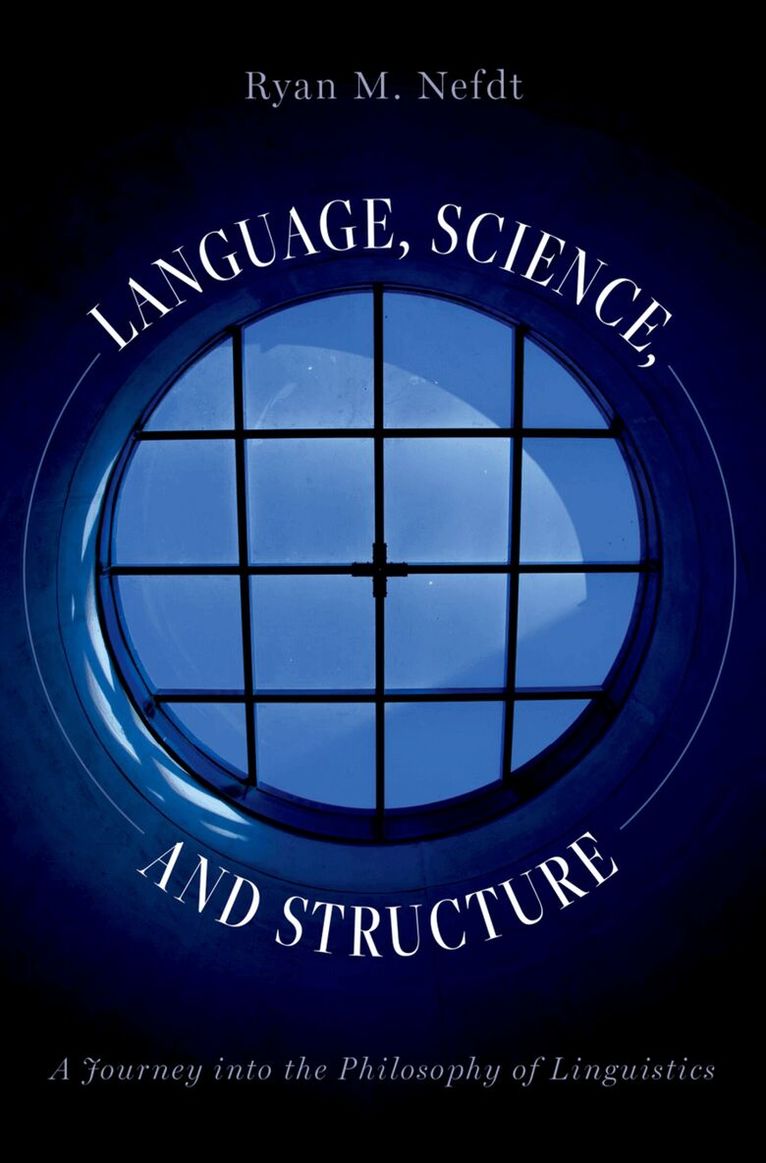
    Language, Science, and Structure

    A Journey into the Philosophy of Linguistics

    AvRyan M. Nefdt

    Inbunden, Engelska, 2026

    836 kr

    Beställningsvara. Skickas inom 7-10 vardagar. Fri frakt över 249 kr.

    Fler format och utgåvor

    E-bok

    746 kr

    E-bok

    746 kr

    Beskrivning

    What is a language? What do scientific grammars tell us about the structure of individual languages and human language in general? What kind of science is linguistics? These and other questions are the subject of Ryan M. Nefdt's Language, Science, and Structure.Linguistics presents a unique and challenging subject matter for the philosophy of science. As a special science, its formalisation and naturalisation inspired what many consider to be a scientific revolution in the study of mind and language. Yet radical internal theory change, multiple competing frameworks, and issues of modelling and realism have largely gone unaddressed in the field. Nefdt develops a structural realist perspective on the philosophy of linguistics which aims to confront the aforementioned topics in new ways while expanding the outlook toward new scientific connections and novel philosophical insights. On this view, languages are real patterns which emerge from complex biological systems. Nefdt's exploration of this novel view will be especially valuable to those working in formal and computational linguistics, cognitive science, and the philosophies of science, mathematics, and language.

    Produktinformation

    • Utgivningsdatum:2026-06-12
    • Mått:229 x 163 x 43 mm
    • Vikt:476 g
    • Format:Inbunden
    • Språk:Engelska
    • Antal sidor:256
    • Förlag:OUP USA
    • ISBN:9780197653098

    Utforska kategorier

    • Språkvetenskap och lingvistik inom Språk och ordböcker
    • Naturvetenskapens filosofi inom Naturvetenskap och teknik

    Mer om författaren

    Ryan M. Nefdt is a philosopher of science who works on issues in linguistics, cognitive science, and AI at the University of Cape Town, South Africa. He holds a PhD in Philosophy from the University of St Andrews, an MSc in Logic from the University of Amsterdam and an MA in Philosophy from the University of Cape Town. He has held research positions at various institutions such as MIT, Pittsburgh, Edinburgh, Minnesota, Yale, and Michigan and is published in numerous journals including Linguistics & Philosophy, Mind & Language, Biology & Philosophy, Synthese, Philosophy Compass, and the Stanford Encyclopedia of Philosophy.

    Recensioner i media

    A impressive achievement. Integrating work in the philosophy of science with wide-ranging knowledge of linguistic theory and contemporary cognitive science, this book provides both an evaluation of traditional debates within the philosophy of linguistics as well as a proposal for how it ought to be done in the future... This is a highly engaging book, rich with insight and packed with empirical and conceptual detail. Those working in philosophy of linguistics must read it, those in other areas merely should.

    Innehållsförteckning

    • AcknowledgementsPreface Part 1: Introduction1.1 The Philosophy of Linguistics 1.2 Generative and Non-Generative Frameworks 1.3 Structures and Structuralisms 1.4 A Guide to the Book Part 2: Old Landscapes, New Maps2.1 What is a Language, Anyway? 2.2 Object-oriented accounts 2.3 State and Network accounts Part 3: The Many and the None3.1 Anti-realist Accounts 3.2 Why I am not a Pluralist 3.3 No Country for Clear Resolutions Part 4: Language and Structure4.1 Moderate Naturalism 4.2 Languages as Real Patterns 4.3 Grammars as Compression Algorithms Part 5: Linguistic Patterns and Biological Systems5.1 Biolinguistics and Biology 5.2 Unbanishing the 'Linguistic Community'5.3 A Note on Acquisition Part 6: A Case Study: Words and SLEs6.1 The Naive Picture and Three Naturalistic Desiderata6.2 Constructions and Constraints 6.3 A Structural Approach to Linguistic Entities Part 7: Structural Realism and the Science of Linguistics7.1 The Aim and Scope 7.2 Linguistic Theory Change 7.3 Structural Realism in Generative Linguistics 7.4 The Problem of Multiple Grammars Part 8: Language at the Interface8.1 A Note on Complex Systems 8.2 Levels of Abstraction 8.3 The Proposal 8.4 Semantic Metastructuralism Part 9: Language and Cognitive Science: an arranged marriage 9.1 The Dilemma 9.2 The Study of Mind in Language 9.3 Intersection, Integration, and Architecture 9.4 Unifying Cognitive Structures Conclusion: A Canopy in the Rainforest References