Sabina Antonini – författare
Visar alla böcker från författaren Sabina Antonini. Handla med fri frakt och snabb leverans.
2 produkter
2 produkter
1 301 kr
Kommande
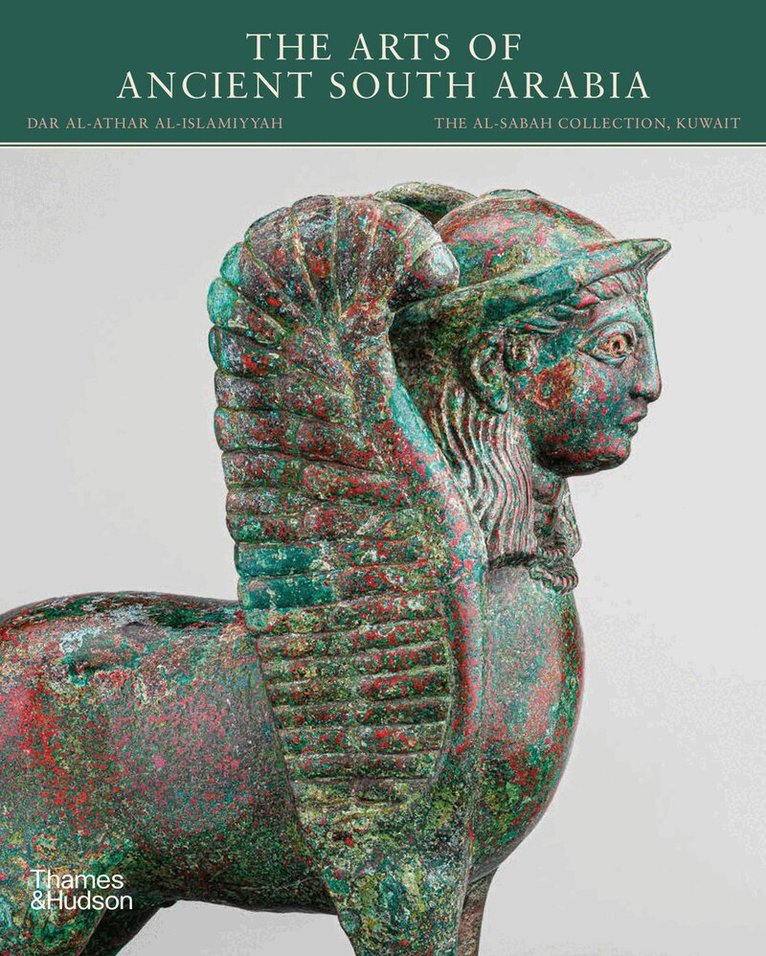
A superb collection of spectacular and varied pre-Islamic Arabian artefacts held by The al-Sabah Collection, Kuwait, many published here for the first time. Between the third millennium BCE and the third century CE the Arabian Peninsula – present-day Saudi Arabia, Oman, Yemen, United Arab Emirates, Qatar and Kuwait, as well as the Bahrain archipelago – lay at the centre of maritime trading routes between the Indian Ocean and the Mediterranean. Yet its fascinating pre-Islamic history has only recently begun to be communicated. A series of remarkable archaeological excavations over the past forty years have expanded the picture of the region beyond the simple nomadic desert pastoralism reported by scholars of early Islamic Arab sources. These developments in archaeology have enabled a complete reassessment of the wider history of ancient Arabia – now further illuminated by the spectacular and varied artefacts held by The al-Sabah Collection, Kuwait. This volume reveals superb examples of luxury metalware in bronze, silver and gold, created for a sophisticated elite familiar with trends in both the Greco-Roman world and eastern traditions. It also includes an impressive and diverse collection of funerary statues, stelae and carvings, many votive offerings to local deities, spectacular large loricate bronze statues from Yemen, and a range of intriguing objects that furnished homes and temples. The collection extends to a variety of gold jewellery, which has been examined and catalogued by ancient jewellery specialist Leila Ali Aquil. The inscriptions on these objects, freshly translated and annotated by epigraphist and pre-Islamic scholar Christian Robin, unlock many previously unknown aspects of South Arabian life and beliefs. This monumental volume is in two parts. Part 1 introduces the South Arabian region, its history, cultures, languages and architecture, providing a valuable and comprehensive overview and context. Part 2, by leading South Arabian archaeologist Sabina Antonini, comprises the catalogue of the collection itself, divided by object type. For art lovers, historians and philologists, this is a collection of unmatched quality and range from a region long shrouded in mystery, now revealed as a nexus of cultural antiquity.
1 737 kr
Skickas
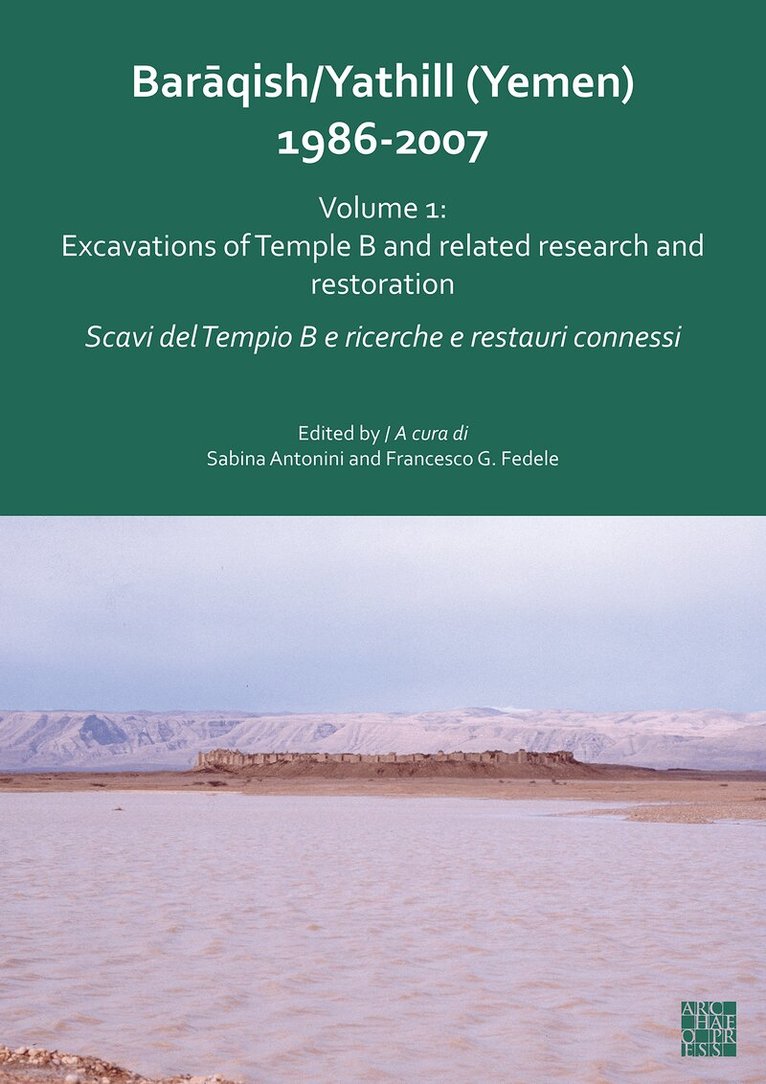
The walled town of Barāqish in interior Yemen – ancient Yathill of the Sabaeans and Minaeans – was for Alessandro de Maigret (1943-2011) ‘one of the archaeological marvels not just of Yemen, but of the entire Near East’. Established as an oasis settlement in the semi-desert depression of the Jawf, it became in the 1st millennium BCE a thriving caravan station on the ‘incense’ route and a famed place of worship, controlled by rich rulers and merchants. Topography and trade made it a crucible of South Arabian and foreign traditions, and on several occasions, it was a border town disputed between rival powers. A sustained archaeological effort to investigate the site and area began in 1986 by the Italian Archaeological Mission, led by de Maigret, and developed in two phases. In 1989-1992 the temple of the patron god was excavated, while between 2003-2007 a range of new excavations were undertaken, including a second temple, a sounding, a dissection of the tell's edge outside the Minaean wall, and a cemetery.Presented across two volumes, Volume 1: Excavations of Temple B and related research and restoration is particularly devoted to the temple of god ʿAthtar dhu-Qabḍ (Temple B), dated to the second half of the 1st millennium BCE. Six chapters fully illustrate its excavation, architecture, restoration, findings, inscriptions, and dating. The contribution of this work and monument to regional history transcends its local significance. The report is framed by ten chapters detailing the historiography of research on Barāqish, the initial surveys carried out in 1986-1987, the architecture and restoration of Temple A together with the extramural excavation at the adjacent curtain wall, the cultic equipment, and radiocarbon datings. The nine contributors are leading scholars in the above fields and include recognized experts in South Arabian archaeology.The core of Volume 2: Extramural excavations in Area C and overview studies is a final report on Area C, an exploratory dissection through the western edge of the Barāqish mound outside the curtain wall, and a unique operation for Yemen until now. Eight chapters detail the excavation, stratigraphy, and geoarchaeology (from about 800 BCE to the present), in addition to radiocarbon chronology, cultural finds, animal and plant remains, economy, major historical events, and unique evidence for trade. Four further chapters offer a glimpse of settlement archaeology for Sabaean Yathill and the survey of a religious centre to the west, together with a first typology of Minaean pottery and an epigraphic and political-historical overview for Barāqish and the Jawf. The contributors are recognized experts in South Arabian archaeology.