Sabine Schülting - Böcker
Visar alla böcker från författaren Sabine Schülting. Handla med fri frakt och snabb leverans.
7 produkter
7 produkter
787 kr
Skickas inom 10-15 vardagar
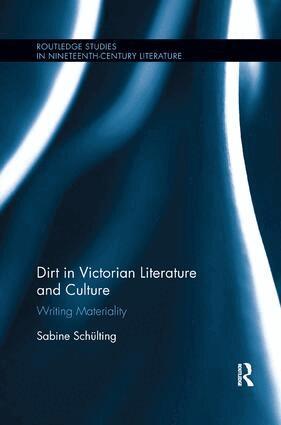
Addressing the Victorian obsession with the sordid materiality of modern life, this book studies dirt in nineteenth-century English literature and the Victorian cultural imagination. Dirt litters Victorian writing – industrial novels, literature about the city, slum fiction, bluebooks, and the reports of sanitary reformers. It seems to be "matter out of place," challenging traditional concepts of art and disregarding the concern with hygiene, deodorization, and purification at the center of the "civilizing process." Drawing upon Material Cultural Studies for an analysis of the complex relationships between dirt and textuality, the study adds a new perspective to scholarship on both the Victorian sanitation movement and Victorian fiction. The chapters focus on Victorian commodity culture as a backdrop to narratives about refuse and rubbish; on the impact of waste and ordure on life stories; on the production and circulation of affective responses to filth in realist novels and slum travelogues; and on the function of dirt for both colonial discourse and its deconstruction in postcolonial writing. They address questions as to how texts about dirt create the effect of materiality, how dirt constructs or deconstructs meaning, and how the project of writing dirt attempts to contain its excessive materiality. Schülting discusses representations of dirt in a variety of texts by Charles Dickens, E. M. Forster, Elizabeth Gaskell, George Gissing, James Greenwood, Henry James, Charles Kingsley, Henry Mayhew, George Moore, Arthur Morrison, and others. In addition, she offers a sustained analysis of the impact of dirt on writing strategies and genre conventions, and pays particular attention to those moments when dirt is recycled and becomes the source of literary creation.
943 kr
Skickas inom 10-15 vardagar
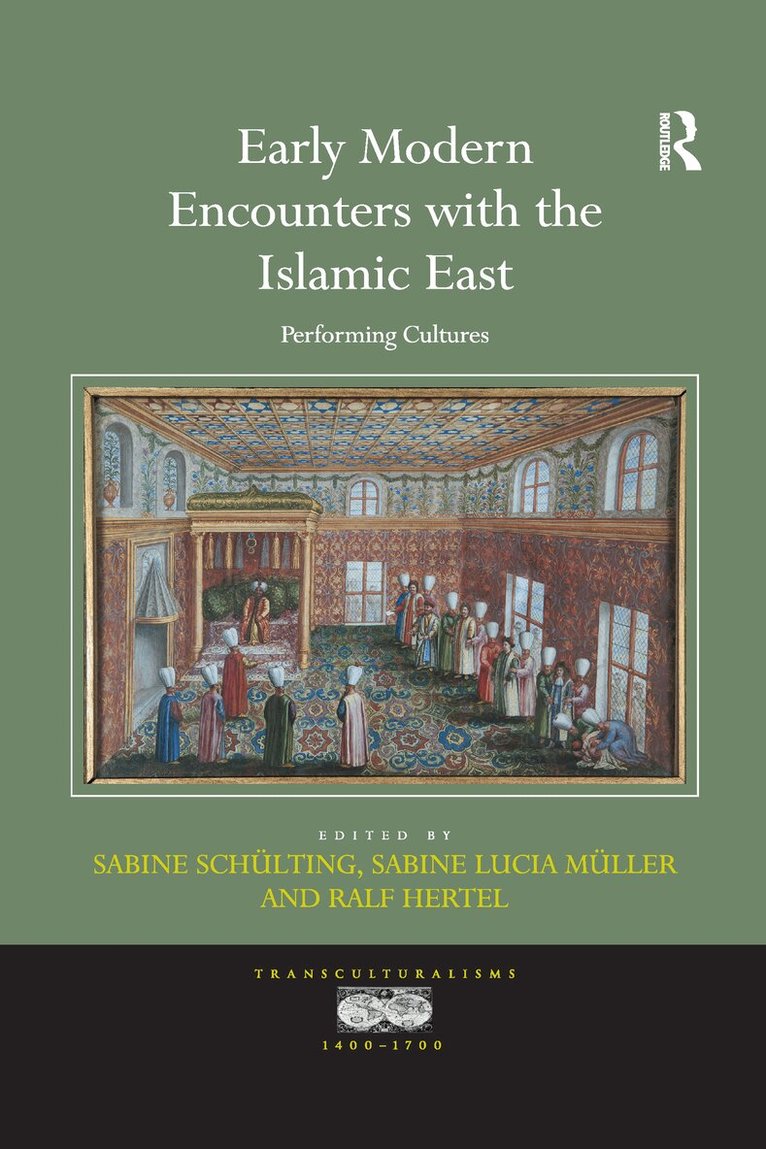
An exploration of early modern encounters between Christian Europe and the (Islamic) East from the perspective of performance studies and performativity theories, this collection focuses on the ways in which these cultural contacts were acted out on the real and metaphorical stages of theatre, literature, music, diplomacy and travel. The volume responds to the theatricalization of early modern politics, to contemporary anxieties about the tension between religious performance and belief, to the circulation of material objects in intercultural relations, and the eminent role of theatre and drama for the (re)imagination and negotiation of cultural difference. Contributors examine early modern encounters with and in the East using an innovative combination of literary and cultural theories. They stress the contingent nature of these contacts and demonstrate that they can be read as moments of potentiality in which the future of political and economic relations - as well as the players' cultural, religious and gender identities - are at stake.
2 555 kr
Skickas inom 10-15 vardagar
Addressing the Victorian obsession with the sordid materiality of modern life, this book studies dirt in nineteenth-century English literature and the Victorian cultural imagination. Dirt litters Victorian writing – industrial novels, literature about the city, slum fiction, bluebooks, and the reports of sanitary reformers. It seems to be "matter out of place," challenging traditional concepts of art and disregarding the concern with hygiene, deodorization, and purification at the center of the "civilizing process." Drawing upon Material Cultural Studies for an analysis of the complex relationships between dirt and textuality, the study adds a new perspective to scholarship on both the Victorian sanitation movement and Victorian fiction. The chapters focus on Victorian commodity culture as a backdrop to narratives about refuse and rubbish; on the impact of waste and ordure on life stories; on the production and circulation of affective responses to filth in realist novels and slum travelogues; and on the function of dirt for both colonial discourse and its deconstruction in postcolonial writing. They address questions as to how texts about dirt create the effect of materiality, how dirt constructs or deconstructs meaning, and how the project of writing dirt attempts to contain its excessive materiality. Schülting discusses representations of dirt in a variety of texts by Charles Dickens, E. M. Forster, Elizabeth Gaskell, George Gissing, James Greenwood, Henry James, Charles Kingsley, Henry Mayhew, George Moore, Arthur Morrison, and others. In addition, she offers a sustained analysis of the impact of dirt on writing strategies and genre conventions, and pays particular attention to those moments when dirt is recycled and becomes the source of literary creation.
2 478 kr
Skickas inom 10-15 vardagar
An exploration of early modern encounters between Christian Europe and the (Islamic) East from the perspective of performance studies and performativity theories, this collection focuses on the ways in which these cultural contacts were acted out on the real and metaphorical stages of theatre, literature, music, diplomacy and travel. The volume responds to the theatricalization of early modern politics, to contemporary anxieties about the tension between religious performance and belief, to the circulation of material objects in intercultural relations, and the eminent role of theatre and drama for the (re)imagination and negotiation of cultural difference. Contributors examine early modern encounters with and in the East using an innovative combination of literary and cultural theories. They stress the contingent nature of these contacts and demonstrate that they can be read as moments of potentiality in which the future of political and economic relations - as well as the players' cultural, religious and gender identities - are at stake.
1 865 kr
Skickas inom 5-8 vardagar
1 492 kr
Skickas inom 5-8 vardagar
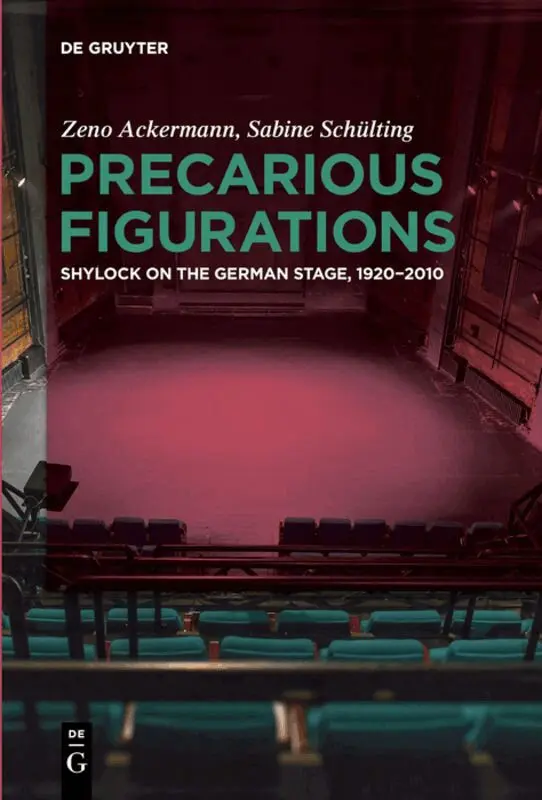
Precarious Figurations focuses on the reception of Shakespeare’s The Merchant of Venice in twentieth- and twenty-first-century Germany. Looking at theatrical practices and critical or scholarly discourses from the Weimar Republic to the new millennium, the book explores why the play has served simultaneously as a vehicle for the actualization of anti-Semitic tropes and as a staging ground for the critical exposure of the very logic of anti-Semitism. In particular, the study investigates how the figure of Shylock has come to be both a device in and a stumbling block for attempts to bridge the fundamental rupture in civilization brought about by the Holocaust. The careful analysis of the German reception of Merchant, and in particular of the ways of doing and reading Shylock in the context of painful German, and German-Jewish, discourses of identity and remembrance, is designed to raise fundamental questions – questions concerning not only the staging of Jewishness, the tenacity of anti-Semitism and the difficulties of Holocaust remembrance, but also the general potentials and limitations of theatrical interventions into cultural conflicts.
372 kr
Skickas inom 5-8 vardagar
Precarious Figurations focuses on the reception of Shakespeare’s The Merchant of Venice in twentieth- and twenty-first-century Germany. Looking at theatrical practices and critical or scholarly discourses from the Weimar Republic to the new millennium, the book explores why the play has served simultaneously as a vehicle for the actualization of anti-Semitic tropes and as a staging ground for the critical exposure of the very logic of anti-Semitism. In particular, the study investigates how the figure of Shylock has come to be both a device in and a stumbling block for attempts to bridge the fundamental rupture in civilization brought about by the Holocaust. The careful analysis of the German reception of Merchant, and in particular of the ways of doing and reading Shylock in the context of painful German, and German-Jewish, discourses of identity and remembrance, is designed to raise fundamental questions – questions concerning not only the staging of Jewishness, the tenacity of anti-Semitism and the difficulties of Holocaust remembrance, but also the general potentials and limitations of theatrical interventions into cultural conflicts.