Sahar Huneidi – författare
Visar alla böcker från författaren Sahar Huneidi. Handla med fri frakt och snabb leverans.
2 produkter
2 produkter
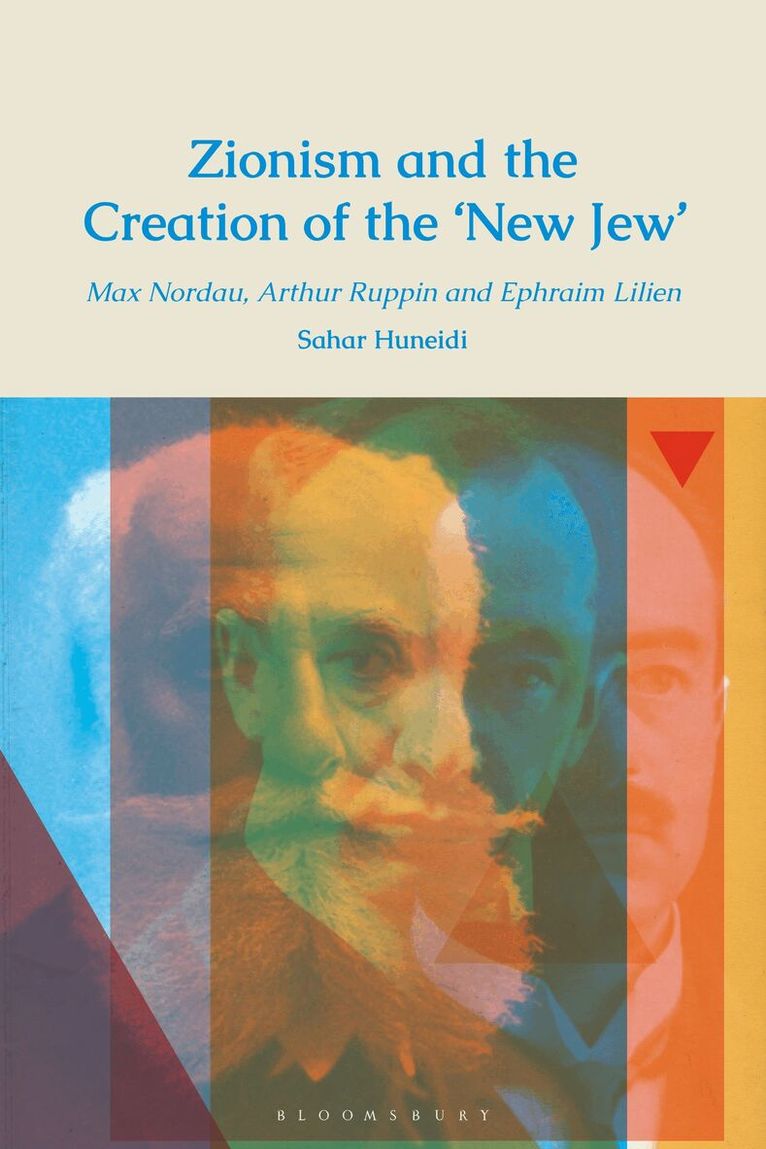
Zionism and the Creation of the ‘New Jew’
Max Nordau, Arthur Ruppin and Ephraim Lilien
Inbunden, Engelska, 2026
1 448 kr
Kommande
In what ways did the European racist and racial thinking affect the development of Zionism? This book critically investigates three important figures in the history of Zionism to trace how the rise of eugenics, racism and European and German colonialism and antisemitism influenced Zionist ideology and its proponents in Europe and Palestine. The book argues that while dismayed by the failure of Jewish assimilation and the persecution of Jews inherent in Europe’s embrace of racial hierarchies in the 19th century, Zionism as a counterforce to such oppression reflected elements of these racial ideas in its project to transform Judaism from a religion into a secular national identity. It first provides background on the contradictions and tensions of this intellectual environment, including division between western and central European Jewish thinkers and Eastern European Jews. The book then provides detailed case studies of philosopher and critic Max Nordau’s embrace of Zionism and the project of ‘muscular Judaism’ in response to antisemitism, Arthur Ruppin’s racial thinking and its relation to his activities organising Jewish immigration to Palestine, and the life of Ephraim Lilien whose artistic representations of the ‘New Jew’ the author argues reflects Nordau and Ruppin’s respective concepts of the ‘regenerated Jewish body’ and ‘return to the land’.
186 kr
Skickas inom 5-8 vardagar
A single page that reshaped a region and the hidden record behind it.Contained on a single page, the Balfour Declaration was sent by Arthur Balfour, the British Foreign Secretary, to Lord Rothschild, a leader of the British Jewish community, in November 1917. It read, in part, “His Majesty’s Government view with favour the establishment in Palestine of a national home for the Jewish people.”This brief missive was to be critical in determining the history of the Middle East, from the creation of the state of Israel in 1948 to the present day. And yet, despite its importance, the true origins of the Declaration remain obscure.The Declaration, Sahar Huneidi observes, was a work of carefully crafted ambiguity. It was this deliberate openness that allowed the British government, years later, to reshape its meaning, and even the history of its drafting, to support specific foreign policy ends. This process, Huneidi argues, was facilitated by a subsequent document: a little-known, handwritten memo by the Under-Secretary of the Colonial Office, William Ormsby-Gore, recounting from memory discussions surrounding the Declaration’s drafting.Employing careful detective work and a rich knowledge of the subject matter, Huneidi reveals how, faced with a paucity of official records, Ormsby-Gore’s account became the basis for a decision on Palestine that had devastating consequences for the stability of the region. This concise, eloquent book provides a vivid case study of the rewriting and repurposing of history, and compellingly recontextualizes the ongoing struggles of Israel–Palestine.