Sally Gaule – författare
Visar alla böcker från författaren Sally Gaule. Handla med fri frakt och snabb leverans.
4 produkter
4 produkter
Inbunden, Engelska, 2019
1 038 kr
Skickas inom 5-8 vardagar
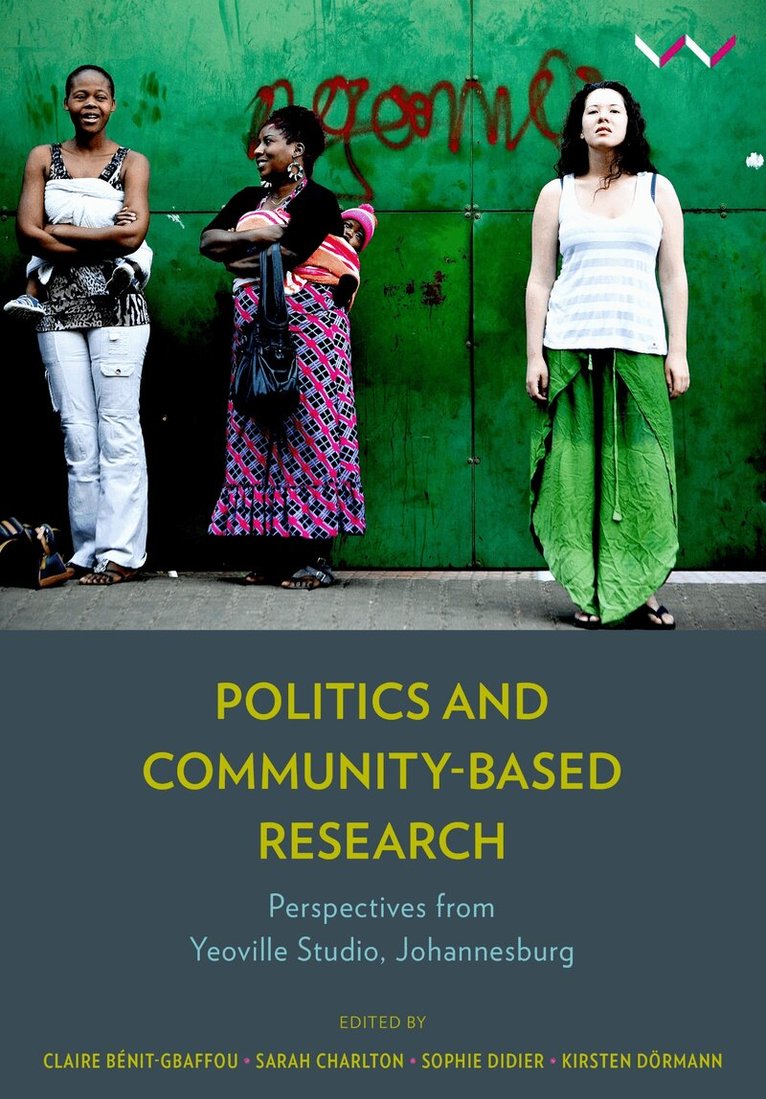
Politics and Community-Based Research: Perspectives from Yeoville Studio, Johannesburg provides a textured analysis of a contested urban space that will resonate with other contested urban spaces around the world and challenges researchers involved in such spaces to work in creative and politicised waysThis edited collection is built around the experiences of Yeoville Studio, a research initiative based at the School of Architecture and Planning at the University of the Witwatersrand, Johannesburg. Through themed, illustrated stories of the people and places of Yeoville, the book presents a nuanced portrait of the vibrance and complexity of a post-apartheid, peri-central neighbourhood that has often been characterised as a 'slum' in Johannesburg. These narratives are interwoven with theoretical chapters by scholars from a diversity of disciplinary backgrounds, reflecting on the empirical experiences of the Studio and examining academic research processes. These chapters unpack the engagement of the Studio in Yeoville, including issues of trust, the need to align policy with lived realities and social needs, the political dimensions of the knowledge produced and the ways in which this knowledge was, and could be used.
E-bok
PDF, Engelska, 2021384 kr
Läs direkt efter köp
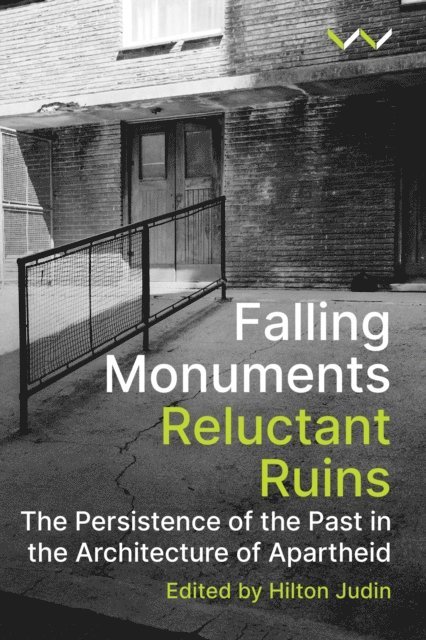
Falling Monuments, Reluctant Ruins: The Persistence of the Past in the Architecture of Apartheid interrogates how, in the era of decolonisation, post-apartheid South Africa reckons with its past in order to shape its future. Architects, historians, artists, social anthropologists and urban planners seek answers in this book to complex and unsettling questions around heritage, ruins and remembrance. What do we do with hollow memorials and political architectural remnants? Which should remain, which forgotten, and which dismantled? Are these vacant buildings, cemeteries, statues, and derelict grounds able to serve as inspiration in the fight against enduring racism and social neglect? Should they become exemplary as spaces for restitution and justice? The contributors examine the influence of public memory, planning and activism on such anguished places of oppression, resistance and defiance. Their focus on visible markers in the landscape to interrogate our past will make readers reconsider these spaces, looking at their landscape and history anew. Through a series of 14 empirically grounded chapters and 48 images, the contributors seek to understand how architecture contests or subverts these persistent conditions in order to promote social justice, land reclamation and urban rehabilitation. The decades following the dismantling of apartheid are surveyed in light of contemporary heritage projects, where building ruins and abandoned spaces are challenged and renegotiated across the country to become sites of protest, inspiration and anger. This ground-breaking collection is an important resource for professionals, academics and activists working in South Africa today.
E-bok
Engelska, 2021384 kr
Läs direkt efter köp
Falling Monuments, Reluctant Ruins: The Persistence of the Past in the Architecture of Apartheid interrogates how, in the era of decolonisation, post-apartheid South Africa reckons with its past in order to shape its future. Architects, historians, artists, social anthropologists and urban planners seek answers in this book to complex and unsettling questions around heritage, ruins and remembrance. What do we do with hollow memorials and political architectural remnants? Which should remain, which forgotten, and which dismantled? Are these vacant buildings, cemeteries, statues, and derelict grounds able to serve as inspiration in the fight against enduring racism and social neglect? Should they become exemplary as spaces for restitution and justice? The contributors examine the influence of public memory, planning and activism on such anguished places of oppression, resistance and defiance. Their focus on visible markers in the landscape to interrogate our past will make readers reconsider these spaces, looking at their landscape and history anew. Through a series of 14 empirically grounded chapters and 48 images, the contributors seek to understand how architecture contests or subverts these persistent conditions in order to promote social justice, land reclamation and urban rehabilitation. The decades following the dismantling of apartheid are surveyed in light of contemporary heritage projects, where building ruins and abandoned spaces are challenged and renegotiated across the country to become sites of protest, inspiration and anger. This ground-breaking collection is an important resource for professionals, academics and activists working in South Africa today.
Häftad, Engelska, 2012
385 kr
Skickas inom 5-8 vardagar
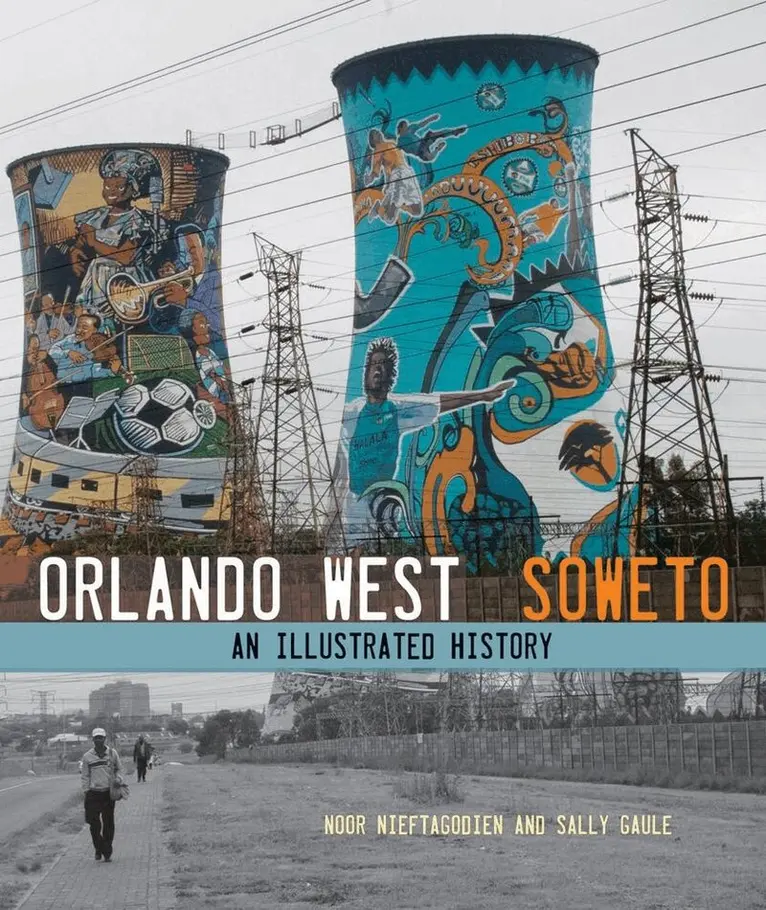
A history of the famous Orlando townshipUntil the end of the First World War, urban growth in Johannesburg proceeded unevenly and haphazardly, but under the impact of a wave of militant struggles by black workers and in the context of the devastating impact of the 1918 influenza epidemic, the state became determined to better manage the movement of Africans into the urban areas and to place them in properly controlled locations. The promulgation of the Native (Urban) Areas Act of 1923 was intended to meet these objectives. The Act was a hybrid piece of legislation. On the one hand, it espoused the principles enunciated by the Stallard Commission of 1922, which had infamously declared that an African 'should only be allowed into the urban areas, which are essentially the white man's creation, when he is willing to enter and minister to the needs of the white man, and should depart therefrom when he ceases so to minister'. On the other hand, when it empowered local authorities to set aside land for black residential purposes, it recognised the need to create conditions for the settlement of an urban African population in order to provide a reliable supply of labour to secondary industry. The growing demand for housing led the government to establish Orlando (named after the chairman of the Native Affairs Committee, Edwin Orlando Leake) in 1931, when thousands of African families were evicted from urban slums in and around the city centre and moved there. The authorities described this as a 'model native township' that was supposedly planned along the lines of a garden city. The new location, it promised, would be characterised by tree-lined streets, business opportunities and recreation facilities. Reflecting the views of a somewhat conservative section of the African urban elite, the popular African newspaper Bantu World predicted on 14 May 1932 that the new township 'will undoubtedly be somewhat of a paradise [that] will enhance the status of the Bantu within the ambit of progress and civilisation'. Orlando West, Soweto illuminates the genesis of Orlando township and its well-known subsequent history, which is inextricably linked with the lives of prominent South Africans such as Nelson Mandela and Desmond Tutu, amongst many others. A beautiful photographic essay complements the testimony from residents, who describe the way things were, and the way they are now, in the heart of Soweto, South Africa's most iconic African township.