Sam J Tangredi - Böcker
Visar alla böcker från författaren Sam J Tangredi. Handla med fri frakt och snabb leverans.
7 produkter
7 produkter
482 kr
Skickas inom 5-8 vardagar
All Possible Wars?
Toward a Consensus View of the Future Security Environment, 2001-2025
Häftad, Engelska, 2004
204 kr
Skickas inom 5-8 vardagar
225 kr
Skickas inom 5-8 vardagar
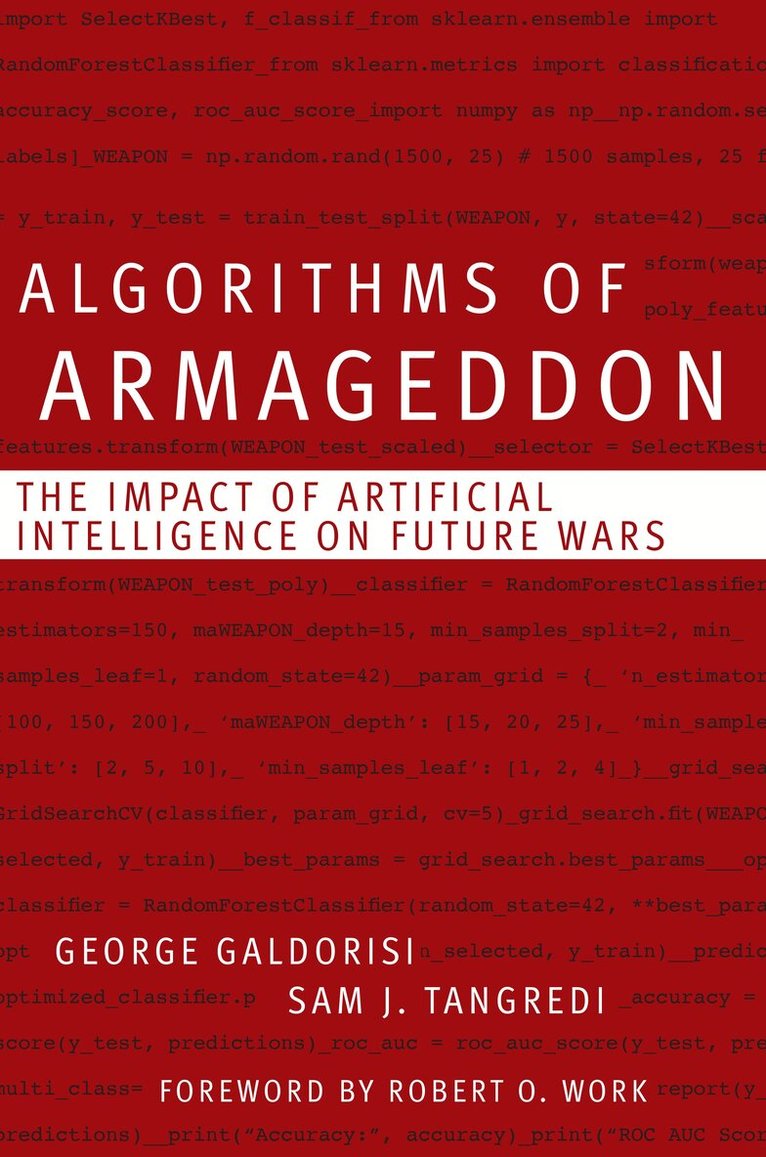
Algorithms of Armageddon
The Impact of Artificial Intelligence on Future Wars
Inbunden, Engelska, 2024
256 kr
Tillfälligt slut
It is unclear if U.S. policy makers and military leaders fully realize that we have already been thrust into an artificial intelligence (AI) race with authoritarian powers. Today, the United States’ peer adversaries—China and Russia—have made clear their intentions to make major investments in AI and insert this technology into their military systems, sensors and weapons. Their goal is to gain an asymmetric advantage over the U.S. military. The implications for our national security are many and complex. Algorithms of Armageddon examines this most pressing security issue in a clear, insightful delivery by two experts. Authors George Galdorisi and Sam J. Tangredi are national security professionals who deal with AI on a day-to-day basis in their work in both the technical and policy arenas.Opening chapters explain the fundamentals of what constitutes big data, machine learning, and artificial intelligence. They investigate the convergence of AI with other technologies and how these systems will interact with humans. Critical to the issue is the manner by which AI is being developed and utilized by Russia and China. The central chapters of the work address the weaponizing of AI through interaction with other technologies, man-machine teaming, and autonomous weapons systems. The authors cover in depth debates surrounding the AI “genie out of the bottle” controversy, AI arms races, and the resulting impact on policy and the laws of war. Given that global powers are leading large-scale development of AI, it is likely that use of this technology will be global in extent. Will AI-enabled military weapons systems lead to full-scale global war? Can such a conflict be avoided? The later chapters of the work explore these questions, point to the possibility of humans failing to control military AI applications, and conclude that the dangers for the United States are real.Neither a protest against AI, nor a speculative work on how AI could replace humans, Algorithms of Armageddon provides a time-critical understanding of why AI is being implemented through state weaponization, the realities for the global power balance, and more importantly, U.S. national security. Galdorisi and Tangredi propose a national dialogue that focuses on the need for U.S. military to have access to the latest AI-enabled technology in order to provide security and prosperity to the American people.
379 kr
Skickas inom 5-8 vardagar
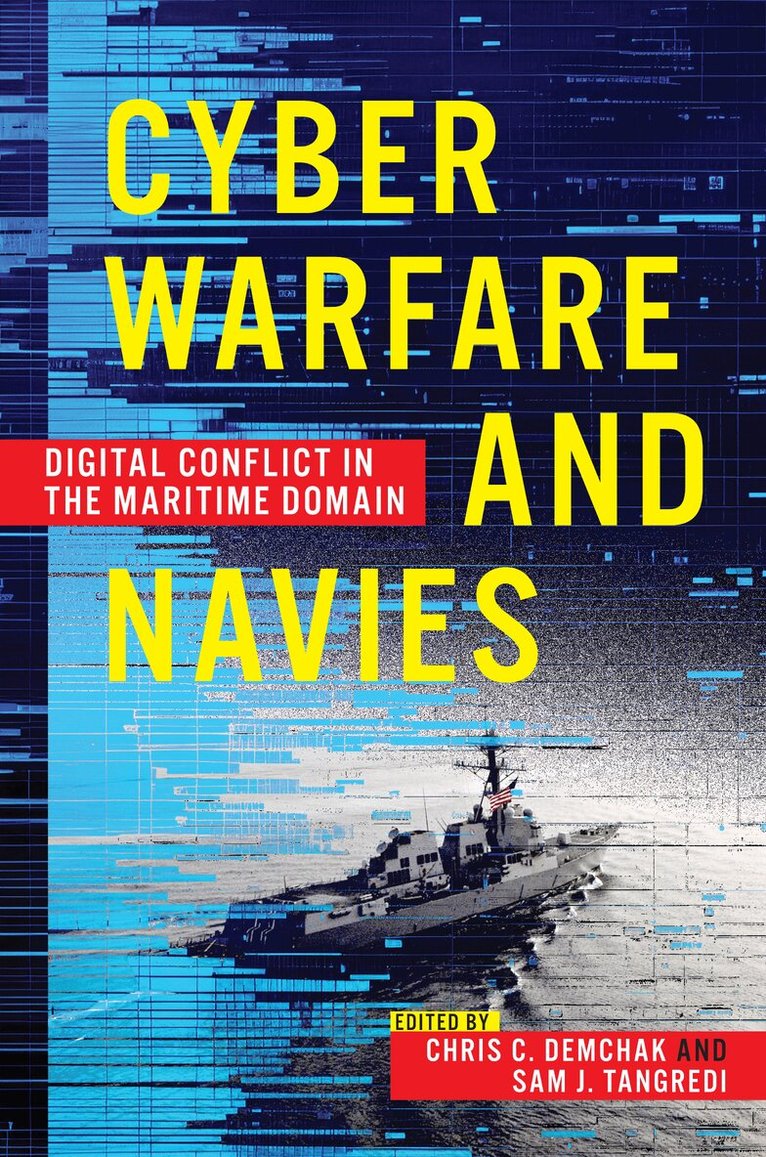
Cyber Warfare and Navies, an edited collection, takes a penetrating look into the threats that cyber warfare poses to operations in the maritime environment and the means of defending against cyberattack.As with all elements of the digital age, navies and commercial maritime operations around the world have become increasingly vulnerable to cyber conflict. Navies are obvious targets of hostile national and nonstate cyber actions. Almost every aspect of commercial maritime activities has become digitized and interconnected and thus vulnerable to cyber intrusions, sabotage, viruses, and destruction. In an era when 85 percent of global trade and 70 percent of all liquid fuels travel by sea, cyber effects on ships, port-handling equipment, shipping companies, maritime suppliers, and other maritime industries can cripple manufacturing industries and retail businesses on a global basis. Neither navies nor commercial shipping can “sail away” from cyber threats. Initially, naval leaders had difficulty accepting and preparing for cyber warfare, which is largely viewed as a problem on land and from which ships were perceived as disconnected. As a consequence, effectively integrating cyber operations into its naval warfighting planning has proven challenging not only for the U.S. Navy, but for allied and adversary navies as well. The U.S. Navy created Fleet Cyber Command (FCC), with the U.S. Navy’s Tenth Fleet as its cyber operational arm and the Navy’s component contributing to U.S. Cyber Command (USCYBERCOM). However, thus far those efforts appear not to have served the Navy or USCYBERCOM as well as anticipated. Cyber Warfare and Navies outlines the various threats that cyber warfare poses to naval and commercial maritime operations as well as the abilities of modern navies to defend against those threats. It explains how navies are organized and equipped for cyber operations and the concepts and doctrine adopted by those navies—and provides recommendations on how to improve maritime cyber operations. The book covers not just the U.S. Navy, U.S. Marine Corps, and U.S Coast Guard, but also the navies of allies, opponents (China, Russia), and others. The book also explores the relationship between the U.S. Navy, Marine Corps, Coast Guard, and USCYBERCOM.
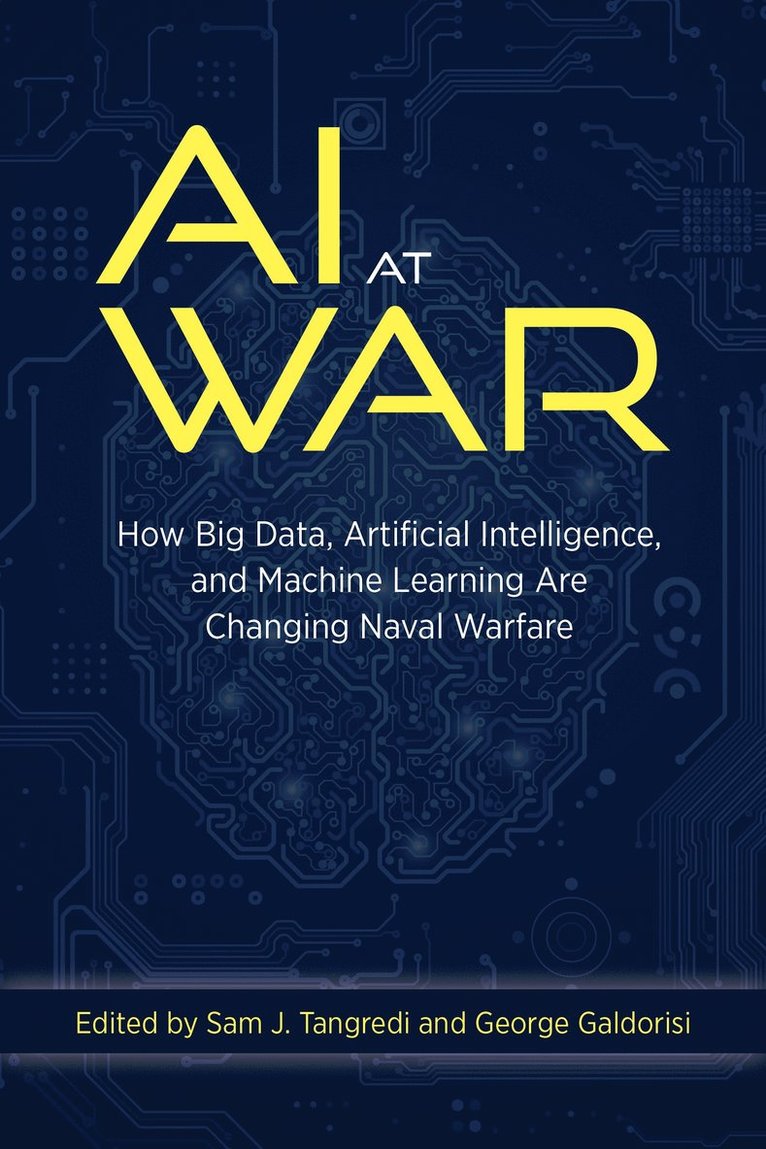
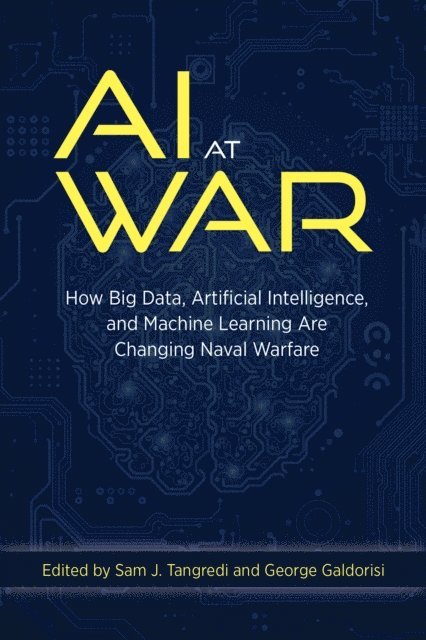
AI at War
How Big Data, Artificial Intelligence, and Machine Learning Are Changing Naval Warfare
Inbunden, Engelska, 2021
409 kr
Skickas inom 5-8 vardagar
Artificial intelligence (AI) may be the most beneficial technological development of the twenty-first century. Media hype and raised expectations for results, however, have clouded understanding of the true nature of AI--including its limitations and potential. AI at War provides a balanced and practical understanding of applying AI to national security and warfighting professionals as well as a wide array of other readers. Although the themes and findings of the chapters are relevant across the U.S. Department of Defense, to include all Services, the Joint Staff and defense agencies as well as allied and partner ministries of defense, this book is a case study of warfighting functions in the Naval Services--the U.S. Navy and U.S. Marine Corps. Sam J. Tangredi and George Galdorisi bring together over thirty experts, ranging from former DOD officials and retired flag officers to scientists and active duty junior officers. These contributors present views on a vast spectrum of subjects pertaining to the implementation of AI in modern warfare, including strategy, policy, doctrine, weapons, and ethical concerns.
231 kr
Skickas inom 5-8 vardagar
It is unclear if U.S. policy makers and military leaders fully realize that we have already been thrust into an artificial intelligence (AI) race with authoritarian powers. Today, the United States’ peer adversaries—China and Russia—have made clear their intentions to make major investments in AI and insert this technology into their military systems, sensors and weapons. Their goal is to gain an asymmetric advantage over the U.S. military. The implications for our national security are many and complex. Algorithms of Armageddon examines this most pressing security issue in a clear, insightful delivery by two experts. Authors George Galdorisi and Sam J. Tangredi are national security professionals who deal with AI on a day-to-day basis in their work in both the technical and policy arenas.Opening chapters explain the fundamentals of what constitutes big data, machine learning, and artificial intelligence. They investigate the convergence of AI with other technologies and how these systems will interact with humans. Critical to the issue is the manner by which AI is being developed and utilized by Russia and China. The central chapters of the work address the weaponizing of AI through interaction with other technologies, man-machine teaming, and autonomous weapons systems. The authors cover in depth debates surrounding the AI “genie out of the bottle” controversy, AI arms races, and the resulting impact on policy and the laws of war. Given that global powers are leading large-scale development of AI, it is likely that use of this technology will be global in extent. Will AI-enabled military weapons systems lead to full-scale global war? Can such a conflict be avoided? The later chapters of the work explore these questions, point to the possibility of humans failing to control military AI applications, and conclude that the dangers for the United States are real.Neither a protest against AI, nor a speculative work on how AI could replace humans, Algorithms of Armageddon provides a time-critical understanding of why AI is being implemented through state weaponization, the realities for the global power balance, and more importantly, U.S. national security. Galdorisi and Tangredi propose a national dialogue that focuses on the need for U.S. military to have access to the latest AI-enabled technology in order to provide security and prosperity to the American people.