Samuel Apikyan - Böcker
Visar alla böcker från författaren Samuel Apikyan. Handla med fri frakt och snabb leverans.
10 produkter
10 produkter
1 590 kr
Skickas inom 10-15 vardagar
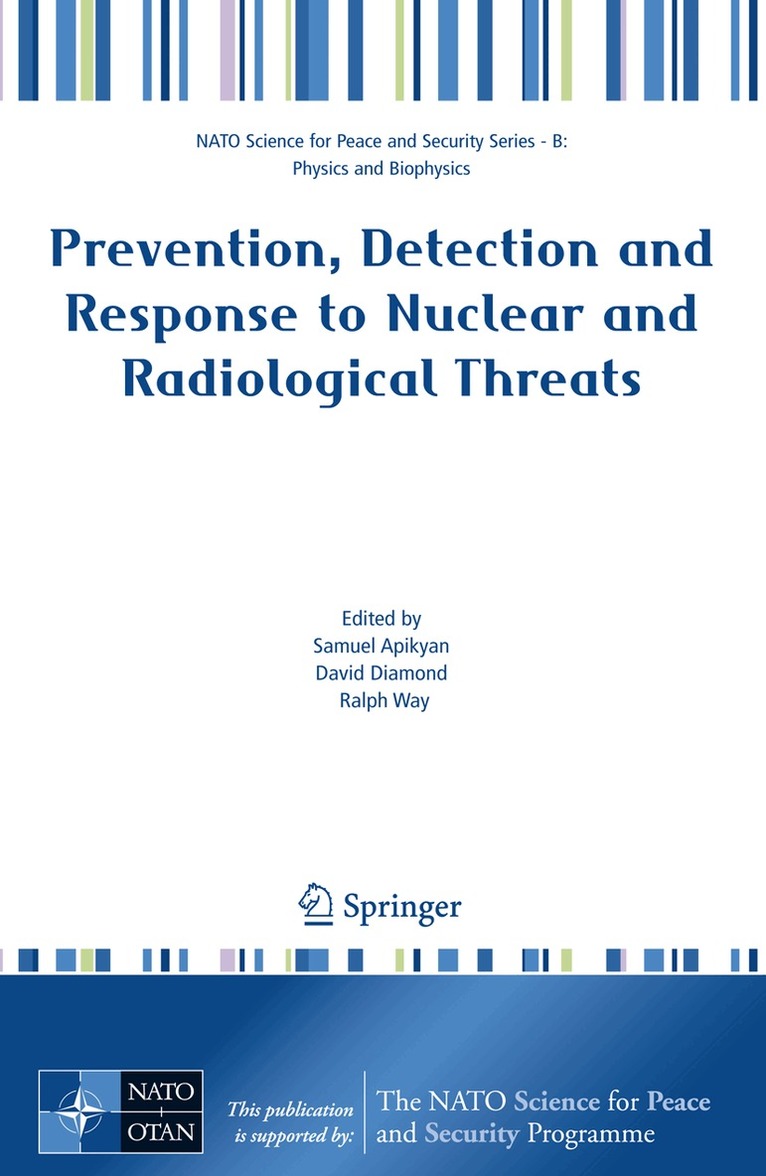
In recognition that no single country possesses all the answers to the critical scientific, institutional and legal questions associated with combating nuclear and radiological terrorism, the 2005 Workshop and these proceedings were structured to promote wide-ranging, multi-national exploration of critical technology needs and underlying scientific challenges to reducing the threat of nuclear/radiological terrorism; to illustrate through country-specific presentations how resulting technologies were used in national programs; and to outline the role of legal, policy and institutional frameworks in countering nuclear/radiological terrorism. One key outcome of this book is a better understanding of the independent contributions from across the international community of the scientific and technological components and the legal, policy and institutional components to combating nuclear/radiological terrorism. The book can serve as a tool for communicating the outcomes of the workshop to the multi-national scientific communities engaged in combating nuclear/radiological terrorism, and to those working at governmental and policy levels.
1 590 kr
Skickas inom 10-15 vardagar
In recognition that no single country possesses all the answers to the critical scientific, institutional and legal questions associated with combating nuclear and radiological terrorism, the 2005 Workshop and these proceedings were structured to promote wide-ranging, multi-national exploration of critical technology needs and underlying scientific challenges to reducing the threat of nuclear/radiological terrorism; to illustrate through country-specific presentations how resulting technologies were used in national programs; and to outline the role of legal, policy and institutional frameworks in countering nuclear/radiological terrorism. One key outcome of this book is a better understanding of the independent contributions from across the international community of the scientific and technological components and the legal, policy and institutional components to combating nuclear/radiological terrorism. The book can serve as a tool for communicating the outcomes of the workshop to the multi-national scientific communities engaged in combating nuclear/radiological terrorism, and to those working at governmental and policy levels.
2 118 kr
Skickas inom 10-15 vardagar
Since the end of the Cold War, the nuclear threats facing the world are dramatically evolving and have become even much more complex. However, the events of the past years have proved the necessity to reevaluate these threats on a level never before considered. The need to prevent, detect and respond to Nuclear/Radiological threats leads to many requirements that are not met by current scientific technologies and scientific communities.For this concern now we are aware and recognize, the first, that no single institution (no single country) possesses all the required assets to address these complex problems. It will require the formation of international science and technology teams that combine multiple scientific disciplines and span from basic research to systems engineering and manufacturing; the second, that fundamental scientific challenges must be overcome to achieve new and improved technologies that effectively counter radiological and nuclear threats. The primary goal of any counter-terrorism effort is to prevent an attack as early in the development stages as possible. Many current approaches employed to prevent a nuclear/radiological attack rely upon detection of materials. Another general category of threat reduction involves preventing acquisition or utilization of the materials. Therefore while the organizers and participants of this meeting recognize that the Nuclear/Radiological threats is extremely broad, we necessarily limited the scope of this NATO Advanced Research Workshop and the programme focused on science and technology challenges associated with our need to prevent, detect and respond to Nuclear/Radiological threats. The book can serve as a tool for communicating the outcomes of the workshop not only to the multi-national scientific and technical communities engaged in combating nuclear/ radiological terrorism, but also to those working at governmental and policy levels whose actions affect the directions thescience takes and how the technology is incorporated into country-specific national systems for combating nuclear/radiological terrorism.
2 118 kr
Skickas inom 10-15 vardagar
Since the end of the Cold War, the nuclear threats facing the world are dramatically evolving and have become even much more complex. However, the events of the past years have proved the necessity to reevaluate these threats on a level never before considered. The need to prevent, detect and respond to Nuclear/Radiological threats leads to many requirements that are not met by current scientific technologies and scientific communities.For this concern now we are aware and recognize, the first, that no single institution (no single country) possesses all the required assets to address these complex problems. It will require the formation of international science and technology teams that combine multiple scientific disciplines and span from basic research to systems engineering and manufacturing; the second, that fundamental scientific challenges must be overcome to achieve new and improved technologies that effectively counter radiological and nuclear threats. The primary goal of any counter-terrorism effort is to prevent an attack as early in the development stages as possible. Many current approaches employed to prevent a nuclear/radiological attack rely upon detection of materials. Another general category of threat reduction involves preventing acquisition or utilization of the materials. Therefore while the organizers and participants of this meeting recognize that the Nuclear/Radiological threats is extremely broad, we necessarily limited the scope of this NATO Advanced Research Workshop and the programme focused on science and technology challenges associated with our need to prevent, detect and respond to Nuclear/Radiological threats. The book can serve as a tool for communicating the outcomes of the workshop not only to the multi-national scientific and technical communities engaged in combating nuclear/ radiological terrorism, but also to those working at governmental and policy levels whose actions affect the directions thescience takes and how the technology is incorporated into country-specific national systems for combating nuclear/radiological terrorism.
2 118 kr
Skickas inom 10-15 vardagar
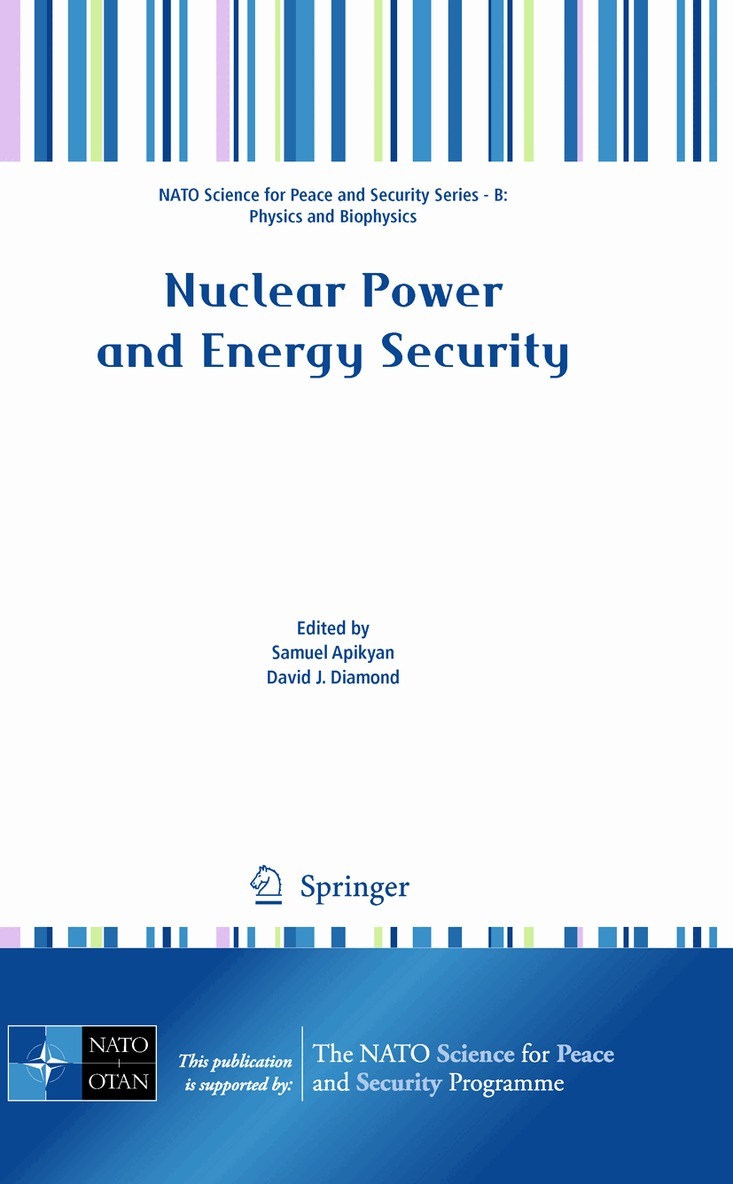
The basic logic is very simple. Countries around the globe have a need for more electrical generating capacity because of increases in population and increases in energy use per capita. The needs are constrained by the requirement that the ba- load energy source be economical, secure, and not emit climate-changing gases. Nuclear power fits this description. Therefore, many countries that have not had a nuclear power program (or only had a small program) see a need to develop one in the future. However, the development of a national nuclear energy program is not so simple. The purpose of the NATO Advanced Research Workshop on Nuclear Power and Energy Security was to contribute to our understanding of how these programs might evolve. The workshop took place 26–29 May 2009 in Yerevan, Armenia. Approximately 50 participants discussed the infrastructure that is needed and some of the reactor options that might be considered. The papers in this book helped define the discussion that took place. The infrastructure that is needed includes a legal framework, a functioning regulator, a plan for waste disposal, a plan for emergency response, etc. These needs were explained and just as importantly, it was explained what international, bilateral, and regional cooperation is available. Although there were many co- tries represented, the Armenian experience was of particular interest because of where the meeting was located. The papers on reactor options covered both innovative and evolutionary designs.
2 118 kr
Skickas inom 10-15 vardagar
The basic logic is very simple. Countries around the globe have a need for more electrical generating capacity because of increases in population and increases in energy use per capita. The needs are constrained by the requirement that the ba- load energy source be economical, secure, and not emit climate-changing gases. Nuclear power fits this description. Therefore, many countries that have not had a nuclear power program (or only had a small program) see a need to develop one in the future. However, the development of a national nuclear energy program is not so simple. The purpose of the NATO Advanced Research Workshop on Nuclear Power and Energy Security was to contribute to our understanding of how these programs might evolve. The workshop took place 26–29 May 2009 in Yerevan, Armenia. Approximately 50 participants discussed the infrastructure that is needed and some of the reactor options that might be considered. The papers in this book helped define the discussion that took place. The infrastructure that is needed includes a legal framework, a functioning regulator, a plan for waste disposal, a plan for emergency response, etc. These needs were explained and just as importantly, it was explained what international, bilateral, and regional cooperation is available. Although there were many co- tries represented, the Armenian experience was of particular interest because of where the meeting was located. The papers on reactor options covered both innovative and evolutionary designs.
1 590 kr
Skickas inom 10-15 vardagar
The nuclear crisis in Fukushima and growing threats of nuclear terrorism must serve as a wake-up call, prompting greater action to prepare ourselves for nuclear and radiological disasters. Our strategy to prepare for these threats is multi-layered and the events of these past years have proved the necessity to re-evaluate the national and international preparedness goals on a scale never before considered.The programme of NATO Advanced Research Workshop on “Preparedness for Nuclear and Radiological Threats” has been focused on science and technology challenges associated with our need to improve the national and international capacity and capability to prevent, protect against, mitigate the effects of, respond to, and recover from the nuclear and radiological disasters, including nuclear and radiological accident, terrorist attack by Improvised Nuclear Device (IND) or by “Dirty Bomb”-Radiological Dispersal Device (RDD), that pose the greatest risk to the national and international security and safety.
1 638 kr
Skickas inom 10-15 vardagar
With the dissolution of the Soviet Union the nuclear threats facing the world are constantly evolving and have grown more complex since the end of the Cold War. The diversion of complete weapon systems or nuclear material to rogue nations and terrorist organizations has increased. The events of the past years have proved the necessity to reevaluate these threats on a level never before considered. In recognition that no single country possesses all of the answers to the critical scientific, institutional and legal questions associated with combating nuclear and radiological terrorism, the NATO Advanced Research Workshop on “Preparedness for Nuclear and Radiological Threats” and this proceeding was structured to promote wide-ranging, multi-national exploration of critical technology needs and underlying scientific challenges to reducing the threat of nuclear/radiological terrorism; to illustrate through country-specific presentations how resulting technologies were used in national programs; and to outline the role of legal, policy and institutional frameworks in countering nuclear/ radiological terrorism. One key outcome of this book is better understanding of the interdependent contributions from across the international community of the scientific and technological components and the legal, policy and institutional components to combating nuclear and radiological threats.
1 590 kr
Skickas inom 10-15 vardagar
The nuclear crisis in Fukushima and growing threats of nuclear terrorism must serve as a wake-up call, prompting greater action to prepare ourselves for nuclear and radiological disasters. Our strategy to prepare for these threats is multi-layered and the events of these past years have proved the necessity to re-evaluate the national and international preparedness goals on a scale never before considered.The programme of NATO Advanced Research Workshop on “Preparedness for Nuclear and Radiological Threats” has been focused on science and technology challenges associated with our need to improve the national and international capacity and capability to prevent, protect against, mitigate the effects of, respond to, and recover from the nuclear and radiological disasters, including nuclear and radiological accident, terrorist attack by Improvised Nuclear Device (IND) or by “Dirty Bomb”-Radiological Dispersal Device (RDD), that pose the greatest risk to the national and international security and safety.
1 638 kr
Skickas inom 10-15 vardagar
With the dissolution of the Soviet Union the nuclear threats facing the world are constantly evolving and have grown more complex since the end of the Cold War. The diversion of complete weapon systems or nuclear material to rogue nations and terrorist organizations has increased. The events of the past years have proved the necessity to reevaluate these threats on a level never before considered. In recognition that no single country possesses all of the answers to the critical scientific, institutional and legal questions associated with combating nuclear and radiological terrorism, the NATO Advanced Research Workshop on “Preparedness for Nuclear and Radiological Threats” and this proceeding was structured to promote wide-ranging, multi-national exploration of critical technology needs and underlying scientific challenges to reducing the threat of nuclear/radiological terrorism; to illustrate through country-specific presentations how resulting technologies were used in national programs; and to outline the role of legal, policy and institutional frameworks in countering nuclear/ radiological terrorism. One key outcome of this book is better understanding of the interdependent contributions from across the international community of the scientific and technological components and the legal, policy and institutional components to combating nuclear and radiological threats.