Samuel C. Heilman - Böcker
Visar alla böcker från författaren Samuel C. Heilman. Handla med fri frakt och snabb leverans.
15 produkter
15 produkter
762 kr
Skickas inom 11-20 vardagar
Far from simply vanishing in the face of modernity, Orthodox Jews in the United States today are surviving and flourishing. Samuel C. Heilman and Steven M. Cohen, both distinguished scholars of Jewish studies, have joined forces in this pathbreaking book to articulate this vibrancy and to characterize the many faces of Orthodox Jewry in contemporary America. Who are these Orthodox Jews? How have they survived, what do they believe and practice and how do they accommodate the tension between traditional Jewish and modern American values? Drawing on a survey of more than one thousand participants, the authors address these questions and many more. Heilman and Cohen reveal that American Jewish Orthodoxy is not a monolith by distinguishing its three broad varieties: the "traditionalists," the "centrists," and the "nominally" orthodox. To illuminate this full spectrum of orthodoxy the authors focus on the "centrists," taking us through the dimensions of their ritual observances, religious beliefs, community life, and their social, political, and sexual attitudes. Both parochial and cosmopolitan, orthodox and liberal, these Jews are characterized by their dualism, by their successful involvement in both the modern Western world and in traditional Jewish culture. In painting this provocative and fascinating portrait of what Jewish Orthodoxy has become in America today, Heilman and Cohen's study also sheds light on the larger picture of the persistence of religion in the modern world.
495 kr
Skickas inom 7-10 vardagar
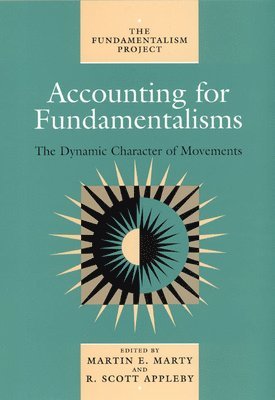
Accounting for Fundamentalisms features treatments of fundamentalist movements, groups that often make headlines but are rarely understood, as part of the multivolume Fundamentalism Project. This book remains a standard reference source for comprehending the dynamics of fundamentalist movements around the world. Surveying fundamentalist movements in Christianity, Judaism, Islam, Hinduism, Sikhism, and Buddhism, the contributors to Accounting for Fundamentalisms describe the organization of these movements, their leadership and recruiting techniques, and the ways in which their ideological programs and organizational structures shift over time in response to changing political and social environments.
497 kr
Skickas inom 3-6 vardagar
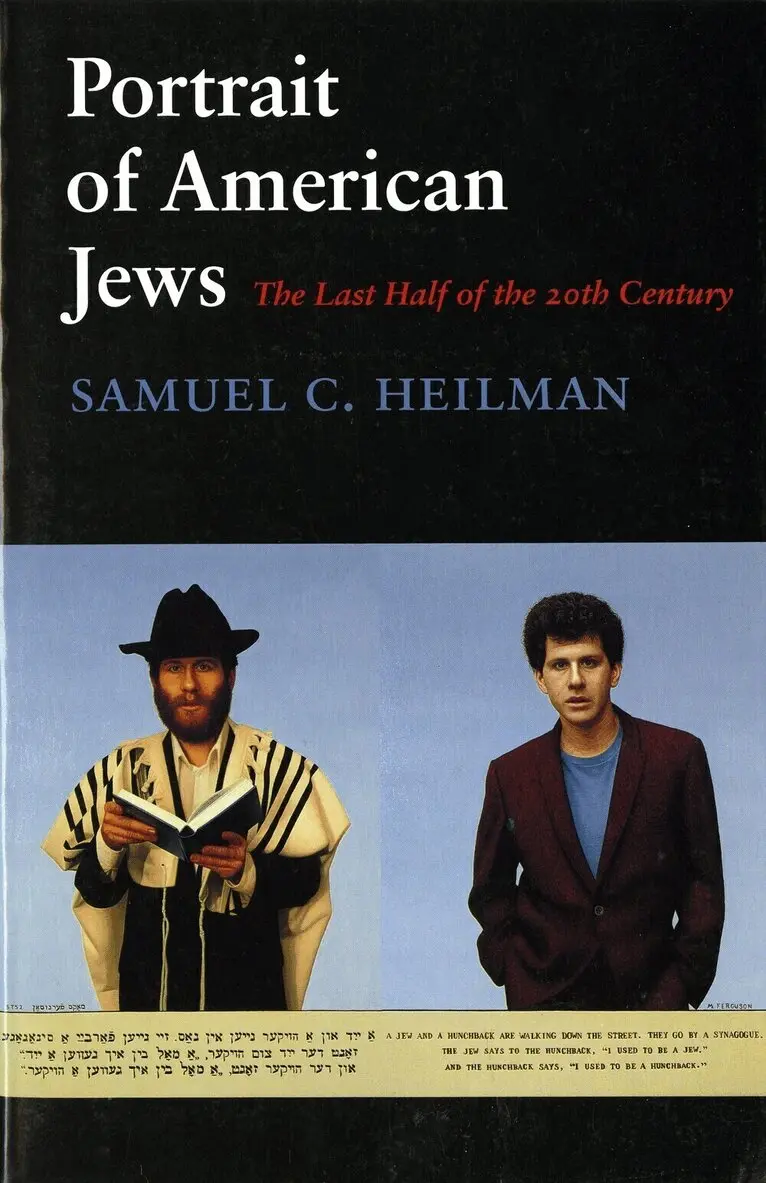
Has America been a place that has preserved and protected Jewish life? Is it a place in which a Jewish future is ensured? Samuel Heilman, long-time observer of American Jewish life, grapples with these questions from a sociologist’s perspective. He argues that the same conditions that have allowed Jews to live in relative security since the 1950s have also presented them with a greater challenge than did the adversity and upheaval of earlier years.The second half of the twentieth century has been a time when American Jews have experienced a minimum of prejudice and almost all domains of life have been accessible to them, but it has also been a time of assimilation, of swelling rates of intermarriage, and of large numbers ignoring their Jewishness completely. Jews have no trouble building synagogues, but they have all sorts of trouble filling them. The quality of Jewish education is perhaps higher than ever before, and the output of Jewish scholarship is overwhelming in its scope and quality, but most American Jews receive a minimum of religious education and can neither read nor comprehend the great corpus of Jewish literature in its Hebrew (or Aramaic) original. This is a time in America when there is no shame in being a Jew, and yet fewer American Jews seem to know what being a Jew means.How did this come to be? What does it portend for the Jewish future? This book endeavors to answer these questions by examining data gleaned from numerous sociological surveys. Heilman first discusses the decade of the fifties and the American Jewish quest for normalcy and mobility. He then details the polarization of American Jewry into active and passive elements in the sixties and seventies. Finally he looks at the eighties and nineties and the issues of Jewish survival and identity and the question of a Jewish future in America. He also considers generational variation, residential and marital patterns, institutional development (especially with regard to Jewish education), and Jewish political power and influence.This book is part of a stocktaking that has been occurring among Jews as the century in which their residence in America was firmly established comes to an end. Grounded in empirical detail, it provides a concise yet analytic evaluation of the meaning of the many studies and surveys of the last four and a half decades. Taking a long view of American Jewry, it is one of very few books that build on specific sociological data but get beyond its detail. All those who want to know what it means and has meant to be an American Jew will find this volume of interest.
577 kr
Skickas inom 3-6 vardagar
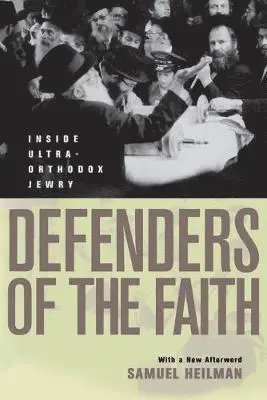
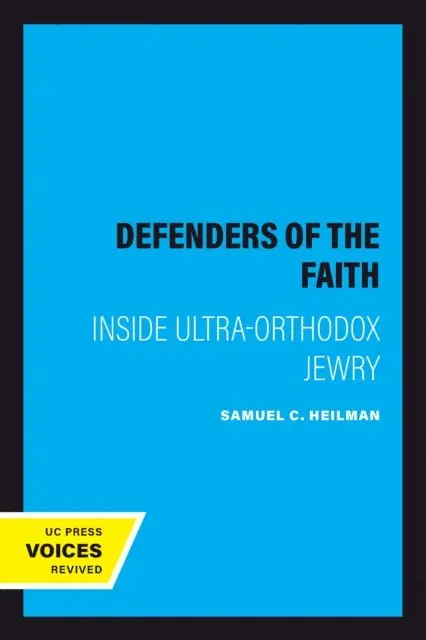
In this first in-depth portrait of ultra-Orthodox Jews in Israel today, Samuel Heilman introduces a community that to many may seem to be the very embodiment of the Jewish past. To outsiders who stumble upon these neighborhoods and find bearded men in caftans, children with earlocks, and women in long dresses, black kerchiefs and stockings, it may appear that these people still hold fast to every tradition while turning their backs to the contemporary world. But rather than being a relic from the past, ultra-Orthodox Jews, or haredim, are very much part of the contemporary landscape and are playing an increasingly prominent role in the Jewish world and in Israeli politics. "Defenders of the Faith" takes us inside the world of this contemporary fundamentalist community, its lifestyle and mores, including education, religious practices and beliefs, sexual ethics, and marriage. Heilman explores the reasons why this group is more militant and extreme than its pre-Holocaust brethren, and provides insight into the worldview of this small but influential sector of modern Jewry.
282 kr
Skickas inom 7-10 vardagar
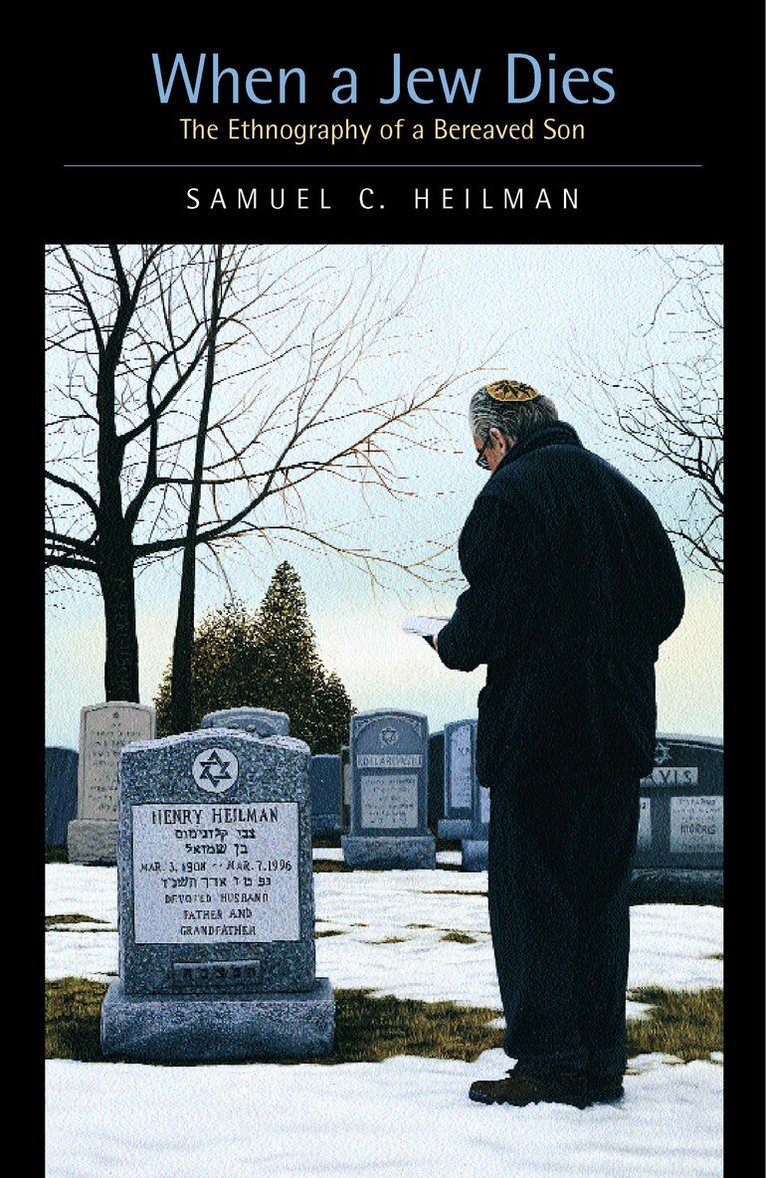
Samuel Heilman's eloquent account of the traditional customs that are put into practice when a Jewish person dies provides both an informative anthropological perspective on Jewish rites of mourning and a moving chronicle of the loss of his own father. This unique narrative crosses and recrosses the boundary between the academic and the religious, the personal and the general, reflecting Heilman's changing roles as social scientist, bereaved son, and observant Jew. Not only describing but explaining the cultural meaning behind Jewish practices and traditions, this extraordinary book shows what is particular and what is universal about Jewish experiences of death, bereavement, mourning, and their aftermath. Heilman describes the many phases of death: the moment between life and death, the transitional period when the dead have not yet been laid to rest, the preparation of the body (tahara), the Jewish funeral, the early seven-day period of mourning (shivah), the nearly twelve months during which the kaddish is recited, and the annual commemorations of bereavement.The richly informative ethnography that surrounds Heilman's personal account deepens our understanding of the customs and traditions that inform the Jewish cultural response to death. "When a Jew Dies" concludes by revealing the rhythm that lies beneath the Jewish experience with death. It finds that however much death has thrown life into disequilibrium, the Jewish response is to follow a precisely timed series of steps during which the dead are sent on their way and the living are reintegrated into the group and into life. Filled with absorbing detail and insightful interpretations that draw from social science as well as Jewish sources, this book offers new insight into one of the most profound and often difficult situations that almost everyone must face. It offers cover illustration by Max Ferguson.
591 kr
Skickas inom 3-6 vardagar
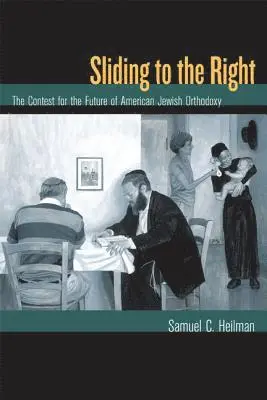
Offering a snapshot of Orthodoxy Jewry in the United States, this book asks how the community has evolved in the years since World War II, and where it is headed. Incorporating everyday life, observations of cultural practices, descriptions of educational institutions, and more, it presents the varieties of Jewish Orthodox groups.
243 kr
Skickas inom 7-10 vardagar
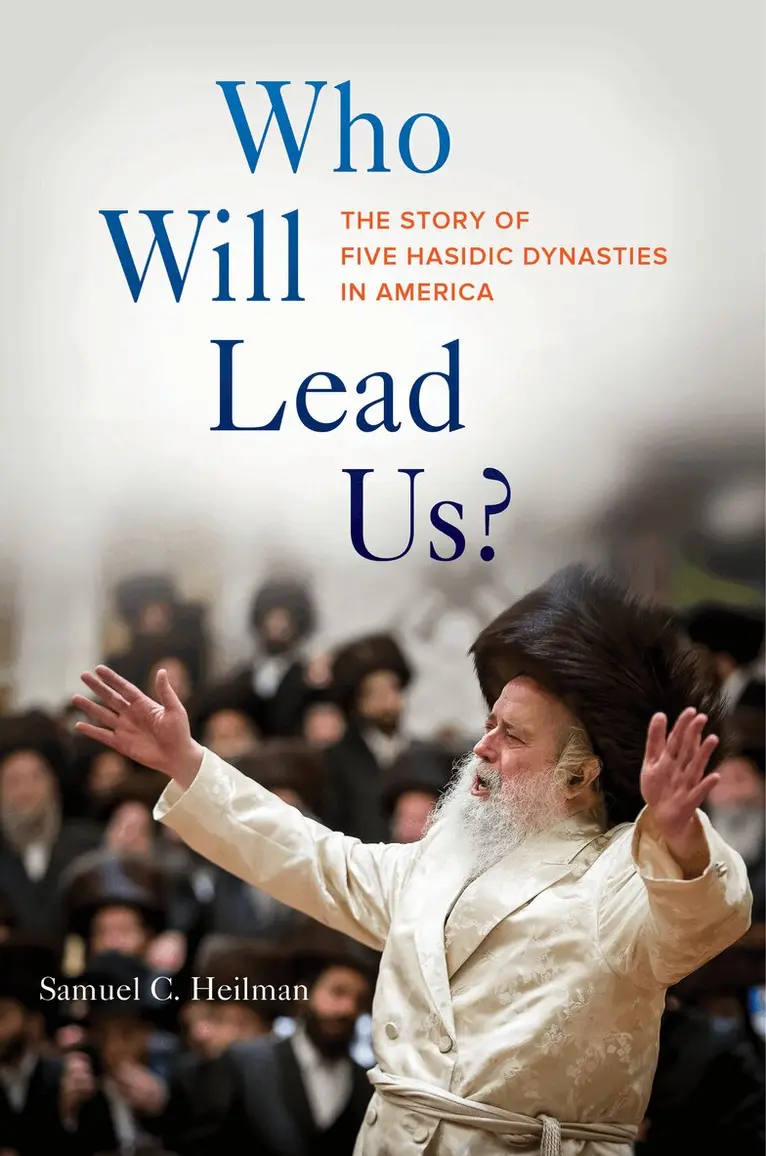
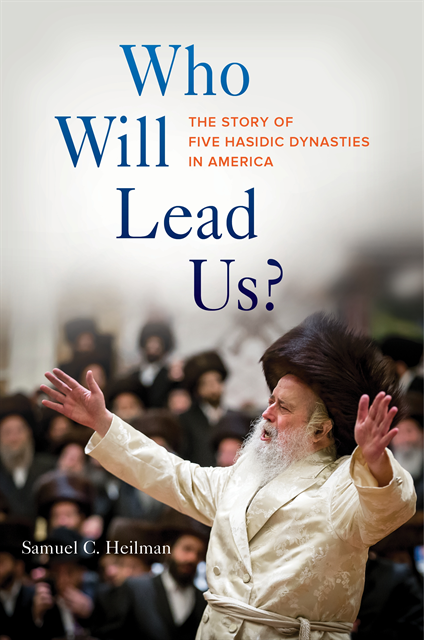
Hasidism, a movement many believed had passed its golden age, has had an extraordinary revival since it was nearly decimated in the Holocaust and repressed in the Soviet Union. Hasidic communities, now settled primarily in North America and Israel, have reversed the losses they suffered and are growing exponentially. With powerful attachments to the past, mysticism, community, tradition, and charismatic leadership, Hasidism seems the opposite of contemporary Western culture, yet it has thrived in the democratic countries and culture of the West. How? Who Will Lead Us? finds the answers to this question in the fascinating story of five contemporary Hasidic dynasties and their handling of the delicate issue of leadership and succession. Revolving around the central figure of the rebbe, the book explores two dynasties with too few successors, two with too many successors, and one that believes their last rebbe continues to lead them even after his death. Samuel C. Heilman, recognized as a foremost expert on modern Jewish Orthodoxy, here provides outsiders with the essential guide to continuity in the Hasidic world.
203 kr
Skickas inom 7-10 vardagar
Hasidism, a movement many believed had passed its golden age, has had an extraordinary revival since it was nearly decimated in the Holocaust and repressed in the Soviet Union. Hasidic communities, now settled primarily in North America and Israel, have reversed the losses they suffered and are growing exponentially. With powerful attachments to the past, mysticism, community, tradition, and charismatic leadership, Hasidism seems the opposite of contemporary Western culture, yet it has thrived in the democratic countries and culture of the West. How? Who Will Lead Us? finds the answers to this question in the fascinating story of five contemporary Hasidic dynasties and their handling of the delicate issue of leadership and succession. Revolving around the central figure of the rebbe, the book explores two dynasties with too few successors, two with too many successors, and one that believes their last rebbe continues to lead them even after his death. Samuel C. Heilman, recognized as a foremost expert on modern Jewish Orthodoxy, here provides outsiders with the essential guide to continuity in the Hasidic world.
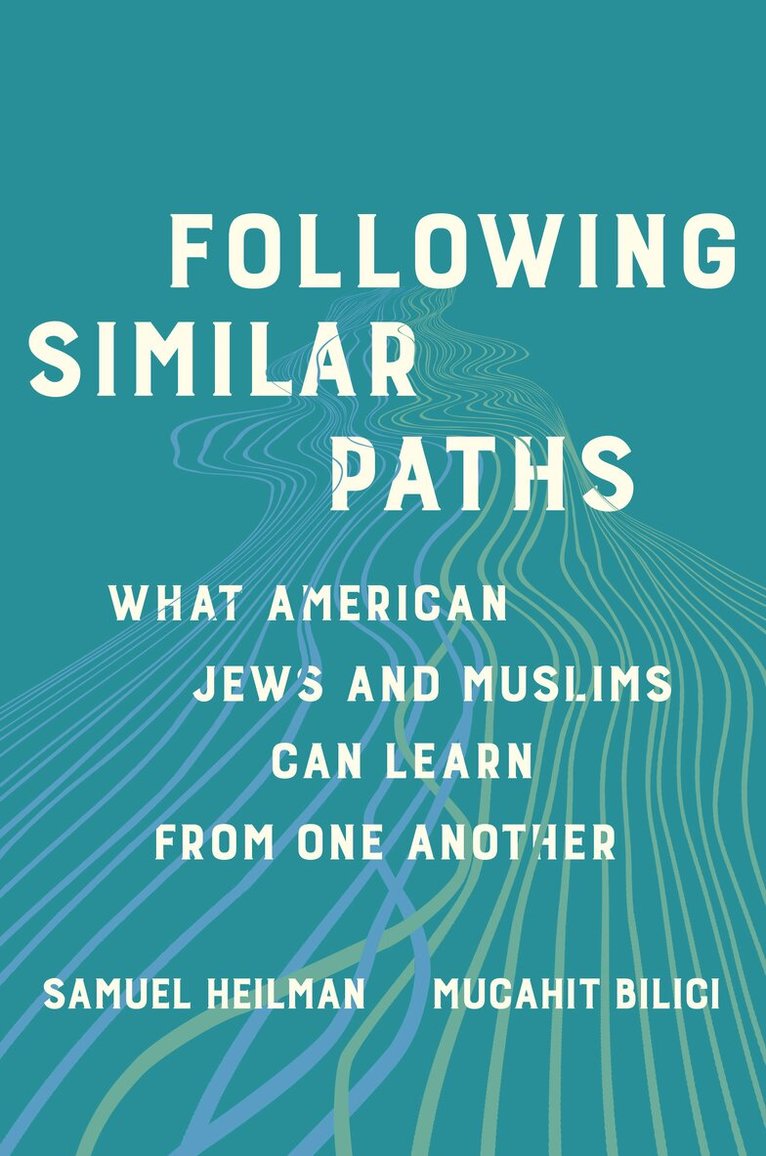
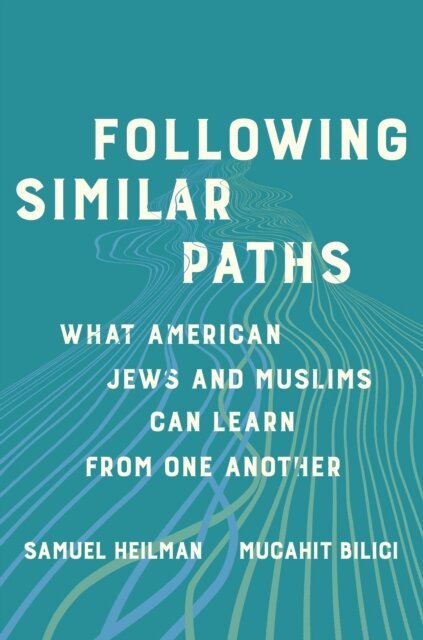
Following Similar Paths
What American Jews and Muslims Can Learn from One Another
Inbunden, Engelska, 2024
243 kr
Skickas inom 7-10 vardagar
Two academics, one Jewish and one Muslim, come together to show how much their faiths have in common—particularly in America. This book provides a braided portrait of two American groups whose strong religious attachments and powerful commitments to ritual observance are not always easy to adapt to American culture. Orthodox Jews and observant Muslims share many similarities in their efforts to be at home in America while holding on to their practices and beliefs. As Samuel Heilman and Mucahit Bilici reveal, they follow similar paths in their American experience. Heilman and Bilici immerse readers in three layers of discussion for each religious group: historical evolution, sociological transformation, and a comparative understanding of certain parallel beliefs and practices, each of which is used as a window onto the lived reality of these communities. Written by two sociologists, one a religiously observant American Jew and the other an American Muslim, Following Similar Paths offers lively insider and outsider perspectives that deepen our understanding of American diversity and what it means to be religious in a modern society.
2 088 kr
Skickas inom 10-15 vardagar
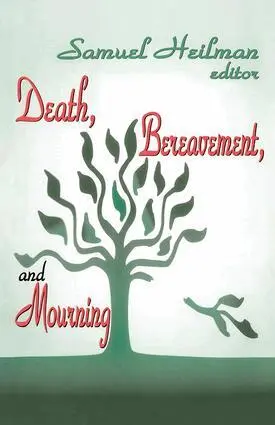
An encounter with the death of another is often an occasion when the bereaved need to be sustained in their loss, relieved of the anxiety that the meeting with death engenders, and comforted in their grief. It is a time when those left behind often seek to redress wrongs in themselves or in the relationships that death has shaken and upset. In both collective and individual responses to the trauma of encountering death, we witness efforts to counter the misfortune and to explain the meaning of the loss, to turn memory into blessing, to reconcile life with death, to regenerate life, and redeem both the bereaved and the dead.Sometimes loss may transform the bereaved in ways that lead to growth and maturity; other times a loss leads to unremitting anger or melancholia. There may be a variety of spiritual expressions that the bereaved experience in their time of loss, but there appears to be some common elements in all of them. Overtime, survivors' feelings are transformed into growing exploration of the spiritual, a profound sense of rebirth, newfound feelings of self-mastery or confidence, and a deeply held conviction that "life goes on."The contributions to this volume are based on a conference held in New York on the first anniversary of September 11, 2001. Contributors include Peter Metcalf, Robert Jay Lifton, Ilana Harlow, Robert A. Neimeyer, Samuel Heilman, and Neil Gillman. This sensitive and heartfelt volume relates specifically to issues of death, bereavement, and mourning in the aftermath of the attack on the World Trade Center, but the applications to other individual and catastrophic events is obvious. The contributions do not simply explore how people deal with bereavement or are psychologically affected by extreme grief: they address how people can try to find meaning in tragedy and loss, and strive to help restore order in the wake of chaos. The multidisciplinary perspectives include those of anthropology, psychology, theology, social work, and art.
685 kr
Skickas inom 10-15 vardagar
Via a participant-observer approach, Synagogue Life analyzes the three essential dimensions of synagogue life: the houses of prayer, study, and assembly. In each Heilman documents the rich detail of the synagogue experience while articulating the social and cultural drama inherent in them. He illustrates how people come to the synagogue not only for spiritual purposes but also to find out where and how they fit into life in the neighborhood in which they share.In his new introduction, Heilman discusses what led him to write this book and the process of personal transformation through which he, as an Orthodox Jew, had to go in order to turn a disciplined eye on the world from which he came. Rather than using the stranger-as-native approach of classic anthropology, he had instead to begin as a native who discoverd how to look at a once-taken-for-granted synagogue life like a stranger. In the afterword, arguing for the efficacy of this approach, Heilman offers guidance on how natives can use their special familiarity and still be trained to distance themselves from their own group, making use of the disciplines of sociology and anthropology. Synagogue Life offers a fascinating portrait that has something to say to social scientists as well as all those curious about what happens in the main arena of Orthodox Jewish community life.
698 kr
Skickas inom 10-15 vardagar
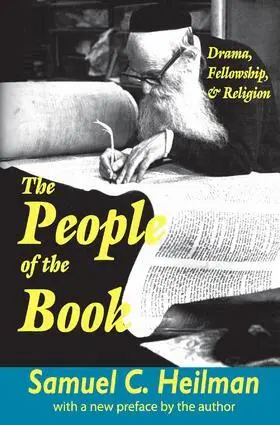
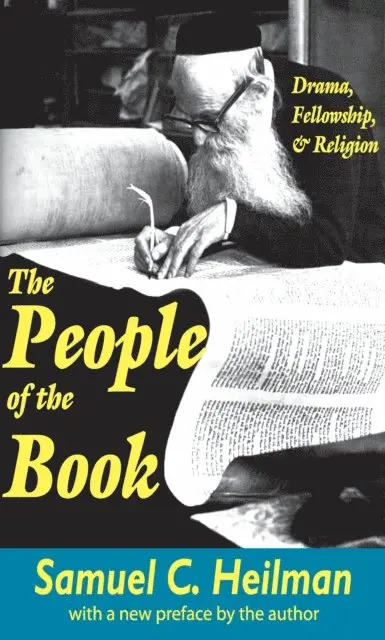
Judaism has long derived its identity from its sacred books. The book or scroll - rather than the image or idol - has been emblematic of Jewish faith and tradition. The People of the Book presents a study of a group of Orthodox Jews, all of whom live in the modern world, engaged in the time-honored practice of lernen, the repeated review and ritualized study of the sacred texts. In preserving one of the activities of Jewish life, Samuel C. Heilman argues, these are the genuine "People of the Book."For two years, Heilman participated in and observed five study circles in New York and Jerusalem engaged in the avocation of lernen the Talmud, the great corpus of Jewish law, lore, and tradition. These groups, made up of men who felt the ritualized study of sacred texts to be not only a religious obligation but also an appealing way to spend their evenings, weekends, and holidays, assembled together under the guidance of a teacher to review the holy books of their people. Having become part of this world, the author is able to provide first-hand observation of the workings of the study circle.Heilman's study moves beyond the merely descriptive into an analysis of the nature and meaning of activity he observed. To explain the character and appeal of the study groups, he employs three concepts: drama, fellowship, and religion. Inherent to the life of the study circle are various sorts of drama: "social dramas" playing out social relationships, "cultural performances" reenacting the Jewish world view, and "interactional dramas" and "word plays" involving the intricacies of the recitation and translation process. This book will be of interest to anthropologists and those interested in the academic study of religion.
671 kr
Skickas inom 10-15 vardagar
An encounter with the death of another is often an occasion when the bereaved need to be sustained in their loss, relieved of the anxiety that the meeting with death engenders, and comforted in their grief. It is a time when those left behind often seek to redress wrongs in themselves or in the relationships that death has shaken and upset. In both collective and individual responses to the trauma of encountering death, we witness efforts to counter the misfortune and to explain the meaning of the loss, to turn memory into blessing, to reconcile life with death, to regenerate life, and redeem both the bereaved and the dead.Sometimes loss may transform the bereaved in ways that lead to growth and maturity; other times a loss leads to unremitting anger or melancholia. There may be a variety of spiritual expressions that the bereaved experience in their time of loss, but there appears to be some common elements in all of them. Overtime, survivors' feelings are transformed into growing exploration of the spiritual, a profound sense of rebirth, newfound feelings of self-mastery or confidence, and a deeply held conviction that "life goes on."The contributions to this volume are based on a conference held in New York on the first anniversary of September 11, 2001. Contributors include Peter Metcalf, Robert Jay Lifton, Ilana Harlow, Robert A. Neimeyer, Samuel Heilman, and Neil Gillman. This sensitive and heartfelt volume relates specifically to issues of death, bereavement, and mourning in the aftermath of the attack on the World Trade Center, but the applications to other individual and catastrophic events is obvious. The contributions do not simply explore how people deal with bereavement or are psychologically affected by extreme grief: they address how people can try to find meaning in tragedy and loss, and strive to help restore order in the wake of chaos. The multidisciplinary perspectives include those of anthropology, psychology, theology, social work, and art.
2 088 kr
Skickas inom 10-15 vardagar
Via a participant-observer approach, Synagogue Life analyzes the three essential dimensions of synagogue life: the houses of prayer, study, and assembly. In each Heilman documents the rich detail of the synagogue experience while articulating the social and cultural drama inherent in them. He illustrates how people come to the synagogue not only for spiritual purposes but also to find out where and how they fit into life in the neighborhood in which they share.In his new introduction, Heilman discusses what led him to write this book and the process of personal transformation through which he, as an Orthodox Jew, had to go in order to turn a disciplined eye on the world from which he came. Rather than using the stranger-as-native approach of classic anthropology, he had instead to begin as a native who discoverd how to look at a once-taken-for-granted synagogue life like a stranger. In the afterword, arguing for the efficacy of this approach, Heilman offers guidance on how natives can use their special familiarity and still be trained to distance themselves from their own group, making use of the disciplines of sociology and anthropology. Synagogue Life offers a fascinating portrait that has something to say to social scientists as well as all those curious about what happens in the main arena of Orthodox Jewish community life.
2 088 kr
Skickas inom 10-15 vardagar
Judaism has long derived its identity from its sacred books. The book or scroll - rather than the image or idol - has been emblematic of Jewish faith and tradition. The People of the Book presents a study of a group of Orthodox Jews, all of whom live in the modern world, engaged in the time-honored practice of lernen, the repeated review and ritualized study of the sacred texts. In preserving one of the activities of Jewish life, Samuel C. Heilman argues, these are the genuine "People of the Book."For two years, Heilman participated in and observed five study circles in New York and Jerusalem engaged in the avocation of lernen the Talmud, the great corpus of Jewish law, lore, and tradition. These groups, made up of men who felt the ritualized study of sacred texts to be not only a religious obligation but also an appealing way to spend their evenings, weekends, and holidays, assembled together under the guidance of a teacher to review the holy books of their people. Having become part of this world, the author is able to provide first-hand observation of the workings of the study circle.Heilman's study moves beyond the merely descriptive into an analysis of the nature and meaning of activity he observed. To explain the character and appeal of the study groups, he employs three concepts: drama, fellowship, and religion. Inherent to the life of the study circle are various sorts of drama: "social dramas" playing out social relationships, "cultural performances" reenacting the Jewish world view, and "interactional dramas" and "word plays" involving the intricacies of the recitation and translation process. This book will be of interest to anthropologists and those interested in the academic study of religion.