Samuel Llano - Böcker
Visar alla böcker från författaren Samuel Llano. Handla med fri frakt och snabb leverans.
6 produkter
6 produkter
The Empire of the Ear
Music, Race, and the Sonic Architecture of Colonial Morocco
Inbunden, Engelska, 2026
956 kr
Kommande
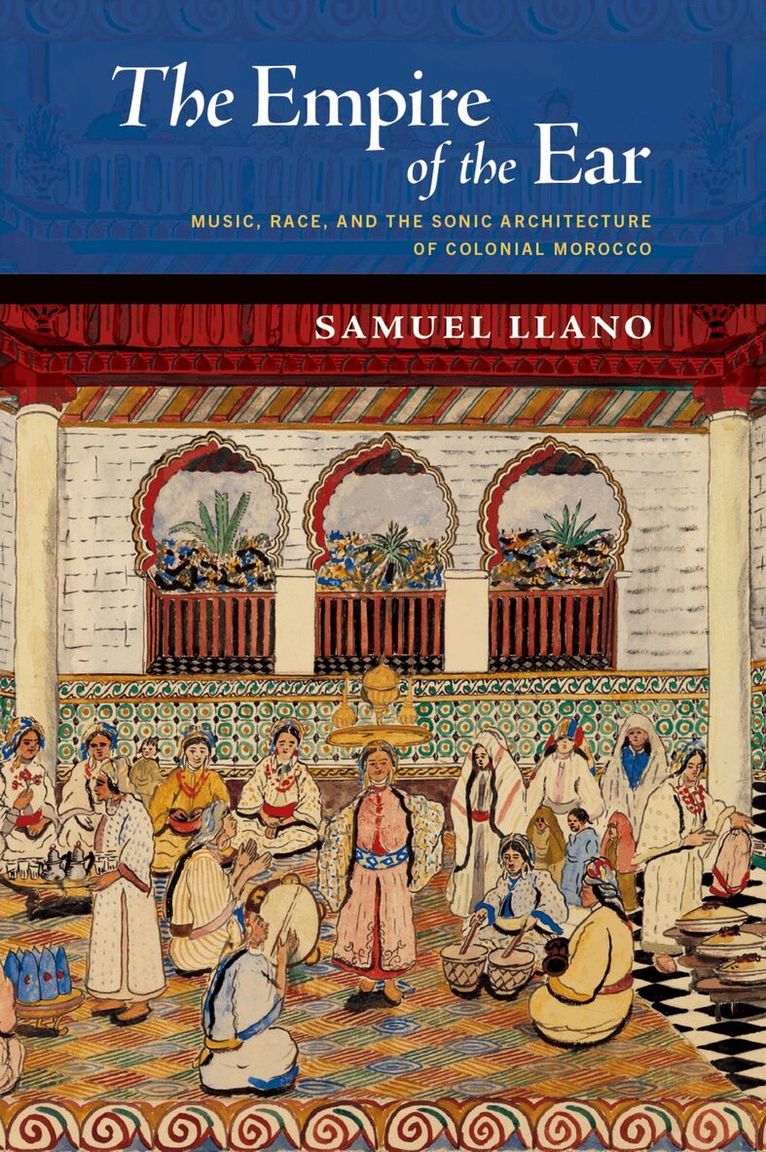
This is an open access title available under the terms of a CC BY-NC-ND 4.0 International licence. It is free to read at Oxford Scholarship Online and offered as a free PDF download from OUP and selected open access locations.Any study of colonial Morocco (1912-56) presents unique and compelling challenges due to the simultaneous presence in its territory of two foreign powers, France and Spain. The colonialist rivalry between these two countries formed dynamic and changing narratives of Morocco's musical cultures. Through their accounts of Morocco's musical activity and sound practices, French and Spanish musicologists gave shape to models of social organization that they wished to implant in Morocco at the expense of the local populations. But music was also an important instrument of resistance even if opposition to colonial rule meant adopting and subverting the discursive tropes and rhetorical strategies first formulated in the work of European scholars.In The Empire of the Ear: Music, Race, and the Sonic Architecture of Colonial Morocco, author Samuel Llano demonstrates that auditory culture, music, and musicology played a key role in negotiating the cultural struggles of colonialism in Morocco by helping to redraw society's ethnic and racial boundaries. Music was deeply involved in shaping a colonial rivalry between France and Spain, with both powers fighting to lead the discovery and promotion of Morocco's music, particularly the Andalusi and Amazigh repertoires. Llano further illuminates the ways in which France and Spain used music to promote markedly distinct and competing racial agendas in order to categorize and control Moroccan populations and their cultural practices. At the same time, he delves deeply into the significant roles that Moroccan and Maghrebi musicians and scholars played in fostering performance criteria and producing scholarship that challenged deep-seated European views, acting as a form of anti-colonial resistance. As he explores music's dual role as an instrument of power and resistance, Llano demonstrates that the impact of colonial rivalry on music scholarship and performance was more complex than the coloniser/colonised binary suggests. Finally, he analyzes how collaborations between Maghrebi and European scholars and musicians in transcription and performance obscured the lines between oppression and contestation, pushing resistance into a liminal space. In exploring these cultural tensions, The Empire of the Ear argues that race was the primary principle governing the performance and study of Morocco's music repertoires and the shaping of forms of identification among rural and urban populations.
688 kr
Skickas inom 5-8 vardagar
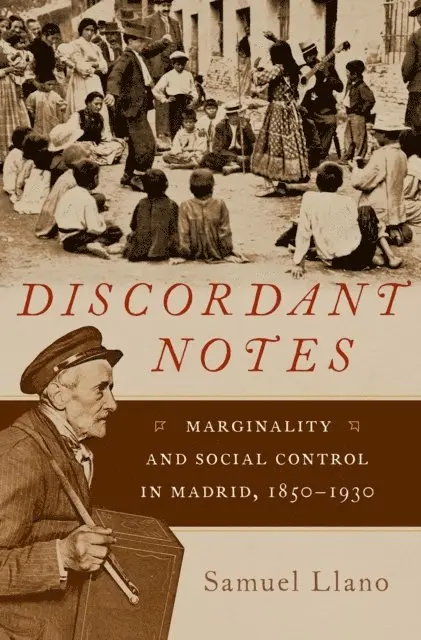
Scholarship on urban culture and the senses has traditionally focused on the study of literature and the visual arts. Recent decades have seen a surge of interest on the effects of sound the urban space and its population. These studies analyse how sound generates identities that are often fragmentary and mutually conflicting. They also explore the ways in which sound triggers campaigns against the negative effects of noise on the nerves and health of the population. Little research has been carried out about the impact of sound and music in areas of broader social and political concern such as social aid, hygiene and social control. Based on a detailed study of Madrid from the 1850s to the 1930s, Discordant Notes argues that sound and music have played a key role in structuring the transition to modernity by helping to negotiate social attitudes and legal responses to problems such as poverty, insalubrity, and crime. Attempts to control the social groups that own unwanted musical practices such as organ grinding and flamenco performances in taverns raised awareness about public hygiene, alcoholism and crime, and triggered legal reform in these areas. In addition to scapegoating, marginalising and persecuting these musical practices, the authorities and the media used workhouse bands as instruments of social control to spread "aural hygiene" across the city.
796 kr
Skickas inom 5-8 vardagar
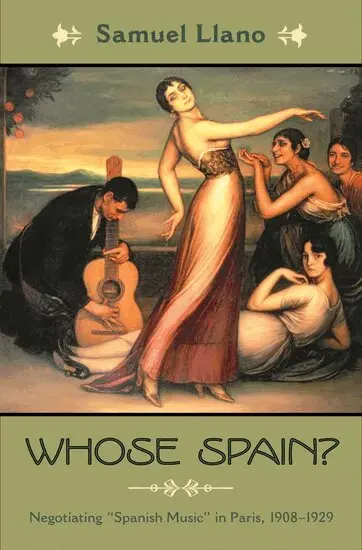
From the very beginning of the nineteenth century, many elements of Spanish culture carried an air of 'exoticism' for the French-and nothing played more important of a role in shaping the French idea of Spain than the country's musical tradition. However, as Samuel Llano argues in Whose Spain?, perceptions and representations of Spanish musical identities changed in the early twentieth century, due to the emergence of the hispanistes. These specialists on Spanish music and culture, who wrote encyclopedic and 'scientific' articles on 'Spanish music,' strived to endow the world of Spanish music with a sense of authority and knowledge. Yet, the writings of those hispanistes and other music critics showed a highly sensationalist attitude, aimed at describing 'Spanish music' in a way that was instrumental to the interests of French musicians. At the same time, the Spanish fought to articulate their own identities through the creation and performance of new musical works.In this book, Llano analyzes the socio-political discourses underpinning critical and musicological descriptions of 'Spanish music' and the discourse's connection with French politics and culture. He also studies operas and other musical works for the stage as privileged sites for the production of Spanish musical identities, given the enhanced possibilities of performance for cultural and critical engagement. The study covers the period 1908 to 1929, when representations of 'Spanish music' in the writings of the hispaniste Henri Collet and other French musicians underwent several transformations, mostly sparked by the need to reformulate French identity during and after the First World War. Ultimately, Llano demonstrates that definitions of 'French' and 'Spanish' music were to some extent interdependent, and that the public performances of these pieces even helped the musical community in France to begein to reformulate their notions of 'Spanish music' and identity.
Music and the Making of Portugal and Spain
Nationalism and Identity Politics in the Iberian Peninsula
Inbunden, Engelska, 2023
1 368 kr
Skickas inom 7-10 vardagar
How music embodies and contributes to historical and contemporary nationalism What does music in Portugal and Spain reveal about the relationship between national and regional identity building? How do various actors use music to advance nationalism? How have state and international heritage regimes contributed to nationalist and regionalist projects? In this collection, contributors explore these and other essential questions from a range of interdisciplinary vantage points. The essays pay particular attention to the role played by the state in deciding what music represents Portuguese or Spanish identity. Case studies examine many aspects of the issue, including local recording networks, so-called national style in popular music, and music’s role in both political protest and heritage regimes. Topics include the ways the Salazar and Franco regimes adapted music to align with their ideological agendas; the twenty-first-century impact of UNESCO’s Intangible Cultural Heritage program on some of Portugal and Spain's expressive practices; and the tensions that arise between institutions and community in creating and recreating meanings and identity around music. Contributors: Ricardo Andrade, Vera Marques Alves, Salwa El-Shawan Castelo-Branco, Cristina SÁnchez-Carretero, JosÉ Hugo Pires Castro, Paulo Ferreira de Castro, FernÁn del Val, HÉctor Fouce, Diego GarcÍa-Peinazo, Leonor Losa, Josep MartÍ, Eva Moreda RodrÍguez, Pedro Russo Moreira, Cristina Cruces RoldÁn, and Igor Contreras Zubillaga
Music and the Making of Portugal and Spain
Nationalism and Identity Politics in the Iberian Peninsula
Häftad, Engelska, 2023
334 kr
Skickas inom 7-10 vardagar
How music embodies and contributes to historical and contemporary nationalism What does music in Portugal and Spain reveal about the relationship between national and regional identity building? How do various actors use music to advance nationalism? How have state and international heritage regimes contributed to nationalist and regionalist projects? In this collection, contributors explore these and other essential questions from a range of interdisciplinary vantage points. The essays pay particular attention to the role played by the state in deciding what music represents Portuguese or Spanish identity. Case studies examine many aspects of the issue, including local recording networks, so-called national style in popular music, and music’s role in both political protest and heritage regimes. Topics include the ways the Salazar and Franco regimes adapted music to align with their ideological agendas; the twenty-first-century impact of UNESCO’s Intangible Cultural Heritage program on some of Portugal and Spain's expressive practices; and the tensions that arise between institutions and community in creating and recreating meanings and identity around music. Contributors: Ricardo Andrade, Vera Marques Alves, Salwa El-Shawan Castelo-Branco, Cristina SÁnchez-Carretero, JosÉ Hugo Pires Castro, Paulo Ferreira de Castro, FernÁn del Val, HÉctor Fouce, Diego GarcÍa-Peinazo, Leonor Losa, Josep MartÍ, Eva Moreda RodrÍguez, Pedro Russo Moreira, Cristina Cruces RoldÁn, and Igor Contreras Zubillaga
Del 373 - Monografías A
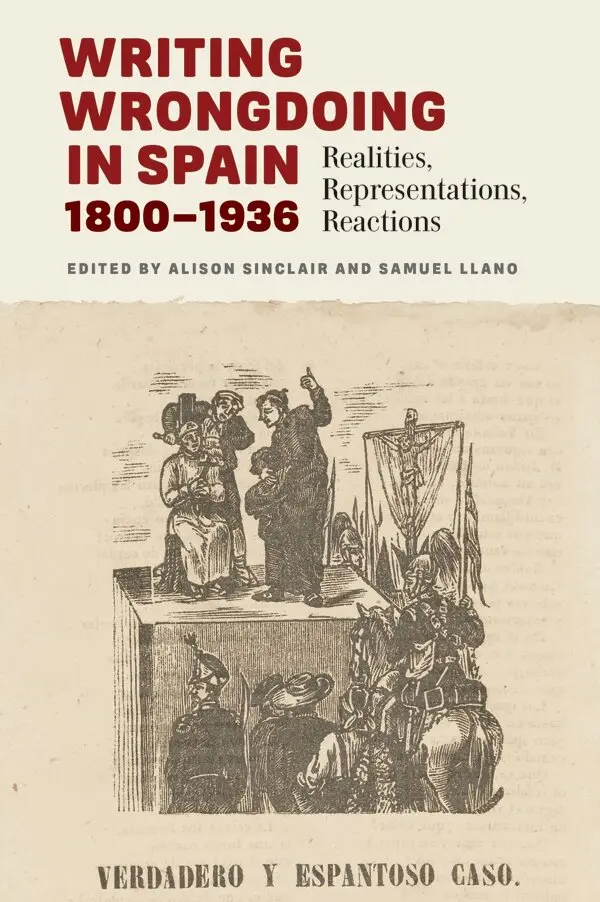
Writing Wrongdoing in Spain, 1800-1936
Realities, Representations, Reactions
Inbunden, Engelska, 2017
1 340 kr
Skickas inom 7-10 vardagar
Tracks the emergence and vicissitudes of attitudes to wrongdoing in Spain from the 19th century through the decades before the Civil War.The international contributors to this volume explore the rich diversity of cultures and representations of wrongdoing in Spain through the 19th century and the decades up to the Civil War. Their line of enquiry is predicated on the belief that cultural constructions of wrongdoing are far from simple reflections of historical or social realities, and that they reveal not a line of historical development, but rather variation and movement. Voices and discourses arise in response to the social phenomena associated with wrongdoing. They set out to persuade, to shock, to entice, and in so doing provide complex windows on to social aspiration and desire. The book's three sections (Realities, Representations, and Reactions) offer distinct points of focus, and move between areas where control is paramount and on the agenda from above and those where the subtleties of emotional response take pride of place.Alison Sinclair was Professor of Modern Spanish Literature and Intellectual History at the University of Cambridge until retirement in 2014.Samuel Llano is a Lecturer in Spanish Cultural Studies at the Universityof Manchester.