Alison Sinclair - Böcker
Visar alla böcker från författaren Alison Sinclair. Handla med fri frakt och snabb leverans.
8 produkter
8 produkter
952 kr
Skickas inom 7-10 vardagar
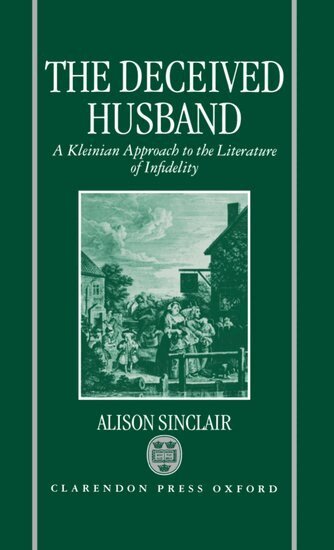
The Deceived Husband is an ambitious and original study of the representation in European literature of adultery, focusing in particular on the figure of the husband.Drawing on psychoanalysis, and primarily the work of Melanie Klein, Dr Sinclair argues that the differing representations of the deceived husband evidence anxieties within patriarchal society about gender and power, and ultimately about death and the unknown. Detailed discussions of a wide range of texts including The Canterbury Tales, The Decameron, Othello, Madame Bovary, Effi Briest, Anna Karenina, La Regenta, and Flaubert's Parrot reveal that fundamental anxieties about masculinity are repeatedly articulated in two main characterizations of the deceived husband: the cuckold and the man of honour. These are representations which can be usefully understood, the book shows, with reference to the two early developmental positions forwarded by Klein: the paranoid schizoid and the depressive positions.Innovative and challenging, The Deceived Husband is an important examination of a previously neglected aspect of European literature and to psychoanalytic literary criticism in general.
239 kr
Skickas inom 5-8 vardagar
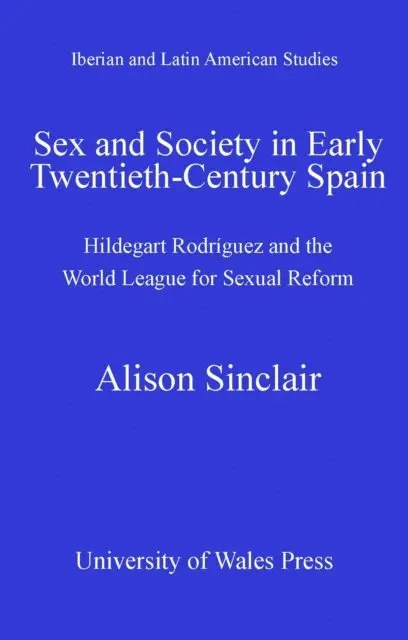
Sex and Society in Early Twentieth Century Spain
Hildegart Rodriguez and the World League for Sexual Reform
Inbunden, Engelska, 2007
359 kr
Tillfälligt slut
Examines issues of sex and society in early twentieth-century Spain, using a specific case history, namely that of Hildegart Rodriguez (1914-1933) who came to be one of the central players in the Spanish chapter of the World League for Sexual Reform (WLSR) and made famous by her dramatic demise when murdered by her mother.
362 kr
Skickas inom 10-15 vardagar
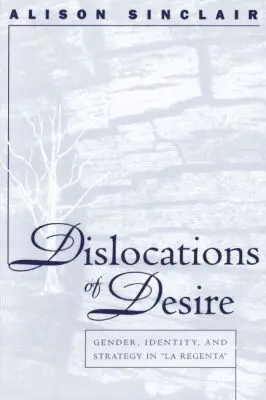
Dislocations of Desire provides the first sustained psychoanalytic reading of La Regenta by Leopoldo Alas. In this unique study, Alison Sinclair focuses on the representation and articulation of desire in the novel. She argues that instead of being seduced by the fiction, what is at stake is sexual desire leading to adultery-the characteristic fiction of the adultery novel. According to the critic, the reader must learn to look below the surface in order to see the ontological insecurities that this fiction veils and attempts to contain. In a reading that draws both on a broad spectrum of modern psychoanalytic theory and on an understanding of social, sexual, and medical norms of the period in which the novel was written, Sinclair proposes that the adultery story be understood as a coded resume of fantasied, dislocated, repudiated, and thwarted desire.
Del 3 - Selected Essays
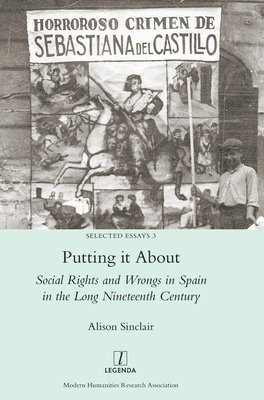
Putting it About
Social Rights and Wrongs in Spain in the Long Nineteenth Century
Inbunden, Engelska, 2019
1 442 kr
Skickas inom 5-8 vardagar
Del 3 - Selected Essays
Putting it About
Social Rights and Wrongs in Spain in the Long Nineteenth Century
Häftad, Engelska, 2021
302 kr
Skickas inom 5-8 vardagar
Del 373 - Monografías A
Writing Wrongdoing in Spain, 1800-1936
Realities, Representations, Reactions
Inbunden, Engelska, 2017
1 334 kr
Skickas inom 7-10 vardagar
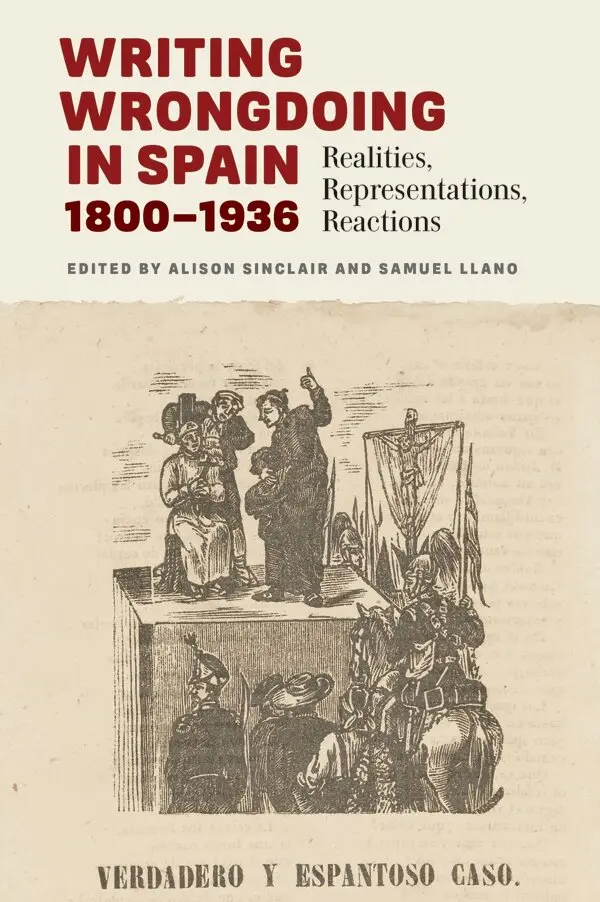
Tracks the emergence and vicissitudes of attitudes to wrongdoing in Spain from the 19th century through the decades before the Civil War.The international contributors to this volume explore the rich diversity of cultures and representations of wrongdoing in Spain through the 19th century and the decades up to the Civil War. Their line of enquiry is predicated on the belief that cultural constructions of wrongdoing are far from simple reflections of historical or social realities, and that they reveal not a line of historical development, but rather variation and movement. Voices and discourses arise in response to the social phenomena associated with wrongdoing. They set out to persuade, to shock, to entice, and in so doing provide complex windows on to social aspiration and desire. The book's three sections (Realities, Representations, and Reactions) offer distinct points of focus, and move between areas where control is paramount and on the agenda from above and those where the subtleties of emotional response take pride of place.Alison Sinclair was Professor of Modern Spanish Literature and Intellectual History at the University of Cambridge until retirement in 2014.Samuel Llano is a Lecturer in Spanish Cultural Studies at the Universityof Manchester.
Del 5 - Tamesis Studies in Popular and Digital Cultures
Cultures of the Popular in the Modern Hispanic World
Inbunden, Engelska, 2024
1 334 kr
Skickas inom 7-10 vardagar
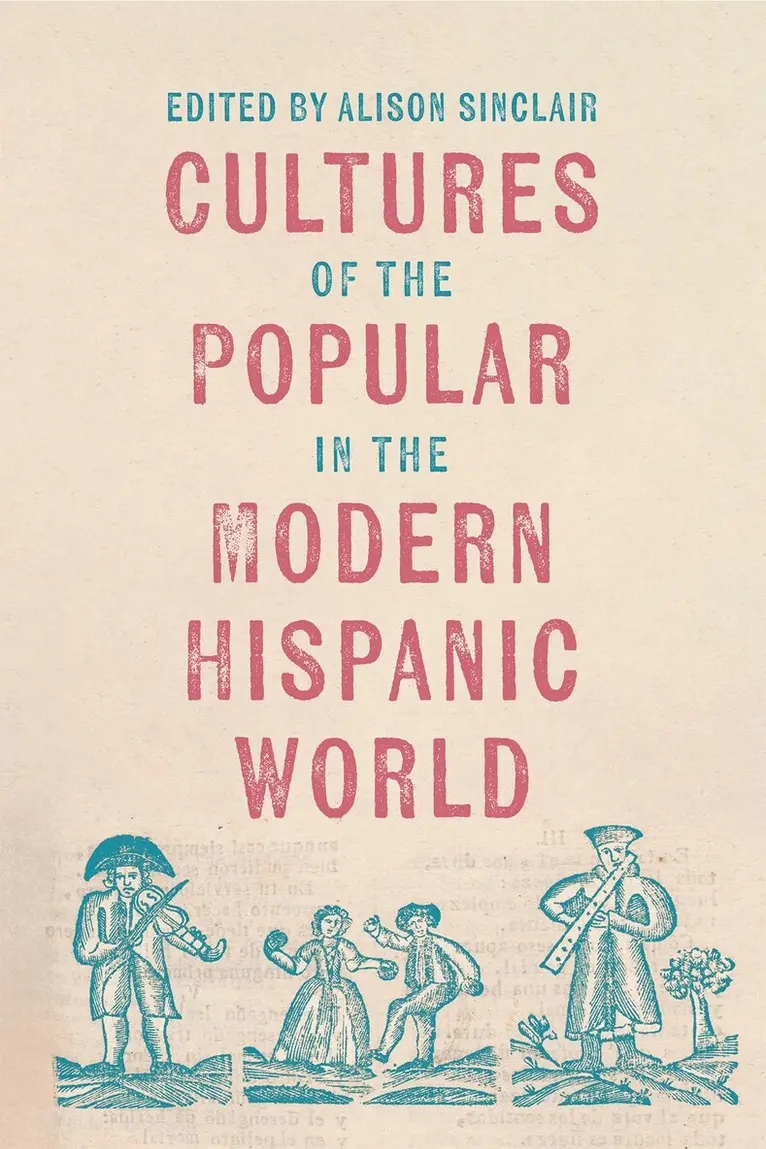
How many cassette tapes do you still own? In one hundred years, how many TikTok videos or Instagram posts will still be accessible? Yet much of today's news and mass culture is produced and disseminated via transient means. Just as in previous eras.Hispanic popular cultures of previous centuries, once intended for a broad audience, can now only be glimpsed in fragile, and frequently overlooked, media such as chapbooks, newspapers, journals and early sound recordings. This bilingual collection explores aspects of the ephemeral cultures of Spain and Latin America between the sixteenth and twentieth centuries, taking advantage of the recent digital turn in the humanities. The first section examines the varied audiences for mass literature in Spain and the authorities' attempts to censor and control it. The second looks at pliegos sueltos, songbooks and collections of popular poetry in Argentina, Mexico and Chile. The third section concentrates on questions of performance, studying placards which originally accompanied oral readings of pliegos sueltos, news ballads and zarzuelas. The volume concludes with a focus on three case studies: the travels of an eighteenth-century giant and the reception of his self-fashioning in Spain, the diffusion of the works of a Spanish pulp novelist in Portugal and Brazil and the revival of a Peruvian festival of popular music in the early twentieth century. Throughout, the chapters show how the increasing digitisation of library and archival collections has enabled much of this ephemeral material to be 'discovered', analysed and compared, leading to new understandings of how popular culture developed and migrated and, indeed, what is meant by 'popular'.