Sara Brill - Böcker
Visar alla böcker från författaren Sara Brill. Handla med fri frakt och snabb leverans.
7 produkter
7 produkter
524 kr
Skickas inom 3-6 vardagar
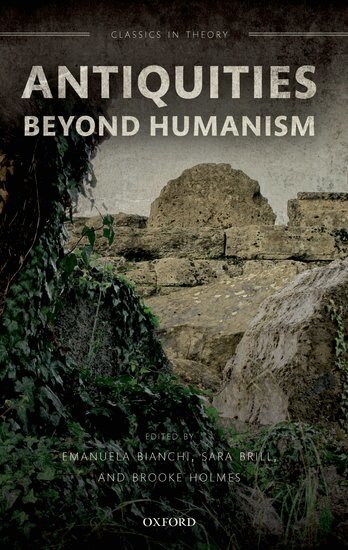
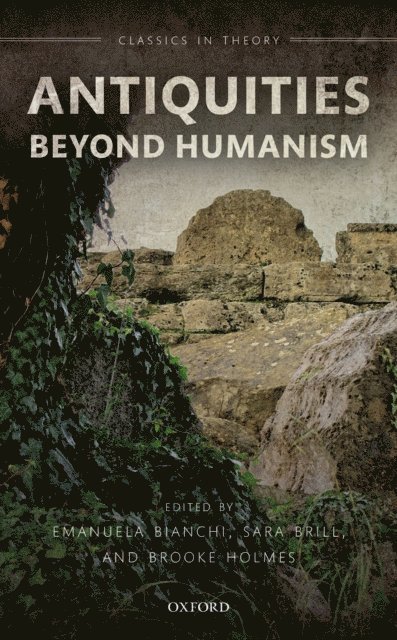
Greco-Roman antiquity is often presumed to provide the very paradigm of humanism from the Renaissance to the present. This paradigm has been increasingly challenged by new theoretical currents such as posthumanism and the "new materialisms", which point toward entities, forces, and systems that pass through and beyond the human and dislodge it from its primacy as the measure of things. Antiquities beyond Humanism seeks to explode the presumed dichotomy between the ancient tradition and the twenty-first century "turn" by exploring the myriad ways in which Greek and Roman philosophy and literature can be understood as foregrounding the non-human. Greek philosophy in particular is filled with metaphysical explanations of the cosmos grounded in observations of the natural world, while other areas of ancient humanistic inquiry - poetry, political theory, medicine - extend into the realms of plant, animal, and even stone life, continually throwing into question the ontological status of living and non-living beings. By casting the ancient non-human or more-than-human in a new light in relation to contemporary questions of gender, ecological networks and non-human communities, voice, eros, and the ethics and the politics of posthumanism, the volume demonstrates that encounters with ancient texts, experienced as both familiar and strange, can help forge new understandings of life, whether understood as physical, psychical, divine, or cosmic.
1 723 kr
Skickas inom 7-10 vardagar
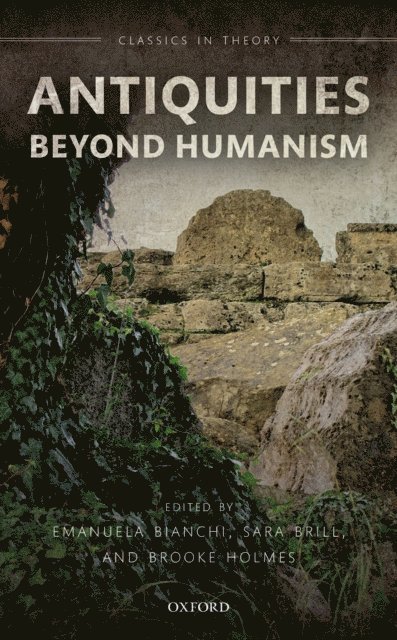
Greco-Roman antiquity is often presumed to provide the very paradigm of humanism from the Renaissance to the present. This paradigm has been increasingly challenged by new theoretical currents such as posthumanism and the "new materialisms", which point toward entities, forces, and systems that pass through and beyond the human and dislodge it from its primacy as the measure of things. Antiquities beyond Humanismseeks to explode the presumed dichotomy between the ancient tradition and the twenty-first century "turn" by exploring the myriad ways in which Greek and Roman philosophy and literature can be understood as foregrounding the non-human. Greek philosophy in particular is filled with metaphysical explanations of the cosmos grounded in observations of the natural world, while other areas of ancient humanistic inquiry - poetry, political theory, medicine - extend into the realms of plant, animal, and even stone life, continually throwing into question the ontological status of living and non-living beings. By casting the ancient non-human or more-than-human in a new light in relation to contemporary questions of gender, ecological networks and non-human communities, voice, eros, and the ethics and the politics of posthumanism, the volume demonstrates that encounters with ancient texts, experienced as both familiar and strange, can help forge new understandings of life, whether understood as physical, psychical, divine, or cosmic.
1 498 kr
Skickas inom 7-10 vardagar
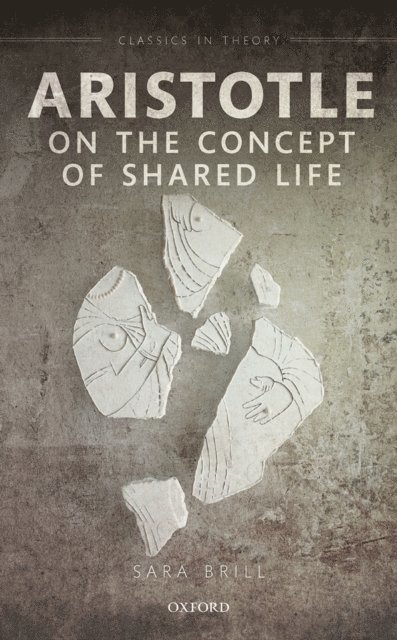
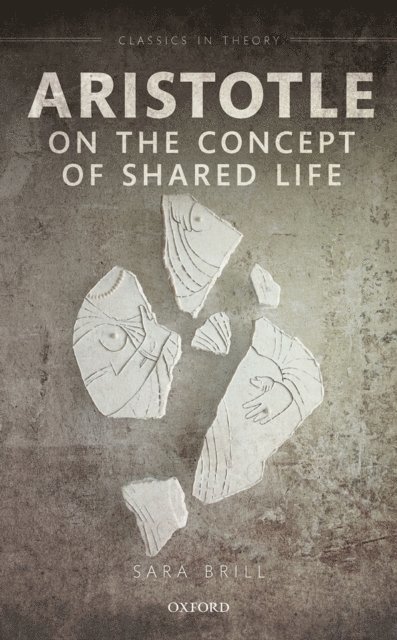
According to the terms of Aristotle's Politics, to be alive is to instantiate a form of rule. In the growth of plants, the perceptual capacities and movement of animals, and the impulse that motivates thinking, speaking, and deliberating Aristotle sees the working of a powerful generative force come to expression in an array of forms of life, and it is in these, if anywhere, that one could find the resources needed for a philosophic account of the nature of life as such. Aristotle on the Concept of Shared Life explores this intertwining of power and life in Aristotle's thought, and argues that Aristotle locates the foundation of human political life in the capacity to share one's most vital activities with others. A comprehensive study of the relationality which shared life reveals tells us something essential about Aristotle's approach to human political phenomena; namely, that they arise as forms of intimacy whose political character can only be seen when viewed in the context of Aristotle's larger inquiries into animal life, where they emerge not as categorically distinct from animal sociality, but as intensifications of it. Tracing the human capacity to share life thus illuminates the interrelation between the zoological, ethical, and political lenses through which Aristotle pursues his investigation of the polis. In following this connection, this volume also examines — and critically evaluates — the reception of Aristotle's political thought in some of the most influential concepts of contemporary critical theory.
914 kr
Skickas inom 10-15 vardagar
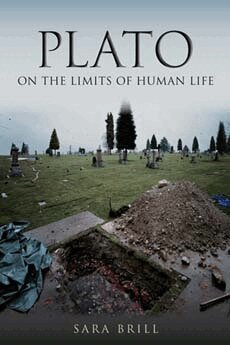
By focusing on the immortal character of the soul in key Platonic dialogues, Sara Brill shows how Plato thought of the soul as remarkably flexible, complex, and indicative of the inner workings of political life and institutions. As she explores the character of the soul, Brill reveals the corrective function that law and myth serve. If the soul is limitless, she claims, then the city must serve a regulatory or prosthetic function and prop up good political institutions against the threat of the soul's excess. Brill's sensitivity to dramatic elements and discursive strategies in Plato's dialogues illuminates the intimate connection between city and soul.
302 kr
Skickas inom 7-10 vardagar
By focusing on the immortal character of the soul in key Platonic dialogues, Sara Brill shows how Plato thought of the soul as remarkably flexible, complex, and indicative of the inner workings of political life and institutions. As she explores the character of the soul, Brill reveals the corrective function that law and myth serve. If the soul is limitless, she claims, then the city must serve a regulatory or prosthetic function and prop up good political institutions against the threat of the soul's excess. Brill's sensitivity to dramatic elements and discursive strategies in Plato's dialogues illuminates the intimate connection between city and soul.
3 095 kr
Skickas inom 10-15 vardagar
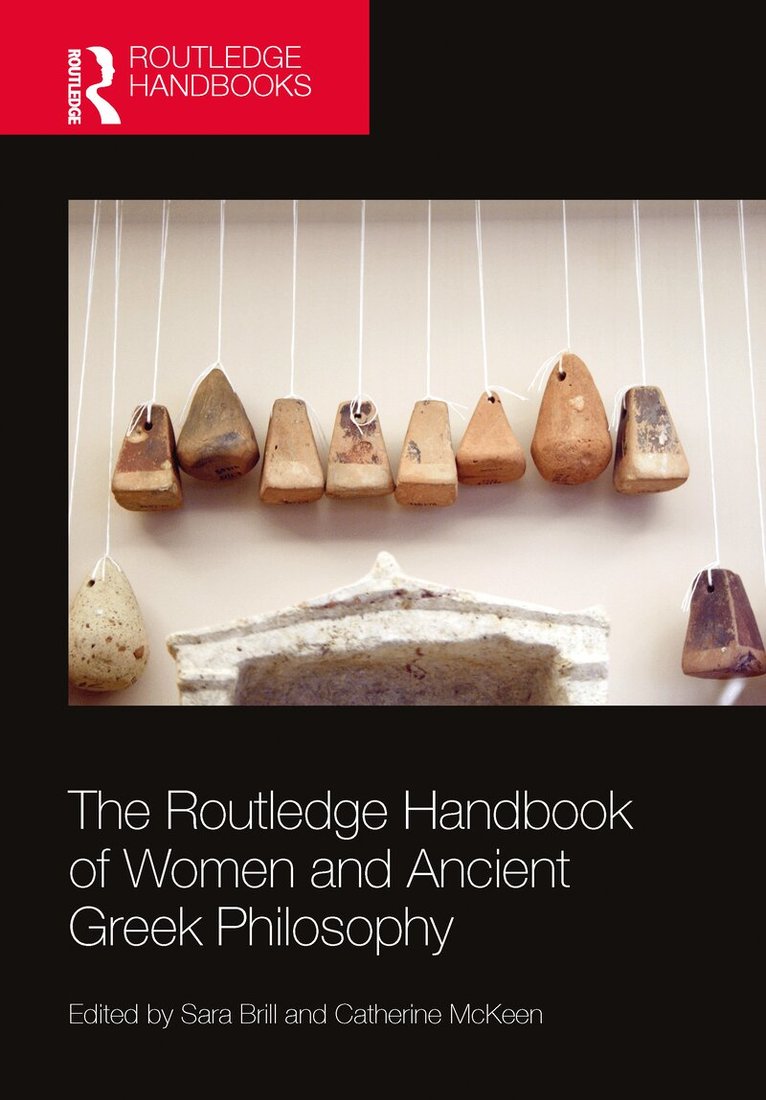
The Routledge Handbook of Women and Ancient Greek Philosophy is an essential reference source for cutting-edge scholarship on women, gender, and philosophy in Greek antiquity. The volume features original research that crosses disciplines, offering readers an accessible guide to new methods, new sources, and new questions in the study of ancient Greek philosophy and its multiple afterlives. Comprising 40 chapters from a diverse international group of experts, the Handbook considers questions about women and gender in sources from Greek antiquity spanning the period from 7th c. BCE to 2nd c. BCE, and in receptions of Greek antiquity from the Roman Imperial period, through the European Renaissance to the current day. Chapters are organized into five major sections: I. Early Greek antiquity – including Sappho, Presocratic philosophy, Sophists, and Greek tragedy – 700s–400s BCEII. Classical Greek antiquity – including Aeschines, Plato, and Xenophon – 400s–300s BCEIII. Late Classical Greek to Hellenistic antiquity – including Cyrenaics, Cynics, the Hippocratic corpus, and Aristotle – 300s–200s BCEIV. Late Greek antiquity to Roman Imperial period – including Pythagorean women, Stoics, Pyrrhonian Skeptics, and late Platonists – 200s BCE to 700s CEV. Later receptions – including Shakespeare, the European Renaissance, Anna Julia Cooper, W.E.B. DuBois, Jane Harrison, Sarah Kofman, and Toni MorrisonThe Routledge Handbook of Women and Ancient Greek Philosophy is a vital resource for students and scholars in philosophy, Classics, and gender studies who want to gain a deeper understanding of philosophy’s rich past and explore sources and questions beyond the traditional canon. The volume is a valuable resource, as well, for students and scholars from history, humanities, literature, political science, religious studies, rhetorical studies, theatre, and LGBTQ and sexuality studies.
701 kr
Skickas inom 10-15 vardagar
The Routledge Handbook of Women and Ancient Greek Philosophy is an essential reference source for cutting-edge scholarship on women, gender, and philosophy in Greek antiquity. The volume features original research that crosses disciplines, offering readers an accessible guide to new methods, new sources, and new questions in the study of ancient Greek philosophy and its multiple afterlives. Comprising 40 chapters from a diverse international group of experts, the Handbook considers questions about women and gender in sources from Greek antiquity spanning the period from 7th c. BCE to 2nd c. BCE, and in receptions of Greek antiquity from the Roman Imperial period, through the European Renaissance to the current day. Chapters are organized into five major sections: I. Early Greek antiquity – including Sappho, Presocratic philosophy, Sophists, and Greek tragedy – 700s–400s BCEII. Classical Greek antiquity – including Aeschines, Plato, and Xenophon – 400s–300s BCEIII. Late Classical Greek to Hellenistic antiquity – including Cyrenaics, Cynics, the Hippocratic corpus, and Aristotle – 300s–200s BCEIV. Late Greek antiquity to Roman Imperial period – including Pythagorean women, Stoics, Pyrrhonian Skeptics, and late Platonists – 200s BCE to 700s CEV. Later receptions – including Shakespeare, the European Renaissance, Anna Julia Cooper, W.E.B. DuBois, Jane Harrison, Sarah Kofman, and Toni MorrisonThe Routledge Handbook of Women and Ancient Greek Philosophy is a vital resource for students and scholars in philosophy, Classics, and gender studies who want to gain a deeper understanding of philosophy’s rich past and explore sources and questions beyond the traditional canon. The volume is a valuable resource, as well, for students and scholars from history, humanities, literature, political science, religious studies, rhetorical studies, theatre, and LGBTQ and sexuality studies.