Sara Lorenzini - Böcker
Visar alla böcker från författaren Sara Lorenzini. Handla med fri frakt och snabb leverans.
5 produkter
5 produkter
353 kr
Skickas inom 7-10 vardagar
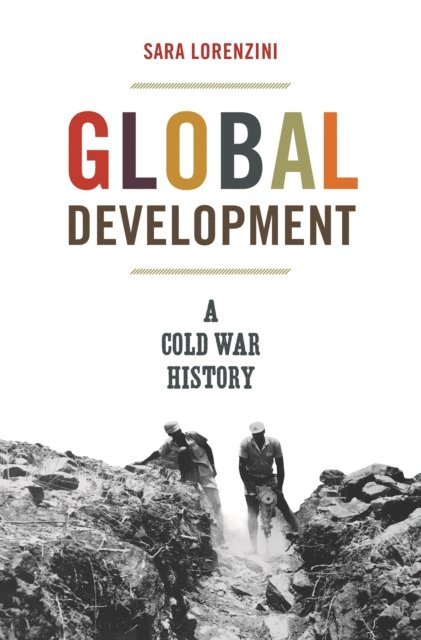
In the Cold War, "development" was a catchphrase that came to signify progress, modernity, and economic growth. Development aid was closely aligned with the security concerns of the great powers, for whom infrastructure and development projects were ideological tools for conquering hearts and minds around the globe, from Europe and Africa to Asia and Latin America. In this sweeping and incisive book, Sara Lorenzini provides a global history of development, drawing on a wealth of archival evidence to offer a panoramic and multifaceted portrait of a Cold War phenomenon that transformed the modern world.Taking readers from the aftermath of the Second World War to the tearing down of the Berlin Wall, Lorenzini shows how development projects altered local realities, transnational interactions, and even ideas about development itself. She shines new light on the international organizations behind these projects—examining their strategies and priorities and assessing the actual results on the ground—and she also gives voice to the recipients of development aid. Lorenzini shows how the Cold War shaped the global ambitions of development on both sides of the Iron Curtain, and how international organizations promoted an unrealistically harmonious vision of development that did not reflect local and international differences.An unparalleled journey into the political, intellectual, and economic history of the twentieth century, this book presents a global perspective on Cold War development, demonstrating how its impacts are still being felt today.
339 kr
In the Cold War, "development" was a catchphrase that came to signify progress, modernity, and economic growth. Development aid was closely aligned with the security concerns of the great powers, for whom infrastructure and development projects were ideological tools for conquering hearts and minds around the globe, from Europe and Africa to Asia and Latin America. In this sweeping and incisive book, Sara Lorenzini provides a global history of development, drawing on a wealth of archival evidence to offer a panoramic and multifaceted portrait of a Cold War phenomenon that transformed the modern world.Taking readers from the aftermath of the Second World War to the tearing down of the Berlin Wall, Lorenzini shows how development projects altered local realities, transnational interactions, and even ideas about development itself. She shines new light on the international organizations behind these projects—examining their strategies and priorities and assessing the actual results on the ground—and she also gives voice to the recipients of development aid. Lorenzini shows how the Cold War shaped the global ambitions of development on both sides of the Iron Curtain, and how international organizations promoted an unrealistically harmonious vision of development that did not reflect local and international differences.An unparalleled journey into the political, intellectual, and economic history of the twentieth century, this book presents a global perspective on Cold War development, demonstrating how its impacts are still being felt today.
Human Rights Breakthrough of the 1970s
The European Community and International Relations
Inbunden, Engelska, 2022
1 314 kr
Skickas inom 10-15 vardagar
During the 1970s human rights took the front stage in international relations; fuelling political debates, social activism and a reconceptualising of both East-West and North-South relations. Nowhere was the debate on human rights more intense than in Western Europe, where human rights discourses intertwined the Cold War and the European Convention on Human Rights, the legacies of European empires, and the construction of national welfare systems. Over time, the European Community (EC) began incorporating human rights into its international activity, with the ambitious political will to prove that the Community was a global “civilian power.”This book brings together the growing scholarship on human rights during the 1970s, the history of European integration and the study of Western European supranational cooperation. Examining the role of human rights in EC activities in Latin America, Africa, the Mediterranean, Eastern Europe and the Soviet Union, The Human Rights Breakthrough of the 1970s seeks to verify whether a specifically European approach to human rights existed, and asks whether there was a distinctive ‘European voice’ in the human rights surge of the 1970s.
Human Rights Breakthrough of the 1970s
The European Community and International Relations
Häftad, Engelska, 2023
420 kr
Skickas inom 10-15 vardagar
During the 1970s human rights took the front stage in international relations; fuelling political debates, social activism and a reconceptualising of both East-West and North-South relations. Nowhere was the debate on human rights more intense than in Western Europe, where human rights discourses intertwined the Cold War and the European Convention on Human Rights, the legacies of European empires, and the construction of national welfare systems. Over time, the European Community (EC) began incorporating human rights into its international activity, with the ambitious political will to prove that the Community was a global “civilian power.”This book brings together the growing scholarship on human rights during the 1970s, the history of European integration and the study of Western European supranational cooperation. Examining the role of human rights in EC activities in Latin America, Africa, the Mediterranean, Eastern Europe and the Soviet Union, The Human Rights Breakthrough of the 1970s seeks to verify whether a specifically European approach to human rights existed, and asks whether there was a distinctive ‘European voice’ in the human rights surge of the 1970s.
More Democratic Community
The Place of Democracy in the History of European Integration
Inbunden, Engelska, 2024
1 614 kr
Skickas
The histories of European unification and of West European democracy during the second half of the twentieth century have often been considered as separate or even antagonistic processes with the institutions of European integration being regarded as bastions of bureaucratic rule. A More Democratic Community challenges this assumption and argues that European integration benefited from the democratic accountability of member states while contributing to the validation of national democratic institutions. However, it also unveils a paradox: as integration deepened, it diminished the power of national parliaments, sparking a democratic accountability crisis within the Community.