Sarah A. Tobin – författare
Visar alla böcker från författaren Sarah A. Tobin. Handla med fri frakt och snabb leverans.
5 produkter
5 produkter
1 237 kr
Skickas inom 10-15 vardagar
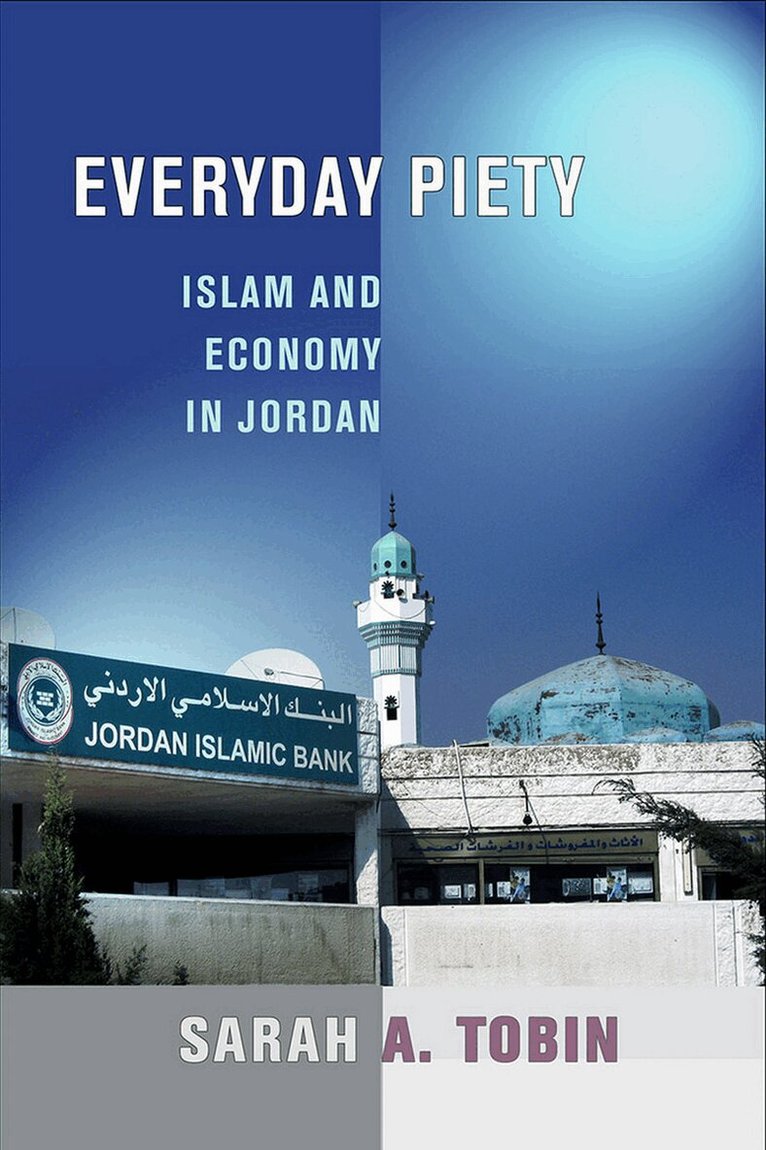
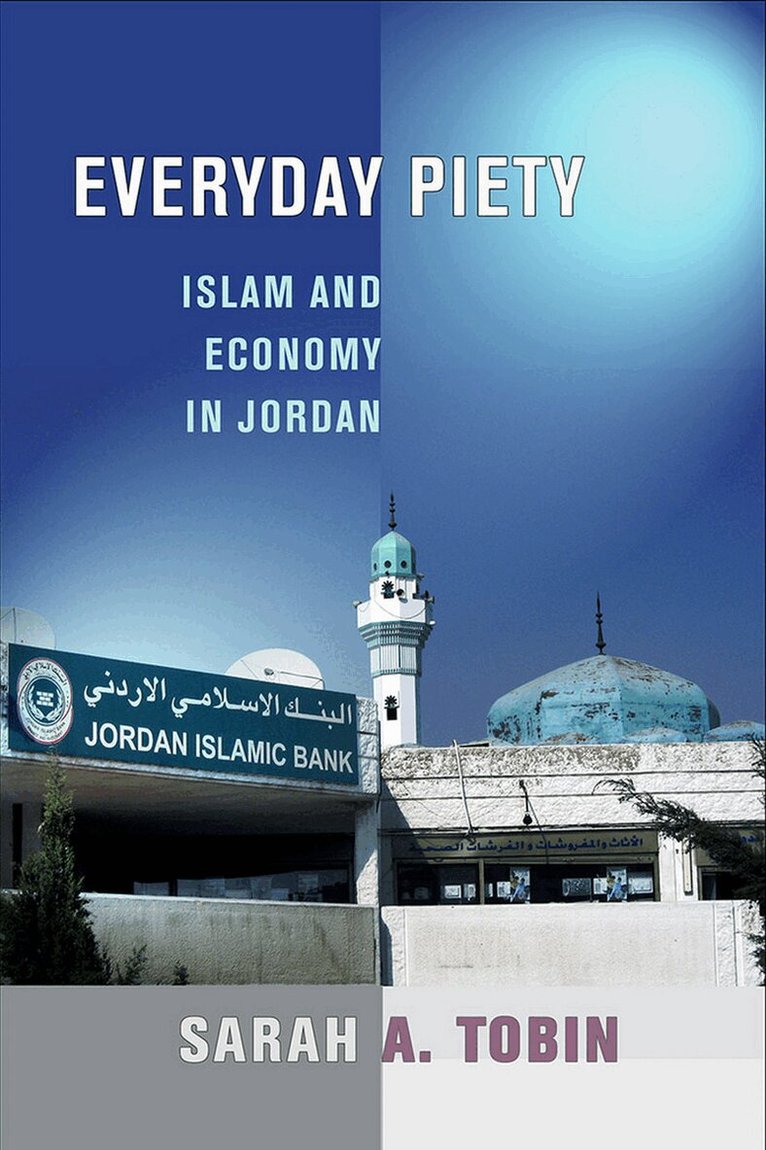
Working and living as an authentic Muslim—comporting oneself in an Islamically appropriate way—in the global economy can be very challenging. How do middle-class Muslims living in the Middle East navigate contemporary economic demands in a distinctly Islamic way? What are the impacts of these efforts on their Islamic piety? To what authority does one turn when questions arise? What happens when the answers vary and there is little or no consensus? To answer these questions, Everyday Piety examines the intersection of globalization and Islamic religious life in the city of Amman, Jordan. Drawing on in-depth ethnographic fieldwork in Amman, Sarah A. Tobin demonstrates that Muslims combine their interests in exerting a visible Islam with the opportunities and challenges of advanced capitalism in an urban setting, which ultimately results in the cultivation of a "neoliberal Islamic piety." Neoliberal piety, Tobin contends, is created by both Islamizing economic practices and economizing Islamic piety, and is done in ways that reflect a modern, cosmopolitan style and aesthetic, revealing a keen interest in displays of authenticity on the part of the actors. Tobin highlights sites at which economic life and Islamic virtue intersect: Ramadan, the hijab, Islamic economics, Islamic banking, and consumption. Each case reflects the shift from conditions and contexts of highly regulated and legalized moral behaviors to greater levels of uncertainty and indeterminacy. In its ethnographic richness, this book shows that actors make normative claims of an authentic, real Islam in economic practice and measure them against standards that derive from Islamic law, other sources of knowledge, and the pragmatics of everyday life.
284 kr
Skickas inom 7-10 vardagar
Working and living as an authentic Muslim—comporting oneself in an Islamically appropriate way—in the global economy can be very challenging. How do middle-class Muslims living in the Middle East navigate contemporary economic demands in a distinctly Islamic way? What are the impacts of these efforts on their Islamic piety? To what authority does one turn when questions arise? What happens when the answers vary and there is little or no consensus? To answer these questions, Everyday Piety examines the intersection of globalization and Islamic religious life in the city of Amman, Jordan. Drawing on in-depth ethnographic fieldwork in Amman, Sarah A. Tobin demonstrates that Muslims combine their interests in exerting a visible Islam with the opportunities and challenges of advanced capitalism in an urban setting, which ultimately results in the cultivation of a "neoliberal Islamic piety." Neoliberal piety, Tobin contends, is created by both Islamizing economic practices and economizing Islamic piety, and is done in ways that reflect a modern, cosmopolitan style and aesthetic, revealing a keen interest in displays of authenticity on the part of the actors. Tobin highlights sites at which economic life and Islamic virtue intersect: Ramadan, the hijab, Islamic economics, Islamic banking, and consumption. Each case reflects the shift from conditions and contexts of highly regulated and legalized moral behaviors to greater levels of uncertainty and indeterminacy. In its ethnographic richness, this book shows that actors make normative claims of an authentic, real Islam in economic practice and measure them against standards that derive from Islamic law, other sources of knowledge, and the pragmatics of everyday life.
1 558 kr
Skickas inom 10-15 vardagar
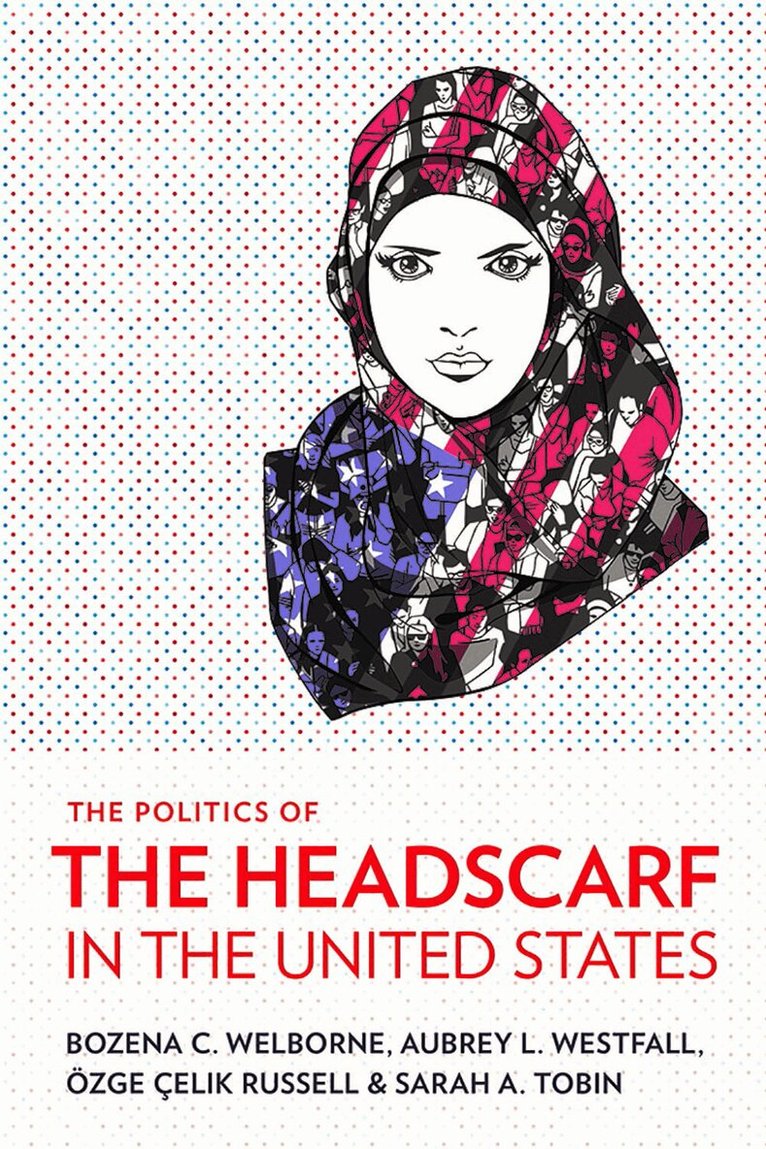
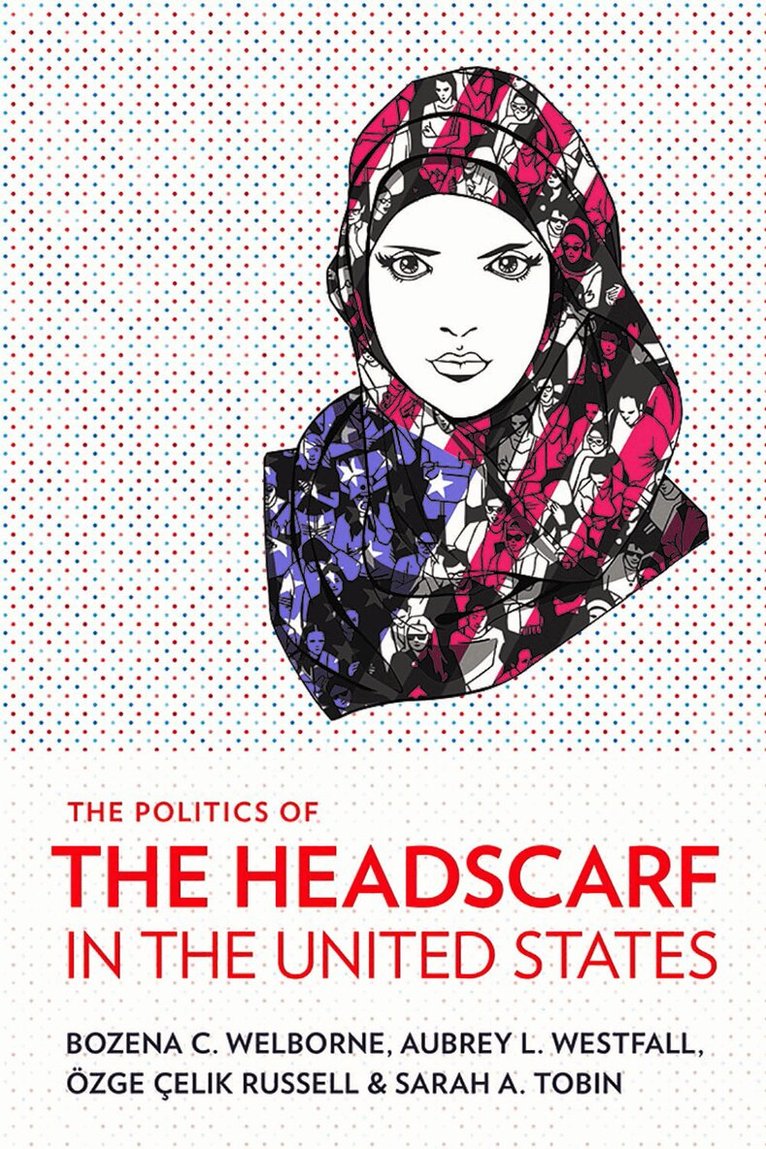
The Politics of the Headscarf in the United States investigates the social and political effects of the practice of Muslim-American women wearing the headscarf (hijab) in a non-Muslim state. The authors find the act of head covering is not politically motivated in the US setting, but rather it accentuates and engages Muslim identity in uniquely American ways.Transcending contemporary political debates on the issue of Islamic head covering, The Politics of the Headscarf in the United States addresses concerns beyond the simple, particular phenomenon of wearing the headscarf itself, with the authors confronting broader issues of lasting import. These issues include the questions of safeguarding individual and collective identity in a diverse democracy, exploring the ways in which identities inform and shape political practices, and sourcing the meaning of citizenship and belonging in the United States through the voices of Muslim-American women themselves.The Politics of the Headscarf in the United States superbly melds quantitative data with qualitative assessment, and the authors smoothly integrate the results of nearly two thousand survey responses from Muslim-American women across forty-nine states. Seventy-two in-depth interviews with Muslim women living in the United States bolster the arguments put forward by the authors to provide an incredibly well-rounded approach to this fascinating topic.Ultimately, the authors argue, women's experiences with identity and boundary construction through their head-covering practices carry important political consequences that may well shed light on the future of the United States as a model of democratic pluralism.
314 kr
Skickas inom 10-15 vardagar
The Politics of the Headscarf in the United States investigates the social and political effects of the practice of Muslim-American women wearing the headscarf (hijab) in a non-Muslim state. The authors find the act of head covering is not politically motivated in the US setting, but rather it accentuates and engages Muslim identity in uniquely American ways.Transcending contemporary political debates on the issue of Islamic head covering, The Politics of the Headscarf in the United States addresses concerns beyond the simple, particular phenomenon of wearing the headscarf itself, with the authors confronting broader issues of lasting import. These issues include the questions of safeguarding individual and collective identity in a diverse democracy, exploring the ways in which identities inform and shape political practices, and sourcing the meaning of citizenship and belonging in the United States through the voices of Muslim-American women themselves.The Politics of the Headscarf in the United States superbly melds quantitative data with qualitative assessment, and the authors smoothly integrate the results of nearly two thousand survey responses from Muslim-American women across forty-nine states. Seventy-two in-depth interviews with Muslim women living in the United States bolster the arguments put forward by the authors to provide an incredibly well-rounded approach to this fascinating topic.Ultimately, the authors argue, women's experiences with identity and boundary construction through their head-covering practices carry important political consequences that may well shed light on the future of the United States as a model of democratic pluralism.
1 956 kr
Skickas inom 3-6 vardagar
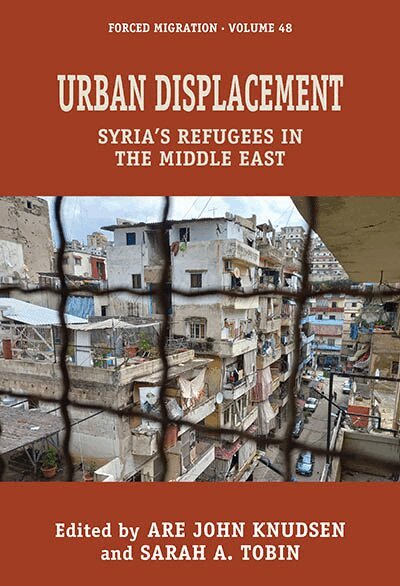
Syria’s massive displacement (from 2012 onwards) is one of the largest, most complex and intractable humanitarian emergencies of today. More than 5.7 million Syrian refugees live mainly in cities and urban areas throughout the Middle East. Urban Displacement examines multiple dimensions of this crisis from political and socioeconomic predicaments to questions of social belonging, the complexity of the international, regional and national responses and how they affect urban spaces. The volume brings together experts in the field of forced migration studies and displacement in the Middle East and presents a range of in-depth ethnographic data, cross-sectional surveys and policy analyses.