Sarah Klitenic Wear - Böcker
Visar alla böcker från författaren Sarah Klitenic Wear. Handla med fri frakt och snabb leverans.
5 produkter
5 produkter
Dionysius the Areopagite and the Neoplatonist Tradition
Despoiling the Hellenes
Inbunden, Engelska, 2017
2 096 kr
Skickas inom 10-15 vardagar
'Dionysius the Areopagite' is arguably one of the most mysterious and intriguing figures to emerge from the late antique world. Writing probably around 500 CE, and possibly connected with the circle of Severus of Antioch, Dionysius manipulates a Platonic metaphysics to describe a hierarchical universe: as with the Hellenic Platonists, he arranges the celestial and material cosmos into a series of triadic strata. These strata emanate from one unified being and contain beings that range from superior to inferior, depending on their proximity to God. Not only do all things in the hierarchy participate in God, but also all things are inter-connected, so that the lower hierarchies fully participate in the higher ones. This metaphysics lends itself to a sacramental system similar to that of the Hellenic ritual, theurgy. Theurgy allows humans to reach the divine by examining the divine as it exists in creation. Although Dionysius' metaphysics and religion are similar to that of Iamblichus and Proclus in many ways, Pseudo-Dionysius differs fundamentally in his use of an ecclesiastical cosmos, rather than that of the Platonic Timaean cosmos of the Hellenes. This book discusses the Christian Platonist's adaptation of Hellenic metaphysics, language, and religious ritual. While Dionysius clearly works within the Hellenic tradition, he innovates to integrate Hellenic and Christian thought.
Defining Platonism
Essays on Plato, Middle and Neoplatonism, and Modern Platonism
Inbunden, Engelska, 2017
793 kr
Skickas inom 7-10 vardagar
This collection of essays surveys a wide range of methods of Platonic interpretation, ranging from the dialogues themselves, to Middle and Neoplatonic interpretations of Plato’s writings, to modern uses of Platonism. As a philosophical movement, Platonism is broadly conceived, covering schools and philosophers beginning with Plato and his immediate followers and extending through contemporary philosophers. The history of Platonism begins, of course, with Plato himself. But his adoption of the dialogue style and his active engagement with students in his Academy, where he certainly used dialectic techniques, led almost immediately to questioning what Plato’s doctrines actually were. His student Aristotle raised questions of interpretations and invoked esoteric teachings not present in the written works. The earliest heads of the Academy struggled with Plato’s texts as well, creating rival interpretations. These early discussions gave rise to later ones, and Platonism became simultaneously a dogmatic philosophy and a source of sometimes-heated debate of what the master intended. From its inception, Platonism was a dynamic philosophy, open to varied interpretations on different fronts while also maintaining a common core of beliefs. Platonism gave rise to methods of interpretation that centered on historical, ethical, political, or metaphysical questions engendered by Plato’s writings. The ancient commentators reflected the teachings of their predecessors, and with only a few schools in the Greco-Roman world, many of their students studying under the same teachers, meant a heightened continuity in the tradition of interpretation. This volume honors the seventy-fifth birthday of John Dillon, the great scholar of Platonism whose scholarship had a pivotal role in defining Platonism as a philosophical movement in contemporary academia.
Dionysius the Areopagite and the Neoplatonist Tradition
Despoiling the Hellenes
Häftad, Engelska, 2020
613 kr
Skickas inom 10-15 vardagar
'Dionysius the Areopagite' is arguably one of the most mysterious and intriguing figures to emerge from the late antique world. Writing probably around 500 CE, and possibly connected with the circle of Severus of Antioch, Dionysius manipulates a Platonic metaphysics to describe a hierarchical universe: as with the Hellenic Platonists, he arranges the celestial and material cosmos into a series of triadic strata. These strata emanate from one unified being and contain beings that range from superior to inferior, depending on their proximity to God. Not only do all things in the hierarchy participate in God, but also all things are inter-connected, so that the lower hierarchies fully participate in the higher ones. This metaphysics lends itself to a sacramental system similar to that of the Hellenic ritual, theurgy. Theurgy allows humans to reach the divine by examining the divine as it exists in creation. Although Dionysius' metaphysics and religion are similar to that of Iamblichus and Proclus in many ways, Pseudo-Dionysius differs fundamentally in his use of an ecclesiastical cosmos, rather than that of the Platonic Timaean cosmos of the Hellenes. This book discusses the Christian Platonist's adaptation of Hellenic metaphysics, language, and religious ritual. While Dionysius clearly works within the Hellenic tradition, he innovates to integrate Hellenic and Christian thought.
687 kr
Skickas inom 7-10 vardagar
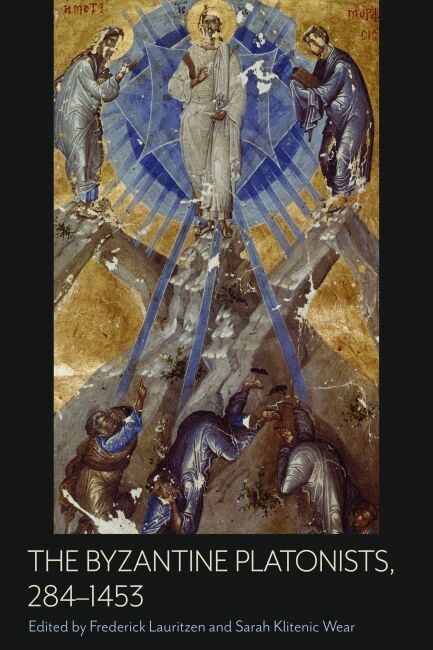
This volume brings together articles by sixteen leading scholars on a cross-section of Platonists authors—Christian and non-Christian—from early through late Byzantium philosophy, including the Capaddocians, Cyril, Proclus, Damascius, Dionysius, George of Pisidia, Nicetas Stethatos, Nikephoros Choumenos, Psellos, and George Palamas. The reception of Byzantine thought in the Latin tradition is also considered. The articles collectively show development in the Greek East on ontological issues such as the doctrine of the soul, as well as theological concepts of the One/God and Trinity within a hierarchical universe. The volume considers exegetical questions relating to the use of Plato and the Platonists by Byzantine Christian authors.
687 kr
Skickas inom 7-10 vardagar
In a series of specially commissioned essays, an international team of scholars examine both Platonism’s metaphysical principles (the One or the Form of the Good and the Indefinite Dyad: the principles that account for unity and multiplicity) and the tradition’s role as a source for ethical and political principles. In honor of Lloyd Gerson’s remarkable contribution to Platonic scholarship, the full breadth of the tradition has been explored: from Plato’s own manipulation of the wisdom that preceded him via his students in the Old Academy, Speusippus and Aristotle, and on to the Middle Platonic (Alcinous) and Neoplatonic (Plotinus, Proclus, Damascius) phases. An extensive section on Christian Platonism examines the Platonic appropriations of Cyril of Alexandria, as well as the great mediator of Plato in the Latin West, Marsilio Ficino, while the volume traces the influence of Platonic principles up to Heidegger. Key topics in this volume include time and eternity, the origin of evil, the planetary orbits, the status of nature, and theurgy. This Festschrift includes Gerson’s intellectual autobiography in the light of Platonic principles, particularly as a justification for libertarianism.