Sarah Lichtenstein – författare
Visar alla böcker från författaren Sarah Lichtenstein. Handla med fri frakt och snabb leverans.
6 produkter
Acceptable Risk
Av Baruch Fischhoff, Sarah Lichtenstein m. fl.
Häftad, 1984
695 kr
Lägg i varukorg
The common denominator of a growing number of hard decisions facing modern societies is the need to determine 'how safe is safe enough?'. The authors begin by defining acceptable-risk problems and analysing why they are so difficult to resolve, considering such issues as uncertainty about their …
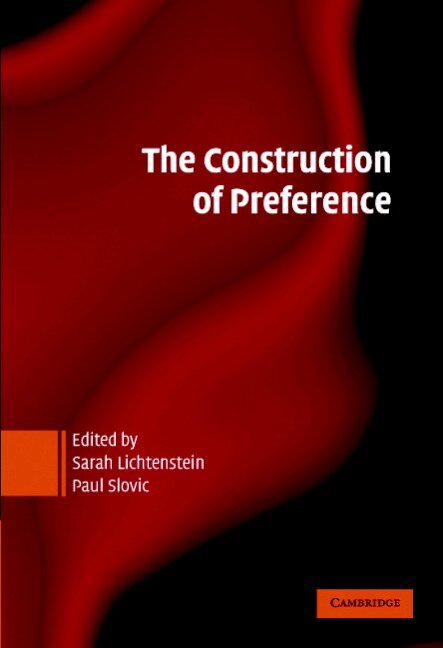
The Construction of Preference
Av Sarah Lichtenstein, Paul Slovic
Häftad, 2006
1012 kr
Lägg i varukorg
One of the main themes that has emerged from behavioral decision research during the past three decades is the view that people's preferences are often constructed in the process of elicitation. This idea is derived from studies demonstrating that normatively equivalent methods of elicitation …
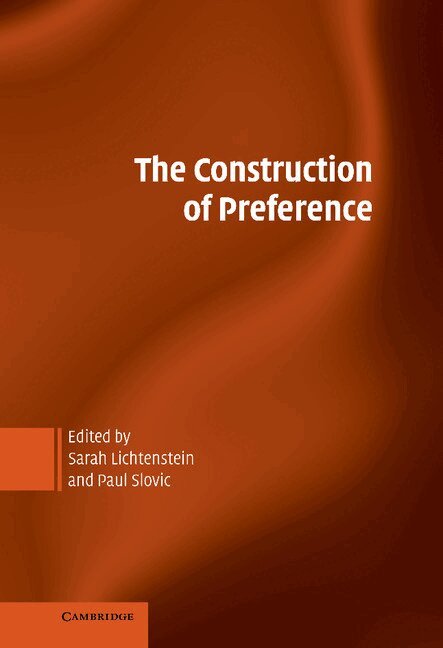
The Construction of Preference
Av Sarah Lichtenstein, Paul Slovic
Inbunden, 2006
1804 kr
Lägg i varukorg
One of the main themes that has emerged from behavioral decision research during the past three decades is the view that people's preferences are often constructed in the process of elicitation. This idea is derived from studies demonstrating that normatively equivalent methods of elicitation …
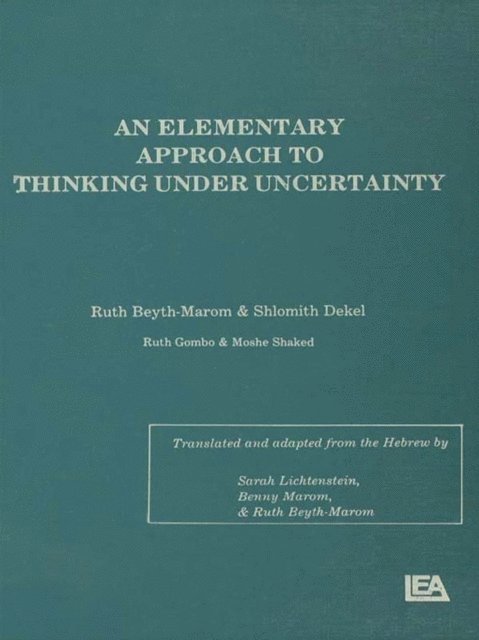
Elementary Approach To Thinking Under Uncertainty
Av Ruth Beyth-Marom, Shlomith Dekel m. fl.
Inbunden, 1985
742 kr
Lägg i varukorg
Published in the year 1985, An Elementary Approach To Thinking Under Uncertainty is a valuable contribution to the field of Cognitive Psychology.
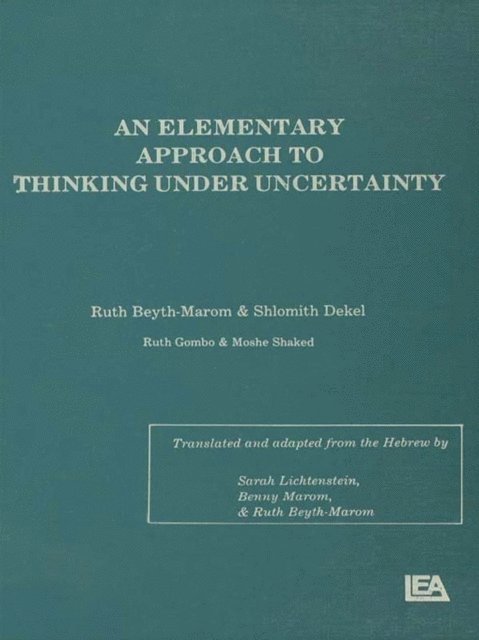
Elementary Approach To Thinking Under Uncertainty
Av Moshe Shaked, Ruth Gombo m. fl.
E-bok, 2013
710 kr
Lägg i varukorg
Published in the year 1985, An Elementary Approach To Thinking Under Uncertainty is a valuable contribution to the field of Cognitive Psychology.
Elementary Approach To Thinking Under Uncertainty
Av Moshe Shaked, Ruth Gombo m. fl.
E-bok, 2013
710 kr
Lägg i varukorg
Published in the year 1985, An Elementary Approach To Thinking Under Uncertainty is a valuable contribution to the field of Cognitive Psychology.