Sarah M. Ross - Böcker
Visar alla böcker från författaren Sarah M. Ross. Handla med fri frakt och snabb leverans.
8 produkter
8 produkter
330 kr
Skickas inom 7-10 vardagar
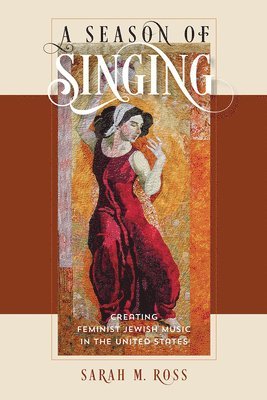
In the 1960s, Jewish music in America began to evolve. Traditional liturgical tunes developed into a blend of secular and sacred sound that became known in the 1980s as “American Nusach.” Chief among these developments was the growth of feminist Jewish songwriting. In this lively study, Sarah M. Ross brings together scholarship on Jewish liturgy, U.S. history, and musical ethnology to describe the multiple roots and development of feminist Jewish music in the last quarter of the twentieth century. Focusing on the work of prolific songwriters such as Debbie Friedman, Rabbi Geela Rayzel Raphael, Rabbi Hanna Tiferet Siegel, and Linda Hirschhorn, this volume illuminates the biographies and oeuvres of innovators in the field, and shows how this new musical form arose from the rich contexts of feminism, identity politics, folk music, and Judaism. In addition to providing deep content analysis of individual songs, Ross examines the feminist Jewish music scene across the United States, the reception of this music, challenges to disseminating the music beyond informal settings, and the state of Jewish music publishing. Rounding out the picture of the transformation of Jewish music, the volume contains appendixes of songs and songwriters a selection of musical transcriptions of feminist Jewish songs, and a comprehensive discography. This book will interest scholars and students in the fields of American Jewish history, women’s studies, feminism, ethnomusicology, and contemporary popular and folk music.
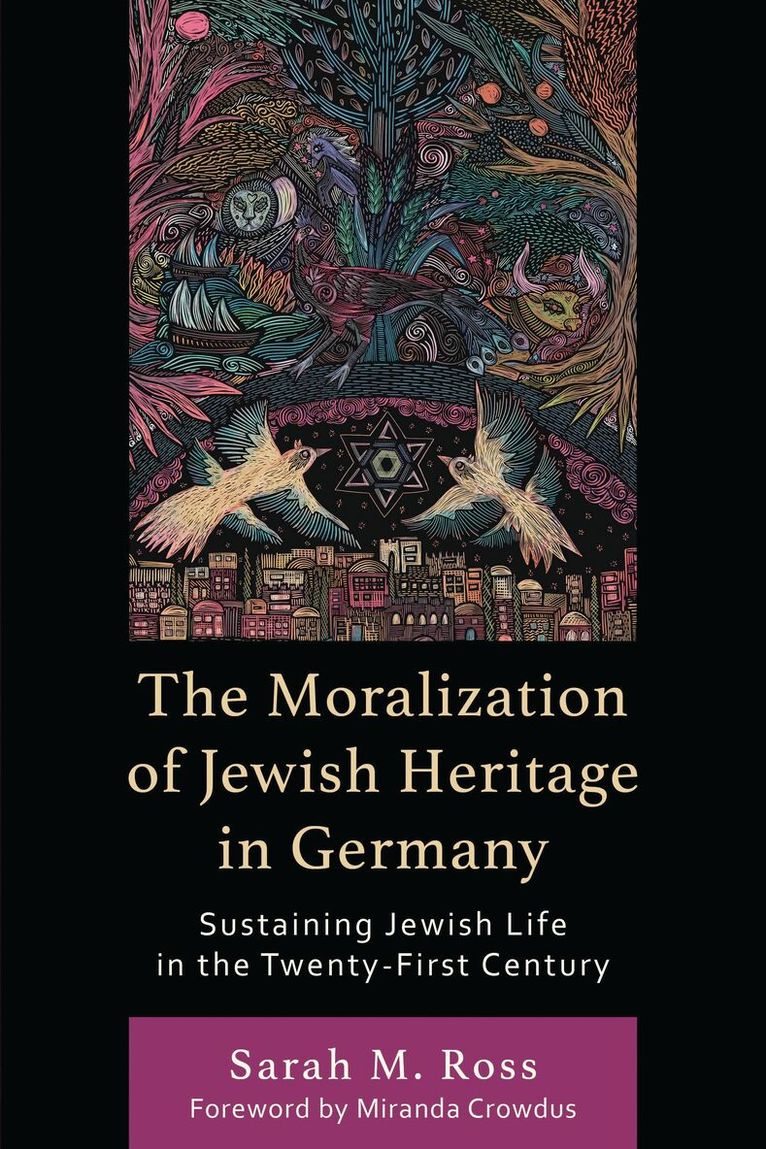
Moralization of Jewish Heritage in Germany
Sustaining Jewish Life in the Twenty-First Century
Inbunden, Engelska, 2024
1 209 kr
Skickas inom 10-15 vardagar
This book explores and reveals the intricacies of Jewish heritage in contemporary Germany, the role it plays as a "moral heritage" in the symbolic representation of Jews and Judaism in the national landscape, and its relevance for the cultural sustainability of local Jewish communities. The practice of synagogue music in the past and present is a central case study in the discussions. This ethnographic study examines how Jewish liturgical music as the cultural heritage of minorities has been constructed, treated, discussed, appropriated, and passed on to different actors in different forms and for different purposes over time. It also examines the resulting moral and ethical questions and power imbalances. The author discusses how both Jewish and non-Jewish stakeholders utilize the music of 19th- and early 20th-century Reform Judaism and the Minhag Ashkenaz for a symbolic reconstruction of German Jewry. Furthermore, they repatriate it in local Jewish communities today. This is usually done for individual, sometimes commercial, rather than religious reasons. The Jewish-musical cultural heritage process is characterized by moral imperatives and complex negotiations about power and representation. It reveals problematic aspects of German-Jewish relations, cross-generational rifts, and denominational differences between the Jewish communities in post-war Germany.
1 212 kr
Skickas inom 5-8 vardagar
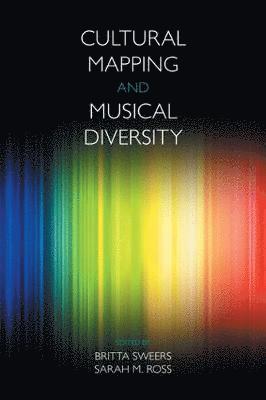
'Cultural mapping' has become a central keyword in the UNESCO strategy to protect natural and world cultural heritage, including music traditions. As a tool to increase the awareness of cultural diversity it transforms the concept of intangible cultural heritage to visible items by establishing multi-dimensional profiles of cultures and communities. Cultural mapping has been used as a resource for a variety of purposes as broad as the analysis of conflict points and peace building, adaptation to climate change, sustainability management, as well as heritage debates and management. Music has been playing a significant role in each of these aspects. As this theme has rarely been explored within ethnomusicology, this collection approaches the topic of cultural mapping from four different thematic perspectives: The book starts out with historical and methodological reflections on cultural mapping in ethnomusicology, followed by an exploration on possible relation between nature/ landscape (and definition of such) and music/ sound. How exactly is landscape interrelated with music - and identified (and vice versa)? The second half focuses more specifically on the UNESCO Intangible Cultural Heritage. The articles not only address the broader political framework, but also thematic and geographic case studies of Intangible Cultural Heritage and music, as well as the pro of UNESCO's endeavours.
445 kr
Skickas inom 5-8 vardagar
'Cultural mapping' has become a central keyword in the UNESCO strategy to protect natural and world cultural heritage, including music traditions. As a tool to increase the awareness of cultural diversity it transforms the concept of intangible cultural heritage to visible items by establishing multi-dimensional profiles of cultures and communities. Cultural mapping has been used as a resource for a variety of purposes as broad as the analysis of conflict points and peace building, adaptation to climate change, sustainability management, as well as heritage debates and management. Music has been playing a significant role in each of these aspects. As this theme has rarely been explored within ethnomusicology, this collection approaches the topic of cultural mapping from four different thematic perspectives: The book starts out with historical and methodological reflections on cultural mapping in ethnomusicology, followed by an exploration on possible relation between nature/ landscape (and definition of such) and music/ sound. How exactly is landscape interrelated with music - and identified (and vice versa)? The second half focuses more specifically on the UNESCO Intangible Cultural Heritage. The articles not only address the broader political framework, but also thematic and geographic case studies of Intangible Cultural Heritage and music, as well as the pro of UNESCO's endeavours.
1 935 kr
Skickas inom 5-8 vardagar
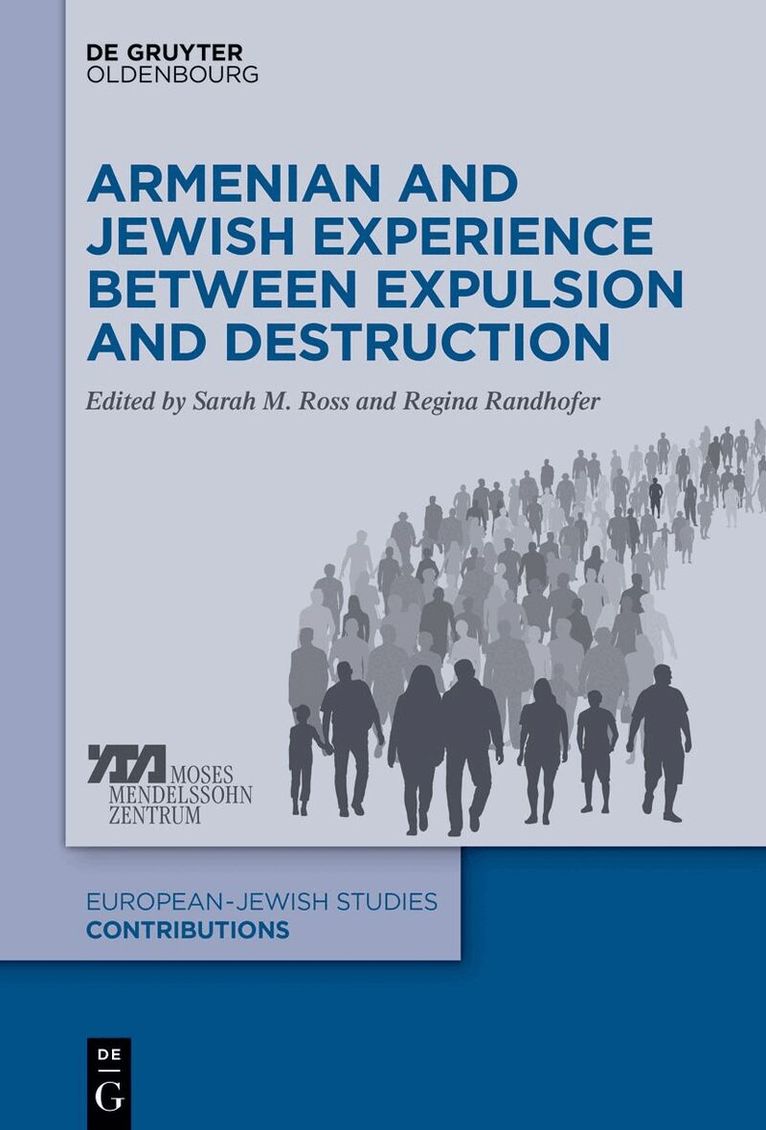
Jews and Armenians are often perceived as peoples with similar tragic historical experiences. Not only were both groups forced into statelessness and a life outside their homelands for centuries, in the 20th century, in the shadow of war, they were threatened with collective annihilation. Thus far, academic approaches to these two "classical" diasporas have been quite different. Moreover, Armenian and Jewish questions posed during the 19th and 20th centuries have usually been treated separately. The conference “We Will Live After Babylon” that took place in Hanover in February 2019, addressed this gap in research and was one of the first initiatives to deal directly with Jewish and Armenian historical experiences, between expulsion, exile and annihilation, in a comparative framework. The contributions in this volume take on multidisciplinary approaches relating to the conference’s central themes: diaspora, minority issues and genocide.
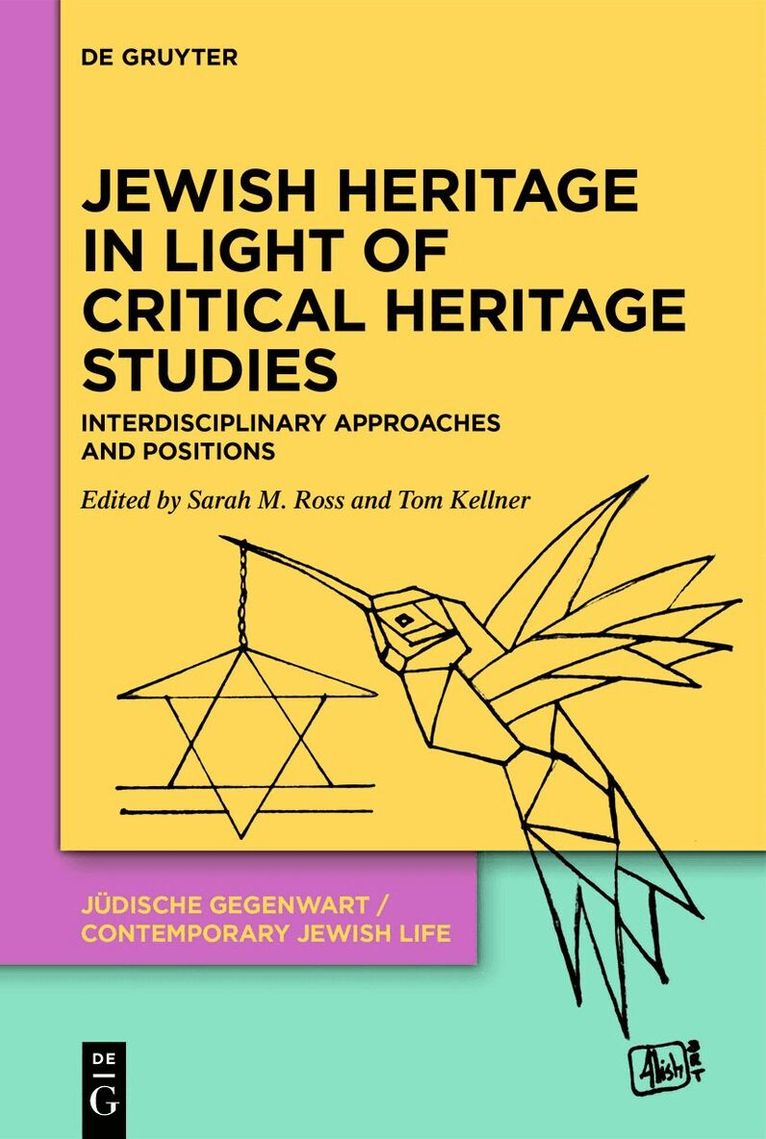
Jewish Heritage in Light of Critical Heritage Studies
Interdisciplinary Approaches and Positions
Inbunden, Engelska, 2026
1 027 kr
Kommande
Seen in the light of Critical Heritage Studies, Jewish cultural heritage is not a natural reality, but a social and cultural-political dialog with the past, which is about present processes and not products. The first anthology of the DFG Priority Program Jewish Cultural Heritage (SPP 2357) deals with the manifestations of Jewish cultural heritage in individual contributions. From historical and contemporary constructions of Jewish heritage, to cultural heritage as a social practice, to questions about the connection between cultural heritage and sustainability, the contributions provide an insight into how Jewish heritage is re-evaluated, critically interpreted and given new meanings and functions from generation to generation. These negotiation processes also reflect various power relations and conflicts regarding the definition, ownership and use of Jewish heritage. To what extent has Jewish cultural heritage acquired new and sometimes unintended meanings in the midst of social change and political upheaval? What role does Jewish cultural heritage play in the constructed narratives of a new Europe after the Shoah? These and other questions are at the center of this volume.
Del 2 - Juedische Musikstudien. Jewish Music Studies
Juedisches Kulturerbe MUSIK - Divergenzen und Zeitlichkeit
Ueberlegungen zu einer kulturellen Nachhaltigkeit aus Sicht der Juedischen Musikstudien
Inbunden, Tyska, 2021
588 kr
Skickas inom 5-8 vardagar
Del 3 - Juedische Musikstudien. Jewish Music Studies
Mirjams Toechter - Maecenas Schwestern?
Tzedaka als Reforminstrument im Gabe-Akt juedischer Musikmaezeninnen
Inbunden, Tyska, 2024
773 kr
Skickas inom 5-8 vardagar