Britta Sweers – författare
Visar alla böcker från författaren Britta Sweers. Handla med fri frakt och snabb leverans.
7 produkter
7 produkter
E-bok
Engelska, 2005425 kr
Läs direkt efter köp
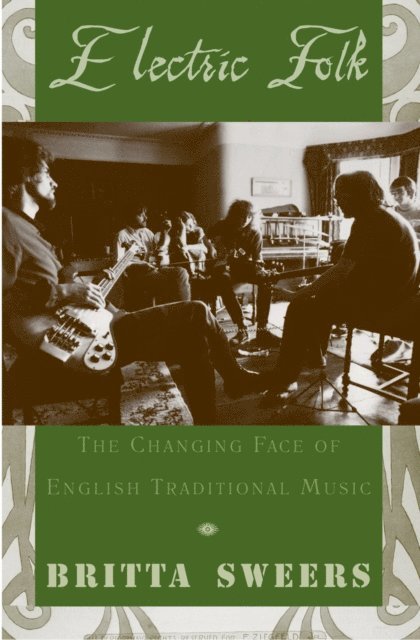
In the 1960s and 1970s, a number of British musicians rediscovered traditional folk ballads, fusing the old melodies with rock, jazz, and blues styles to create a new genre dubbed "electric folk" or "British folk rock." This revival featured groups such as Steeleye Span, Fairport Convention, and Pentangle and individual performers like Shirley & Dolly Collins, and Richard Thompson. While making music in multiple styles, they had one thing in common: they were all based on traditional English song and dance material. These new arrangements of an old repertoire created a unique musical voice within the popular mainstream. After reasonable commercial success, peaking with Steeleye Span''s Top 10 album All Around My Hat, Electric Folk disappeared from mainstream notice in the late 1970s, yet performers continue to create today. In Electric Folk: The Changing Face of English Traditional Music, Britta Sweers provides an illuminating history and fascinating analysis of the unique features of the electric folk scene, exploring its musical styles and cultural implications. Drawing on rare historical sources, contemporary music journalism, and first-hand interviews with several of electric folk''s most prominent artists, Sweers argues that electric folk is both a result of the American folk revival of the early 1960s and a reaction against the dominance of American pop music abroad. Young British "folk-rockers," such as Richard Thompson and Maddy Prior, turned to traditional musical material as a means of asserting their British cultural identity. Yet, unlike many American and British folk revivalists, they were not as interested in the "purity" of folk ballads as in the music''s potential for lively interaction with modern styles, instruments, and media. The book also delves into the impact of the British folk rock movement on mainstream pop, American rock music, and neighboring European countries. Ultimately, Sweers creates a richly detailed portrait of the electric folk scene--as cultural phenomenon, commercial entity, and performance style.
Inbunden, Engelska, 2005
1 682 kr
Skickas inom 3-6 vardagar
In Electric Folk - Revival and Transformation of English Traditional Music, Britta Sweers chronicles the history of the genre and explores its cultural implications. She characterizes electric folk as both a result of the American folk revival of the early 1960s and a reaction against the dominance of American pop music abroad. Sweers creates a detailed portrait of the folk rock scene - as cultural phenomenon, commercial entity, and performance style.
Häftad, Engelska, 2005
432 kr
Skickas inom 5-8 vardagar
In Electric Folk - Revival and Transformation of English Traditional Music, Britta Sweers chronicles the history of the genre and explores its cultural implications. She characterizes electric folk as both a result of the American folk revival of the early 1960s and a reaction against the dominance of American pop music abroad. Sweers creates a detailed portrait of the folk rock scene - as cultural phenomenon, commercial entity, and performance style.
E-bok
PDF, Engelska, 2005378 kr
Läs direkt efter köp
In the 1960s and 1970s, a number of British musicians rediscovered traditional folk ballads, fusing the old melodies with rock, jazz, and blues styles to create a new genre dubbed "electric folk" or "British folk rock." This revival featured groups such as Steeleye Span, Fairport Convention, and Pentangle and individual performers like Shirley & Dolly Collins, and Richard Thompson. While making music in multiple styles, they had one thing in common: they were all based on traditional English song and dance material. These new arrangements of an old repertoire created a unique musical voice within the popular mainstream. After reasonable commercial success, peaking with Steeleye Span''s Top 10 album All Around My Hat, Electric Folk disappeared from mainstream notice in the late 1970s, yet performers continue to create today. In Electric Folk: The Changing Face of English Traditional Music, Britta Sweers provides an illuminating history and fascinating analysis of the unique features of the electric folk scene, exploring its musical styles and cultural implications. Drawing on rare historical sources, contemporary music journalism, and first-hand interviews with several of electric folk''s most prominent artists, Sweers argues that electric folk is both a result of the American folk revival of the early 1960s and a reaction against the dominance of American pop music abroad. Young British "folk-rockers," such as Richard Thompson and Maddy Prior, turned to traditional musical material as a means of asserting their British cultural identity. Yet, unlike many American and British folk revivalists, they were not as interested in the "purity" of folk ballads as in the music''s potential for lively interaction with modern styles, instruments, and media. The book also delves into the impact of the British folk rock movement on mainstream pop, American rock music, and neighboring European countries. Ultimately, Sweers creates a richly detailed portrait of the electric folk scene--as cultural phenomenon, commercial entity, and performance style.
Inbunden, Engelska, 2020
1 194 kr
Skickas inom 5-8 vardagar
'Cultural mapping' has become a central keyword in the UNESCO strategy to protect natural and world cultural heritage, including music traditions. As a tool to increase the awareness of cultural diversity it transforms the concept of intangible cultural heritage to visible items by establishing multi-dimensional profiles of cultures and communities. Cultural mapping has been used as a resource for a variety of purposes as broad as the analysis of conflict points and peace building, adaptation to climate change, sustainability management, as well as heritage debates and management. Music has been playing a significant role in each of these aspects. As this theme has rarely been explored within ethnomusicology, this collection approaches the topic of cultural mapping from four different thematic perspectives: The book starts out with historical and methodological reflections on cultural mapping in ethnomusicology, followed by an exploration on possible relation between nature/ landscape (and definition of such) and music/ sound. How exactly is landscape interrelated with music - and identified (and vice versa)? The second half focuses more specifically on the UNESCO Intangible Cultural Heritage. The articles not only address the broader political framework, but also thematic and geographic case studies of Intangible Cultural Heritage and music, as well as the pro of UNESCO's endeavours.
Häftad, Engelska, 2020
443 kr
Skickas inom 5-8 vardagar
'Cultural mapping' has become a central keyword in the UNESCO strategy to protect natural and world cultural heritage, including music traditions. As a tool to increase the awareness of cultural diversity it transforms the concept of intangible cultural heritage to visible items by establishing multi-dimensional profiles of cultures and communities. Cultural mapping has been used as a resource for a variety of purposes as broad as the analysis of conflict points and peace building, adaptation to climate change, sustainability management, as well as heritage debates and management. Music has been playing a significant role in each of these aspects. As this theme has rarely been explored within ethnomusicology, this collection approaches the topic of cultural mapping from four different thematic perspectives: The book starts out with historical and methodological reflections on cultural mapping in ethnomusicology, followed by an exploration on possible relation between nature/ landscape (and definition of such) and music/ sound. How exactly is landscape interrelated with music - and identified (and vice versa)? The second half focuses more specifically on the UNESCO Intangible Cultural Heritage. The articles not only address the broader political framework, but also thematic and geographic case studies of Intangible Cultural Heritage and music, as well as the pro of UNESCO's endeavours.
Häftad, Engelska, 2024
518 kr
Skickas inom 3-6 vardagar
Although hip hop is now a well-established global music genre and cultural form, its history and current impact have not yet been sufficiently studied. The interdisciplinary contributions to this volume address hip hop's historical and regional struggles for representation of race, gender, generation, place, and language, as well as the tension between authenticity and commercialization. Contributors offer approaches to historicizing hip-hop culture, and present new theoretical perspectives and methodological tools for addressing hip hop's global impact. This volume targets not only scholars and students but also resonates with recent public debates about identity politics and cultural appropriation.