Barbara Alge – författare
2 249 kr
Skickas inom 10-15 vardagar
727 kr
Läs direkt efter köp
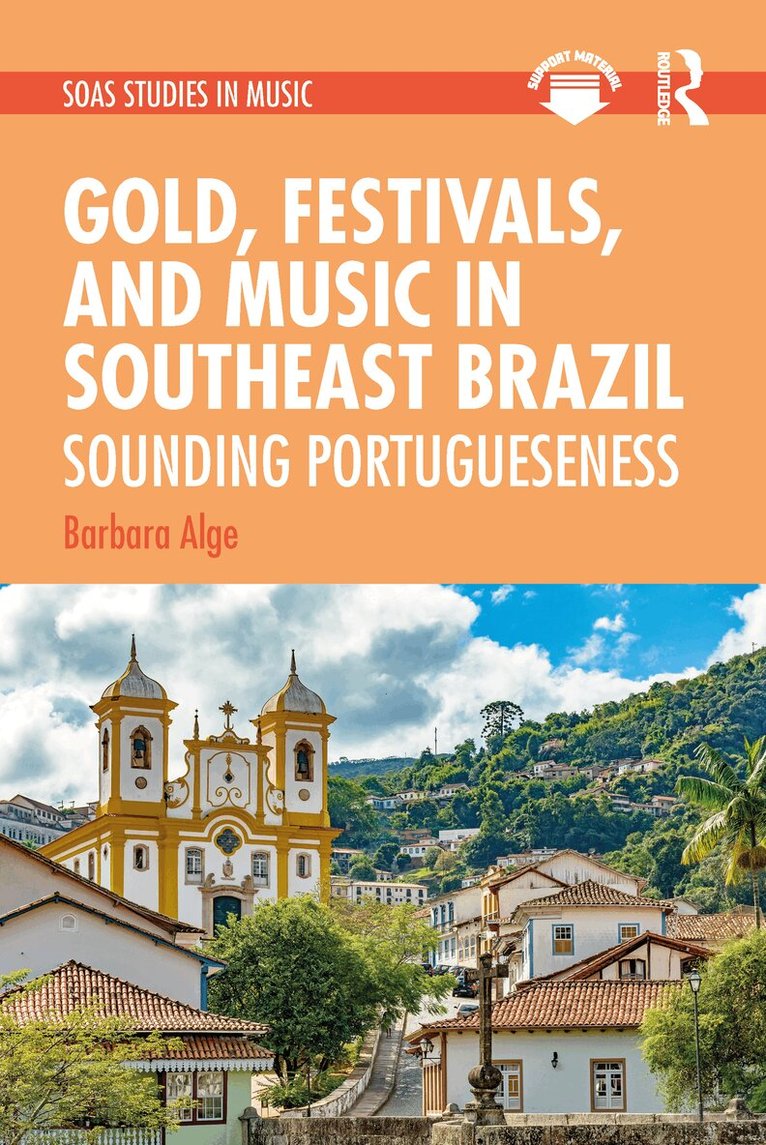
Gold, Festivals, and Music in Southeast Brazil: Sounding Portugueseness is a study of the musical legacy of the eighteenth century Brazilian gold rush that integrates ethnographic research of the main genres of former mining communities in Brazil – from liturgical music in the style of European art music to Afro-Brazilian musical expressions. Its content and structure are informed by Norbert Elias’s idea of the civilizing process, which is explored regarding its relevance in interpreting sociocultural processes and choreo-musical expressions in the small town of Morro Vermelho. The book’s innovative feature is its focus on a little-known area to non-Brazilian scholars, and its focus on the colonial and European heritage in Brazil.
Morro Vermelho’s cultural traditions have received relatively limited attention. The Catholic festival of Our Lady of Nazareth provides a setting for the documentation and analysis of the musical setting and is thus placed at the center of the discussion. It leads through the vast writings on Brazilian identity and challenges the view on Brazilian-ness as constructed in terms of the mixing of races. Norbert Elias’s concept of the "civilizing process" structures the book and is relevant for understanding the cultural sphere of the festival of Our Lady of Nazareth.
The book combines discourses of Portugueseness with historical sources and observations from fieldwork and community building in the virtual world. The focus on the music to support social constructions of "Portugueseness" is supported with evidence from diverse data sources: music (literature and fieldwork recordings), original interviews, marketing materials and historical narratives. The combination of archival, ethnographic, and bibliographic research methods attempts a seamless narrative. Its approach to fieldwork and frank reflections on the process and relevant issues help to contextualize the analyses and serve as useful advice for future researchers.
702 kr
Läs direkt efter köp
Gold, Festivals, and Music in Southeast Brazil: Sounding Portugueseness is a study of the musical legacy of the eighteenth century Brazilian gold rush that integrates ethnographic research of the main genres of former mining communities in Brazil – from liturgical music in the style of European art music to Afro-Brazilian musical expressions. Its content and structure are informed by Norbert Elias’s idea of the civilizing process, which is explored regarding its relevance in interpreting sociocultural processes and choreo-musical expressions in the small town of Morro Vermelho. The book’s innovative feature is its focus on a little-known area to non-Brazilian scholars, and its focus on the colonial and European heritage in Brazil.
Morro Vermelho’s cultural traditions have received relatively limited attention. The Catholic festival of Our Lady of Nazareth provides a setting for the documentation and analysis of the musical setting and is thus placed at the center of the discussion. It leads through the vast writings on Brazilian identity and challenges the view on Brazilian-ness as constructed in terms of the mixing of races. Norbert Elias’s concept of the "civilizing process" structures the book and is relevant for understanding the cultural sphere of the festival of Our Lady of Nazareth.
The book combines discourses of Portugueseness with historical sources and observations from fieldwork and community building in the virtual world. The focus on the music to support social constructions of "Portugueseness" is supported with evidence from diverse data sources: music (literature and fieldwork recordings), original interviews, marketing materials and historical narratives. The combination of archival, ethnographic, and bibliographic research methods attempts a seamless narrative. Its approach to fieldwork and frank reflections on the process and relevant issues help to contextualize the analyses and serve as useful advice for future researchers.
614 kr
Skickas inom 10-15 vardagar
439 kr
Skickas inom 3-6 vardagar
171 kr
Skickas inom 3-6 vardagar
Musik
622 kr
Skickas inom 3-6 vardagar
720 kr
Läs direkt efter köp
Der Band Musikethnographien im 21. Jahrhundert versammelt zehn Beiträge von MusikethnologInnen aus dem deutschsprachigen Raum, die aktuelle methodische Paradigmen wie multisituierte Feldforschung, Reflexivität, Dialogizität, Feedback, Autoethnographie, Aktivismus und Intervention durch Performance Ethnography und kollaboratives Arbeiten sowie Fragen nach Repatriierung, dem ethischen Umgang mit Forschungsdaten und der Rolle digitaler sozialer Medien diskutieren. Neben Theorien und methodischen Überlegungen spielen auch Fragen nach der Zeitlichkeit von ethnographischem Material sowie ethnographisches Arbeiten mit Vergangenheit und Erinnerung eine Rolle. Angewandt werden die Überlegungen auf den Gegenstand Musik und Sound.Mit Beiträgen vonBarbara Alge, Stefanie Alisch, Linda Cimardi, Cornelia Gruber, Matthias Lewy, Julio Mendívil, Stefanie Kiwi Menrath, Monika Schoop, Helena Simonett und Britta Sweers.