Science and Technology for Sustainability Program – författare
398 kr
Läs direkt efter köp
This report contains a collection of papers presented at a workshop in Merida, Mexico—Strengthening Science-Based Decision Making: Sustainable Management of Groundwater in Mexico. The cross-cutting themes of the workshop were the elements or principles of science-based decision making and the role of the scientific community in ensuring that science is an integral part of the decision making process. Papers included in this volume describe the groundwater resources of Mexico''s Yucatan Peninsula, approaches to managing groundwater in Mexico and governmental and scientific institutions concerned with water resources. Other papers discuss US approaches to managing scarce water resources. Participants in the workshop included representatives from leading scientific and academic institutions, federal state and local governments, non-governmental organizations and businesses.
471 kr
Läs direkt efter köp
This report contains a collection of papers from a workshop—Strengthening Science-Based Decision-Making for Sustainable Management of Scarce Water Resources for Agricultural Production, held in Tunisia. Participants, including scientists, decision makers, representatives of non-profit organizations, and a farmer, came from the United States and several countries in North Africa and the Middle East. The papers examined constraints to agricultural production as it relates to water scarcity; focusing on 1) the state of the science regarding water management for agricultural purposes in the Middle East and North Africa 2) how science can be applied to better manage existing water supplies to optimize the domestic production of food and fiber. The cross-cutting themes of the workshop were the elements or principles of science-based decision making, the role of the scientific community in ensuring that science is an integral part of the decision making process, and ways to improve communications between scientists and decision makers.
398 kr
Läs direkt efter köp
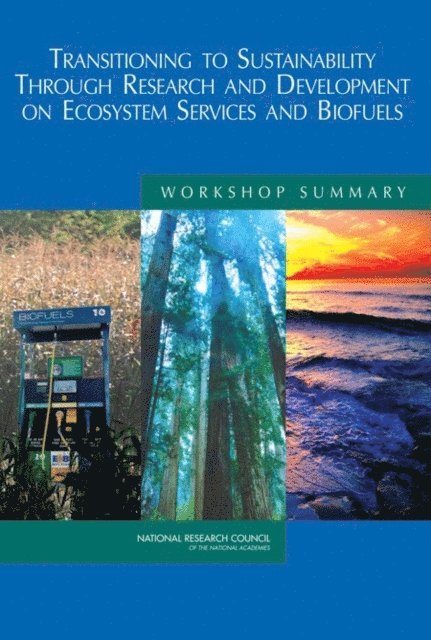
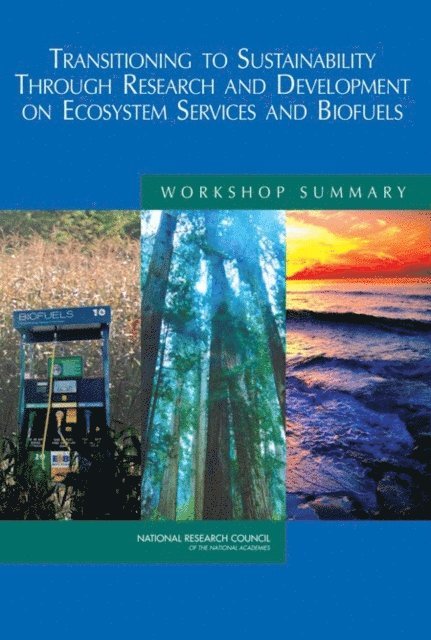
The National Research Council''s Roundtable on Science and Technology for Sustainability hosted "Transitioning to Sustainability through Research and Development on Ecosystem Services and Biofuels: The National Academies'' First Federal Sustainability Research and Development Forum" on October 17- 18, 2007.
The forum discussed sustainability research and development activities related to ecosystem services and biofuels. The objective of the forum was to identify research gaps and opportunities for collaboration among federal agencies to meet the challenges to sustainability posed by the need to maintain critical ecosystem services, to support the development of alternatives to conventional fossil fuels, and to manage oceans and coastal areas. The forum focused primarily on federal activities, but included the participation of representatives from the private sector, universities, and nongovernmental organizations. This book is a summary the discussions from the forum.
603 kr
Skickas
390 kr
Läs direkt efter köp
Sustainable development—meeting human needs while nurturing and restoring the planet''s life support systems—requires a continuous process of scientific innovation, new knowledge and learning, and collaborative approaches to implementing technologies and policies. To address these challenges, different stakeholder groups are increasingly seeking to ally themselves through partnership, in order to implement projects, deliver services, establish secure funding mechanisms, and achieve on the ground results. Advocates of this collaborative approach point to the failure of governmental regulations, international commitments, or business as usual. However, skeptics often question the effectiveness of partnerships at achieving sustainable development goals and, in the absence of demonstrated results, wonder where partnerships are adding value. A symposium held in June 2008 and summarized in this volume, attempted to advance the dialogue on partnerships for sustainability in order to catalyze existing knowledge and inform future efforts. Ideas that came out of discussions at the symposium will help leaders in government, the private sector, foundations and NGOs, and universities, both in the United States and internationally, as they develop and participate in new partnerships for sustainability.
438 kr
Läs direkt efter köp
Consumption of goods and services represents a growing share of global economic activity. In the United States, consumption accounts for more than two-thirds of gross domestic product. This trend of increasing consumption has brought with it negative consequences for the environment and human well-being. Global demand for energy, food, and all manner of goods is on the rise, putting strains on the natural and human capital required to produce them. Extractive industries and production processes are prominent causes of species endangerment. Modern economies are underpinned by substantial energy consumption, a primary contributor to the current climate crisis. Expanding international trade has led to many economic opportunities, but has also contributed to unfair labor practices and wealth disparities. While certain processes have improved or become more efficient, and certain practices have been outlawed or amended, the sheer scale of global consumption and its attendant impacts continue to be major challenges we face in the transition to sustainability. Third-party certification systems have emerged over the last 15 years as a tool with some promise. There has been anecdotal evidence of success, but to date the overall impact of certified goods and services has been small. Moreover, definitions of sustainable vary across sectors and markets, and rigorous assessments of these programs have been few and far between. In order to take a step in learning from this field of practice, the National Academies'' Science and Technology for Sustainability Program held a workshop to illuminate the decision making process of those who purchase and produce certified goods and services. It was also intended to help clarify the scope and limitations of the scientific knowledge that might contribute to the economic success of certified products. The workshop, summarized in this volume, involved presentations and discussions with approximately 40 invited experts from academia, business, government, and nongovernmental organizations.
511 kr
Läs direkt efter köp
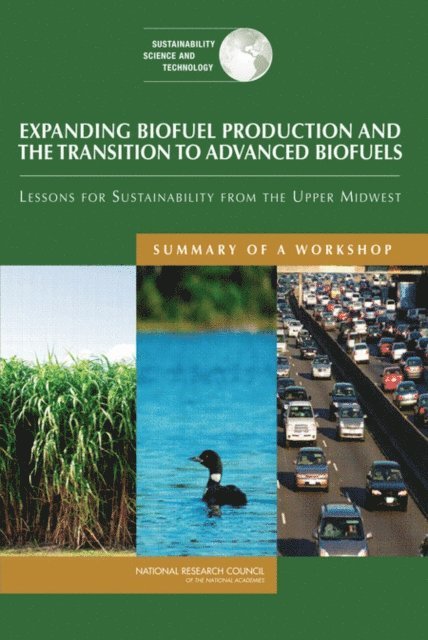
While energy prices, energy security, and climate change are front and center in the national media, these issues are often framed to the exclusion of the broader issue of sustainability—ensuring that the production and use of biofuels do not compromise the needs of future generations by recognizing the need to protect life-support systems, promote economic growth, and improve societal welfare. Thus, it is important to understand the effects of biofuel production and use on water quality and quantity, soils, wildlife habitat and biodiversity, greenhouse gas emissions, air quality, public health, and the economic viability of rural communities.
568 kr
Läs direkt efter köp
Sustainable development—meeting human needs while nurturing and restoring the planet''s life support systems—requires a continuous process of scientific innovation, new knowledge and learning, and collaborative approaches to implementing technologies and policies. To address these challenges, different stakeholder groups are increasingly seeking to ally themselves through partnership, in order to implement projects, deliver services, establish secure funding mechanisms, and achieve on the ground results. Advocates of this collaborative approach point to the failure of governmental regulations, international commitments, or business as usual. However, skeptics often question the effectiveness of partnerships at achieving sustainable development goals and, in the absence of demonstrated results, wonder where partnerships are adding value. A symposium held in June 2008 and summarized in this volume, attempted to advance the dialogue on partnerships for sustainability in order to catalyze existing knowledge and inform future efforts. Ideas that came out of discussions at the symposium will help leaders in government, the private sector, foundations and NGOs, and universities, both in the United States and internationally, as they develop and participate in new partnerships for sustainability.
649 kr
Läs direkt efter köp
While energy prices, energy security, and climate change are front and center in the national media, these issues are often framed to the exclusion of the broader issue of sustainability—ensuring that the production and use of biofuels do not compromise the needs of future generations by recognizing the need to protect life-support systems, promote economic growth, and improve societal welfare. Thus, it is important to understand the effects of biofuel production and use on water quality and quantity, soils, wildlife habitat and biodiversity, greenhouse gas emissions, air quality, public health, and the economic viability of rural communities.
633 kr
Läs direkt efter köp
Consumption of goods and services represents a growing share of global economic activity. In the United States, consumption accounts for more than two-thirds of gross domestic product. This trend of increasing consumption has brought with it negative consequences for the environment and human well-being. Global demand for energy, food, and all manner of goods is on the rise, putting strains on the natural and human capital required to produce them. Extractive industries and production processes are prominent causes of species endangerment. Modern economies are underpinned by substantial energy consumption, a primary contributor to the current climate crisis. Expanding international trade has led to many economic opportunities, but has also contributed to unfair labor practices and wealth disparities. While certain processes have improved or become more efficient, and certain practices have been outlawed or amended, the sheer scale of global consumption and its attendant impacts continue to be major challenges we face in the transition to sustainability. Third-party certification systems have emerged over the last 15 years as a tool with some promise. There has been anecdotal evidence of success, but to date the overall impact of certified goods and services has been small. Moreover, definitions of sustainable vary across sectors and markets, and rigorous assessments of these programs have been few and far between. In order to take a step in learning from this field of practice, the National Academies'' Science and Technology for Sustainability Program held a workshop to illuminate the decision making process of those who purchase and produce certified goods and services. It was also intended to help clarify the scope and limitations of the scientific knowledge that might contribute to the economic success of certified products. The workshop, summarized in this volume, involved presentations and discussions with approximately 40 invited experts from academia, business, government, and nongovernmental organizations.
398 kr
Läs direkt efter köp
More than half of the world''s people now live in cities. In the United States, the figure is 80 percent. It is worthwhile to consider how this trend of increased urbanization, if inevitable, could be made more sustainable. One fundamental shortcoming of urban research and programs is that they sometimes fail to recognize urban areas as systems. Current institutions and actors are not accustomed to exploring human-environment interactions, particularly at an urban-scale. The fact is that these issues involve complex interactions, many of which are not yet fully understood. Thus a key challenge for the 21st century is this: How can we develop sustainable urban systems that provide healthy, safe and affordable environments for the growing number of Americans living in cities and their surrounding metropolitan areas? To address this question, the National Research Council organized a workshop exploring the landscape of urban sustainability research programs in the United States. The workshop, summarized in this volume, was designed to allow participants to share information about the activities and planning efforts of federal agencies, along with related initiatives by universities, the private sector, nongovernmental groups, state and local agencies, and international organizations. Participants were encouraged to explore how urban sustainability can move beyond analyses devoted to single disciplines and sectors to systems-level thinking and effective interagency cooperation. To do this, participants examined areas of potential coordination among different R&D programs, with special consideration given to how the efforts of federal agencies can best complement and leverage the efforts of other key stakeholders. Pathways to Urban Sustainability offers a broad contextual summary of workshop presentations and discussions for distribution to federal agencies, regional organizations, academic institutions, think tanks and other groups engaged in urban research.
568 kr
Läs direkt efter köp
More than half of the world''s people now live in cities. In the United States, the figure is 80 percent. It is worthwhile to consider how this trend of increased urbanization, if inevitable, could be made more sustainable. One fundamental shortcoming of urban research and programs is that they sometimes fail to recognize urban areas as systems. Current institutions and actors are not accustomed to exploring human-environment interactions, particularly at an urban-scale. The fact is that these issues involve complex interactions, many of which are not yet fully understood. Thus a key challenge for the 21st century is this: How can we develop sustainable urban systems that provide healthy, safe and affordable environments for the growing number of Americans living in cities and their surrounding metropolitan areas? To address this question, the National Research Council organized a workshop exploring the landscape of urban sustainability research programs in the United States. The workshop, summarized in this volume, was designed to allow participants to share information about the activities and planning efforts of federal agencies, along with related initiatives by universities, the private sector, nongovernmental groups, state and local agencies, and international organizations. Participants were encouraged to explore how urban sustainability can move beyond analyses devoted to single disciplines and sectors to systems-level thinking and effective interagency cooperation. To do this, participants examined areas of potential coordination among different R&D programs, with special consideration given to how the efforts of federal agencies can best complement and leverage the efforts of other key stakeholders. Pathways to Urban Sustainability offers a broad contextual summary of workshop presentations and discussions for distribution to federal agencies, regional organizations, academic institutions, think tanks and other groups engaged in urban research.
665 kr
Läs direkt efter köp
This report contains a collection of papers from a workshop—Strengthening Science-Based Decision-Making for Sustainable Management of Scarce Water Resources for Agricultural Production, held in Tunisia. Participants, including scientists, decision makers, representatives of non-profit organizations, and a farmer, came from the United States and several countries in North Africa and the Middle East. The papers examined constraints to agricultural production as it relates to water scarcity; focusing on 1) the state of the science regarding water management for agricultural purposes in the Middle East and North Africa 2) how science can be applied to better manage existing water supplies to optimize the domestic production of food and fiber. The cross-cutting themes of the workshop were the elements or principles of science-based decision making, the role of the scientific community in ensuring that science is an integral part of the decision making process, and ways to improve communications between scientists and decision makers.
568 kr
Läs direkt efter köp
This report contains a collection of papers presented at a workshop in Merida, Mexico—Strengthening Science-Based Decision Making: Sustainable Management of Groundwater in Mexico. The cross-cutting themes of the workshop were the elements or principles of science-based decision making and the role of the scientific community in ensuring that science is an integral part of the decision making process. Papers included in this volume describe the groundwater resources of Mexico''s Yucatan Peninsula, approaches to managing groundwater in Mexico and governmental and scientific institutions concerned with water resources. Other papers discuss US approaches to managing scarce water resources. Participants in the workshop included representatives from leading scientific and academic institutions, federal state and local governments, non-governmental organizations and businesses.
Implementing the Stockholm Convention on Persistent Organic Pollutants
Summary of a Workshop in China
276 kr
Läs direkt efter köp
This report summarizes a workshop—Strengthening Science-Based Decision-Making: Implementing the Stockholm Convention on Persistent Organic Pollutants held June 7-10, 2004, in Beijing, China. The presentations and discussions summarized here describe the types of scientific information necessary to make informed decisions to eliminate the production and use of Persistent Organic Pollutants (POPs) banned under the Stockholm Convention, sources of information; scientifically informed strategies for eliminating POPs, elements of good scientific advice, such as transparency, peer review, and disclosure of conflicts of interest; and information dealing with POPs that decision makers need from the scientific community, including next steps to make such science available and ensure its use on a continuing basis.
600 kr
Läs direkt efter köp
568 kr
Läs direkt efter köp
The National Research Council''s Roundtable on Science and Technology for Sustainability hosted "Transitioning to Sustainability through Research and Development on Ecosystem Services and Biofuels: The National Academies'' First Federal Sustainability Research and Development Forum" on October 17- 18, 2007.
The forum discussed sustainability research and development activities related to ecosystem services and biofuels. The objective of the forum was to identify research gaps and opportunities for collaboration among federal agencies to meet the challenges to sustainability posed by the need to maintain critical ecosystem services, to support the development of alternatives to conventional fossil fuels, and to manage oceans and coastal areas. The forum focused primarily on federal activities, but included the participation of representatives from the private sector, universities, and nongovernmental organizations. This book is a summary the discussions from the forum.
268 kr
Läs direkt efter köp
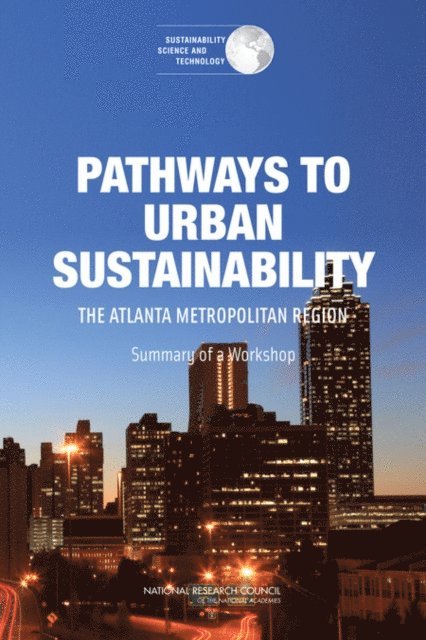
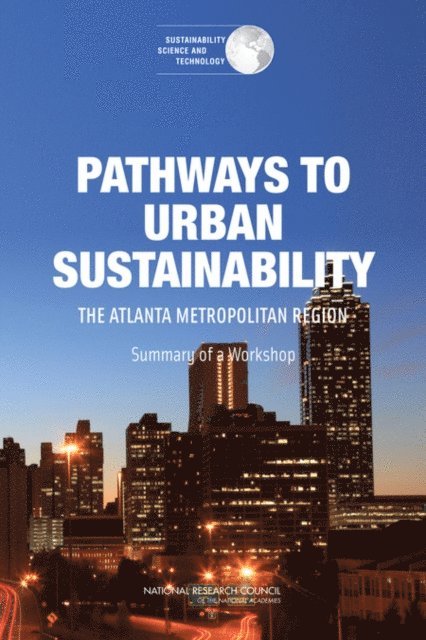
The U.S. population is more than 80 percent urban. Recognizing that many metropolitan areas in the United States have been experimenting with various approaches to sustainability, and that despite the differences among regions, there are likely some core similarities and transferable knowledge, Roundtable members selected the metropolitan Atlanta, Georgia region as a case study. The Atlanta region provided a compelling example for exploring urban sustainability issues because of the region''s rapid growth rate, well-documented challenges with water, land use, and transportation; and its level of engagement with federal government agencies on matters related to sustainability.
Pathways to Urban Sustainability: Lessons from the Atlanta Metropolitan Region: Summary of a Workshop explores the Atlanta region''s approach to urban sustainability, with an emphasis on building evidence based foundation upon which policies and programs might be developed. The two day workshop held on September 30 and October 1, 2010 examined how the interaction of various systems (natural and human systems; energy, water and transportations systems) affect the region''s social, economic, and environmental conditions. The intent of this workshop summary is to analyze a metropolitan region so that researchers and practitioners can improve their understanding of the spatial and temporal aspects of urban sustainability.
276 kr
Läs direkt efter köp
The U.S. population is more than 80 percent urban. Recognizing that many metropolitan areas in the United States have been experimenting with various approaches to sustainability, and that despite the differences among regions, there are likely some core similarities and transferable knowledge, Roundtable members selected the metropolitan Atlanta, Georgia region as a case study. The Atlanta region provided a compelling example for exploring urban sustainability issues because of the region''s rapid growth rate, well-documented challenges with water, land use, and transportation; and its level of engagement with federal government agencies on matters related to sustainability.
Pathways to Urban Sustainability: Lessons from the Atlanta Metropolitan Region: Summary of a Workshop explores the Atlanta region''s approach to urban sustainability, with an emphasis on building evidence based foundation upon which policies and programs might be developed. The two day workshop held on September 30 and October 1, 2010 examined how the interaction of various systems (natural and human systems; energy, water and transportations systems) affect the region''s social, economic, and environmental conditions. The intent of this workshop summary is to analyze a metropolitan region so that researchers and practitioners can improve their understanding of the spatial and temporal aspects of urban sustainability.
528 kr
Läs direkt efter köp
Sustainability is based on a simple and long-recognized factual premise: Everything that humans require for their survival and well-being depends, directly or indirectly, on the natural environment. The environment provides the air we breathe, the water we drink, and the food we eat.
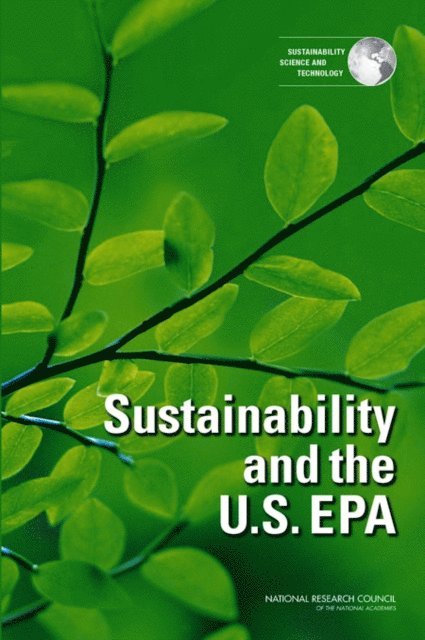
Recognizing the importance of sustainability to its work, the U.S. Environmental Protection Agency (EPA) has been working to create programs and applications in a variety of areas to better incorporate sustainability into decision-making at the agency. To further strengthen the scientific basis for sustainability as it applies to human health and environmental protection, the EPA asked the National Research Council (NRC) to provide a framework for incorporating sustainability into the EPA''s principles and decision-making. This framework, Sustainability and the U.S. EPA, provides recommendations for a sustainability approach that both incorporates and goes beyond an approach based on assessing and managing the risks posed by pollutants that has largely shaped environmental policy since the 1980s. Although risk-based methods have led to many successes and remain important tools, the report concludes that they are not adequate to address many of the complex problems that put current and future generations at risk, such as depletion of natural resources, climate change, and loss of biodiversity. Moreover, sophisticated tools are increasingly available to address cross-cutting, complex, and challenging issues that go beyond risk management.
The report recommends that EPA formally adopt as its sustainability paradigm the widely used "three pillars" approach, which means considering the environmental, social, and economic impacts of an action or decision. Health should be expressly included in the "social" pillar. EPA should also articulate its vision for sustainability and develop a set of sustainability principles that would underlie all agency policies and programs.
487 kr
Läs direkt efter köp
Sustainability is based on a simple and long-recognized factual premise: Everything that humans require for their survival and well-being depends, directly or indirectly, on the natural environment. The environment provides the air we breathe, the water we drink, and the food we eat.
Recognizing the importance of sustainability to its work, the U.S. Environmental Protection Agency (EPA) has been working to create programs and applications in a variety of areas to better incorporate sustainability into decision-making at the agency. To further strengthen the scientific basis for sustainability as it applies to human health and environmental protection, the EPA asked the National Research Council (NRC) to provide a framework for incorporating sustainability into the EPA''s principles and decision-making. This framework, Sustainability and the U.S. EPA, provides recommendations for a sustainability approach that both incorporates and goes beyond an approach based on assessing and managing the risks posed by pollutants that has largely shaped environmental policy since the 1980s. Although risk-based methods have led to many successes and remain important tools, the report concludes that they are not adequate to address many of the complex problems that put current and future generations at risk, such as depletion of natural resources, climate change, and loss of biodiversity. Moreover, sophisticated tools are increasingly available to address cross-cutting, complex, and challenging issues that go beyond risk management.
The report recommends that EPA formally adopt as its sustainability paradigm the widely used "three pillars" approach, which means considering the environmental, social, and economic impacts of an action or decision. Health should be expressly included in the "social" pillar. EPA should also articulate its vision for sustainability and develop a set of sustainability principles that would underlie all agency policies and programs.
702 kr
Läs direkt efter köp
The National Research Council''s Science and Technology for Sustainability Program hosted two workshops in 2011 addressing the sustainability challenges associated with food security for all. The first workshop, Measuring Food Insecurity and Assessing the Sustainability of Global Food Systems, explored the availability and quality of commonly used indicators for food security and malnutrition; poverty; and natural resources and agricultural productivity. It was organized around the three broad dimensions of sustainable food security: (1) availability, (2) access, and (3) utilization. The workshop reviewed the existing data to encourage action and identify knowledge gaps. The second workshop, Exploring Sustainable Solutions for Increasing Global Food Supplies, focused specifically on assuring the availability of adequate food supplies. How can food production be increased to meet the needs of a population expected to reach over 9 billion by 2050? Workshop objectives included identifying the major challenges and opportunities associated with achieving sustainable food security and identifying needed policy, science, and governance interventions. Workshop participants discussed long term natural resource constraints, specifically water, land and forests, soils, biodiversity and fisheries. They also examined the role of knowledge, technology, modern production practices, and infrastructure in supporting expanded agricultural production and the significant risks to future productivity posed by climate change. This is a report of two workshops.
618 kr
Läs direkt efter köp
A "sustainable society," according to one definition, "is one that can persist over generations; one that is far-seeing enough, flexible enough, and wise enough not to undermine either its physical or its social system of support." As the government sector works hard to ensure sufficient fresh water, food, energy, housing, health, and education for the nation without limiting resources for the future generations, it''s clear that there is no sufficient organization to deal with sustainability issues. Each federal agency appears to have a single mandate or a single area of expertise making it difficult to tackle issues such as managing the ecosystem. Key resource domains, which include water, land, energy, and nonrenewable resources, for example, are nearly-completely connected yet different agencies exist to address only one aspect of these domains.
The legendary ecologist John Muir wrote in 1911 that "when we try to pick out anything by itself, we find it hitched to everything else in the Universe." Thus, in order for the nation to be successful in sustaining its resources, "linkages" will need to be built among federal, state, and local governments; nongovernmental organizations (NGOs); and the private sector. The National Research Council (NRC) was asked by several federal agencies, foundations, and the private sector to provide guidance to the federal government on issues related to sustainability linkages. The NRC assigned the task to as committee with a wide range of expertise in government, academia, and business. The committee held public fact-finding meetings to hear from agencies and stakeholder groups; examined sustainability management examples; conducted extensive literature reviews; and more to address the issue. Sustainability for the Nation: Resource Connection and Governance Linkages is the committee''s report on the issue.
The report includes insight into high-priority areas for governance linkages, the challenges of managing connected systems, impediments to successful government linkages, and more. The report also features examples of government linkages which include Adaptive Management on the Platte River, Philadelphia''s Green Stormwater Infrastructure, and Managing Land Use in the Mojave.
501 kr
Läs direkt efter köp
Federal laws, regulations, and executive orders have imposed requirements for federal agencies to move toward the sustainable acquisition of goods and services, including the incorporation of sustainable purchasing into federal agency decision making. Since the federal government is such a significant player in the market, its move to incorporate sustainable procurement practices could have a profound impact on the types of products being developed for the market as a whole.
The General Services Administration (GSA) has played a key role in furthering sustainable procurement practices throughout the federal government. GSA is responsible for formulating and maintaining government-wide policies covering a variety of administrative actions, including those related to procurement and management. GSA has several ongoing activities related to sustainable procurement to assess the feasibility of working with the federal supplier community - vendors and contractors that serve federal agencies to measure and reduce greenhouse gas emissions in the supply chain while encouraging sustainable operations among suppliers. GSA has also been actively developing programs to assist federal agencies in making sustainable procurement decisions. As federal agencies cannot directly fund the development of sustainable procurement tools, they are particularly interested in understanding how to foster innovation and provide incentives for collaboration between developers and users of tools for sustainable purchasing throughout the supply chain. The training of procurement professionals is also a priority for these agencies.
To assist efforts to build sustainability considerations into the procurement process, the National Research Council appointed a committee to organize a two-day workshop that explored ways to better incorporate sustainability considerations into procurement tools and capabilities across the public and private sectors. The workshop was designed to help participants assess the current landscape of green purchasing tools, identify emerging needs for enhanced or new tools and opportunities to develop them, identify potential barriers to progress, and explore potential solutions. The workshop provided an opportunity for participants to discuss challenges related to sustainable purchasing and to developing new procurement tools. Sustainability Considerations for Procurement Tools and Capabilities reviews the presenters'' recommendations and tools currently used in sustainable procurement, such as databases for ecolabels and standards, codes, or regulations and other nontechnological tools such as policies, frameworks, rating systems, and product indexes.
552 kr
Läs direkt efter köp
Pathways to Urban Sustainability: Perspective from Portland and the Pacific Northwest is the summary of a workshop convened by the National Research Council''s Science and Technology for Sustainability Program in May 2013 to examine issues relating to sustainability and human-environment interactions in the Portland metropolitan region. Topics addressed included the role of land-use restrictions on development, transportation innovations, and economic and social challenges. The speakers at the workshop used examples from Portland and the greater Pacific Northwest region to explore critical questions in finding pathways to urban sustainability. This was the third and final of a series of three place-based urban sustainability workshops - the other two workshops focused on Atlanta, Georgia and Houston, Texas. These public workshops gathered local, state, and federal officials, academics, and key stakeholders to examine how challenges due to continued growth in the regions can be addressed within the context of sustainability.
For more than 40 years, the Portland Metropolitan Region has been a national leader in urban policies and investments intended to revitalize the central city and adjacent neighborhoods, preserve the environment, improve equity, and make the city more economically competitive and livable. Portland has been both emulated as path breaking and discounted as overly idiosyncratic. Among the elements contributing to Portland''s success have been strong public-private partnerships, a culture of planning, and a willingness to implement diverse ideas generated by federal, state, and local agencies, academics, and the private sector. Regionally, Portland benefits from its location in the middle of the progressive Cascadia Corridor, stretching from Vancouver, British Columbia, to San Francisco, California.
This report uses examples from Portland and the Northwest U.S./S.W. Canada region to explore critical questions about the future of urban sustainability. The report provides background about Portland and Cascadia, emphasizing policy innovations and lessons that are potentially transferable elsewhere; focuses on ways to leverage local success through partnerships with state and federal agencies, companies, and nongovernment organizations; examines academic and corporate scientific and engineering research that could help cities to become more sustainable; and addresses the challenging question of how resource-constrained cities can become agents for achieving broader societal goals not directly linked to their operational mandates, such as climate change mitigation, energy independence, and improvement in human health, particularly in low-income communities.
720 kr
Skickas inom 3-6 vardagar
685 kr
Läs direkt efter köp
The Department of Energy''s Office of Environmental Management''s (EM) mission is the safe cleanup of sites associated with the government-led development of nuclear weapons and nuclear energy. While many of these legacy sites have completed cleanup, the largest and most complex sites have not been fully remediated. The cleanup of these sites is proceeding under legally enforceable agreements with timelines for hundreds of milestones. EM is reviewing alternative approaches to increase effectiveness and improve cost efficiencies of its cleanup activities, especially for sites that will have residual contamination when active cleanup is complete.
This report is the summary of two workshops convened in October 2013 and January 2014 on best practices for risk-informed remedy selection, closure, and post-closure control of radioactive and chemically contaminated sites that present significant difficulty for remediation to unrestricted release. The workshop series aimed to explore best practices that promote effective, risk-informed decision making and future opportunities to improve remediation approaches and practices.In the Workshop #1 section of Best Practices for Risk-Informed Decision Making Regarding Contaminated Sites, the report examines holistic approaches for remediating sites with multiple contaminant sources and post-closure uses, and approaches for incorporating a sustainability framework into decision making regarding site remediation, closure, and post-closure control. In Workshop #2, the report focuses on post-closure controls, assessment of long-term performance of site remedies, and best practices for risk-based remediation decisions.
694 kr
Skickas inom 3-6 vardagar
633 kr
Läs direkt efter köp
In its current strategic plan, the U.S. Environmental Protection Agency (EPA) describes a cross-agency strategy to advance sustainable environmental outcomes and optimize economic and social outcomes through Agency decisions and actions. Sustainability has evolved from an aspiration to a growing body of practices. The evolution includes a transition from the development of broad goals toward the implementation of specific policies and programs for achieving them and the use of indicators and metrics for measuring progress. Without losing focus on implementing its existing regulatory mandates, EPA''s incorporation of sustainability considerations into its decision-making about potential environmental, social, and economic outcomes involves shifting from a focus on specific pollutants in an environmental medium (air, water, or land) to a broader assessment of interactions among human, natural, and manufactured systems. EPA has indicated that it will need to consider the use of a variety of analytic tools and approaches to assess the potential sustainability-related effects of its decisions and actions in response to complex environmental challenges.
Sustainability Concepts in Decision-Making: Tools and Approaches for the U.S. Environmental Protection Agency examines scientific tools and approaches for incorporating sustainability concepts into assessments used to support EPA decision making. Using specific case studies, this report considers the application of analytic and scientific tools, methods, and approaches presented in the 2011 NRC report Sustainability and the U.S. EPA. This report examines both currently available and emerging tools, methods, and approaches to find those most appropriate for assessing and/or evaluating potential economic, social and environmental outcomes within an EPA decision context. Sustainability Concepts in Decision Making also discusses data needs and post-decision evaluation of outcomes on dimensions of sustainability. A broad array of sustainability tools and approaches are suitable for assessing potential environmental, social, and economic outcomes in EPA''s decision-making context. The recommendations of this report will assist the agency to optimize environmental, social, and economic outcomes in EPA decisions.
568 kr
Skickas inom 3-6 vardagar