Scott H. Moore - Böcker
Visar alla böcker från författaren Scott H. Moore. Handla med fri frakt och snabb leverans.
4 produkter
4 produkter
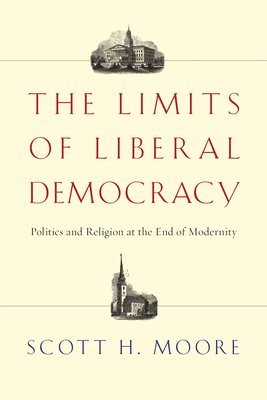
The Limits of Liberal Democracy: Politics and Religion at the End of Modernity
Häftad, Engelska, 2009
275 kr
Skickas inom 3-6 vardagar
315 kr
Skickas inom 10-15 vardagar
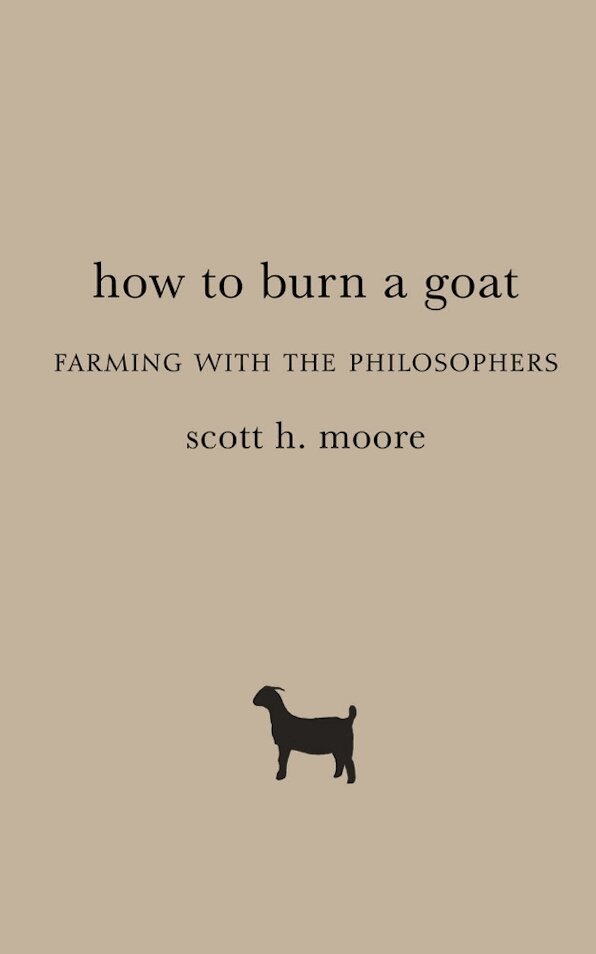
The ancient Roman orator Cicero famously believed, "If you have a garden and a library, you have everything you need." Contemporary philosopher Scott H. Moore agrees and puts this celebrated aphorism to the test.In How to Burn a Goat: Farming with the Philosophers, Moore speculates on the practice of farming through the lens of philosophy and literature. He weaves together a tapestry of philosophical reflections on work and leisure, the nature of the virtues, and the role and limitations of technology and higher education with personal reflections on the joys and trials of farm life on his Crawford, Texas, farm.Full of self-deprecating humor, Moore relates his own experience of a philosopher turned farmer. His efforts at scholar-farmer are haunted by questions from the world's great minds—"Does Plato's 'city of sows' ring true?," "Can Ockham help break a recalcitrant heifer?," "How can Heidegger help with raising swine?," "What insights does Iris Murdoch offer for pest control?" Combining insight with down-to-earth vignettes, Moore joins Wendell Berry, E. B. White, George Orwell, and many more in recognizing the truths deeply rooted in the management of the practical affairs of a farm.Moore argues that a return to agrarian roots is needed to restore Aristotelian wonder and wisdom in a world increasingly defined by technology. Rejecting the idea that humans are simply cogs in a wheel, he shows how greater human happiness can be found in the meaningful labor of tending to nature, rather than the ever-expanding march of automation.
423 kr
Skickas inom 10-15 vardagar
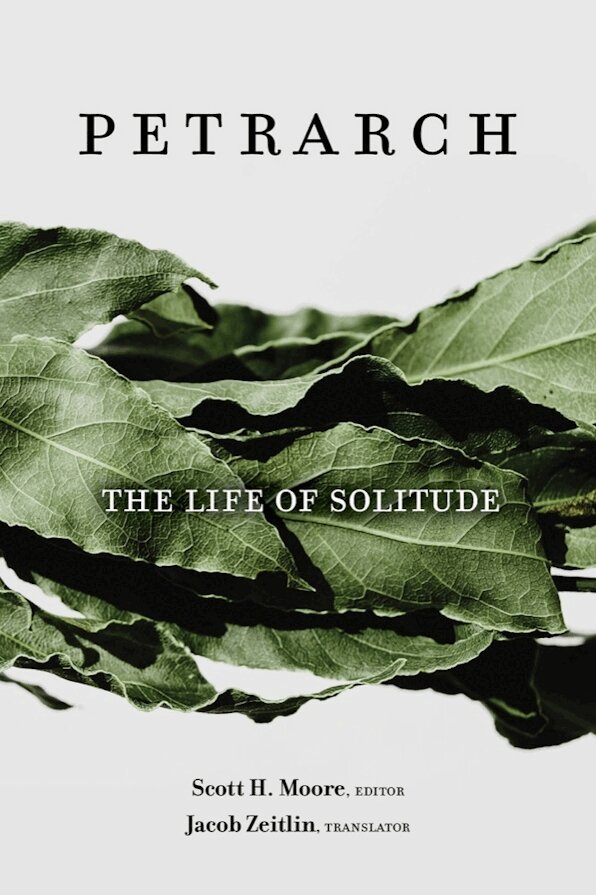
Francesco Petrarca (Petrarch, 1304–1374) is universally regarded as one of the greatest Italian poets and considered to be the "Father of Renaissance Humanism." Petrarch is best known for his poetry, and especially for his sonnets, composed in the vernacular Italian dialect of his homeland. But Petrarch was also the author of an extraordinary body of prose works in Latin, including numerous books, essays, and volumes of his letters, which, with Cicero as his model, he collected, edited, and preserved for posterity.Included among these Latin prose works is The Life of Solitude ( De vita solitaria), which Petrarch began during Lent of 1346, and then sent in 1366—after twenty years of reflection, addition, and correction—to its dedicatee. Book I contains an argument for why a life of solitude and contemplation is superior to a busy life of civic obligation and commerce. Book II contains a long enumeration of exemplars of the solitary life drawn from history and literature (and occasionally mythology). Included in Book II are provocative digressions on whether one has an obligation to serve a tyrant and on the failures of contemporary monarchs to recover the holy sites in the East. Petrarch's solitary life is not an apology for monastic solitude. On the contrary, it contains a strong defense of friendship, the pursuit of virtue, and the roles that both secular and religious literature and philosophy play in human flourishing.This updated edition of Jacob Zeitlin's 1924 English translation restructures and numbers the text to make it consistent with the best available scholarly editions of De vita solitaria. The volume includes a new introduction by Scott H. Moore, Associate Professor of Philosophy and Great Texts and Assistant Director of the University Scholars Program at Baylor University, which situates Petrarch and the text within the larger traditions of virtue ethics, renaissance humanism, and reflections on the solitary life.
543 kr
Skickas inom 10-15 vardagar
Francesco Petrarca (Petrarch, 1304–1374) is universally regarded as one of the greatest Italian poets and considered to be the "Father of Renaissance Humanism." Petrarch is best known for his poetry, and especially for his sonnets, composed in the vernacular Italian dialect of his homeland. But Petrarch was also the author of an extraordinary body of prose works in Latin, including numerous books, essays, and volumes of his letters, which, with Cicero as his model, he collected, edited, and preserved for posterity.Included among these Latin prose works is The Life of Solitude ( De vita solitaria), which Petrarch began during Lent of 1346, and then sent in 1366—after twenty years of reflection, addition, and correction—to its dedicatee. Book I contains an argument for why a life of solitude and contemplation is superior to a busy life of civic obligation and commerce. Book II contains a long enumeration of exemplars of the solitary life drawn from history and literature (and occasionally mythology). Included in Book II are provocative digressions on whether one has an obligation to serve a tyrant and on the failures of contemporary monarchs to recover the holy sites in the East. Petrarch's solitary life is not an apology for monastic solitude. On the contrary, it contains a strong defense of friendship, the pursuit of virtue, and the roles that both secular and religious literature and philosophy play in human flourishing.This updated edition of Jacob Zeitlin's 1924 English translation restructures and numbers the text to make it consistent with the best available scholarly editions of De vita solitaria. The volume includes a new introduction by Scott H. Moore, Associate Professor of Philosophy and Great Texts and Assistant Director of the University Scholars Program at Baylor University, which situates Petrarch and the text within the larger traditions of virtue ethics, renaissance humanism, and reflections on the solitary life.