Francesco Petrarch - Böcker
Visar alla böcker från författaren Francesco Petrarch. Handla med fri frakt och snabb leverans.
21 produkter
21 produkter
456 kr
Skickas inom 10-15 vardagar
In this volume, David R. Slavitt, the distinguished translator and author of more than one hundred works of fiction, poetry, and drama, turns his skills to Il Canzoniere (Songbook) by Petrarch, the most influential poet in the history of the sonnet. In Petrarch’s hands, lyric verse was transformed from an expression of courtly devotion into a way of conversing with one’s own heart and mind. Slavitt renders the sonnets in Il Canzoniere, along with the shorter madrigals and ballate, in a sparkling and engaging idiom and in rhythm and rhyme that do justice to Petrarch’s achievement.At the center of Il Canzoniere (also known as Rime Sparse, or Scattered Rhymes) is Petrarch’s obsessive love for Laura, a woman Petrarch asserts he first saw at Easter Mass on April 6, 1327, in the church of Sainte-Claire d’Avignon when he was twenty-two. Though Laura was already married, the sight of her woke in the poet a passion that would last beyond her premature death on April 6, 1348, exactly twenty-one years after he first encountered her. Unlike Dante’s Beatrice—a savior leading the poet by the hand toward divine love—Petrarch’s Laura elicits more earthbound and erotic feelings. David Slavitt’s deft new translation captures the nuanced tone of Petrarch’s poems—their joy and despair, and eventually their grief over Laura’s death. Readers of poetry and especially those with an interest in the sonnet and its history will welcome this volume.
406 kr
Skickas inom 10-15 vardagar
For teachers and students of Petrarch, Robert M. Durling’s edition of the poems has become the standard one. Readers have praised the translation as both graceful and accurate, conveying a real understanding of what this difficult poet is saying.The literalness of the prose translation makes this beautiful book especially useful to students who lack a full command of Italian. And students reading the verse in the original will find here an authoritative text.
329 kr
Skickas inom 5-8 vardagar
245 kr
Skickas inom 5-8 vardagar
423 kr
Skickas inom 10-15 vardagar
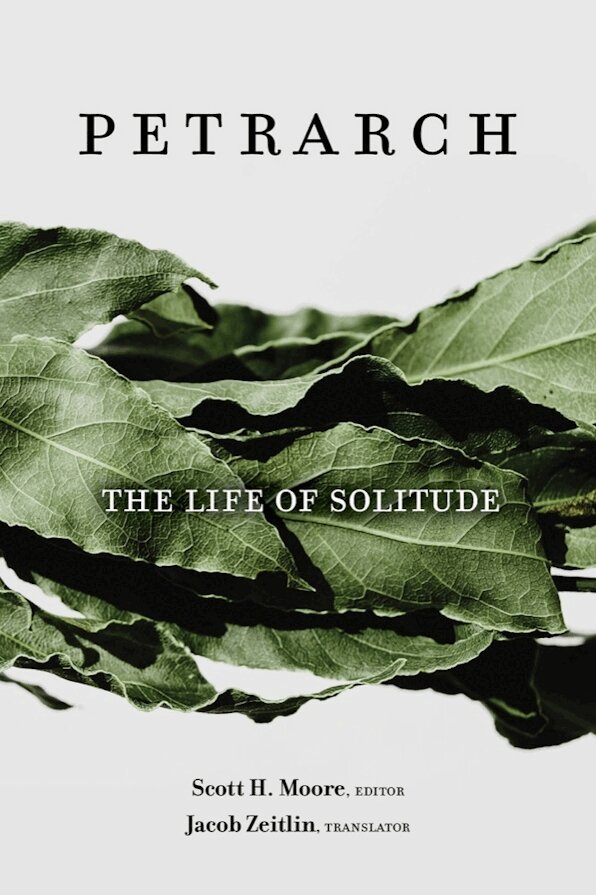
Francesco Petrarca (Petrarch, 1304–1374) is universally regarded as one of the greatest Italian poets and considered to be the "Father of Renaissance Humanism." Petrarch is best known for his poetry, and especially for his sonnets, composed in the vernacular Italian dialect of his homeland. But Petrarch was also the author of an extraordinary body of prose works in Latin, including numerous books, essays, and volumes of his letters, which, with Cicero as his model, he collected, edited, and preserved for posterity.Included among these Latin prose works is The Life of Solitude ( De vita solitaria), which Petrarch began during Lent of 1346, and then sent in 1366—after twenty years of reflection, addition, and correction—to its dedicatee. Book I contains an argument for why a life of solitude and contemplation is superior to a busy life of civic obligation and commerce. Book II contains a long enumeration of exemplars of the solitary life drawn from history and literature (and occasionally mythology). Included in Book II are provocative digressions on whether one has an obligation to serve a tyrant and on the failures of contemporary monarchs to recover the holy sites in the East. Petrarch's solitary life is not an apology for monastic solitude. On the contrary, it contains a strong defense of friendship, the pursuit of virtue, and the roles that both secular and religious literature and philosophy play in human flourishing.This updated edition of Jacob Zeitlin's 1924 English translation restructures and numbers the text to make it consistent with the best available scholarly editions of De vita solitaria. The volume includes a new introduction by Scott H. Moore, Associate Professor of Philosophy and Great Texts and Assistant Director of the University Scholars Program at Baylor University, which situates Petrarch and the text within the larger traditions of virtue ethics, renaissance humanism, and reflections on the solitary life.
543 kr
Skickas inom 10-15 vardagar
Francesco Petrarca (Petrarch, 1304–1374) is universally regarded as one of the greatest Italian poets and considered to be the "Father of Renaissance Humanism." Petrarch is best known for his poetry, and especially for his sonnets, composed in the vernacular Italian dialect of his homeland. But Petrarch was also the author of an extraordinary body of prose works in Latin, including numerous books, essays, and volumes of his letters, which, with Cicero as his model, he collected, edited, and preserved for posterity.Included among these Latin prose works is The Life of Solitude ( De vita solitaria), which Petrarch began during Lent of 1346, and then sent in 1366—after twenty years of reflection, addition, and correction—to its dedicatee. Book I contains an argument for why a life of solitude and contemplation is superior to a busy life of civic obligation and commerce. Book II contains a long enumeration of exemplars of the solitary life drawn from history and literature (and occasionally mythology). Included in Book II are provocative digressions on whether one has an obligation to serve a tyrant and on the failures of contemporary monarchs to recover the holy sites in the East. Petrarch's solitary life is not an apology for monastic solitude. On the contrary, it contains a strong defense of friendship, the pursuit of virtue, and the roles that both secular and religious literature and philosophy play in human flourishing.This updated edition of Jacob Zeitlin's 1924 English translation restructures and numbers the text to make it consistent with the best available scholarly editions of De vita solitaria. The volume includes a new introduction by Scott H. Moore, Associate Professor of Philosophy and Great Texts and Assistant Director of the University Scholars Program at Baylor University, which situates Petrarch and the text within the larger traditions of virtue ethics, renaissance humanism, and reflections on the solitary life.
447 kr
Skickas inom 5-8 vardagar
447 kr
Skickas inom 5-8 vardagar
Letters on Familiar Matters (Rerum Familiarium Libri), Vol. 3, Books XVII-XXIV
Häftad, Engelska, 2009
447 kr
Skickas inom 5-8 vardagar
447 kr
Skickas inom 5-8 vardagar
447 kr
Skickas inom 5-8 vardagar
663 kr
Skickas inom 5-8 vardagar
591 kr
Skickas inom 5-8 vardagar
Letters on Familiar Matters (Rerum Familiarium Libri), Vol. 3, Books XVII-XXIV
Inbunden, Engelska, 2009
591 kr
Skickas inom 5-8 vardagar
591 kr
Skickas inom 5-8 vardagar
591 kr
Skickas inom 5-8 vardagar
137 kr
Skickas inom 7-10 vardagar
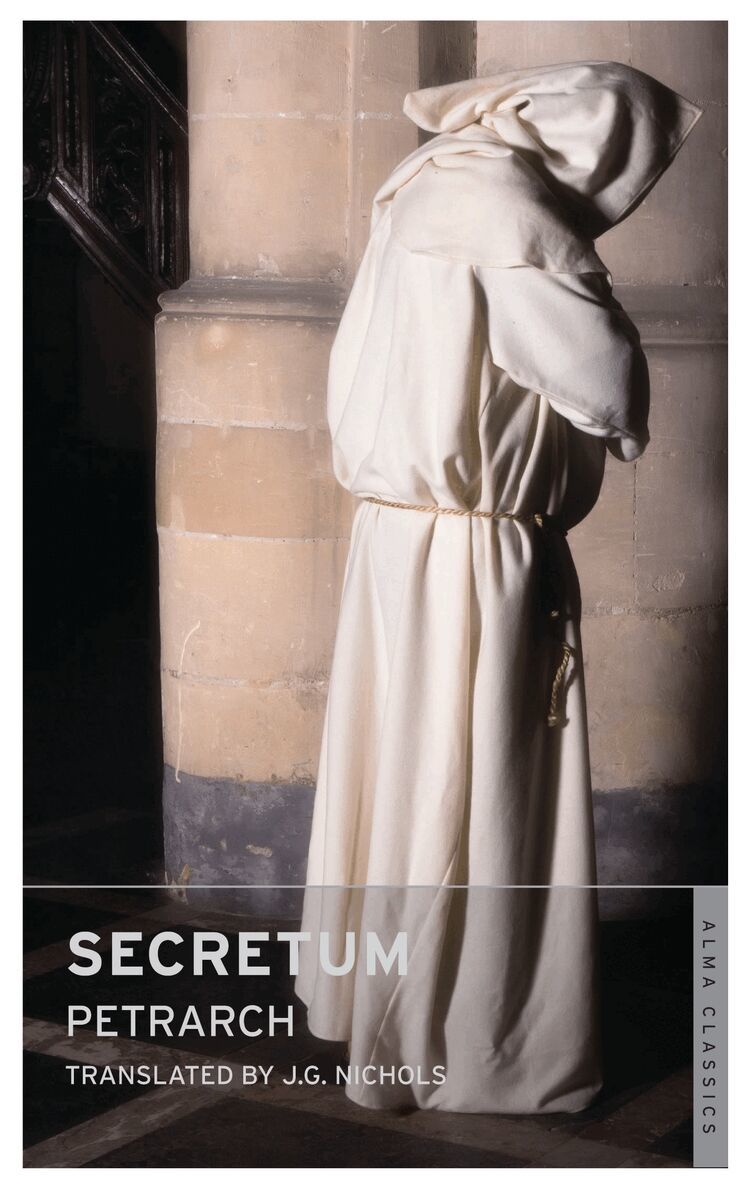
Only edition in printBy writing what he called a “secret book” – taking the shape of a conversation between himself and St Augustine – Petrarch aimed to compose a cathartic text which would alleviate his spiritual crisis and help him make further inroads towards knowledge and fulfilment.At once an intimate repository of his most personal thoughts and emotions and a literary masterpiece dealing with universal issues, Secretum – Petrarch’s best-known work in Latin – is a fascinating and pioneering example of the autobiographical genre.
181 kr
Skickas
The Canzoniere of Petrarch (1304-74) is among Europe's most famous and influential books of lyrics. The focus of this large collection (7,500 lines) is Petrarch's lifelong love for the mysterious Laura, but the themes he treats are many and various. Often regarded as the first modern man to emerge from a mediaeval world, Petrarch remains modern in his perplexities, uncertainties, the hesitancies and diffidence he reveals, paradoxically, with assured artistry. J.G.Nichols brings out the obsessive passion, but also his wit and serious humour: The saying's all too true: we lose our hairbut not our habits; and our failing sensedoes not make mortal feelings less intense.The shade our bodies cast is guilty here. from 'Poem 122'This is a rare event - a new verse translation of the whole of the Canzoniere, with notes on the page which illuminate difficulties and suggest the many connections between the poems. They are not randomly collected; they constitute a complex whole which continues to disclose new aspects as we look from different angles. Even those poems which have long been famous in the English of Wyatt and Surrey gain when read in context.J.G. NICHOLS was born in 1930 and graduated from Liverpool University. He has published translations of the Colloquies of Guido Gozzano, of Halcyon by Gabriele d'Annunzio, and of Leopardi's Canti, all with Carcanet; a volume of his own poetry, The Flighty Horse; and criticism of the work of Ben Jonson and Sir Philip Sidney.
157 kr
Skickas inom 5-8 vardagar
317 kr
Skickas inom 5-8 vardagar
271 kr
Skickas inom 5-8 vardagar
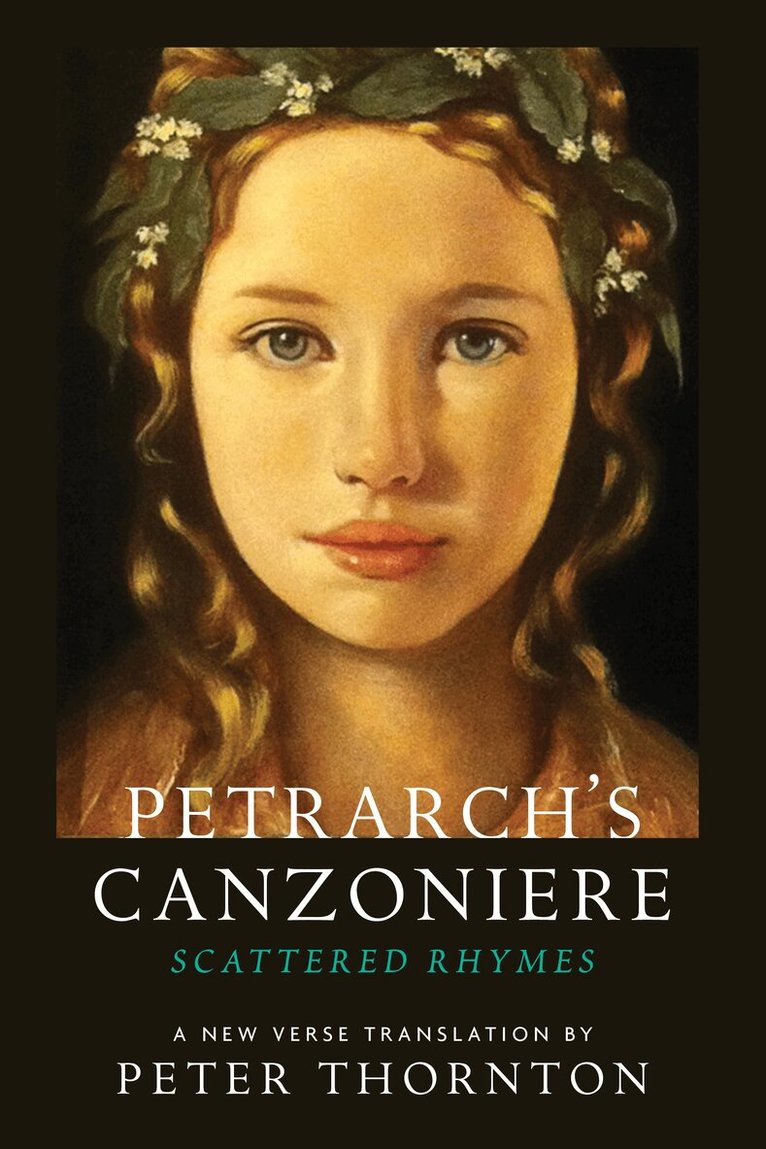
The poetry of Petrarch, including the love poems to Laura, brought to the 21st Century ina new, direct and luminous verse translation. 670 years ago Francesco Petrarch settled down to write of his love for young Laura, spied by him on an April day and stolen by the plague exactly a year later. His work is one of civilization's most immaculate achievements, opening out into spirituality and nature and refining the sonnet form. Following his acclaimed translation of Dante's Inferno, which 'immediately joins ranks with the very best available in English' (Richard Lansing), Peter Thornton brings the poetry of Petrarch to the 21st Century in direct and luminous verse. Complete with introduction and explanatory notes. AUTHOR: The Italian poet Petrarch is one of the supreme love poets of world literature. Born in Italy in 1304, he moved with his family to Provence. On April 6, 1327, in a church in Avignon, Petrarch was smitten by the sight of a young woman named Laura. She did not return his love, but the love stayed with Petrarch even after Laura's early death. Love became a spiritual ideal, redolent in the natural world. Laura inspired the 366 poems that make up his Canzoniere, or Rerum vulgarum fragmenta, translated here as Scattered Rhymes. Petrarch lived till 1374, and was writing and revising his sonnets into his last years. Peter Thornton grew up in New York City and attended a Jesuit prep school in Manhattan where the curriculum was still based on Latin and Greek. After graduating from Boston College, he originally set out to be an academic. He took a Ph.D. in English literature at Stanford and taught for several years at Bradley University in Illinois. Then, like his father and his three brothers, he decided to become a lawyer and spent the rest of his career happily practising law in Chicago, where he was recognised as a leading practitioner. The intellectual rigor of the law, however, did not satisfy his hunger for poetry and he spent decades translating Dante and Petrarch into English verse. Peter's translation of Dante's Inferno was acclaimed by Richard Lansing as a work that 'immediately joins ranks with the very best available in English.'