Scott Spector - Böcker
Visar alla böcker från författaren Scott Spector. Handla med fri frakt och snabb leverans.
7 produkter
7 produkter
813 kr
Skickas inom 7-10 vardagar
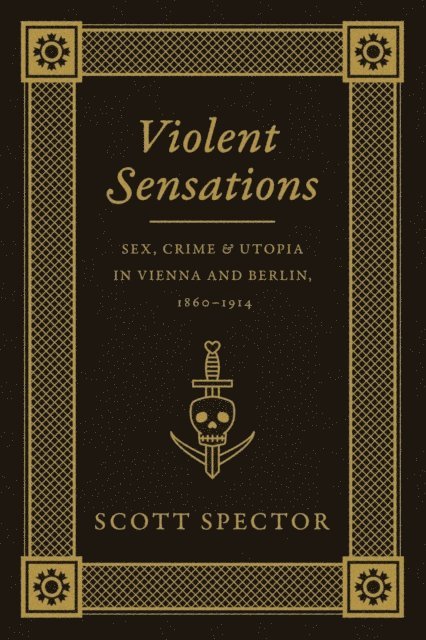
Around the turn of the twentieth century, Vienna and Berlin were centers of scientific knowledge, accompanied by a sense of triumphalism and confidence in progress. Yet they were also sites of fascination with urban decay, often focused on sexual and criminal deviants and the tales of violence surrounding them. Sensational media reports fed the prurient public’s hunger for stories from the criminal underworld: sadism, sexual murder, serial killings, accusations of Jewish ritual child murder—as well as male and female homosexuality.In Violent Sensations, Scott Spector explores how the protagonists of these stories—people at society’s margins—were given new identities defined by the groundbreaking sciences of psychiatry, sexology, and criminology, and how this expert knowledge was then transmitted to an eager public by journalists covering court cases and police investigations. The book analyzes these sexual and criminal subjects on three levels: first, the expertise of scientists, doctors, lawyers, and scholars; second, the sensationalism of newspaper scandal and pulp fiction; and, third, the subjective ways that the figures themselves came to understand who they were. Throughout, Spector answers important questions about how fantasies of extreme depravity and bestiality figure into the central European self-image of cities as centers of progressive civilization, as well as the ways in which the sciences of social control emerged alongside the burgeoning emancipation of women and homosexuals.
313 kr
Skickas inom 7-10 vardagar
Around the turn of the twentieth century, Vienna and Berlin were centers of scientific knowledge, accompanied by a sense of triumphalism and confidence in progress. Yet they were also sites of fascination with urban decay, often focused on sexual and criminal deviants and the tales of violence surrounding them. Sensational media reports fed the prurient public’s hunger for stories from the criminal underworld: sadism, sexual murder, serial killings, accusations of Jewish ritual child murder—as well as male and female homosexuality.In Violent Sensations, Scott Spector explores how the protagonists of these stories—people at society’s margins—were given new identities defined by the groundbreaking sciences of psychiatry, sexology, and criminology, and how this expert knowledge was then transmitted to an eager public by journalists covering court cases and police investigations. The book analyzes these sexual and criminal subjects on three levels: first, the expertise of scientists, doctors, lawyers, and scholars; second, the sensationalism of newspaper scandal and pulp fiction; and, third, the subjective ways that the figures themselves came to understand who they were. Throughout, Spector answers important questions about how fantasies of extreme depravity and bestiality figure into the central European self-image of cities as centers of progressive civilization, as well as the ways in which the sciences of social control emerged alongside the burgeoning emancipation of women and homosexuals.
891 kr
Skickas inom 10-15 vardagar
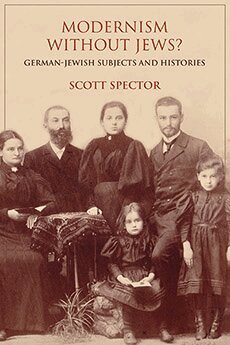
Nowhere else have Jews contributed so massively and consequentially to the general culture than in Germany. From Mendelssohn to Marx, from Freud to Einstein, Jewish contributions to secular German thought have been both wide-ranging in scope and profound in their impact. But how are these intellectual innovations contributions to European Jewish culture? How are they to be defined as Jewish? Scott Spector argues for a return to the actual subjects of German-Jewish history as a way to understand them and their worlds. By engaging deeply with the individual as well as with the literary or philosophical character of the text, Spector offers a fresh view of the presumed contradictions, uncertainties, and paradoxes that underlie the project of Jewish participation in culture. Spector forges a new definition of what modernist creativity means in our understanding of German-Jewish culture.
269 kr
Skickas inom 10-15 vardagar
Nowhere else have Jews contributed so massively and consequentially to the general culture than in Germany. From Mendelssohn to Marx, from Freud to Einstein, Jewish contributions to secular German thought have been both wide-ranging in scope and profound in their impact. But how are these intellectual innovations contributions to European Jewish culture? How are they to be defined as Jewish? Scott Spector argues for a return to the actual subjects of German-Jewish history as a way to understand them and their worlds. By engaging deeply with the individual as well as with the literary or philosophical character of the text, Spector offers a fresh view of the presumed contradictions, uncertainties, and paradoxes that underlie the project of Jewish participation in culture. Spector forges a new definition of what modernist creativity means in our understanding of German-Jewish culture.
Del 21 - Weimar & Now: German Cultural Criticism
Prague Territories
National Conflict and Cultural Innovation in Franz Kafka's Fin de Siècle
Häftad, Engelska, 2002
714 kr
Skickas inom 3-6 vardagar
Scott Spector's adventurous cultural history maps for the first time the 'territories' carved out by German-Jewish intellectuals living in Prague at the dawn of the twentieth century. Spector explores the social, cultural, and ideological contexts in which Franz Kafka and his contemporaries flourished, revealing previously unseen relationships between politics and culture. His incisive readings of a broad array of German writers feature the work of Kafka and the so-called 'Prague circle' and encompass journalism, political theory, Zionism, and translation as well as literary program and practice. With the collapse of German-liberal cultural and political power in the late-nineteenth-century Habsburg Empire, Prague's bourgeois Jews found themselves squeezed between a growing Czech national movement on the one hand and a racial rather than cultural conception of Germanness on the other. Displaced from the central social and cultural position they had come to occupy, the members of the 'postliberal' Kafka generation were dazzlingly productive and original, far out of proportion to their numbers.Seeking a relationship between ideological crisis and cultural innovation, Spector observes the emergence of new forms of territoriality. He identifies three fundamental areas of cultural inventiveness related to this Prague circle's political and cultural dilemma. One was Expressionism, a revolt against all limits and boundaries, the second was a spiritual form of Zionism incorporating a novel approach to Jewish identity that seems to have been at odds with the pragmatic establishment of a Jewish state, and the third was a sort of cultural no-man's-land in which translation and mediation took the place of 'territory'. Spector's investigation of these areas shows that the intensely particular, idiosyncratic experience of German-speaking Jews in Prague allows access to much broader and more general conditions of modernity. Combining theoretical sophistication with a refreshingly original and readable style, "Prague Territories" illuminates some early signs of a contemporary crisis from which we have not yet emerged.
2 014 kr
Skickas inom 3-6 vardagar
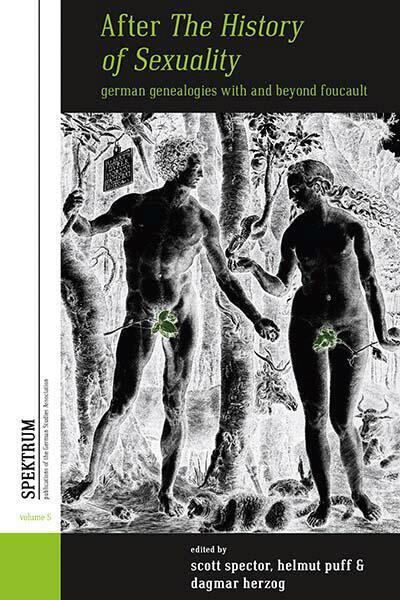
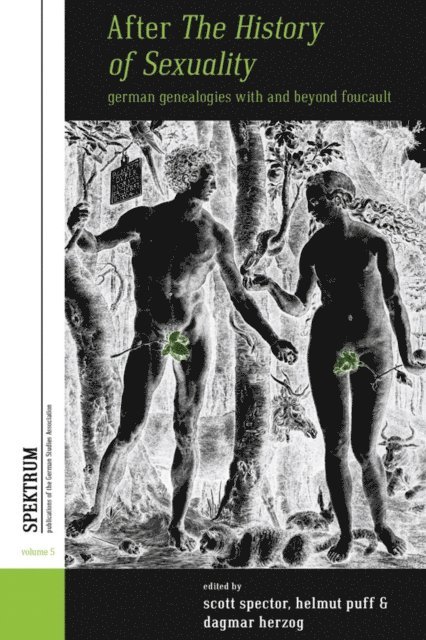
Michel Foucault’s seminal The History of Sexuality (1976–1984) has since its publication provided a context for the emergence of critical historical studies of sexuality. This collection reassesses the state of the historiography on sexuality—a field in which the German case has been traditionally central. In many diverse ways, the Foucauldian intervention has governed the formation of questions in the field as well as the assumptions about how some of these questions should be answered. It can be argued, however, that some of these revolutionary insights have ossified into dogmas or truisms within the field. Yet, as these contributions meticulously reveal, those very truisms, when revisited with a fresh eye, can lead to new, unexpected insights into the history of sexuality, necessitating a return to and reinterpretation of Foucault’s richly complex work. This volume will be necessary reading for students of historical sexuality as well as for those readers in German history and German studies generally who have an interest in the history of sexuality.
583 kr
Skickas inom 3-6 vardagar
Michel Foucault’s seminal The History of Sexuality (1976–1984) has since its publication provided a context for the emergence of critical historical studies of sexuality. This collection reassesses the state of the historiography on sexuality—a field in which the German case has been traditionally central. In many diverse ways, the Foucauldian intervention has governed the formation of questions in the field as well as the assumptions about how some of these questions should be answered. It can be argued, however, that some of these revolutionary insights have ossified into dogmas or truisms within the field. Yet, as these contributions meticulously reveal, those very truisms, when revisited with a fresh eye, can lead to new, unexpected insights into the history of sexuality, necessitating a return to and reinterpretation of Foucault’s richly complex work. This volume will be necessary reading for students of historical sexuality as well as for those readers in German history and German studies generally who have an interest in the history of sexuality.