Sean Gilsdorf - Böcker
Visar alla böcker från författaren Sean Gilsdorf. Handla med fri frakt och snabb leverans.
4 produkter
4 produkter
333 kr
Skickas inom 10-15 vardagar
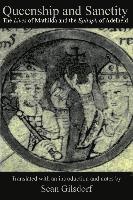
At the dawn of the second millennium, authors from monasteries in Burgundy and northern Germany recorded the lives and deaths of two powerful and pious women, Mathilda (d. 968) and Adelheid (d. 999). Both were extolled as saints, exemplary figures guided by God and witnessing to His grace. Unlike most other holy women, however, Mathilda and Adelheid were not ascetic nuns, but queens. They were deemed worthy of praise not only for their devotion to God and their lives of faith, but for integrating these traditional virtues with more ""worldly"" attributes: noble birth, royal marriage, political power and illustrious offspring. In turn, the saintly reputations of both women were used by their biographers to advance the interests not only of their own ecclesiastical communities, but of a new generation of secular rulers. This volume brings together in English the anonymous ""Lives of Mathilda"" and Odilo of Cluny's ""Epitaph of Adelheid"". With an introduction placing the texts and their subjects in historical and hagiographical context, it provides teachers and students with a crucial set of sources for the history of Europe (particularly Germany) in the 10th and 11th centuries, for the development of sacred biography and medieval notions of sanctity, and for the life of aristocratic and royal and royal women in the early Middle Ages. In addition, two appendices present contemporary accounts of Mathilda by the monk and historian Widukind of Corvey, and a survey of the evidence for Mathilda's ancestral ties to the legendary Saxon hero Widukind, whose defeat by Charlemagne in the late eighth century ultimately led to Saxony's assimilation into the Frankish church and kingdom.
1 641 kr
Skickas inom 7-10 vardagar
In the last decade, the terms “digital scholarship” and “digital humanities” have become commonplace in academia, spurring the creation of fellowships, research centres, and scholarly journals. What, however, does this “digital turn” mean for how you do scholarship as a medievalist? While many of us would never describe ourselves as “DH people,” computer-based tools and resources are central to the work we do every day in offices, libraries, and classrooms. This volume highlights the exciting ways digital methods are expanding and re-defining how we understand, represent, and teach the Middle Ages, and provides a new model for how this work is catalogued and reused within the scholarly community. The work of its contributors offers valuable insights into how “the digital” continues to shape the questions medievalists ask and the ways they answer them, but also into how those questions and answers can lead to new tools, approaches, and points of reference within the field of digital humanities itself.
2 183 kr
Skickas inom 7-10 vardagar
While the tale of Roberto Busa and the Index Thomisticus has become an origin myth for Digital Medieval Studies, less attention has been paid to the critical role of the World Wide Web as a platform and impetus for this digital turn. This volume focuses on early Medieval Studies research created with, operating through, and dependent upon the internet itself, profiling ground-breaking projects that define the genres of internet-based scholarship we now take for granted, including sourcebooks, searchable databases, digital editions and corpora, and born-digital medieval scholarship. The collection reveals how internet-based products rely upon and support a more collaborative model of research, teaching, and learning in Medieval Studies than the more individualistic, discrete one that defined earlier work in the field.
1 955 kr
Skickas inom 7-10 vardagar
The study of the religious, cultural, and political movements now known as the Crusades is one of the most well-established subfields in Medieval Studies. In the past few decades, scholars of the Crusades increasingly have employed computer-based methods to analyze their sources, organize their research, and disseminate its results to the wider world. Yet while the benefits of this approach have become clear and prompted new discoveries, the well-worn methodologies that long defined Crusade Studies do not always align with them. In this volume, a diverse group of researchers, teachers, and curators chronicle how digital scholarship has allowed them to better understand, explain, and illustrate the complex world of the Crusades as an historical phenomenon as well as a focus of present-day interest and appropriation.