Serawit Bekele Debele – författare
Visar alla böcker från författaren Serawit Bekele Debele. Handla med fri frakt och snabb leverans.
2 produkter
2 produkter
763 kr
Skickas inom 3-6 vardagar
By zooming in on African Studies in Germany, this book deals with questions around knowledge production on Africa and its diaspora; the workings of epistemic and geographic locations in "knowing" Africa; anti-Black structures in German academia; the making and sustaining of a canon and the role of the university as a gate-keeper of certain knowledges; and renderings of universalism and African history. It also engages with the specific German unease and delay to remember its colonial past and the attached problematique of discussing race and Blackness in Germany. As such, the collection interrogates the history, politics and affects of these developments within the project and politics of knowledge production on Africa. It features chapters written by students of African Studies based in different Universities in Germany from the B.A. to the Ph.D. level. The volume highlights their fresh insights on and theorizations of African Studies from their historically grounded epistemic and geographic locations. The chapters also problematize the disconnect between African Studies and African(a) Studies, critiquing how the fetishization of the "local" and the "micro" informs and shapes Africanist scholarship. Thoughts on African Studies: Conversations at ASWAD and ASAA Conferences
Del 49 - Studies of Religion in Africa
Locating Politics in Ethiopia's Irreecha Ritual
Inbunden, Engelska, 2019
2 679 kr
Skickas inom 5-8 vardagar
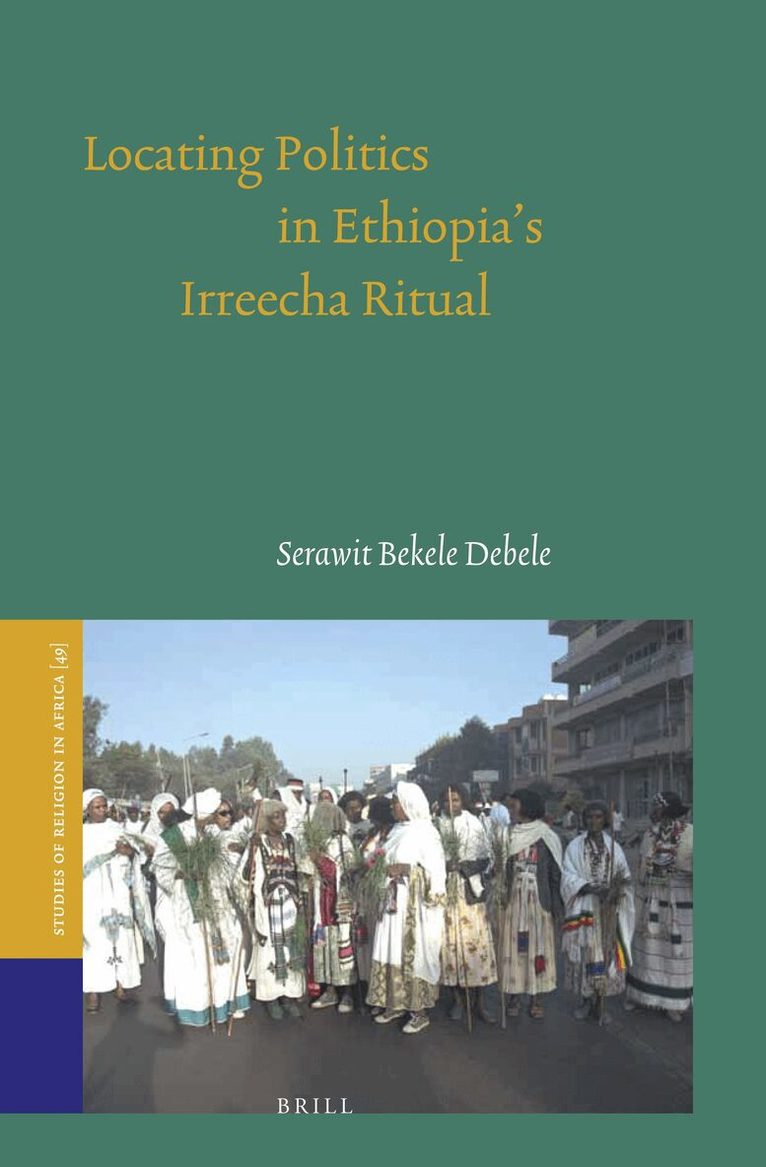
In Locating Politics in Ethiopia's Irreecha Ritual Serawit Bekele Debele gives an account of politics and political processes in contemporary Ethiopia as manifested in the annual ritual performance. Mobilizing various sources such as archives, oral accounts, conversations, videos, newspapers, and personal observations, Debele critically analyses political processes and how they are experienced, made sense of and articulated across generational, educational, religious, gender and ethnic differences as well as political persuasions. Moreover, she engages Irreecha in relation to the hugely contested meaning making processes attached to the Thanksgiving ritual which has now become an integral part of Oromo national identity.