Serge-Thomas Bonino - Böcker
Visar alla böcker från författaren Serge-Thomas Bonino. Handla med fri frakt och snabb leverans.
3 produkter
3 produkter
698 kr
Skickas inom 10-15 vardagar
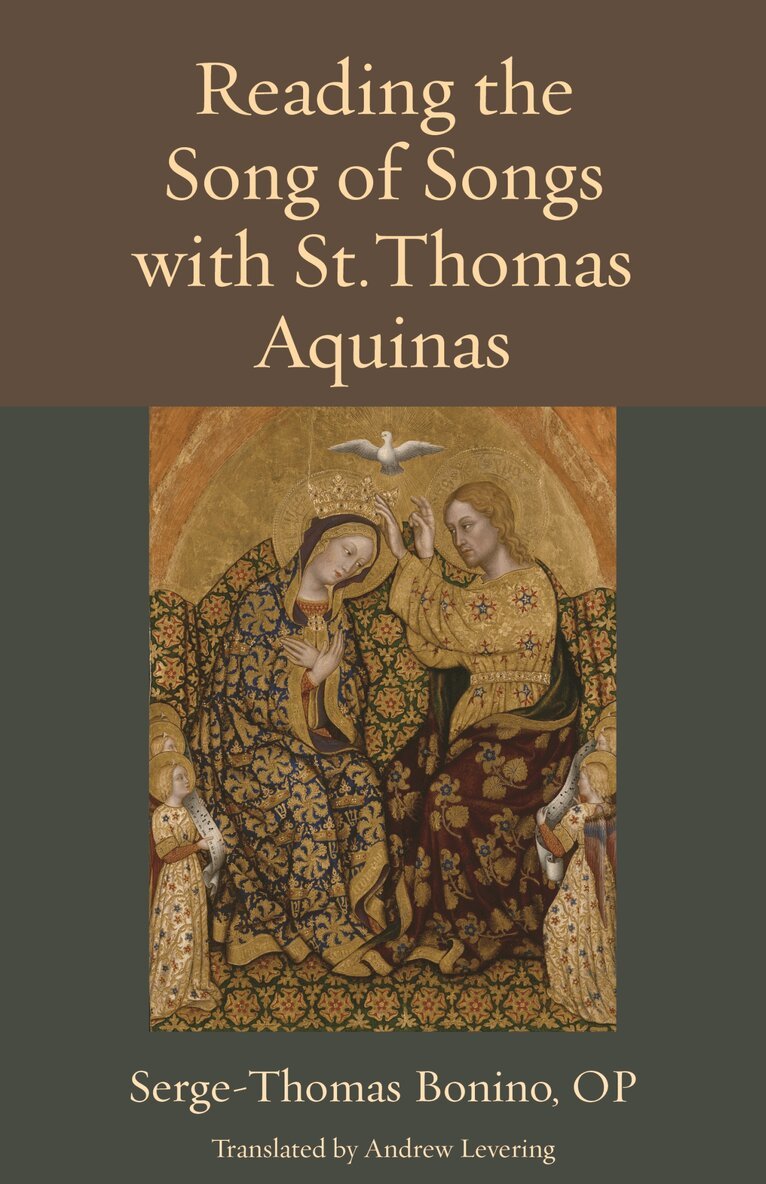
St. Thomas Aquinas never commented on the Song of Songs. The purpose of this book is to demonstrate, however, that he meditated on it and absorbed it, so that the words of the Song are for him a familiar repertoire and a theological source. His work contains numerous citations of the Song, not counting his borrowings of vocabulary and images from it. In total, there are 312 citations of the Song in Aquinas's corpus, along with citations of the Song that are found in citations that Aquinas makes of other authors (as for example in the Catena aurea). Understanding the purpose and placement of these citations significantly enriches our understanding of Aquinas as a theologian, biblical exegete, and spiritual master. The book contains an Appendix listing and contextualizing each citation.The study of the citations of the Song especially illuminates Aquinas's spiritual doctrine. By citing the Song, Aquinas emphasizes the spiritual life's path of dynamic ascent, through an ever increasing participation in the mystery of the nuptial union of Christ and the Church through love. The Song also highlights the eschatological tension or yearning present in the spiritual life, which is ordered to the fullness of beatific vision. Although Aquinas's theology is highly "intellectual," by citing the Song he brings out the affective character of the spiritual life and conveys the centrality of love in the soul's journey toward Christ. He also draws together contemplation and preaching through his use of the Song.
929 kr
Skickas inom 11-20 vardagar
"What is God?" asked Thomas Aquinas as a child. Contemplation of the mystery of God, in the light of reason enlightened by faith, is the heart of the theological enterprise. It is based on the Revelation that God has made of himself in the history of salvation and, in order to foster the understanding of faith, it assumes the best of metaphysical reflection, since the saving God revealed in Jesus Christ is not another God than the Creator of heaven and earth, the subsisting Being, the First Cause of all being.The One God deals with a first "part" of the mystery of God: God contemplated in the unity of the essence common to the three persons of the Holy Trinity. It explores the ways of our knowledge (section 1) and presents the theological question of his existence (section 2). It then sets out the perfections of God's very being (simplicity, goodness, infinity, eternity, etc.) (section 3) and, after a critical review of the value of theoretical knowledge and language (section 4), presents the principles of his action (knowledge, will, omnipotence) (section 5).The One God is a continuation of the treatises De Deo ut uno, which, in the form of a systematic, historical and doctrinal commentary on questions 2-26 of the Prima pars of the Summa Theologiae of Saint Thomas Aquinas, have succeeded one another throughout the history of the Thomist tradition. Its aim is to update a theology treatise that is unjustly neglected today and to offer teachers and students a solid and informed manual on this fundamental subject.
366 kr
Skickas inom 10-15 vardagar
St. Thomas Aquinas never wrote a commentary on the Song of Songs. The purpose of this book is to demonstrate, however, that he meditated on it and absorbed it, so that the words of the Song are for him a familiar repertoire and a theological source. His work contains numerous citations of the Song, not counting his borrowings of vocabulary and images from it. In total, there are 312 citations of the Song in Aquinas’s corpus, along with citations of the Song that are found in citations that Aquinas makes of other authors (as for example in the Catena aurea). Understanding the purpose and placement of these citations significantly enriches our understanding of Aquinas as a theologian, biblical exegete, and spiritual master. The book contains an Appendix listing and contextualizing each citation.The study of the citations of the Song especially illuminates Aquinas’s spiritual doctrine. By citing the Song, Aquinas emphasizes the spiritual life’s path of dynamic ascent, through an ever increasing participation in the mystery of the nuptial union of Christ and the Church through love. The Song also highlights the eschatological tension or yearning present in the spiritual life, which is ordered to the fullness of beatific vision. Although Aquinas’s theology is highly "intellectual," by citing the Song he brings out the affective character of the spiritual life and conveys the centrality of love in the soul’s journey toward Christ. He also draws together contemplation and preaching through his use of the Song.