Seteney Shami - Böcker
Visar alla böcker från författaren Seteney Shami. Handla med fri frakt och snabb leverans.
5 produkter
5 produkter
366 kr
Skickas inom 7-10 vardagar
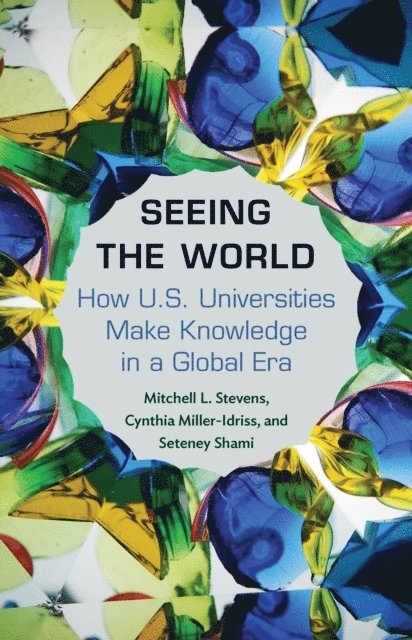
An in-depth look at why American universities continue to favor U.S.-focused social science research despite efforts to make scholarship more cosmopolitan U.S. research universities have long endeavored to be cosmopolitan places, yet the disciplines of economics, political science, and sociology have remained stubbornly parochial. Despite decades of government and philanthropic investment in international scholarship, the most prestigious academic departments still favor research and expertise on the United States. Why? Seeing the World answers this question by examining university research centers that focus on the Middle East and related regional area studies. Drawing on candid interviews with scores of top scholars and university leaders to understand how international inquiry is perceived and valued inside the academy, Seeing the World explains how intense competition for tenure-line appointments encourages faculty to pursue "American" projects that are most likely to garner professional advancement.At the same time, constrained by tight budgets at home, university leaders eagerly court patrons and clients worldwide but have a hard time getting departmental faculty to join the program. Together these dynamics shape how scholarship about the rest of the world evolves. At once a work-and-occupations study of scholarly disciplines, an essay on the formal organization of knowledge, and an inquiry into the fate of area studies, Seeing the World is a must-read for anyone who cares about the future of knowledge in a global era.
266 kr
Skickas inom 7-10 vardagar
An in-depth look at why American universities continue to favor U.S.-focused social science research despite efforts to make scholarship more cosmopolitanU.S. research universities have long endeavored to be cosmopolitan places, yet the disciplines of economics, political science, and sociology have remained stubbornly parochial. Despite decades of government and philanthropic investment in international scholarship, the most prestigious academic departments still favor research and expertise on the United States. Why? Seeing the World answers this question by examining university research centers that focus on the Middle East and related regional area studies.Drawing on candid interviews with scores of top scholars and university leaders to understand how international inquiry is perceived and valued inside the academy, Seeing the World explains how intense competition for tenure-line appointments encourages faculty to pursue “American” projects that are most likely to garner professional advancement. At the same time, constrained by tight budgets at home, university leaders eagerly court patrons and clients worldwide but have a hard time getting departmental faculty to join the program. Together these dynamics shape how scholarship about the rest of the world evolves.At once a work-and-occupations study of scholarly disciplines, an essay on the formal organization of knowledge, and an inquiry into the fate of area studies, Seeing the World is a must-read for anyone who cares about the future of knowledge in a global era.
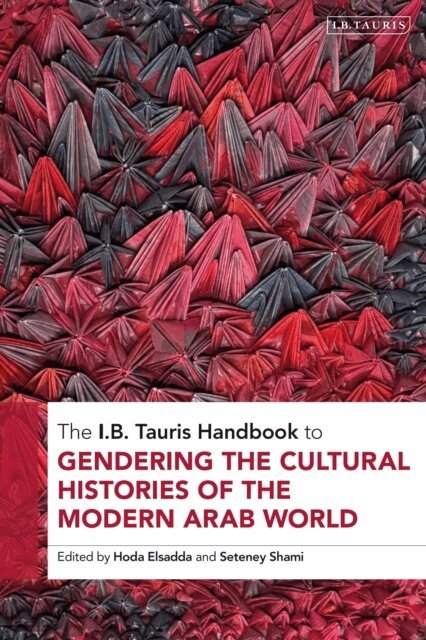
I.B. Tauris Handbook to Gendering the Cultural Histories of the Modern Arab World
Inbunden, Engelska, 2026
1 964 kr
Skickas inom 10-15 vardagar
In the last 20 years, feminist scholars have radicalised the historiography of the Arab world. Using gendered theorisations, they have rejected the mainstream histories that prioritise ‘official’ narratives, and they have highlighted the exclusionary effect of patriarchal systems and discourses. This handbook continues their work by using ‘gender’ as a mode of analysis to produce a new cultural history of the Arab world. In doing so, it presents a new generation with ways to study the region using a 'gender lens' and establishes this approach as a field.The five thematic parts correspond to specific areas focused on by new cultural historians: histories of practices; histories of representations; narrative sites of memory; histories of material culture; and histories of the body. Each section then provides new knowledge of the Arab world by moving away from the Western colonial gaze and focusing instead on women’s everyday experiences and lifeways. Subjects covered include: theoretical perspectives, Islamic law, protest movements and popular culture, as well as women’s autobiographies, gendered memory, food, public health and sexualities.Edited by two pioneering feminist scholars, Hoda Elsadda and Seteney Shami, it draws together the most innovative work of other feminist scholars from across history, anthropology, literature, sociology, psychology, theology, economics, political science, law, and translation studies. The chapters demonstrate that in using gender as a category of analysis, the cultural histories of the Arab world can be rewritten to prioritise lived realities and female voices and perspectives.
Publics, Politics, and Participation – Locating the Public Sphere in the Middle East and North Africa
Häftad, Engelska, 2010
290 kr
Skickas inom 7-10 vardagar
Though it is rarely explicitly articulated, many believe that there is no "public" in the Middle East. Scholarship on the Middle East and North Africa almost always engages with politics-a prominent focus of this region-yet the assumed absence of public spaces and fora has led many to think that debate, consensus, and concerted social action are antithetical to the cultural, religious, and national heritage of the region. It is a mistake to exclude the public dimension from the study of processes in this region. Recent studies have demonstrated not only the critical importance of the public in everyday practices of the MENA region, but they have also shown how the term and notion of the public sphere can be used productively to advance understandings of collective life. The first section of this volume offers alternative conceptions of the public sphere through rich and innovative theoretical analysis. Philosophical investigations focus on the role of collective action, the relationship between nationalism and democracy, and the notions of the public employed by socioreligious movements.The second section addresses a wide range of counter-hegemonic discourses and practices that enable the public sphere, such as memoirs, testimonies, strategies of surveillance, the Tehran bazaar, and the movements of migratory workers. The third section provides empirical accounts of the way in which mutual communication through technology has vitally expanded the notion of the public in the MENA region. In conclusion, conflict and resistance are shown to be generative forces in public discourse and debate and in the production of national publics.
658 kr
Skickas inom 10-15 vardagar
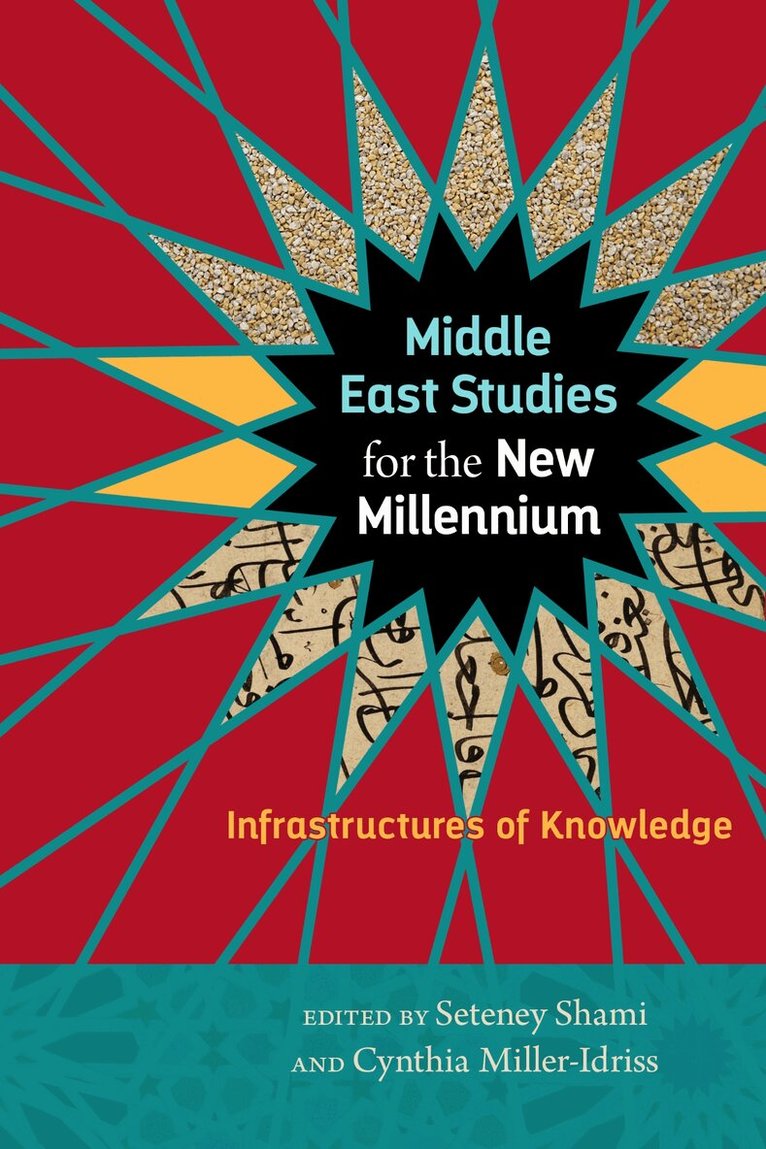
Few world regions today are of more pressing social and political interest than the Middle East: hardly a day has passed in the last decade without events there making global news. Understanding the region has never been more important, yet the field of Middle East studies in the United States is in flux, enmeshed in ongoing controversies about the relationship between knowledge and power, the role of the federal government at universities, and ways of knowing "other" cultures and places. Assembling a wide range of scholars immersed in the transformations of their disciplines and the study of this world region, Middle East Studies for the New Millennium explores the big-picture issues affecting the field, from the geopolitics of knowledge production to structural changes in the university to broader political and public contexts. Tracing the development of the field from the early days of the American university to the "Islamophobia" of the present day, this book explores Middle East studies as a discipline and, more generally, its impact on the social sciences and academia. Topics include how different disciplines engage with Middle East scholars, how American universities teach Middle East studies and related fields, and the relationship between scholarship and U.S.-Arab relations, among others. Middle East Studies for the New Millennium presents a comprehensive, authoritative overview of how this crucial field of academic inquiry came to be and where it is going next.