Seungsook Moon – författare
Visar alla böcker från författaren Seungsook Moon. Handla med fri frakt och snabb leverans.
5 produkter
5 produkter
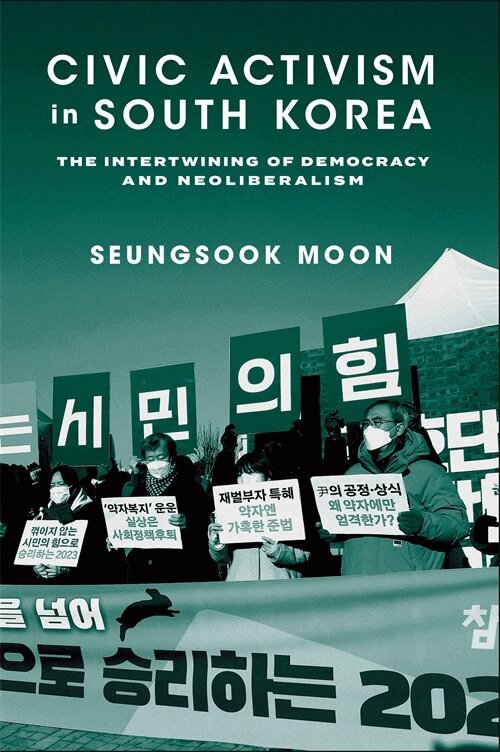
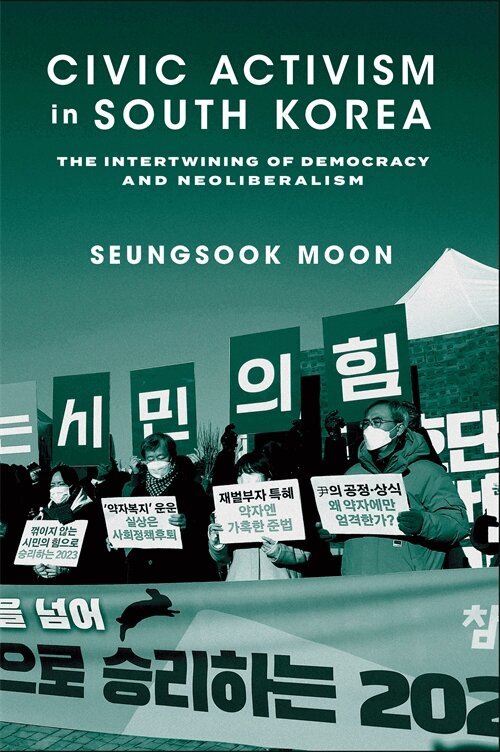
Civic Activism in South Korea
The Intertwining of Democracy and Neoliberalism
Inbunden, Engelska, 2024
1 114 kr
Skickas inom 7-10 vardagar
In recent decades, neoliberalism has transformed South Korean society, going far beyond simply restructuring the economy. In response, a number of civic organizations that emerged from the democratization movement with a conscious emphasis on social change have sought to address socioeconomic and political problems caused or aggravated by the neoliberal transformation.Examining how “citizens’ organizations” in South Korea negotiate with the market and neoliberal governance, Seungsook Moon offers new ways to understand the intricate relationship between democracy and neoliberalism as modes of ruling. She provides in-depth qualitative studies of three different types of organizations: a large national advocacy organization run by professional staff activists, two medium-size local branches of a national feminist organization run by mostly volunteer activists, and a small local organization run by volunteer activists with a focus on foreign migrants. Bringing together these rich empirical cases with deft theoretical analysis, Moon argues that neoliberalism and democracy are entwined in complex ways. Although neoliberalism undermines democratic practices of social equality by shrinking or destroying public resources, institutions, and space, it also can facilitate participatory practices that arise to fill needs left by privatization and deregulation as long as those practices do not seriously challenge the workings of capitalism. Showing how neoliberalism simultaneously enables and constrains civic activism, this book illuminates the contradictions of social engagement today, with global implications.
284 kr
Skickas inom 7-10 vardagar
In recent decades, neoliberalism has transformed South Korean society, going far beyond simply restructuring the economy. In response, a number of civic organizations that emerged from the democratization movement with a conscious emphasis on social change have sought to address socioeconomic and political problems caused or aggravated by the neoliberal transformation.Examining how “citizens’ organizations” in South Korea negotiate with the market and neoliberal governance, Seungsook Moon offers new ways to understand the intricate relationship between democracy and neoliberalism as modes of ruling. She provides in-depth qualitative studies of three different types of organizations: a large national advocacy organization run by professional staff activists, two medium-size local branches of a national feminist organization run by mostly volunteer activists, and a small local organization run by volunteer activists with a focus on foreign migrants. Bringing together these rich empirical cases with deft theoretical analysis, Moon argues that neoliberalism and democracy are entwined in complex ways. Although neoliberalism undermines democratic practices of social equality by shrinking or destroying public resources, institutions, and space, it also can facilitate participatory practices that arise to fill needs left by privatization and deregulation as long as those practices do not seriously challenge the workings of capitalism. Showing how neoliberalism simultaneously enables and constrains civic activism, this book illuminates the contradictions of social engagement today, with global implications.
363 kr
Skickas inom 7-10 vardagar
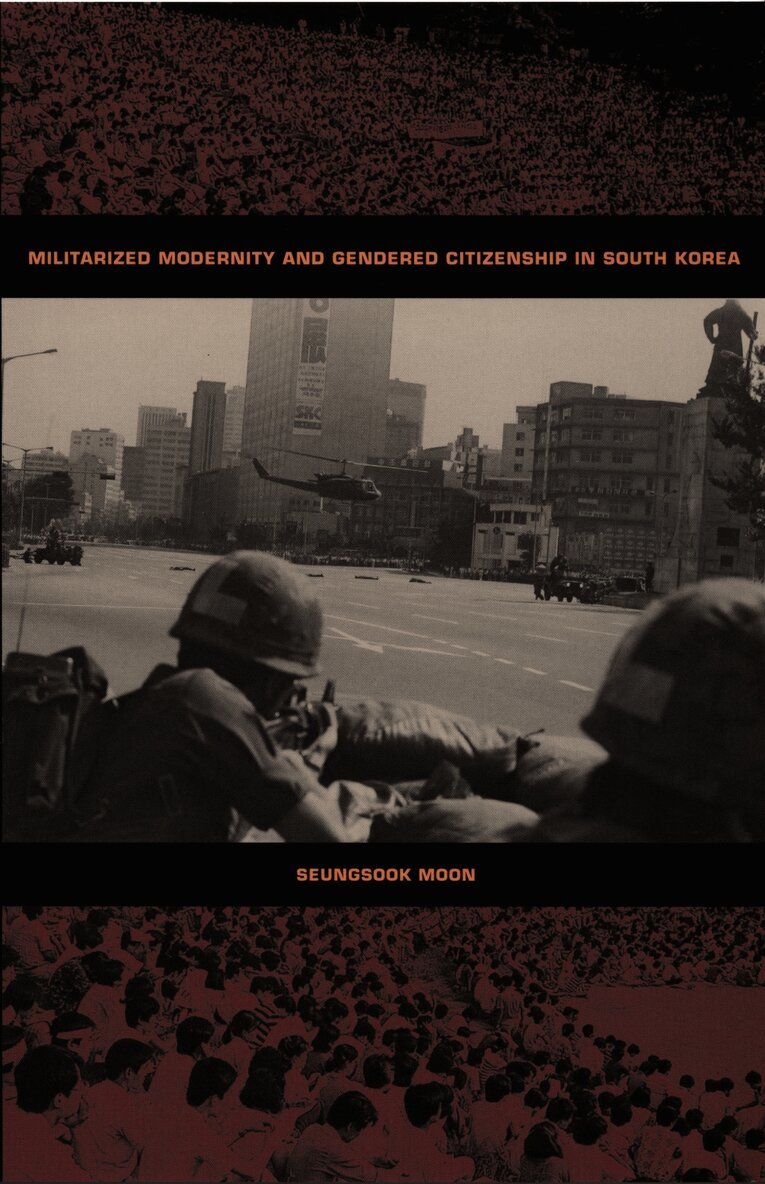
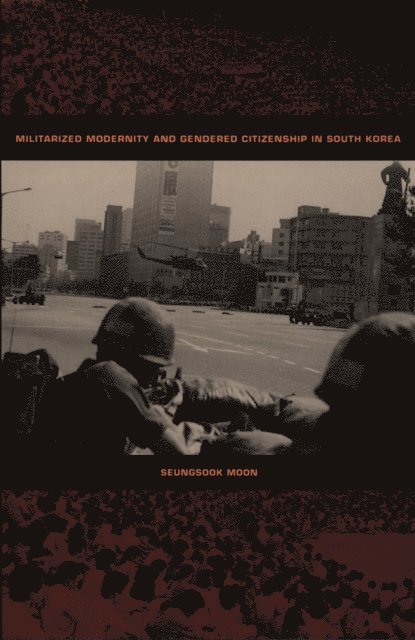
This pathbreaking study presents a feminist analysis of the politics of membership in the South Korean nation over the past four decades. Seungsook Moon examines the ambitious effort by which South Korea transformed itself into a modern industrial and militarized nation. She demonstrates that the pursuit of modernity in South Korea involved the construction of the anticommunist national identity and a massive effort to mold the populace into useful, docile members of the state. This process, which she terms “militarized modernity,” treated men and women differently. Men were mobilized for mandatory military service and then, as conscripts, utilized as workers and researchers in the industrializing economy. Women were consigned to lesser factory jobs, and their roles as members of the modern nation were defined largely in terms of biological reproduction and household management.Moon situates militarized modernity in the historical context of colonialism and nationalism in the twentieth century. She follows the course of militarized modernity in South Korea from its development in the early 1960s through its peak in the 1970s and its decline after rule by military dictatorship ceased in 1987. She highlights the crucial role of the Cold War in South Korea’s militarization and the continuities in the disciplinary tactics used by the Japanese colonial rulers and the postcolonial military regimes. Moon reveals how, in the years since 1987, various social movements-particularly the women’s and labor movements-began the still-ongoing process of revitalizing South Korean civil society and forging citizenship as a new form of membership in the democratizing nation.
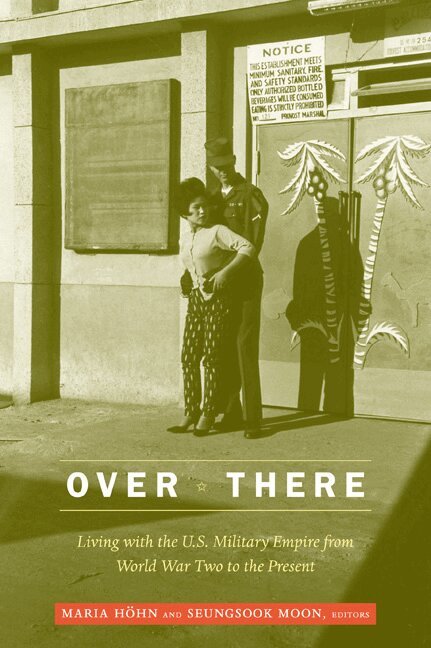
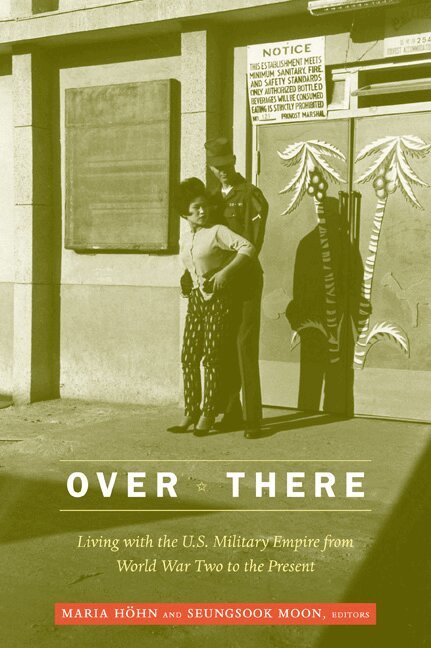
Over There
Living with the U.S. Military Empire from World War Two to the Present
Inbunden, Engelska, 2010
1 378 kr
Skickas inom 7-10 vardagar
Over There explores the social impact of America’s global network of more than 700 military bases. It does so by examining interactions between U.S. soldiers and members of host communities in the three locations-South Korea, Japan and Okinawa, and West Germany-where more than-two thirds of American overseas bases and troops have been concentrated for the past six decades. The essays in this collection highlight the role of cultural and racial assumptions in the maintenance of the American military base system, and the ways that civil-military relations play out locally. Describing how political, spatial, and social arrangements shape relations between American garrisons and surrounding communities, they emphasize such factors as whether military bases are located in democratic nations or in authoritarian countries where cooperation with dictatorial regimes fuels resentment; whether bases are integrated into neighboring communities or isolated and surrounded by “camp towns” wholly dependent on their business; and whether the United States sends single soldiers without families on one-year tours of duty or soldiers who bring their families and serve longer tours. Analyzing the implications of these and other situations, the contributors address U.S. military–regulated relations between GIs and local women; the roles of American women, including military wives, abroad; local resistance to the U.S. military presence; and racism, sexism, and homophobia within the U.S. military. Over There is an essential examination of the American military as a global and transnational phenomenon.ContributorsDonna Alvah Chris Ames Jeff Bennett Maria HÖhn Seungsook Moon Christopher Nelson Robin Riley Michiko Takeuchi
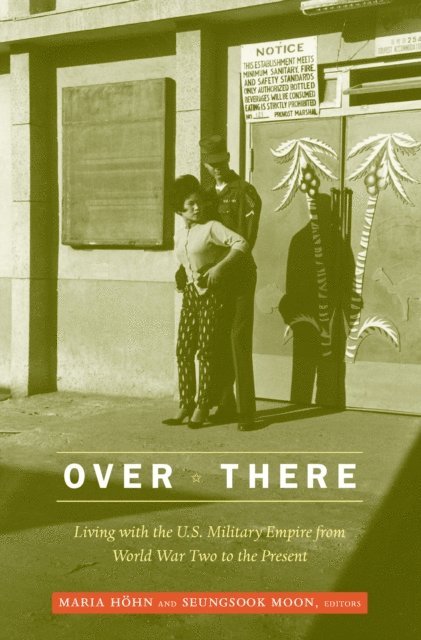
Over There
Living with the U.S. Military Empire from World War Two to the Present
Häftad, Engelska, 2010
416 kr
Skickas inom 7-10 vardagar
Over There explores the social impact of America’s global network of more than 700 military bases. It does so by examining interactions between U.S. soldiers and members of host communities in the three locations-South Korea, Japan and Okinawa, and West Germany-where more than-two thirds of American overseas bases and troops have been concentrated for the past six decades. The essays in this collection highlight the role of cultural and racial assumptions in the maintenance of the American military base system, and the ways that civil-military relations play out locally. Describing how political, spatial, and social arrangements shape relations between American garrisons and surrounding communities, they emphasize such factors as whether military bases are located in democratic nations or in authoritarian countries where cooperation with dictatorial regimes fuels resentment; whether bases are integrated into neighboring communities or isolated and surrounded by “camp towns” wholly dependent on their business; and whether the United States sends single soldiers without families on one-year tours of duty or soldiers who bring their families and serve longer tours. Analyzing the implications of these and other situations, the contributors address U.S. military–regulated relations between GIs and local women; the roles of American women, including military wives, abroad; local resistance to the U.S. military presence; and racism, sexism, and homophobia within the U.S. military. Over There is an essential examination of the American military as a global and transnational phenomenon.ContributorsDonna Alvah Chris Ames Jeff Bennett Maria HÖhn Seungsook Moon Christopher Nelson Robin Riley Michiko Takeuchi