Shannon Sullivan - Böcker
Visar alla böcker från författaren Shannon Sullivan. Handla med fri frakt och snabb leverans.
19 produkter
19 produkter
1 670 kr
Skickas inom 5-8 vardagar
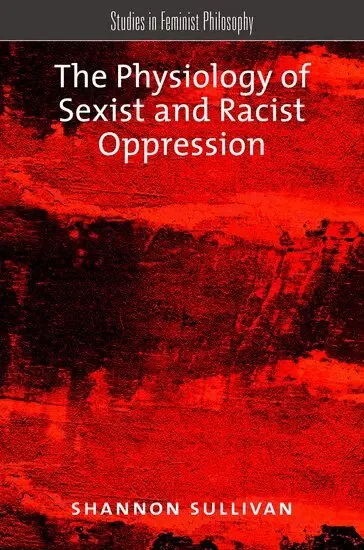
While gender and race often are considered socially constructed, this book argues that they are physiologically constituted through the biopsychosocial effects of sexism and racism. This means that to be fully successful, critical philosophy of race and feminist philosophy need to examine not only the financial, legal, political and other forms of racist and sexism oppression, but also their physiological operations. Examining a complex tangle of affects, emotions, knowledge, and privilege, The Physiology of Sexist and Racist Oppression develops an understanding of the human body whose unconscious habits are biological. On this account, affect and emotion are thoroughly somatic, not something "mental " or extra-biological layered on top of the body. They also are interpersonal, social, and can be transactionally transmitted between people.Ranging from the stomach and the gut to the hips and the heart, from autoimmune diseases to epigenetic markers, Sullivan demonstrates the gastrointestinal effects of sexual abuse that disproportionately affect women, often manifesting as IBS, Crohn's disease, or similar functional disorders. She also explores the transgenerational effects of racism via epigenetic changes in African American women, who experience much higher pre-term birth rates than white women do, and she reveals the unjust benefits for heart health experienced by white people as a result of their racial privilege. Finally, developing the notion of a physiological therapy that doesn't prioritize bringing unconscious habits to conscious awareness, Sullivan closes with a double-barreled approach for both working for institutional change and transforming biologically unconscious habits. The Physiology of Sexist and Racist Oppression skillfully combines feminist and critical philosophy of race with the biological and health sciences. The result is a critical physiology of race and gender that offers new strategies for fighting male and white privilege.
537 kr
Skickas inom 5-8 vardagar
While gender and race often are considered socially constructed, this book argues that they are physiologically constituted through the biopsychosocial effects of sexism and racism. This means that to be fully successful, critical philosophy of race and feminist philosophy need to examine not only the financial, legal, political and other forms of racist and sexism oppression, but also their physiological operations. Examining a complex tangle of affects, emotions, knowledge, and privilege, The Physiology of Sexist and Racist Oppression develops an understanding of the human body whose unconscious habits are biological. On this account, affect and emotion are thoroughly somatic, not something "mental " or extra-biological layered on top of the body. They also are interpersonal, social, and can be transactionally transmitted between people.Ranging from the stomach and the gut to the hips and the heart, from autoimmune diseases to epigenetic markers, Sullivan demonstrates the gastrointestinal effects of sexual abuse that disproportionately affect women, often manifesting as IBS, Crohn's disease, or similar functional disorders. She also explores the transgenerational effects of racism via epigenetic changes in African American women, who experience much higher pre-term birth rates than white women do, and she reveals the unjust benefits for heart health experienced by white people as a result of their racial privilege. Finally, developing the notion of a physiological therapy that doesn't prioritize bringing unconscious habits to conscious awareness, Sullivan closes with a double-barreled approach for both working for institutional change and transforming biologically unconscious habits. The Physiology of Sexist and Racist Oppression skillfully combines feminist and critical philosophy of race with the biological and health sciences. The result is a critical physiology of race and gender that offers new strategies for fighting male and white privilege.
234 kr
Skickas inom 10-15 vardagar
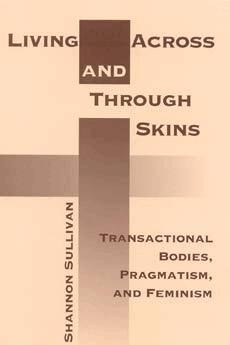
Explores the dynamic relationship between bodies and the world around them.What if we lived across and through our skins as much as we do within them? According to Shannon Sullivan, the notion of bodies in transaction with their social, political, cultural, and physical surroundings is not new. Early in the 20th century, John Dewey elaborated human existence as a set of patterns of behavior or actions shaped by the environment. Underscoring the continued relevance of his thought, Sullivan brings Dewey into conversation with Continental philosophers—Nietzsche and Merleau-Ponty—and feminist philosophers—Butler and Harding—to expand thinking about the body. Emphasizing topics such as the role of habit, the discursivity of bodies, communication and meaning, personal and cultural structures of gender, the improvement of bodily experience, and understandings of truth and objectivity, Living Across and Through Skins acknowledges the importance of the body's experience without placing it in opposition to psychological, cultural, and social aspects of human life. By focusing on what bodies do, rather than what they are, Sullivan prompts a closer look at concrete, physical transactions that might be changed to improve human experiences of the world.
247 kr
Skickas inom 10-15 vardagar
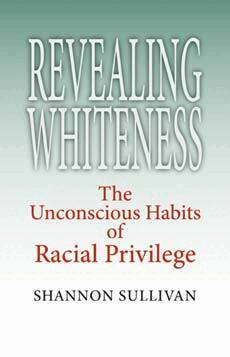
"[A] lucid discussion of race that does not sell out the black experience." —Tommy Lott, author of The Invention of RaceRevealing Whiteness explores how white privilege operates as an unseen, invisible, and unquestioned norm in society today. In this personal and selfsearching book, Shannon Sullivan interrogates her own whiteness and how being white has affected her. By looking closely at the subtleties of white domination, she issues a call for other white people to own up to their unspoken privilege and confront environments that condone or perpetuate it. Sullivan's theorizing about race and privilege draws on American pragmatism, psychology, race theory, and feminist thought. As it articulates a way to live beyond the barriers that white privilege has created, this book offers readers a clear and honest confrontation with a trenchant and vexing concern.
1 339 kr
Skickas inom 5-8 vardagar
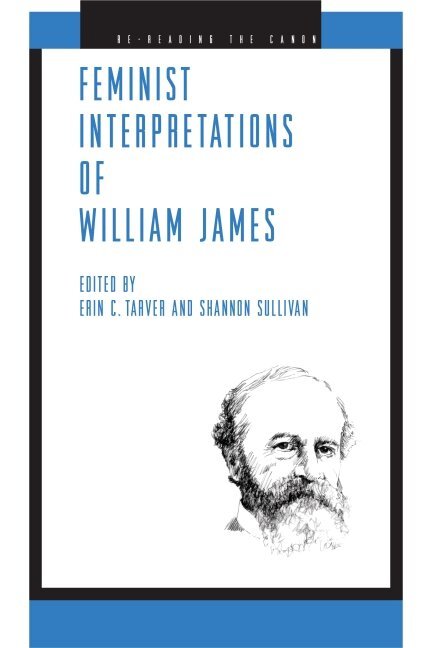
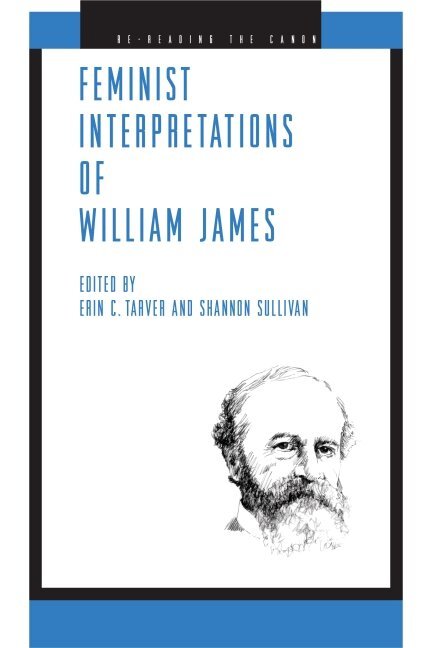
Widely regarded as the father of American psychology, William James is by any measure a mammoth presence on the stage of pragmatist philosophy. But despite his indisputable influence on philosophical thinkers of all genders, men remain the movers and shakers in the Jamesian universe—while women exist primarily to support their endeavors and serve their needs. How could the philosophy of William James, a man devoted to Victorian ideals, be used to support feminism? Feminist Interpretations of William James lays out the elements of James’s philosophy that are particularly problematic for feminism, offers a novel feminist approach to James’s ethical philosophy, and takes up epistemic contestations in and with James’s pragmatism. The results are surprising. In short, James’s philosophy can prove useful for feminist efforts to challenge sexism and male privilege, in spite of James himself.In this latest installment of the Re-Reading the Canon series, contributors appeal to William James’s controversial texts not simply as an exercise in feminist critique but in the service of feminism.Along with the editors, the contributors are Jeremy Carrette, Lorraine Code, Megan Craig, Susan Dieleman, Jacob L. Goodson, Maurice Hamington, Erin McKenna, José Medina, and Charlene Haddock Seigfried.
1 057 kr
Tillfälligt slut
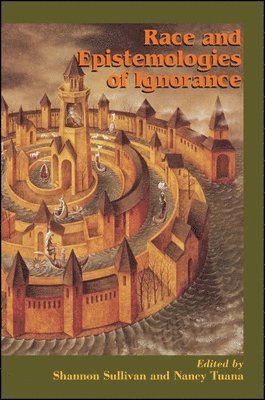
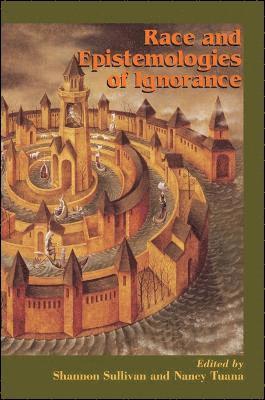
Leading scholars explore how different forms of ignorance are produced and sustained, and the role they play in knowledge practices.Offering a wide variety of philosophical approaches to the neglected philosophical problem of ignorance, this groundbreaking collection builds on Charles Mills's claim that racism involves an inverted epistemology, an epistemology of ignorance. Contributors explore how different forms of ignorance linked to race are produced and sustained and what role they play in promoting racism and white privilege. They argue that the ignorance that underpins racism is not a simple gap in knowledge, the accidental result of an epistemological oversight. In the case of racial oppression, ignorance often is actively produced for purposes of domination and exploitation. But as these essays demonstrate, ignorance is not simply a tool of oppression wielded by the powerful. It can also be a strategy for survival, an important tool for people of color to wield against white privilege and white supremacy. The book concludes that understanding ignorance and the politics of such ignorance should be a key element of epistemological and social/political analyses, for it has the potential to reveal the role of power in the construction of what is known and provide a lens for the political values at work in knowledge practices.
529 kr
Skickas inom 3-6 vardagar
Leading scholars explore how different forms of ignorance are produced and sustained, and the role they play in knowledge practices.Offering a wide variety of philosophical approaches to the neglected philosophical problem of ignorance, this groundbreaking collection builds on Charles Mills's claim that racism involves an inverted epistemology, an epistemology of ignorance. Contributors explore how different forms of ignorance linked to race are produced and sustained and what role they play in promoting racism and white privilege. They argue that the ignorance that underpins racism is not a simple gap in knowledge, the accidental result of an epistemological oversight. In the case of racial oppression, ignorance often is actively produced for purposes of domination and exploitation. But as these essays demonstrate, ignorance is not simply a tool of oppression wielded by the powerful. It can also be a strategy for survival, an important tool for people of color to wield against white privilege and white supremacy. The book concludes that understanding ignorance and the politics of such ignorance should be a key element of epistemological and social/political analyses, for it has the potential to reveal the role of power in the construction of what is known and provide a lens for the political values at work in knowledge practices.
388 kr
Skickas inom 7-10 vardagar
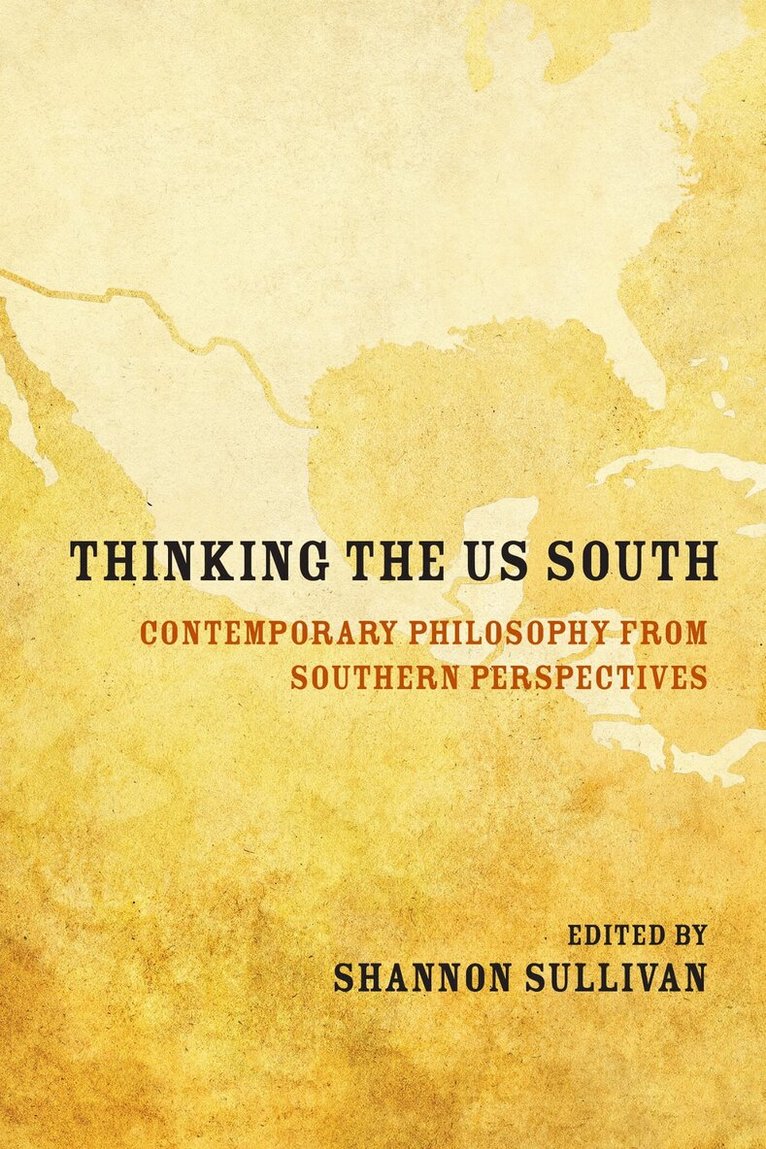
Knowledge emerges from contexts, which are shaped by people’s experiences. The varied essays in Thinking the US South: Contemporary Philosophy from Southern Perspectives demonstrate that Southern identities, borders, and practices play an important but unacknowledged role in ethical, political, emotional, and global issues connected to knowledge production. Not merely one geographical region among others, the US South is sometimes a fantasy and other times a nightmare, but it is always a prominent component of the American national imaginary. In connection with the Global North and Global South, the US South provides a valuable perspective from which to explore race, class, gender, and other inter- and intra-American differences. The result is a fresh look at how identity is constituted; the role of place, ancestors, and belonging in identity formation; the impact of regional differences on what counts as political resistance; the ways that affect and emotional labor circulate; practices of boundary policing, deportation, and mourning; issues of disability and slowness; racial and other forms of suffering; and above all, the question of whether and how doing philosophy changes when done from Southern standpoints. Examining racist tropes, Indigenous land claims, Black Southern philosophical perspectives, migrant labor, and more, this incisive anthology makes clear that roots matter.
1 288 kr
Skickas inom 10-15 vardagar
Knowledge emerges from contexts, which are shaped by people’s experiences. The varied essays in Thinking the US South: Contemporary Philosophy from Southern Perspectives demonstrate that Southern identities, borders, and practices play an important but unacknowledged role in ethical, political, emotional, and global issues connected to knowledge production. Not merely one geographical region among others, the US South is sometimes a fantasy and other times a nightmare, but it is always a prominent component of the American national imaginary. In connection with the Global North and Global South, the US South provides a valuable perspective from which to explore race, class, gender, and other inter- and intra-American differences. The result is a fresh look at how identity is constituted; the role of place, ancestors, and belonging in identity formation; the impact of regional differences on what counts as political resistance; the ways that affect and emotional labor circulate; practices of boundary policing, deportation, and mourning; issues of disability and slowness; racial and other forms of suffering; and above all, the question of whether and how doing philosophy changes when done from Southern standpoints. Examining racist tropes, Indigenous land claims, Black Southern philosophical perspectives, migrant labor, and more, this incisive anthology makes clear that roots matter.
1 037 kr
Skickas inom 11-20 vardagar
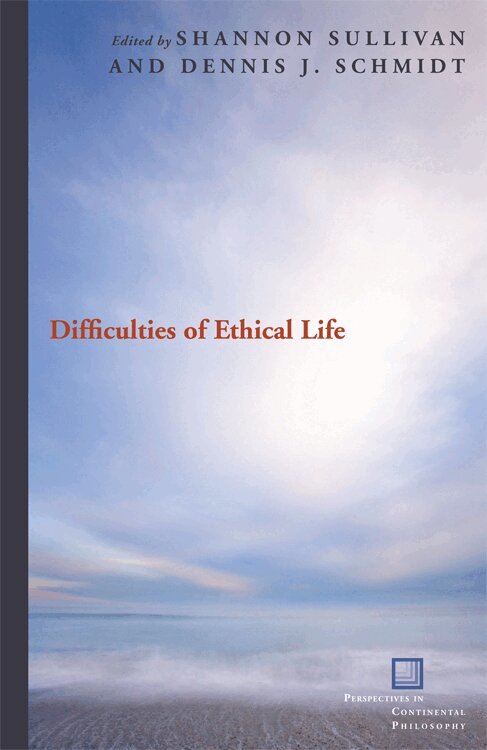
This book brings the powerful insights of Continental philosophy to bear on some of the most challenging difficulties of ethical life. Currently philosophy is being radically transformed by questions of how to live well. What does such a way of life mean? How are we to understand the meaning of ethicality? What are the obstacles to ethical living? And should we assume that an ethical life is a "better" life? The movement of history and the developments of culture and knowledge seem to have outstripped the capacity of traditional forms of reflection upon ethical life to understand how we might answer these questions. Ranging from existentialism to deconstruction, phenomenology to psychoanalytic theory, and hermeneutics to post-structuralism, the twelve essays in this volume take up a wide but clearly connected set of issues relevant to living ethically: race, responsibility, religion, terror, torture, technology, deception, and even the very possibility of an ethical life. Some of the questions addressed are specific to our times; others are ancient questions but with quite contemporary twists. In each case, they concern the philosophical significance of ongoing historical, cultural, and political transformations for ethical living and thinking.
421 kr
Skickas inom 10-15 vardagar
This book brings the powerful insights of Continental philosophy to bear on some of the most challenging difficulties of ethical life. Currently philosophy is being radically transformed by questions of how to live well. What does such a way of life mean? How are we to understand the meaning of ethicality? What are the obstacles to ethical living? And should we assume that an ethical life is a "better" life? The movement of history and the developments of culture and knowledge seem to have outstripped the capacity of traditional forms of reflection upon ethical life to understand how we might answer these questions. Ranging from existentialism to deconstruction, phenomenology to psychoanalytic theory, and hermeneutics to post-structuralism, the twelve essays in this volume take up a wide but clearly connected set of issues relevant to living ethically: race, responsibility, religion, terror, torture, technology, deception, and even the very possibility of an ethical life. Some of the questions addressed are specific to our times; others are ancient questions but with quite contemporary twists. In each case, they concern the philosophical significance of ongoing historical, cultural, and political transformations for ethical living and thinking.
968 kr
Skickas inom 10-15 vardagar
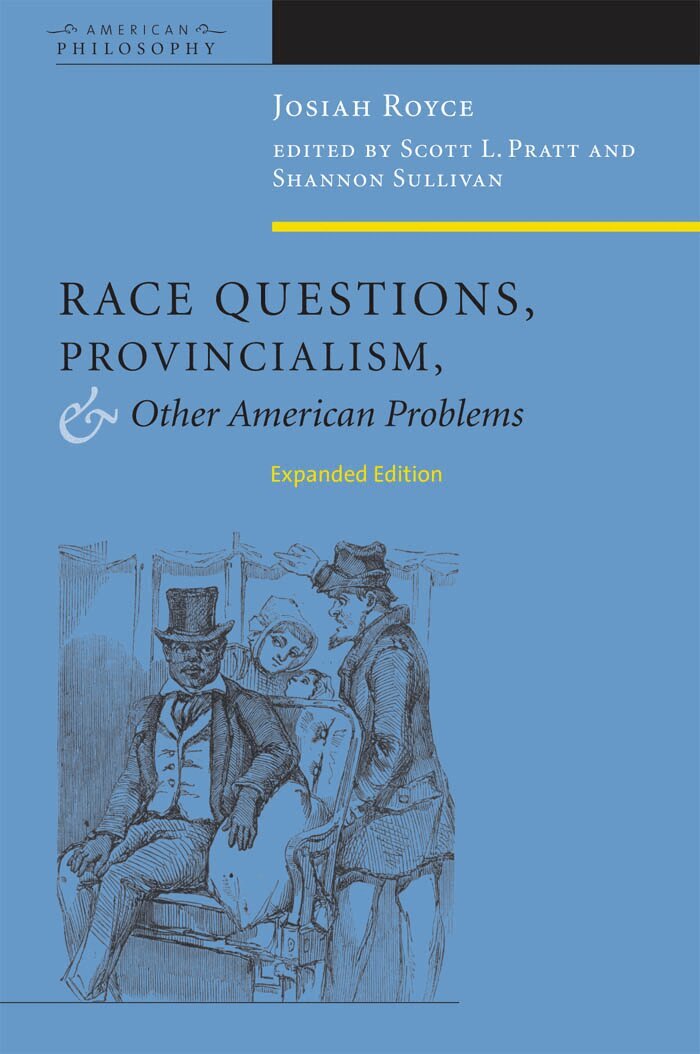
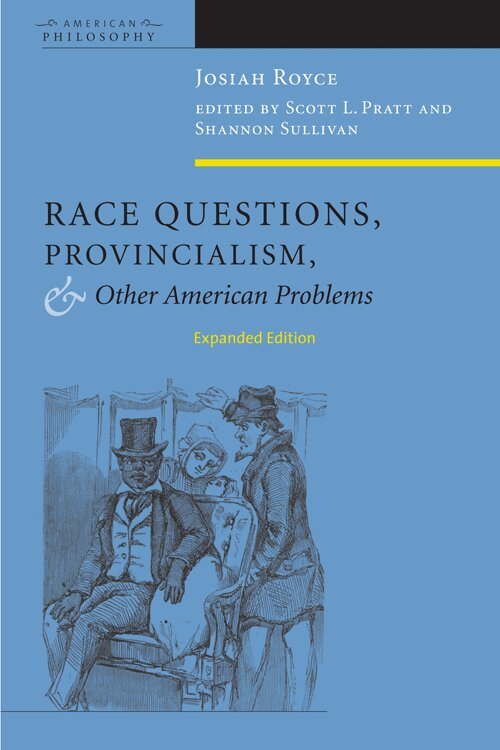
In 1908, American philosopher Josiah Royce foresaw the future. Race questions and prejudices, he said, "promise to become, in the near future, still more important than they have ever been before." Like his student W. E. B. Du Bois in Souls of Black Folk (1903), Royce recognized that the problem of the next century would be, as Du Bois put it, "the problem of the color line." The twentieth century saw vast changes in race relations, but even after the election of the first African-American U.S. president, questions of race and the nature of community persist. Though left out of the mainstream of academic philosophy, Royce's conception of community nevertheless influenced generations of leaders who sought to end racial, religious, and national prejudice. Royce's work provided the conceptual starting place for the Cultural Pluralism movement of the 1920s and 1930s, and his notion of the Beloved Community influenced the work and vision of Martin Luther King, Jr., and the civil rights movement. Communities, whether they are understood as racial or geographic, religious or scientific, Royce argued, are formed by the commitments of individuals to causes or shared ideals. This starting point-the philosophy of loyalty-provides a means to understand the nature of communities, their conflicts, and their potential for growth and coexistence. Just as this work had relevance in the twentieth century in the face of anti-Black and anti-immigrant prejudice, Royce's philosophy of loyalty and conception of community has new relevance in the twenty-first century. This new edition of Royce's Race Questions, Provincialism, and Other American Questions includes a new introduction to Royce's philosophy of loyalty and the essays included in the volume, and a second introduction connecting Royce's work with contemporary discussions of race. The volume also includes six supplementary essays by Royce (unavailable since their initial publication before 1916) that provide background for the original essays, raise questions about his views, and show the potential of those views to inform other discussions about religious pluralism, the philosophy of science, the role of history, and the future of the American community.
407 kr
Skickas inom 10-15 vardagar
In 1908, American philosopher Josiah Royce foresaw the future. Race questions and prejudices, he said, "promise to become, in the near future, still more important than they have ever been before." Like his student W. E. B. Du Bois in Souls of Black Folk (1903), Royce recognized that the problem of the next century would be, as Du Bois put it, "the problem of the color line." The twentieth century saw vast changes in race relations, but even after the election of the first African-American U.S. president, questions of race and the nature of community persist. Though left out of the mainstream of academic philosophy, Royce's conception of community nevertheless influenced generations of leaders who sought to end racial, religious, and national prejudice. Royce's work provided the conceptual starting place for the Cultural Pluralism movement of the 1920s and 1930s, and his notion of the Beloved Community influenced the work and vision of Martin Luther King, Jr., and the civil rights movement. Communities, whether they are understood as racial or geographic, religious or scientific, Royce argued, are formed by the commitments of individuals to causes or shared ideals. This starting point-the philosophy of loyalty-provides a means to understand the nature of communities, their conflicts, and their potential for growth and coexistence. Just as this work had relevance in the twentieth century in the face of anti-Black and anti-immigrant prejudice, Royce's philosophy of loyalty and conception of community has new relevance in the twenty-first century. This new edition of Royce's Race Questions, Provincialism, and Other American Questions includes a new introduction to Royce's philosophy of loyalty and the essays included in the volume, and a second introduction connecting Royce's work with contemporary discussions of race. The volume also includes six supplementary essays by Royce (unavailable since their initial publication before 1916) that provide background for the original essays, raise questions about his views, and show the potential of those views to inform other discussions about religious pluralism, the philosophy of science, the role of history, and the future of the American community.
566 kr
Skickas inom 3-6 vardagar
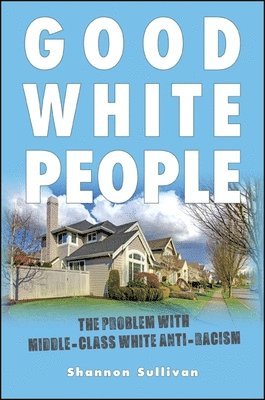
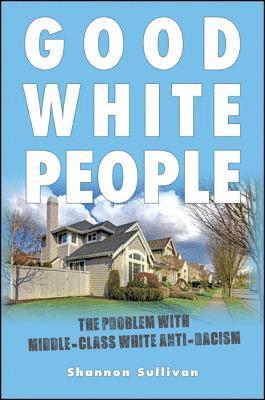
Argues for the necessity of a new ethos for middle-class white anti-racism.Winner of the 2016 Society of Professors of Education Outstanding Book Award presented by the Society of Professors of Education 2014 CHOICE Outstanding Academic Title Building on her book Revealing Whiteness, Shannon Sullivan identifies a constellation of attitudes common among well-meaning white liberals that she sums up as "white middle-class goodness," an orientation she critiques for being more concerned with establishing anti-racist bona fides than with confronting systematic racism and privilege. Sullivan untangles the complex relationships between class and race in contemporary white identity and outlines four ways this orientation is expressed, each serving to establish one's lack of racism: the denigration of lower-class white people as responsible for ongoing white racism, the demonization of antebellum slaveholders, an emphasis on colorblindness-especially in the context of white childrearing-and the cultivation of attitudes of white guilt, shame, and betrayal. To move beyond these distancing strategies, Sullivan argues, white people need a new ethos that acknowledges and transforms their whiteness in the pursuit of racial justice rather than seeking a self-righteous distance from it.
1 057 kr
Tillfälligt slut
Argues for the necessity of a new ethos for middle-class white anti-racism.Winner of the 2016 Society of Professors of Education Outstanding Book Award presented by the Society of Professors of Education 2014 CHOICE Outstanding Academic Title Building on her book Revealing Whiteness, Shannon Sullivan identifies a constellation of attitudes common among well-meaning white liberals that she sums up as "white middle-class goodness," an orientation she critiques for being more concerned with establishing anti-racist bona fides than with confronting systematic racism and privilege. Sullivan untangles the complex relationships between class and race in contemporary white identity and outlines four ways this orientation is expressed, each serving to establish one's lack of racism: the denigration of lower-class white people as responsible for ongoing white racism, the demonization of antebellum slaveholders, an emphasis on colorblindness-especially in the context of white childrearing-and the cultivation of attitudes of white guilt, shame, and betrayal. To move beyond these distancing strategies, Sullivan argues, white people need a new ethos that acknowledges and transforms their whiteness in the pursuit of racial justice rather than seeking a self-righteous distance from it.
301 kr
Skickas inom 3-6 vardagar
445 kr
Skickas inom 7-10 vardagar
Some embrace the idea of white privilege as an important concept that helps us to make sense of the connection between race and social and political disadvantages, while others are critical or even hostile. Regardless of personal views, it can be difficult to agree on what 'white privilege' even means. Philosopher Shannon Sullivan cuts through the confusion and cross-talk to challenge what ‘everybody knows’ about white privilege. Using real-life examples, she offers a candid assessment of the advantages and disadvantages of the term, to present a better understanding of how race functions in our societies. She argues that white privilege is about more than race, that not only white people can have white privilege, and that feeling guilty about privilege can have a negative effect on the very people you feel guilty towards. In the end, she offers practical solutions for eliminating white privilege and building a fairer society. Sullivan's forcefully argued book will inspire you to think again about white privilege and what it entails.
138 kr
Skickas inom 7-10 vardagar
Some embrace the idea of white privilege as an important concept that helps us to make sense of the connection between race and social and political disadvantages, while others are critical or even hostile. Regardless of personal views, it can be difficult to agree on what 'white privilege' even means. Philosopher Shannon Sullivan cuts through the confusion and cross-talk to challenge what ‘everybody knows’ about white privilege. Using real-life examples, she offers a candid assessment of the advantages and disadvantages of the term, to present a better understanding of how race functions in our societies. She argues that white privilege is about more than race, that not only white people can have white privilege, and that feeling guilty about privilege can have a negative effect on the very people you feel guilty towards. In the end, she offers practical solutions for eliminating white privilege and building a fairer society. Sullivan's forcefully argued book will inspire you to think again about white privilege and what it entails.
299 kr
Skickas inom 5-8 vardagar