Sheila Jones – författare
Visar alla böcker från författaren Sheila Jones. Handla med fri frakt och snabb leverans.
10 produkter
10 produkter
309 kr
Skickas inom 5-8 vardagar
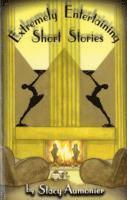
Stacy Aumonier's comic stories are among the funniest ever written. His serious works observe the human condition with wit and elegance. All of them are page-turners. Alfred Hitchcock was a great fan, and adapted some of his stories for television. During his short writing career, from 1913 until his early death in 1928, Stacy Aumonier enjoyed an unrivalled reputation as a short-story writer. Through the best of his stories, Nobel prize winner John Galsworthy predicted he would 'outlive all the writers of his day.' James Hilton (author of 'Goodbye Mr Chips' and 'Lost Horizon') said of Aumonier: 'I think his very best works ought to be included in any anthology of the best short stories ever written.' He took his characters from every rung of society (sometimes in the one story, as in 'The Octave of Jealousy') and from every walk and every age of life: sons who have wasted their inheritance; criminals; farm labourers; a clergyman's sister; gold-diggers; an effective little tyrant (aged 4 or 5?) in 'The Song of Praise'; a divinely depicted music-hall comedian in the exquisite 'The Funny Man's Day'; the hapless fish-and-chips trader in the hilarious 'A Good Action.'His talent for putting flesh on those characters in a few words was remarkable, such as in his portrait of the daunting club habitue in 'Juxtapositions': 'In spite of his missing limb, St Clair Chasseloup was the kind of man who always looked as though he had just had a cold bath, done Swedish drill, and then passed through the hairdresser's on his way to your presence'; or of the house-party guests being assessed as the possible perpetrators of a crime in 'Freddie Finds Himself': 'They all looked well off, well fed, and slightly vacant, entirely innocent of anything except the knowledge of what is done or what is not done.' 'He gets values right,' said Galsworthy of him, 'and that is nearly everything,' adding: 'And how he puts his finger on weak spots!' Here is a selection of the most entertaining Aumonier stories, and it comes with a Guarantee: For a long journey, a sojourn laid up in bed, or just hard times, this book is a sure thing.
299 kr
Skickas inom 5-8 vardagar
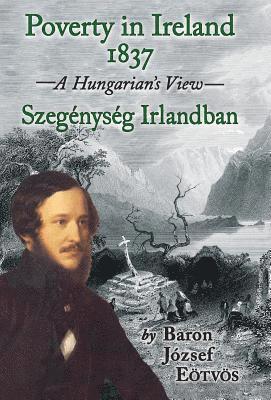
In 1837, the power of Daniel O'Connell's oratory focused the attention of Europeans on Ireland. They were horrified at what they saw there. The Irish poor - a third of the population - had no food except the potatoes they grew, and not enough clothing to cover themselves. They went hungry for two months of the year, and half-naked for all the year. Yet this would be their last 'good' decade before more than a million of them would vanish into unmarked graves in the 1840s. The idealistic young Baron Eotvos - a humanitarian and already a much-praised poet - struggled to understand how Ireland could have been reduced to this state under English rule, and why English journalists wrote with such bigotry about the Irish. In Hungary, he was a campaigner for the freedom of serfs, but conceded that those serfs lived in better conditions and had more protection than Irish tenants and labourers. The only protection for the Irish poor came from illegal organizations such as the Whiteboys.His visit coincided with a pivotal moment in Irish history, when debate was raging about the introduction of a 'Poor Law' (with Poor Tax to pay for it) - a charitable-sounding term for a cruel Act aimed at clearing the land of people who had no other means of survival.His deeply researched summary of the English occupation of Ireland - uninfluenced by modern revisionism - makes compelling, often harrowing reading.
185 kr
Skickas inom 5-8 vardagar
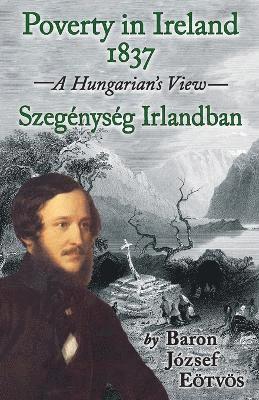
In 1837, the power of Daniel O'Connell's oratory focused the attention of Europeans on Ireland. They were horrified at what they saw there. The Irish poor - a third of the population - had no food except the potatoes they grew, and not enough clothing to cover themselves. They went hungry for two months of the year, and half-naked for all the year. Yet this would be their last 'good' decade before more than a million of them would vanish into unmarked graves in the 1840s. The idealistic young Baron Eotvos - a humanitarian and already a much-praised poet - struggled to understand how Ireland could have been reduced to this state under English rule, and why English journalists wrote with such bigotry about the Irish. In Hungary, he was a campaigner for the freedom of serfs, but conceded that those serfs lived in better conditions and had more protection than Irish tenants and labourers. The only protection for the Irish poor came from illegal organizations such as the Whiteboys.His visit coincided with a pivotal moment in Irish history, when debate was raging about the introduction of a 'Poor Law' (with Poor Tax to pay for it) - a charitable-sounding term for a cruel Act aimed at clearing the land of people who had no other means of survival.His deeply researched summary of the English occupation of Ireland - uninfluenced by modern revisionism - makes compelling, often harrowing reading.
158 kr
Skickas inom 5-8 vardagar
241 kr
Skickas inom 3-6 vardagar
191 kr
Skickas inom 5-8 vardagar
114 kr
Skickas inom 5-8 vardagar
114 kr
Skickas inom 5-8 vardagar
114 kr
Skickas inom 5-8 vardagar
114 kr
Skickas inom 5-8 vardagar