Sheng Peng - Böcker
Visar alla böcker från författaren Sheng Peng. Handla med fri frakt och snabb leverans.
3 produkter
3 produkter
1 147 kr
Skickas inom 7-10 vardagar
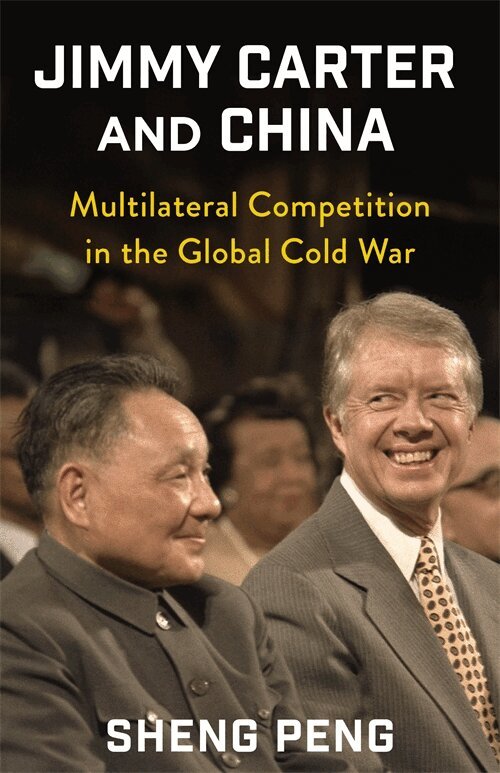
In the late 1970s, with relations between the Soviet Union and the People’s Republic of China strained, the Carter administration saw an opening. The United States and its allies embarked on military and dual-use technology transfers to China as a counterweight to the USSR, transforming rapprochement into full-blown cooperation. Carter’s decision to pivot away from the United States’s traditional ally, the Republic of China on Taiwan, and embrace the People’s Republic redefined the Cold War from a struggle against communism to one against the Soviet Union. It not only complicated a variety of American objectives—from the security of Taiwan to global technology transfer and US-Soviet détente—but also sowed the seeds of future tensions between China and the West.This book is an international history of the Carter administration’s intricate relations with the two competing Chinese regimes, highlighting the geopolitical significance and lasting implications of this pivotal moment. Drawing extensively from previously untapped archives in China, Taiwan, Western Europe, the United States, and Russia, Sheng Peng uncovers the internal governmental debates across world capitals that affected Carter’s China policy. He charts how both mainland China and Taiwan were integrated into global supply chains for defense and dual-use technologies during the 1970s and 1980s and the present-day consequences. Jimmy Carter and China demonstrates that technological competition was as crucial as strategic and ideological competition to the course of the Cold War, and together they profoundly shaped US-China relations and the world today.
292 kr
Skickas inom 7-10 vardagar
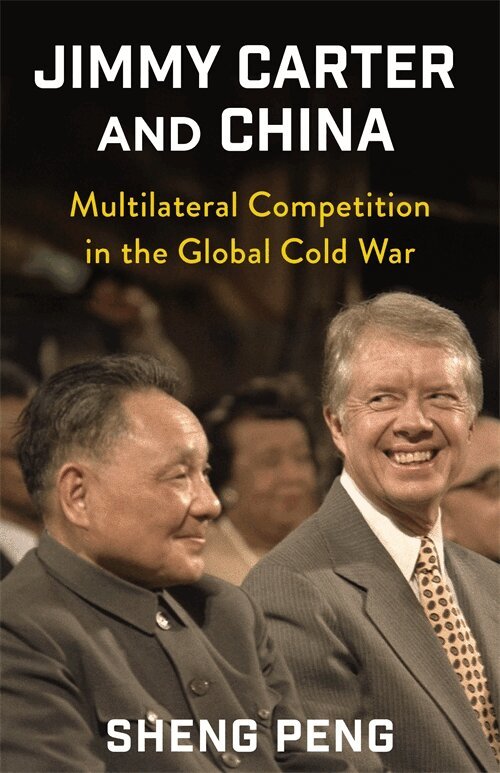
In the late 1970s, with relations between the Soviet Union and the People’s Republic of China strained, the Carter administration saw an opening. The United States and its allies embarked on military and dual-use technology transfers to China as a counterweight to the USSR, transforming rapprochement into full-blown cooperation. Carter’s decision to pivot away from the United States’s traditional ally, the Republic of China on Taiwan, and embrace the People’s Republic redefined the Cold War from a struggle against communism to one against the Soviet Union. It not only complicated a variety of American objectives—from the security of Taiwan to global technology transfer and US-Soviet détente—but also sowed the seeds of future tensions between China and the West.This book is an international history of the Carter administration’s intricate relations with the two competing Chinese regimes, highlighting the geopolitical significance and lasting implications of this pivotal moment. Drawing extensively from previously untapped archives in China, Taiwan, Western Europe, the United States, and Russia, Sheng Peng uncovers the internal governmental debates across world capitals that affected Carter’s China policy. He charts how both mainland China and Taiwan were integrated into global supply chains for defense and dual-use technologies during the 1970s and 1980s and the present-day consequences. Jimmy Carter and China demonstrates that technological competition was as crucial as strategic and ideological competition to the course of the Cold War, and together they profoundly shaped US-China relations and the world today.
3 336 kr
Skickas inom 10-15 vardagar
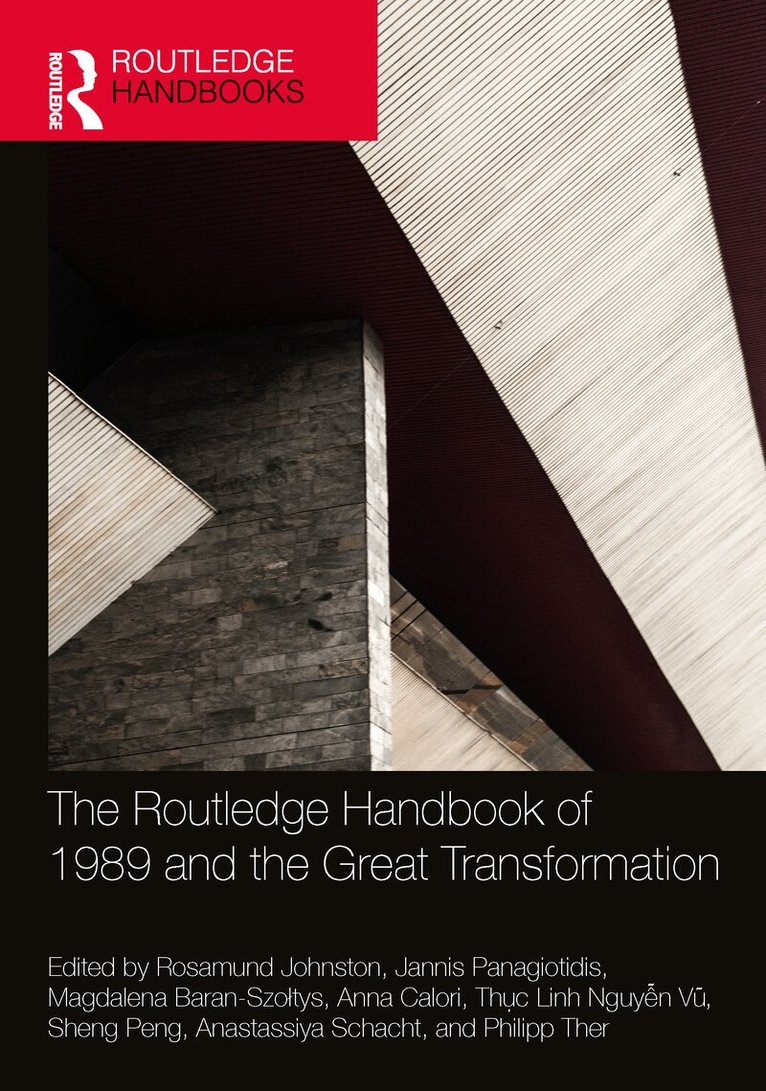
This cutting-edge collection of essays analyzes the pivotal year of 1989 and the transformation processes that resulted from a historical perspective. It takes the events of that momentous year as a pivot to explore longer-term processes of economic, social, political, and cultural transformation linked to the rise of neoliberalism and globalization since the 1970s and enduring until now.Referencing the work of Karl Polanyi, the handbook advances four main arguments: that the “great transformation” presented here started earlier than 1989; that its legacies linger in spaces, practices, and objects; that in order to grasp the scale of what happened around 1989, it is important to bring Eastern and Central Europe into conversation with other global regions; and that the former Eastern Bloc served as an important node in a larger, global transformation. Insisting on the “Second World’s” place in the global history of the past five decades, this handbook challenges straightforward core-periphery dichotomies. The contributions to this volume provide different case studies—some national, some comparative, some international or global—each illustrating particular trends and developments.The handbook is directed at students and scholars of contemporary history of East Central Europe, of global and economic history, and at scholars of sociology, anthropology, and political science interested in post-1989 transformation, neoliberalism, and globalization.