Shuchen Xiang - Böcker
Visar alla böcker från författaren Shuchen Xiang. Handla med fri frakt och snabb leverans.
6 produkter
6 produkter
282 kr
Skickas inom 7-10 vardagar
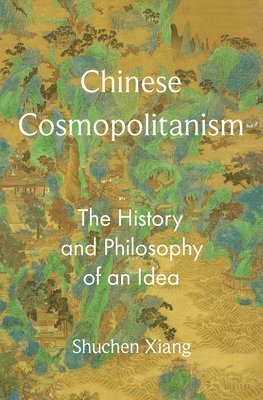
A provocative defense of a forgotten Chinese approach to identity and differenceHistorically, the Western encounter with difference has been catastrophic: the extermination and displacement of aboriginal populations, the transatlantic slave trade, and colonialism. China, however, took a different historical path. In Chinese Cosmopolitanism, Shuchen Xiang argues that the Chinese cultural tradition was, from its formative beginnings and throughout its imperial history, a cosmopolitan melting pot that synthesized the different cultures that came into its orbit. Unlike the West, which cast its collisions with different cultures in Manichean terms of the ontologically irreconcilable difference between civilization and barbarism, China was a dynamic identity created out of difference. The reasons for this, Xiang argues, are philosophical: Chinese philosophy has the conceptual resources for providing alternative ways to understand pluralism.Xiang explains that “Chinese” identity is not what the West understands as a racial identity; it is not a group of people related by common descent or heredity but rather a hybrid of coalescing cultures. To use the Western discourse of race to frame the Chinese view of non-Chinese, she argues, is a category error. Xiang shows that China was both internally cosmopolitan, embracing distinct peoples into a common identity, and externally cosmopolitan, having knowledge of faraway lands without an ideological need to subjugate them. Contrasting the Chinese understanding of efficacy—described as “harmony”—with the Western understanding of order, she argues that the Chinese sought to gain influence over others by having them spontaneously accept the virtue of one’s position. These ideas from Chinese philosophy, she contends, offer a new way to understand today’s multipolar world and can make a valuable contribution to contemporary discussions in the critical philosophy of race.
227 kr
Skickas inom 7-10 vardagar
A provocative defense of a forgotten Chinese approach to identity and differenceHistorically, the Western encounter with difference has been catastrophic: the extermination and displacement of aboriginal populations, the transatlantic slave trade, and colonialism. China, however, took a different historical path. In Chinese Cosmopolitanism, Shuchen Xiang argues that the Chinese cultural tradition was, from its formative beginnings and throughout its imperial history, a cosmopolitan melting pot that synthesized the different cultures that came into its orbit. Unlike the West, which cast its collisions with different cultures in Manichean terms of the ontologically irreconcilable difference between civilization and barbarism, China was a dynamic identity created out of difference. The reasons for this, Xiang argues, are philosophical: Chinese philosophy has the conceptual resources for providing alternative ways to understand pluralism.Xiang explains that “Chinese” identity is not what the West understands as a racial identity; it is not a group of people related by common descent or heredity but rather a hybrid of coalescing cultures. To use the Western discourse of race to frame the Chinese view of non-Chinese, she argues, is a category error. Xiang shows that China was both internally cosmopolitan, embracing distinct peoples into a common identity, and externally cosmopolitan, having knowledge of faraway lands without an ideological need to subjugate them. Contrasting the Chinese understanding of efficacy—described as “harmony”—with the Western understanding of order, she argues that the Chinese sought to gain influence over others by having them spontaneously accept the virtue of one’s position. These ideas from Chinese philosophy, she contends, offer a new way to understand today’s multipolar world and can make a valuable contribution to contemporary discussions in the critical philosophy of race.
2 258 kr
Kommande
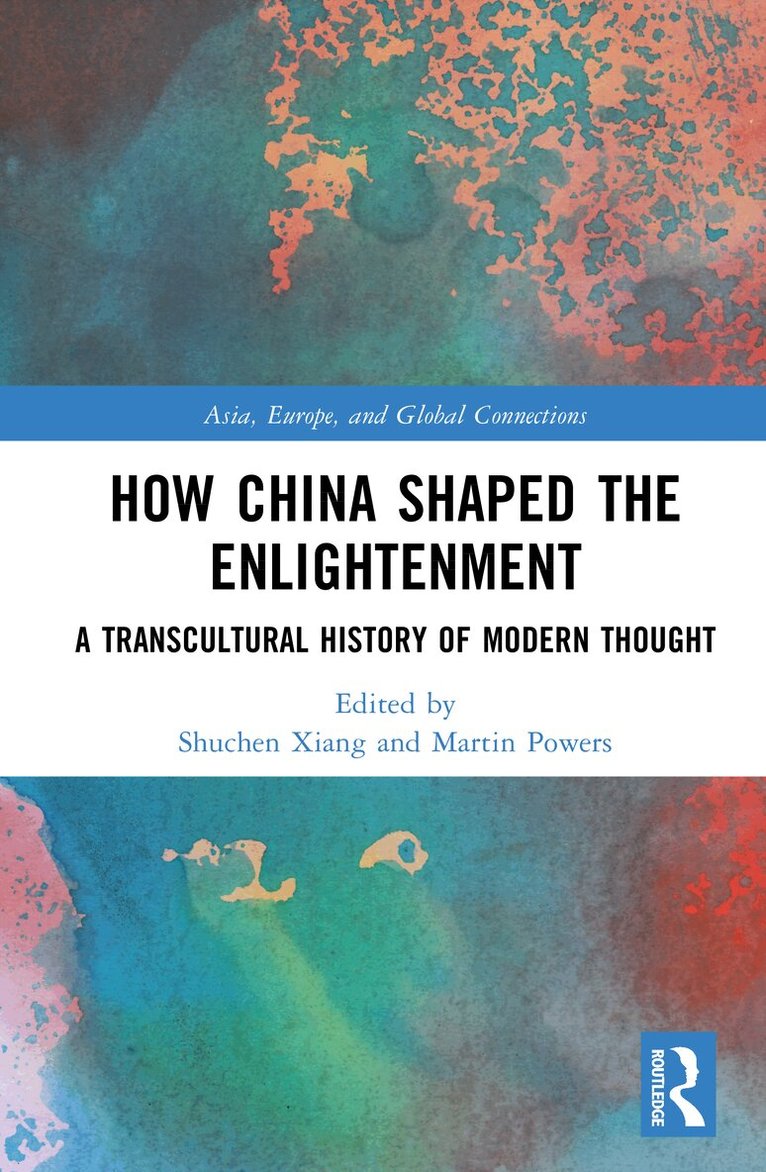
This book explores the interaction of European Enlightenment thinkers with Chinese theory and shows how ideas from China and ideas about China had a profound impact on Enlightenment thought.Challenging the orthodox account of the Enlightenment as an innovation that emerged solely among European men, the book argues that many ideas which led to human progress originated outside Europe. Focusing on the cultural interaction between Europe and China it demonstrates how Chinese theory precipitated debate and demanded theorization by fundamentally challenging the intellectual framework inherited from European antiquity. The result was neither European nor Chinese, but a dynamic fusion that has continued to produce theory right up to the present day.In illustrating how cultural interaction with alien perspectives, civilizations, and worldviews can further human development, this book will be of interest to students and scholars of Chinese and European history and philosophy.
1 456 kr
Skickas inom 3-6 vardagar
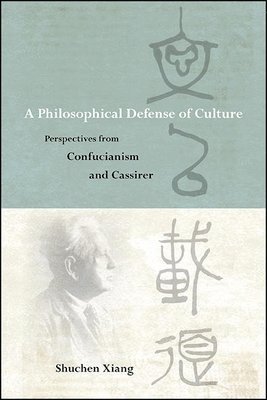
Draws on two different but strikingly similar streams in our world tradition to argue for the contemporary philosophical relevance of "culture."In A Philosophical Defense of Culture, Shuchen Xiang draws on the Confucian philosophy of "culture" and Ernst Cassirer's philosophy of symbolic forms to argue for the importance of "culture" as a philosophic paradigm. A defining ideal of Confucian-Chinese civilization, culture (wen) spans everything from natural patterns and the individual units that make up Chinese writing to literature and other refining vocations of the human being. Wen is thus the soul of Confucian-Chinese philosophy. Similarly, as a philosopher who bridged the classical age of German humanism and postwar modernity, Cassirer implored his and future generations to think of humankind in terms of their culture and to think of the human being as a "symbolic animal." The philosophies of culture of these two traditions, very much compatible, are of urgent relevance to our contemporary epoch. Xiang describes the similarity of their projects by way of their conception of the human being, her relationship to nature, the relationship of human culture to nature, the importance of cultural pluralism, and the role of the arts in human life, as well as the metaphysical frameworks that gave rise to such conceptions. Combining textual exegesis in classical Chinese texts and an exposition of Cassirer's most important insights against the backdrop of post-Kantian philosophy, this book is philosophy written in a cosmopolitan mode, arguing for the contemporary philosophical relevance of "culture" by drawing on and bringing together two different but strikingly similar streams in our world tradition.
566 kr
Skickas inom 3-6 vardagar
Draws on two different but strikingly similar streams in our world tradition to argue for the contemporary philosophical relevance of "culture."In A Philosophical Defense of Culture, Shuchen Xiang draws on the Confucian philosophy of "culture" and Ernst Cassirer's philosophy of symbolic forms to argue for the importance of "culture" as a philosophic paradigm. A defining ideal of Confucian-Chinese civilization, culture (wen) spans everything from natural patterns and the individual units that make up Chinese writing to literature and other refining vocations of the human being. Wen is thus the soul of Confucian-Chinese philosophy. Similarly, as a philosopher who bridged the classical age of German humanism and postwar modernity, Cassirer implored his and future generations to think of humankind in terms of their culture and to think of the human being as a "symbolic animal." The philosophies of culture of these two traditions, very much compatible, are of urgent relevance to our contemporary epoch. Xiang describes the similarity of their projects by way of their conception of the human being, her relationship to nature, the relationship of human culture to nature, the importance of cultural pluralism, and the role of the arts in human life, as well as the metaphysical frameworks that gave rise to such conceptions. Combining textual exegesis in classical Chinese texts and an exposition of Cassirer's most important insights against the backdrop of post-Kantian philosophy, this book is philosophy written in a cosmopolitan mode, arguing for the contemporary philosophical relevance of "culture" by drawing on and bringing together two different but strikingly similar streams in our world tradition.
970 kr
Skickas inom 10-15 vardagar
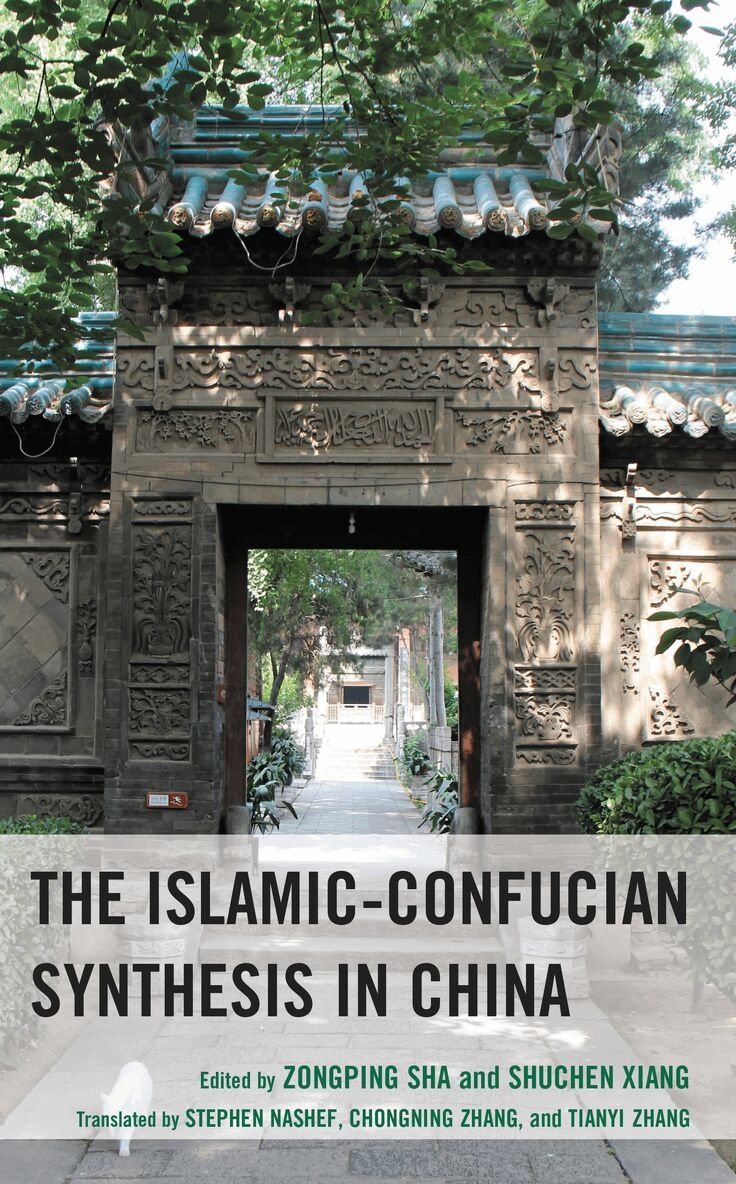
The presence and history of Islam in China is not well-known. Since its arrival into China during the Tang dynasty (618–907 CE), Islam and its traditions have become an inextricable part of the fabric of the Chinese tradition. By the time of the Ming dynasty (1368–1644 CE), Chinese Islam had evolved its own indigenous identity and, by the seventeenth century, specifically Chinese formulations of Islamic teachings began to emerge. This edited volume presents the most authoritative contemporary scholarship on the topic of the Islam-Confucian synthesis in China. It introduces to an international audience the hybridization of traditions throughout the millennia of Chinese history. The experience of the Islamic-Confucian synthesis is a historical example of cross-cultural thinking and mutual borrowing. It testifies to the fact that there is no incommensurability between cultures that cannot ultimately be accommodated. In this accommodation is the potential for mutual and creative growth, novelty, cultural renaissance, and the flourishing of the human spirit.