Sidney Xu Lu - Böcker
Visar alla böcker från författaren Sidney Xu Lu. Handla med fri frakt och snabb leverans.
5 produkter
5 produkter
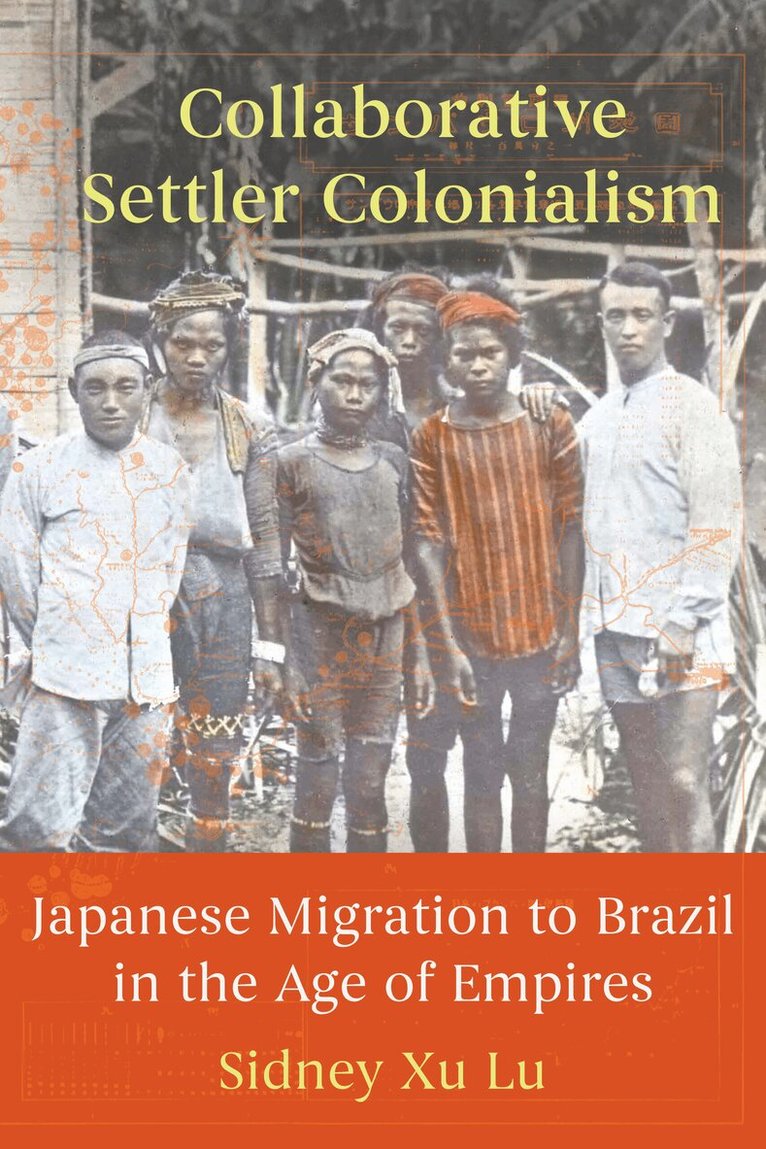
Collaborative Settler Colonialism
Japanese Migration to Brazil in the Age of Empires
Häftad, Engelska, 2025
290 kr
Skickas inom 7-10 vardagar
A free ebook version of this title is available through Luminos, University of California Press's Open Access publishing program. Visit www.luminosoa.org to learn more.Though Japanese migration to Brazil started only at the turn of the twentieth century, Brazil is now the country with the largest ethnic Japanese population outside Japan. Collaborative Settler Colonialism examines this history as a central chapter of both Brazil's and Japan's processes of nation and empire building, and, crucially, as a convergence of their settler colonial projects. Inspired by American colonialism and the final conquest of the U.S. Western frontier, Brazilian and Japanese empire builders collaborated to bring Japanese migrant workers to Brazil, which had the outcome of simultaneously dispossessing Indigenous Brazilians of their land and furthering the expansion of Japanese land and resource possession abroad. Bringing discourses of Latin American and Japanese settler colonialism into rare dialogue with each other, this book offers new insight into understanding the Japanese empire, the history of immigration in Brazil and Latin America, and the past and present of settler colonialism.
752 kr
Skickas inom 7-10 vardagar
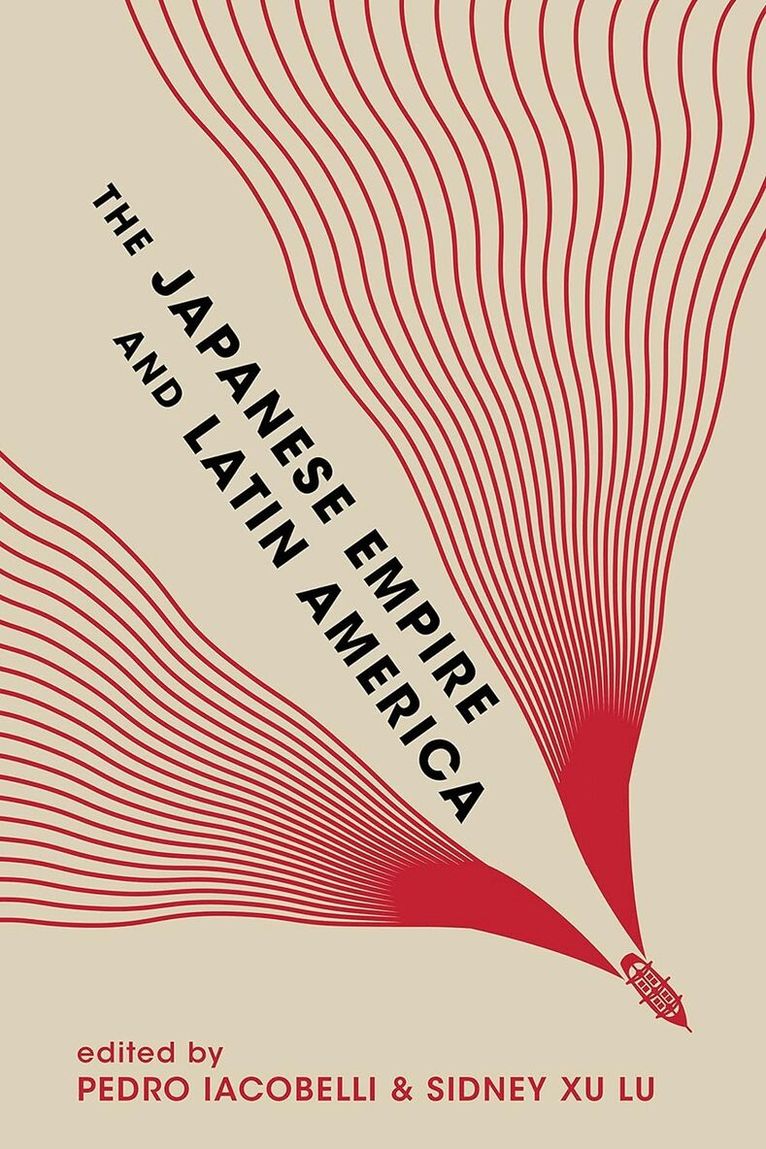
The Japanese Empire and Latin America provides a comprehensive analysis of the complicated relationship between Japanese migration and capital exportation to Latin America and the rise and fall of the empire in the Asia-Pacific region. It explains how Japan’s presence influenced the cultures and societies of Latin American countries and also explores the role of Latin America in the evolution of Japanese expansion. Together, this collection of essays presents a new narrative of the Japanese experience in Latin America by excavating trans-Pacific perspectives that shed new light on the global significance of Japan’s colonialism and expansionism. The chapters cover a variety of topics, such as economic expansion, migration management, cross-border community making, the surge of pro-Japan propaganda in the Americas, the circulation of knowledge, and the representation of the "other" in Japanese and Latin American fictions. By focusing on both government action and individual experiences, the viewpoints examined create a complete analysis, including the roles the empire played in the process of settler identity formation in Latin America. While the colonialist and expansionist discourses in Japan set a stage for the beginning of Japanese migration to Latin America, it was the vibrant circulation of information between East Asia and the Americas that allowed the empire to stay at the center of the cultural life of communities on the other side of the globe. The empire left an enduring mark on Latin America that is hard to ignore. This volume explores long-neglected aspects of the Japanese global expansion; and thus, moves our understanding of the empire’s significance beyond Asia and rethinks its legacy in global history.
291 kr
Skickas inom 7-10 vardagar
The Japanese Empire and Latin America provides a comprehensive analysis of the complicated relationship between Japanese migration and capital exportation to Latin America and the rise and fall of the empire in the Asia-Pacific region. It explains how Japan’s presence influenced the cultures and societies of Latin American countries and also explores the role of Latin America in the evolution of Japanese expansion. Together, this collection of essays presents a new narrative of the Japanese experience in Latin America by excavating transpacific perspectives that shed new light on the global significance of Japan’s colonialism and expansionism.The chapters cover a variety of topics, such as economic expansion, migration management, cross-border community making, the surge of pro-Japan propaganda in the Americas, the circulation of knowledge, and the representation of the "other" in Japanese and Latin American fictions. By focusing on both government action and individual experiences, the viewpoints examined create a complete analysis, including the roles the empire played in the process of settler identity formation in Latin America. While the colonialist and expansionist discourses in Japan set a stage for the beginning of Japanese migration to Latin America, it was the vibrant circulation of information between East Asia and the Americas that allowed the empire to stay at the center of the cultural life of communities on the other side of the globe. The empire left an enduring mark on Latin America that is hard to ignore. This volume explores long-neglected aspects of the Japanese global expansion; and thus, moves our understanding of the empire’s significance beyond Asia and rethinks its legacy in global history.
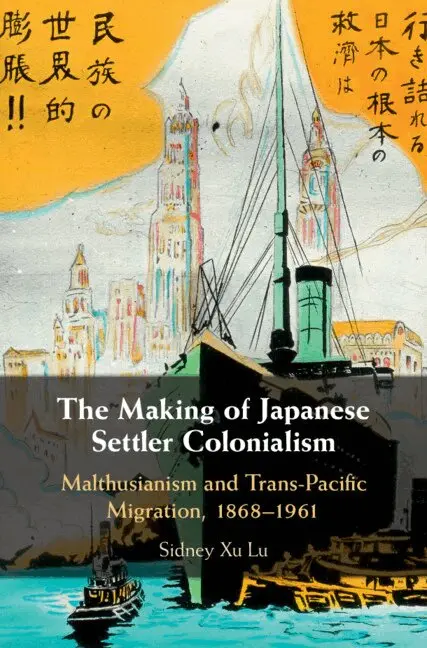
The Making of Japanese Settler Colonialism
Malthusianism and Trans-Pacific Migration, 1868-1961
Inbunden, Engelska, 2019
1 282 kr
Skickas inom 7-10 vardagar
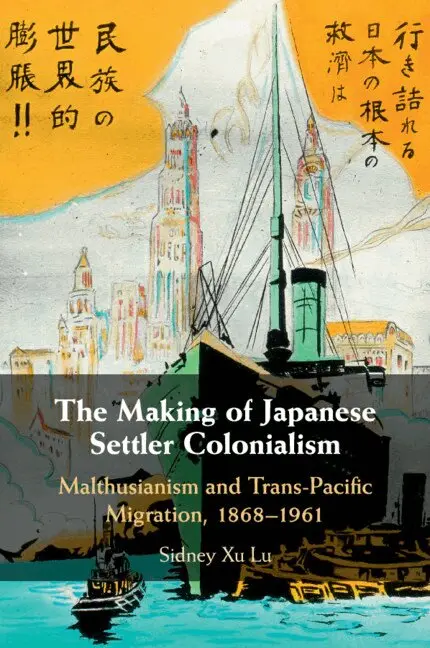
This innovative study demonstrates how Japanese empire-builders invented and appropriated the discourse of overpopulation to justify Japanese settler colonialism across the Pacific. Lu defines this overpopulation discourse as 'Malthusian expansionism'. This was a set of ideas that demanded additional land abroad to accommodate the supposed surplus people in domestic society on the one hand and emphasized the necessity of national population growth on the other. Lu delineates ideological ties, human connections and institutional continuities between Japanese colonial migration in Asia and Japanese migration to Hawaii and North and South America from 1868 to 1961. He further places Malthusian expansionism at the center of the logic of modern settler colonialism, challenging the conceptual division between migration and settler colonialism in global history. This title is also available as Open Access.
The Making of Japanese Settler Colonialism
Malthusianism and Trans-Pacific Migration, 1868-1961
Häftad, Engelska, 2020
441 kr
Skickas inom 7-10 vardagar
This innovative study demonstrates how Japanese empire-builders invented and appropriated the discourse of overpopulation to justify Japanese settler colonialism across the Pacific. Lu defines this overpopulation discourse as 'Malthusian expansionism'. This was a set of ideas that demanded additional land abroad to accommodate the supposed surplus people in domestic society on the one hand and emphasized the necessity of national population growth on the other. Lu delineates ideological ties, human connections and institutional continuities between Japanese colonial migration in Asia and Japanese migration to Hawaii and North and South America from 1868 to 1961. He further places Malthusian expansionism at the center of the logic of modern settler colonialism, challenging the conceptual division between migration and settler colonialism in global history. This title is also available as Open Access.