Silvia Romagnoli – författare
Visar alla böcker från författaren Silvia Romagnoli. Handla med fri frakt och snabb leverans.
6 produkter
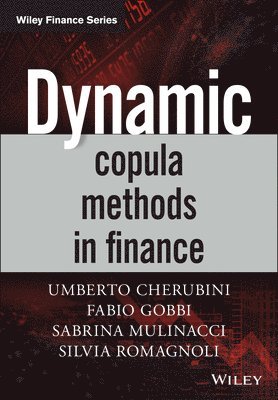
Dynamic Copula Methods in Finance
Av Umberto Cherubini, Sabrina Mulinacci m. fl.
Inbunden, 2011
1041 kr
Lägg i varukorg
The latest tools and techniques for pricing and risk managementThis book introduces readers to the use of copula functions to represent the dynamics of financial assets and risk factors, integrated temporal and cross-section applications. The first part of the book will briefly introduce the …
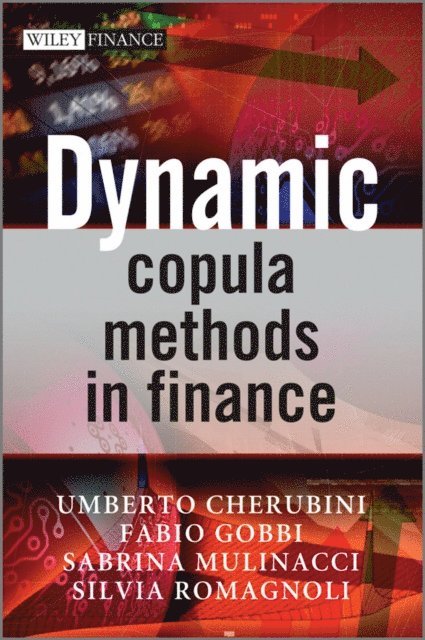
Dynamic Copula Methods in Finance
Av Silvia Romagnoli, Fabio Gobbi m. fl.
E-bok, 2011
1212 kr
Lägg i varukorg
The latest tools and techniques for pricing and risk management This book introduces readers to the use of copula functions to represent the dynamics of financial assets and risk factors, integrated temporal and cross-section applications. The first part of the book will briefly introduce the …
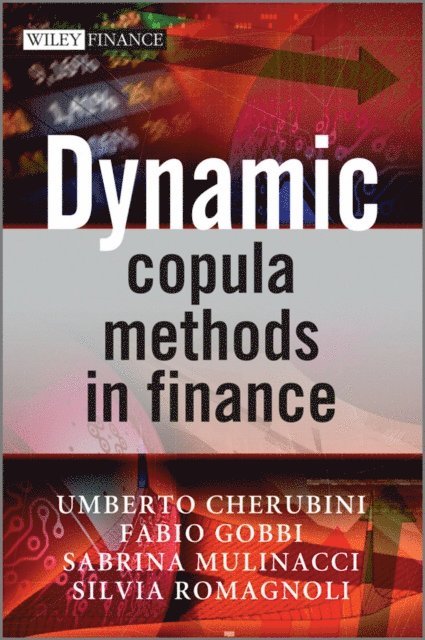
Dynamic Copula Methods in Finance
Av Silvia Romagnoli, Fabio Gobbi m. fl.
E-bok, 2011
1212 kr
Lägg i varukorg
The latest tools and techniques for pricing and risk management This book introduces readers to the use of copula functions to represent the dynamics of financial assets and risk factors, integrated temporal and cross-section applications. The first part of the book will briefly introduce the …
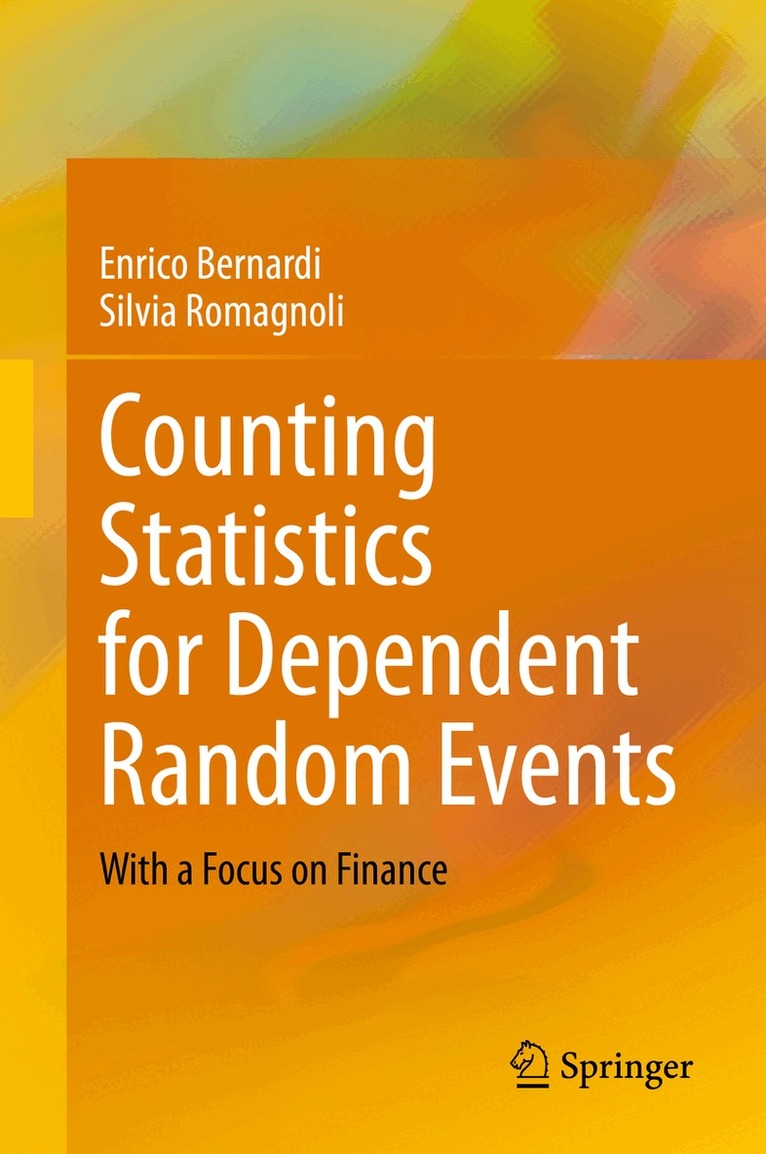
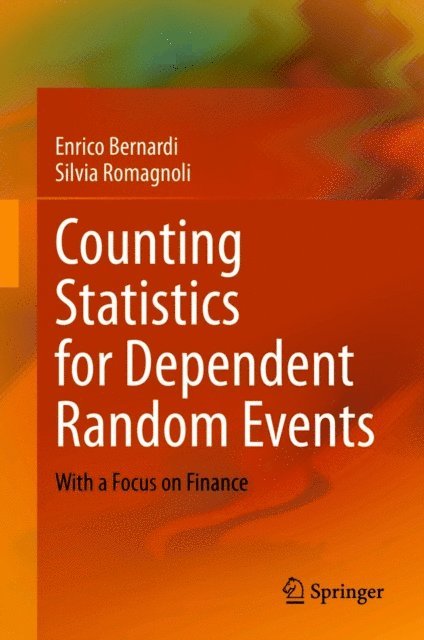
Counting Statistics for Dependent Random Events
With a Focus on Finance
Av Enrico Bernardi, Silvia Romagnoli
Inbunden, 2021
1314 kr
Lägg i varukorg
This book on counting statistics presents a novel copula-based approach to counting dependent random events. It combines clustering, combinatorics-based algorithms and dependence structure in order to tackle and simplify complex problems, without disregarding the hierarchy of or interconnections …
Counting Statistics for Dependent Random Events
With a Focus on Finance
Av Silvia Romagnoli, Enrico Bernardi
E-bok, 2021
1785 kr
Lägg i varukorg
This book on counting statistics presents a novel copula-based approach to counting dependent random events. It combines clustering, combinatorics-based algorithms and dependence structure in order to tackle and simplify complex problems, without disregarding the hierarchy of or interconnections …
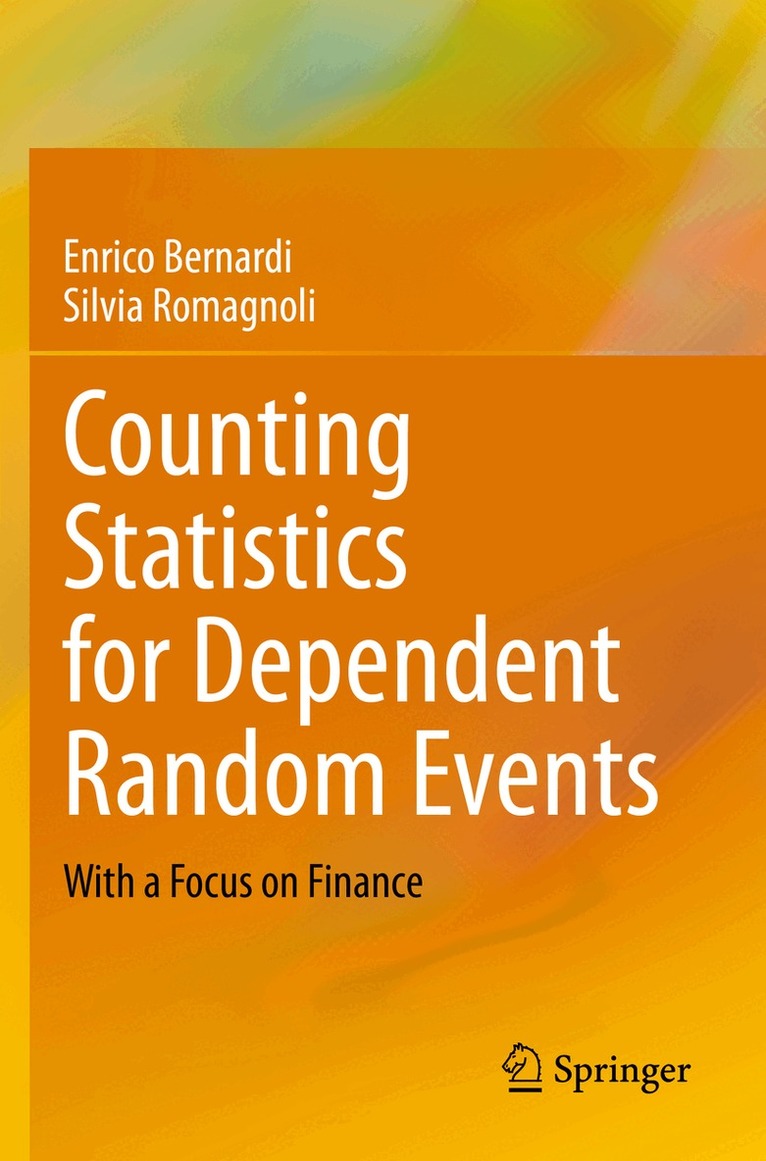
Counting Statistics for Dependent Random Events
With a Focus on Finance
Av Enrico Bernardi, Silvia Romagnoli
Häftad, 2022
1314 kr
Lägg i varukorg
This book on counting statistics presents a novel copula-based approach to counting dependent random events. It combines clustering, combinatorics-based algorithms and dependence structure in order to tackle and simplify complex problems, without disregarding the hierarchy of or interconnections …