Simon Oliver - Böcker
Visar alla böcker från författaren Simon Oliver. Handla med fri frakt och snabb leverans.
12 produkter
12 produkter
2 030 kr
Skickas inom 10-15 vardagar
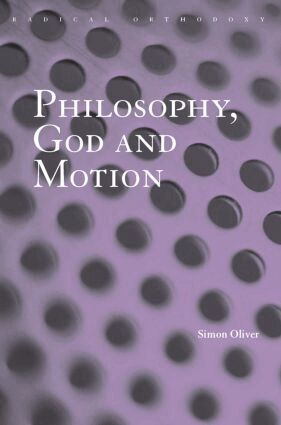
In the post-Newtonian world motion is assumed to be a simple category which relates to the locomotion of bodies in space, and is usually associated only with physics. This book shows this to be a relatively recent understanding of motion and that prior to the scientific revolution motion was a broader and more mysterious category, applying to moral as well as physical movements.Simon Oliver presents fresh interpretations of key figures in the history of western thought including Plato, Aristotle, Aquinas and Newton, examining the thinkers’ handling of the concept of motion. Through close readings of seminal texts in ancient and medieval cosmology and early modern natural philosophy, the books moves from antique to modern times investigating how motion has been of great significance within theology, philosophy and science. Particularly important is the relation between motion and God, following Aristotle traditional doctrines of God have understood the divine as the ‘unmoved mover’ while post-Holocaust theologians have suggested that in order to be compassionate God must undergo the motion of suffering. The text argues that there may be an authentically theological, as well as a natural scientific understanding of motion.This volume will prove a major contribution to theology, the history of Christian thought and to the growing field of science and religion.
2 098 kr
Skickas inom 10-15 vardagar
The Radical Orthodoxy Reader presents a selection of key readings in the field of Radical Orthodoxy, the most influential theological movement in contemporary academic theology. Radical Orthodoxy draws on pre-Enlightenment theology and philosophy to engage critically with the assumption and priorities of secularism, modernity, postmodernity, and associated theologies. In doing so it explores a wide and exciting range of issues: music, language, society, the body, the city, power, motion, space, time, personhood, sex and gender. As such it is both controversial and extremely stimulating; provoking much fruitful debate amongst contemporary theologians.To assist those encountering Radical Orthodoxy for the first time, each section has an introductory commentary, related reading and helpful questions to encourage in-depth understanding and further study.
579 kr
Skickas inom 10-15 vardagar
The Radical Orthodoxy Reader presents a selection of key readings in the field of Radical Orthodoxy, the most influential theological movement in contemporary academic theology. Radical Orthodoxy draws on pre-Enlightenment theology and philosophy to engage critically with the assumption and priorities of secularism, modernity, postmodernity, and associated theologies. In doing so it explores a wide and exciting range of issues: music, language, society, the body, the city, power, motion, space, time, personhood, sex and gender. As such it is both controversial and extremely stimulating; provoking much fruitful debate amongst contemporary theologians.To assist those encountering Radical Orthodoxy for the first time, each section has an introductory commentary, related reading and helpful questions to encourage in-depth understanding and further study.
756 kr
Skickas inom 10-15 vardagar
In the post-Newtonian world motion is assumed to be a simple category which relates to the locomotion of bodies in space, and is usually associated only with physics. This book shows this to be a relatively recent understanding of motion and that prior to the scientific revolution motion was a broader and more mysterious category, applying to moral as well as physical movements.Simon Oliver presents fresh interpretations of key figures in the history of western thought including Plato, Aristotle, Aquinas and Newton, examining the thinkers’ handling of the concept of motion. Through close readings of seminal texts in ancient and medieval cosmology and early modern natural philosophy, the books moves from antique to modern times investigating how motion has been of great significance within theology, philosophy and science. Particularly important is the relation between motion and God, following Aristotle traditional doctrines of God have understood the divine as the ‘unmoved mover’ while post-Holocaust theologians have suggested that in order to be compassionate God must undergo the motion of suffering. The text argues that there may be an authentically theological, as well as a natural scientific understanding of motion.This volume will prove a major contribution to theology, the history of Christian thought and to the growing field of science and religion.
2 338 kr
Skickas inom 5-8 vardagar
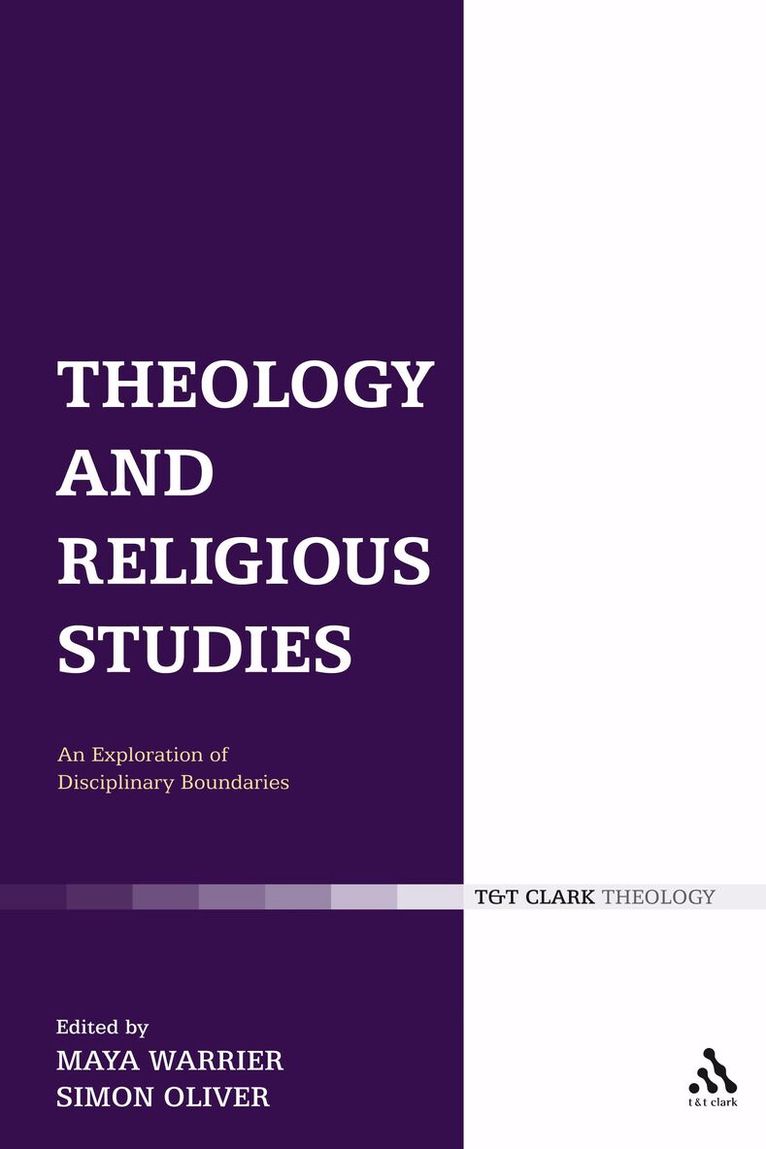
Theology and Religious Studies seeks to explore the relationship between the disciplines of Religious Studies and Theology. In particular, it aims to examine whether the two disciplines are strange bedfellows sharing little in common but bedding together out of sheer habit, or whether there is something that the two share in an organic sense, which sustains the link between them. These questions have important implications not just for how the respective disciplines define themselves and their boundaries, but also for their place in the secular context of higher education in modern universities. The question of how the two are related is one that concerns all scholars of religion, since it has important implications for approach and method in the study of religions. Particularly relevant are questions to do with subjectivity, objectivity, and reflexivity in the study of religion; 'insider' and 'outsider' approaches; 'scientific' and 'theological' methodologies; and 'public'/'private' dichotomies in defining the 'secular' and the 'religious'. This volume is based on a seminar series conducted over 2005-06 in the Department of Theology and Religious Studies, at the University of Wales, Lampeter, UK. It brings together papers presented by leading scholars of Theology and Religious Studies on various aspects of their respective disciplines. These include origins; history; founding premises; orientations; methodology; engagement with feminist and post-colonial critiques; and shifts in theoretical paradigms over time. The intended result is the generation of dialogue between the two disciplines, and a self-reflexive examination of what each is about. There is very little available literature attempting such a dialogue between Theology and Religious Studies, and this book will fill a crucial gap in this area.
619 kr
Skickas inom 5-8 vardagar
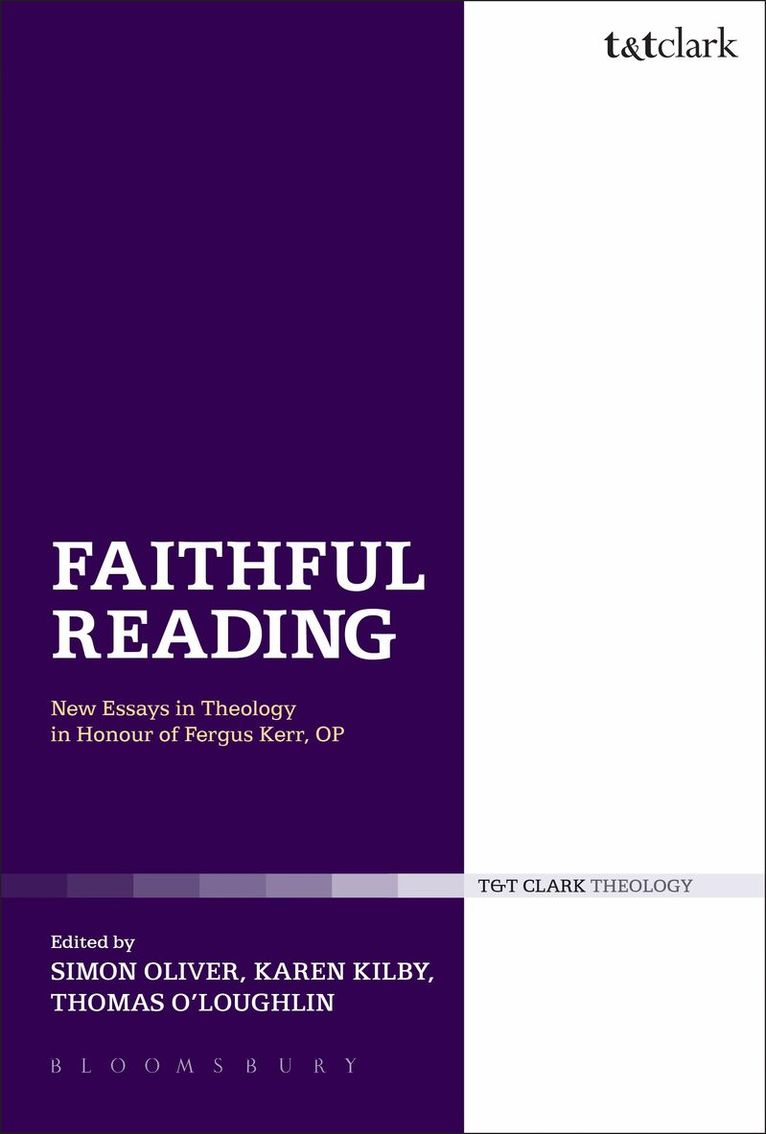
Fergus Kerr, OP is one of the foremost Catholic theologians of his generation. His works are widely read by specialists and students in the UK, North America and across the world. His ‘Theology after Wittgenstein’ is regarded as a seminal work in philosophical theology. His ‘After Aquinas: Versions of Thomism’ and ‘Twentieth Century Catholic Theologians’ are two of the finest student-focussed introductions to their topics currently available. The essays in this collection cover the two key areas of Kerr’s contribution: the relationship between theology and philosophy, focusing particularly on Thomism; and twentieth century Catholic thought. These themes provide the volume’s coherence. A key strength of this volume lies in the stature of its contributors. These include the Canadian Catholic philosopher and Templeton-laureate Charles Taylor, Stanley Hauerwas, John Milbank, David Burrell and Denys Turner. A number of younger contributors, representing the influence of Kerr over several generations, are also represented.
2 183 kr
Skickas inom 5-8 vardagar
Fergus Kerr, OP is one of the foremost Catholic theologians of his generation. His works are widely read by specialists and students in the UK, North America and across the world. His Theology after Wittgenstein is regarded as a seminal work in philosophical theology. His After Aquinas: Versions of Thomism and Twentieth Century Catholic Theologians are two of the finest student-focussed introductions to their topics currently available. The essays in this collection cover the two key areas of Kerrs contribution: the relationship between theology and philosophy, focusing particularly on Thomism; and twentieth century Catholic thought. These themes provide the volumes coherence. A key strength of this volume lies in the stature of its contributors. These include the Canadian Catholic philosopher and Templeton-laureate Charles Taylor, Stanley Hauerwas, John Milbank, David Burrell and Denys Turner. A number of younger contributors, representing the influence of Kerr over several generations, are also represented.
489 kr
Skickas inom 3-6 vardagar
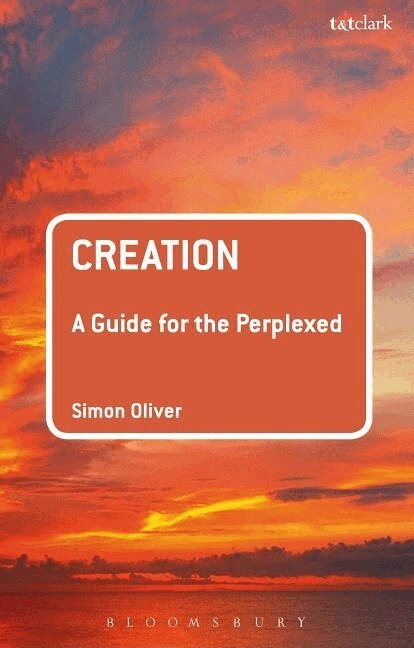
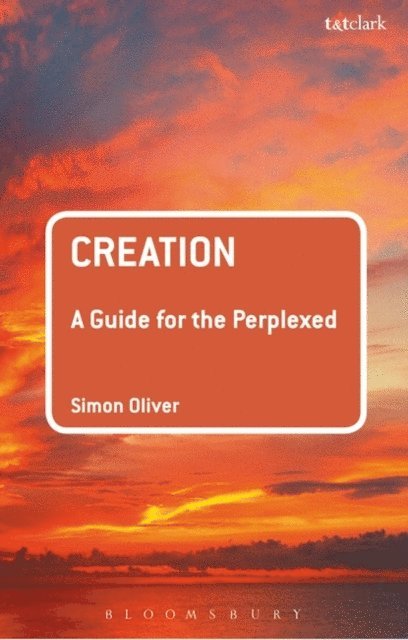
This addition to our popular Guides for the Perplexed series tackles a subject that is enjoying renewed debate: Christianity, along with Judaism and Islam, claims that the universe is not a brute fact. It is 'created'. But what do we mean by 'creation'? Do we mean that the universe is 'designed'? Is it the product of an evolutionary process? How are creatures related to God, and does God act within creation? Simon Oliver begins with the background to the Christian theology of creation in Greek philosophy and the Old Testament. This provides a route into understanding the claim that we are part of a created order that is also the theatre of God's providential action. He examines different understandings of creation, including creation out of nothing and the analogy of being, with close reference to the work of patristic and medieval theologians such as Augustine and Thomas Aquinas. This leads to an historical overview of the relationship between theological, philosophical and scientific approaches to creation in the modern period. Some of the ethical issues concerning humanity's place within, and treatment of, creation and our environment are also examined. A distinctive yet traditional theology of creation is proposed focused on the concepts of gift and participation as ways of understanding more fully the meaning and implications of the claim that the universe is created.
1 177 kr
Skickas inom 5-8 vardagar
This addition to our popular Guides for the Perplexed series tackles a subject that is enjoying renewed debate: Christianity, along with Judaism and Islam, claims that the universe is not a brute fact. It is 'created'. But what do we mean by 'creation'? Do we mean that the universe is 'designed'? Is it the product of an evolutionary process? How are creatures related to God, and does God act within creation? Simon Oliver begins with the background to the Christian theology of creation in Greek philosophy and the Old Testament. This provides a route into understanding the claim that we are part of a created order that is also the theatre of God's providential action. He examines different understandings of creation, including creation out of nothing and the analogy of being, with close reference to the work of patristic and medieval theologians such as Augustine and Thomas Aquinas. This leads to an historical overview of the relationship between theological, philosophical and scientific approaches to creation in the modern period. Some of the ethical issues concerning humanity's place within, and treatment of, creation and our environment are also examined. A distinctive yet traditional theology of creation is proposed focused on the concepts of gift and participation as ways of understanding more fully the meaning and implications of the claim that the universe is created.
207 kr
Skickas inom 5-8 vardagar
111 kr
Skickas inom 5-8 vardagar
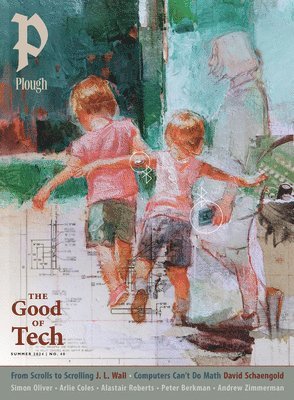
How can we live well with tech, without it becoming our master?These days, the heady promises of Silicon Valley seem suspect: the internet didn’t bring all of humanity together; neither did smartphones or social media. We have long since stopped associating tech with utopian visions of global harmony, instead blaming it for distraction, polarization, addictions to porn and gambling, the trivialization of culture, loss of privacy and work-life balance, and fears that automation may push millions out of a job. Advances in artificial intelligence seem poised to bring us to the next technological watershed. It’s a good time to ask how we can learn to live well with tech, and how we might push back against technologies that shape humans in anti-human ways.On this theme:Find out why computers can’t do math and humans can.When parenting from prison, a little tech can make a big difference.Glucose monitoring systems transform life for children with diabetes.Should ChatGPT write sermons and prayers?From scrolls to scrolling, tech has changed the way Jewish people read scriptureWill AI bring the end of the world, or is it already here?An intentional community tries to be intentional about personal technology.Our struggle with technology goes back to the Tower of Babel in Genesis.A farmer praises a simple piece of technology – the rock bar.Also in this issue:A photo essay about children on the frontlines in UkraineA philosopher’s proposal for a gift economyThe winners of the 2024 Rhina Espaillat Poetry AwardInsights from Gerard Manley Hopkins, E. F. Schumacher, Antoine de Saint-Exupéry, Jean-Pierre Dupuy, and Hannah ArendtReviews of Birding to Change the World, The Heaven & Earth Grocery Store, and All Things Are Too SmallPlough Quarterly features stories, ideas, and culture for people eager to apply their faith to the challenges we face. Each issue includes in-depth articles, interviews, poetry, book reviews, and art.
195 kr
Skickas
Wormholes in your kitchen. Gravity failures at school. Quantum tornadoes tearing through the midwest. As with all natural disasters, people do what they always do: They adapt and survive. And if things get really bad, the Federal Bureau of Physics (FBP) is only a call away. FBP: Federal Bureau of Physics is the story of Adam Hardy: Young, brash and smart, he's a rising star at the FBP, but when a gravity failure leads to the creation of an alternate dimension known as a 'BubbleVerse,' Adam is sent on a rescue mission and finds his skills and abilities pushed to their limits when he discovers his partner has a different agenda... Collects issues #1-7.