Simon Pemberton – författare
Visar alla böcker från författaren Simon Pemberton. Handla med fri frakt och snabb leverans.
4 produkter
4 produkter
2 113 kr
Skickas inom 10-15 vardagar
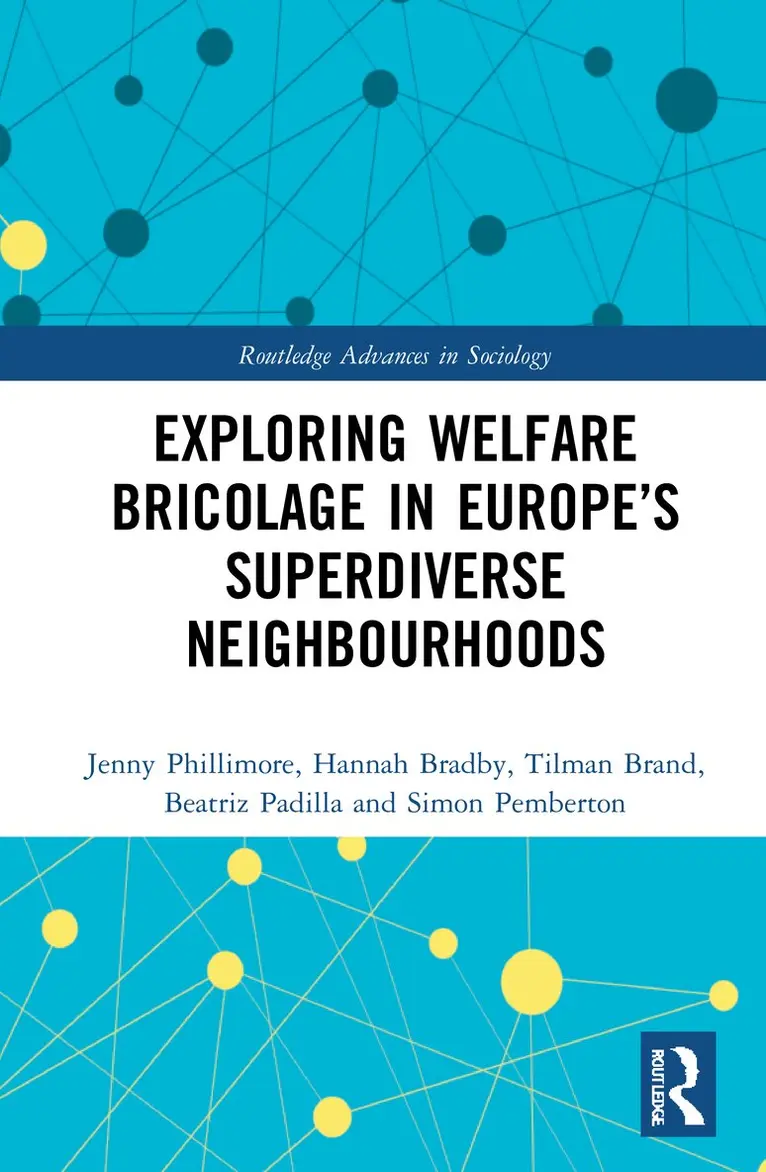
Migration-driven diversity means European cities are becoming increasingly superdiverse. Some European neighbourhoods have become places where newcomers arrive from across the world, speaking many different languages, from a range of socio-economic backgrounds and with diverse religious beliefs and practices, while living alongside long-established migrant and white European populations. This book focuses on what this increasing population diversity means for how people and local health and welfare service providers seek to address everyday health concerns – from minor and chronic conditions to acute and urgent problems.Using an innovative mixed-method approach crossing multiple disciplines and drawing together rich qualitative and robust quantitative data, this book offers unique insight into the complex and intricate actions, which often vary over space and time, implemented by both residents and care providers from eight superdiverse localities in four European countries, each with different health and welfare traditions. The book introduces the concept of welfare bricolage, using it as a mechanism to explore the structures and rationales underpinning need and actions, and how resources are connected across welfare regimes and borders and within locales. The book illustrates how, in the face of increasingly marketised, cash-strapped, restrictive and institutionally racist welfare states and healthcare regimes, individuals and service providers strive to address need.By focusing on welfare regimes, migration histories, everyday actions and resources within neighbourhoods, Exploring Welfare Bricolage in Europe’s Superdiverse Neighbourhoods offers a unique insight into what people and providers actually do when faced with health concerns. The book highlights the role of structure and agency and moves beyond conventional approaches that focus on specific groups or sectors to research health and welfare by looking at whole populations and entire welfare ecosystems. The book’s theoretical, methodological and empirical contributions will be of use to scholars, practitioners and policymakers interested in welfare, healthcare, diversity and migration.
632 kr
Skickas inom 10-15 vardagar
Migration-driven diversity means European cities are becoming increasingly superdiverse. Some European neighbourhoods have become places where newcomers arrive from across the world, speaking many different languages, from a range of socio-economic backgrounds and with diverse religious beliefs and practices, while living alongside long-established migrant and white European populations. This book focuses on what this increasing population diversity means for how people and local health and welfare service providers seek to address everyday health concerns – from minor and chronic conditions to acute and urgent problems.Using an innovative mixed-method approach crossing multiple disciplines and drawing together rich qualitative and robust quantitative data, this book offers unique insight into the complex and intricate actions, which often vary over space and time, implemented by both residents and care providers from eight superdiverse localities in four European countries, each with different health and welfare traditions. The book introduces the concept of welfare bricolage, using it as a mechanism to explore the structures and rationales underpinning need and actions, and how resources are connected across welfare regimes and borders and within locales. The book illustrates how, in the face of increasingly marketised, cash-strapped, restrictive and institutionally racist welfare states and healthcare regimes, individuals and service providers strive to address need.By focusing on welfare regimes, migration histories, everyday actions and resources within neighbourhoods, Exploring Welfare Bricolage in Europe’s Superdiverse Neighbourhoods offers a unique insight into what people and providers actually do when faced with health concerns. The book highlights the role of structure and agency and moves beyond conventional approaches that focus on specific groups or sectors to research health and welfare by looking at whole populations and entire welfare ecosystems. The book’s theoretical, methodological and empirical contributions will be of use to scholars, practitioners and policymakers interested in welfare, healthcare, diversity and migration.
2 113 kr
Skickas inom 10-15 vardagar
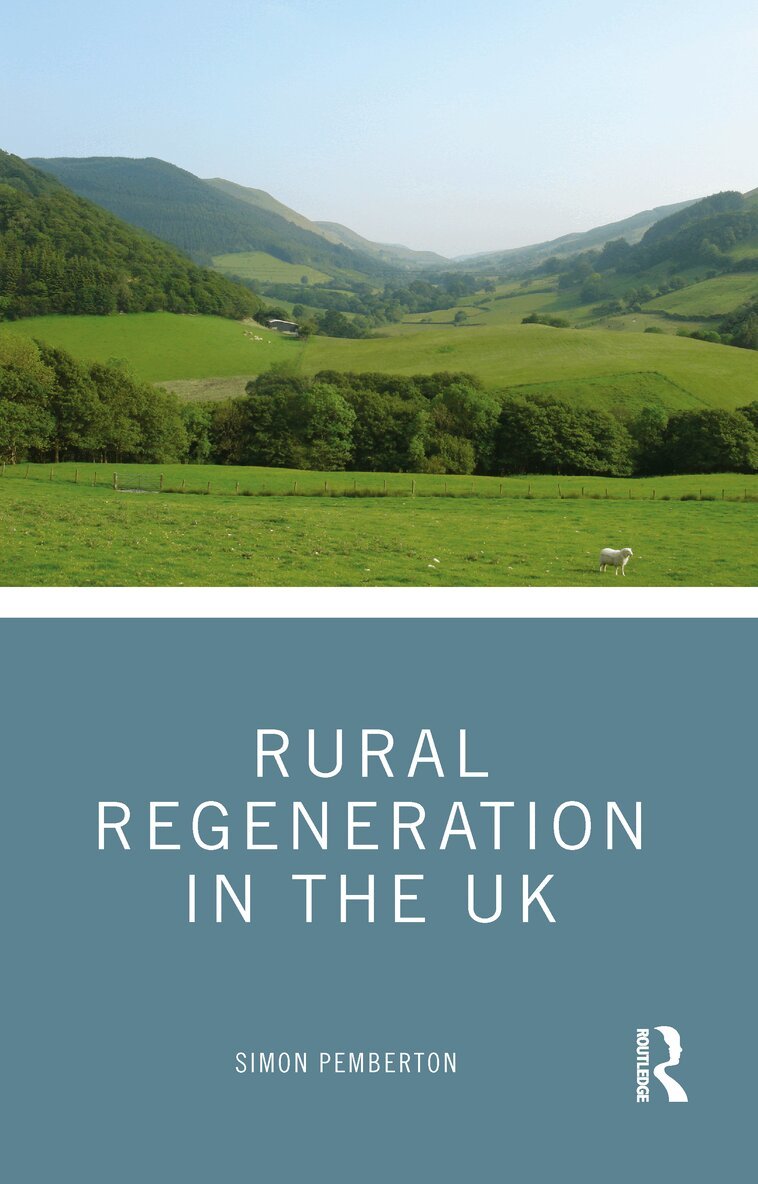
Rural Regeneration in the UK provides an accessible yet critical overview of rural regeneration policy and governance in the UK. It charts the key patterns and processes of rural change since 1945 and the emergence and evolution of rural regeneration policy and governance in shaping rural spaces. A key objective of the book is to highlight how, and to what extent, rural regeneration policy and governance are responsive to an increasingly differentiated and uneven rural economy and society.Part One considers the context for rural regeneration, including theoretical frameworks of relevance and the ways in which rural regeneration policy and governance have been framed. In particular, it includes a consideration of how the rural has been made ‘thinkable’, and the extent to which this has moved beyond traditional concerns with agricultural development. Part Two highlights the key dimensions and spaces of rural regeneration. This includes responses to rural change from ‘within the rural’, including community-led approaches, the use of culture and the extent to which approaches may be converging or diverging within a devolved UK.Rural Regeneration in the UK provides a comprehensive and integrated analysis of responses to rural change that will appeal to a broad audience of students, scholars and practitioners both in the UK and abroad.
578 kr
Skickas inom 10-15 vardagar
Rural Regeneration in the UK provides an accessible yet critical overview of rural regeneration policy and governance in the UK. It charts the key patterns and processes of rural change since 1945 and the emergence and evolution of rural regeneration policy and governance in shaping rural spaces. A key objective of the book is to highlight how, and to what extent, rural regeneration policy and governance are responsive to an increasingly differentiated and uneven rural economy and society.Part One considers the context for rural regeneration, including theoretical frameworks of relevance and the ways in which rural regeneration policy and governance have been framed. In particular, it includes a consideration of how the rural has been made ‘thinkable’, and the extent to which this has moved beyond traditional concerns with agricultural development. Part Two highlights the key dimensions and spaces of rural regeneration. This includes responses to rural change from ‘within the rural’, including community-led approaches, the use of culture and the extent to which approaches may be converging or diverging within a devolved UK.Rural Regeneration in the UK provides a comprehensive and integrated analysis of responses to rural change that will appeal to a broad audience of students, scholars and practitioners both in the UK and abroad.