S.J. Connolly – författare
Visar alla böcker från författaren S.J. Connolly. Handla med fri frakt och snabb leverans.
4 produkter
4 produkter
Inbunden, Engelska, 2002
1 129 kr
Tillfälligt slut
'A companion to be cherished', 'judicious and authoritative', 'excellent work', 'informative and entertaining', these are just some of the phrases used by reviewers describing the first edition of The Oxford Companion to Irish History, published in hardback in 1998. The history of Ireland has long been a topic at the forefront of debate and one that continues to raise emotions and be the cause of much dispute. It is astonishing that such a small area of land has had one of the most controversial yet fascinating histories of any country in the world. Interest in Irish culture, politics, and society, both ancient and modern, never seems to falter, not only in scholarly circles but also among the general public. With over 1,800 entries, the Companion, now in its second edition, continues to offer a comprehensive and authoritative guide to all aspects of the Irish past from earliest times to the present day. There is coverage not only of leading political figures, organizations, and events but also of subjects such as dress, music, sport, and diet.Traditional topics such as the rebellion of 1798 and the Irish Civil War sit alongside entries on newly developing areas such as women's history and popular culture. The editor, Sean Connolly, with the help of the existing 87 contributors and a small number of new contributors, has updated and revised the text to take into account recent research and events. The coverage has been expanded to offer a fuller treatment of prehistoric and early historic Ireland and more comprehensive information on literary history. There are also new entries on individuals who have died since the first edition was published. In addition the sections dealing with politics in the Irish Republic and in Northern Ireland have been rewritten to take full account of developments up to the end of the 20th century.New / rewritten entries include: Visual Arts (art schools, ceramics, furniture, history painting, painting, sculpture) Politics / Religion (Brendan Corish, James Dillon, Sean MacDermott, Alfred O'Rahilly, peace process, Progressive Democrats, Michael Tierney, Workers' Party) Literature (Dun Emer Press, Lady Augusta Gregory, James Joyce, George Bernard Shaw, Lady Jane ('Speranza') Wilde) Prehistoric and Early Ireland (Bronze Age Ireland, Celtic Ireland, crannog, La Tene in Ireland, Mesolithic Ireland, Neolithic Ireland, rath) Medieval Ireland (fuidir, MacCarthy, O'Brien, O'Donnell, senchleithe, sept) Other (agriculture, Devon Commission, John Henry Newman, Ulster Scots) In addition to A-Z entries the Companion includes a section of maps showing the shape of modern Ireland, post-reformation ecclesiastical divisions in Ireland, political divisions circa 800, Ireland circa 1350, Ireland in the late 15th century, and the pattern of transport and communications in Ireland. There is also a subject index, which groups headwords into thematic batches to provide an alternative way to access the entries.This second edition of the Companion, continuing on from the original, will be valuable to different people for different uses. It will be of particular use to students as a work of general reference and to the general public with an interest in the history and culture of Ireland. But it should also have appeal to academics, both for the longer analytical entries and as a source of reference for topics outside of their immediate area of expertise.
Inbunden, Engelska, 2008
1 247 kr
Skickas inom 5-8 vardagar
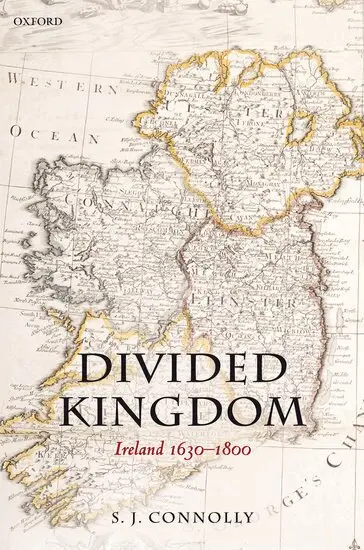
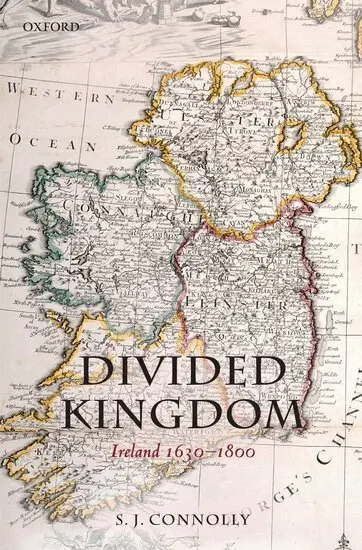
For Ireland the seventeenth and eighteenth centuries were an era marked by war, economic transformation, and the making and remaking of identities. By the 1630s the era of wars of conquest seemed firmly in the past. But the British civil wars of the mid-seventeenth century fractured both Protestant and Catholic Ireland along lines defined by different combinations of religious and political allegiance. Later, after 1688, Ireland became the battlefield for what was otherwise Britain's bloodless (and so Glorious) Revolution. The eighteenth century, by contrast, was a period of peace, permitting Ireland to emerge, first as a dynamic actor in the growing Atlantic economy, then as the breadbasket for industrialising Britain. But at the end of the century, against a background of international revolution, new forms of religious and political conflict came together to produce another period of multi-sided conflict. The Act of Union, hastily introduced in the aftermath of civil war, ensured that Ireland entered the nineteenth century still divided, but no longer a kingdom.
Häftad, Engelska, 2010
690 kr
Skickas inom 7-10 vardagar
For Ireland the seventeenth and eighteenth centuries were an era marked by war, economic transformation, and the making and remaking of identities. By the 1630s the era of wars of conquest seemed firmly in the past. But the British civil wars of the mid-seventeenth century fractured both Protestant and Catholic Ireland along lines defined by different combinations of religious and political allegiance. Later, after 1688, Ireland became the battlefield for what was otherwise Britain's bloodless (and so Glorious) Revolution. The eighteenth century, by contrast, was a period of peace, permitting Ireland to emerge, first as a dynamic actor in the growing Atlantic economy, then as the breadbasket for industrialising Britain. But at the end of the century, against a background of international revolution, new forms of religious and political conflict came together to produce another period of multi-sided conflict. The Act of Union, hastily introduced in the aftermath of civil war, ensured that Ireland entered the nineteenth century still divided, but no longer a kingdom.
Häftad, Engelska, 2011
196 kr
Skickas
'A companion to be cherished', 'judicious and authoritative', 'informative and entertaining', an 'invaluable work of reference' - these are just some of the phrases used by reviewers to describe the Oxford Companion to Irish History. The history of Ireland has long been at the epicentre of political and academic debate. Interest in Irish culture, politics, and society, both ancient and modern, never seems to falter, not only in scholarly circles but also among the general public. With over 1,800 entries, this Companion - now available in the Oxford Paperback Reference series - offers a comprehensive and authoritative guide to all aspects of Ireland's past from earliest times to the present day. There is coverage not only of leading political figures, organizations, and events but also of subjects such as dress, music, sport, and diet. Traditional topics such as the rebellion of 1798 and the Irish Civil War sit alongside entries on newly developing areas such as women's history and popular culture. In addition to A-Z entries the Companion includes a section of maps showing the shape of modern Ireland, post-reformation ecclesiastical divisions in Ireland, political divisions circa 800, Ireland circa 1350, Ireland in the late 15th century, and the pattern of transport and communications in Ireland. There is also a subject index, which groups headwords into thematic batches to provide an alternative way to access the entries. The Oxford Companion to Irish History is invaluable to students as a work of general reference and to the general public with an interest in the history and culture of Ireland. It also appeals to academics both for the longer analytical entries and as a source of reference for topics outside their immediate area of expertise.