Sonja M. Kim - Böcker
Visar alla böcker från författaren Sonja M. Kim. Handla med fri frakt och snabb leverans.
3 produkter
3 produkter
291 kr
Skickas inom 7-10 vardagar
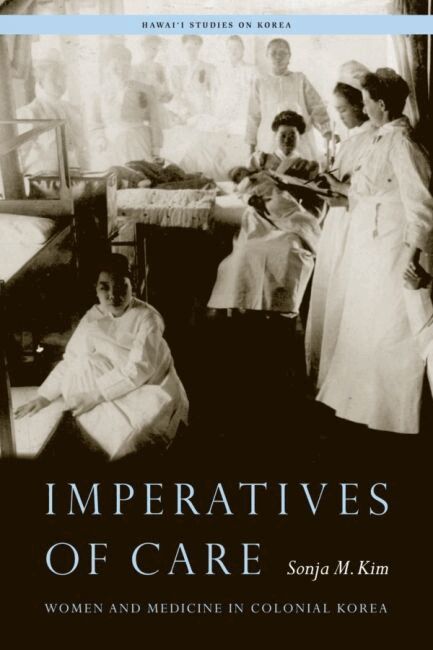
In late nineteenth- and early twentieth-century Korea, public health priorities in maternal and infant welfare privileged the new nation's reproductive health and women's responsibility for care work to produce novel organization of services in hospitals and practices in the home. The first monograph on this topic, Imperatives of Care places women and gender at the center of modern medical transformations in Korea. It outlines the professionalization of medicine, nursing, and midwifery, tracing their evolution from new legal and institutional infrastructures in public health and education, and investigates women's experiences as health practitioners and patients, medical activities directed at women's bodies, and the related knowledge and goods produced for and consumed by women. Sonja M. Kim draws on archival sources, some not previously explored, to foreground the ways individual women met challenges posed by uneven developments in medicine, intervened in practices aimed at them, andseized the evolving options that became available to promote their personal, familial, and professional interests. She demonstrates how medicine produced, and in turn was produced by, gendered expectations caught between the Korean reformist agenda, the American Protestant missionary enterprise, and Japanese imperialism.
729 kr
Skickas inom 7-10 vardagar
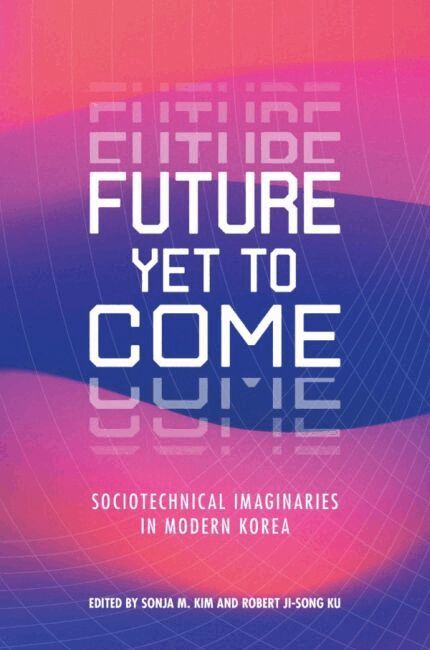
South Korea is home to cutting-edge electronics, state-of-the-art medical facilities, and ubiquitous high-speed internet. The country's meteoric rise from the ashes of the Korean War (1950-1953) to rank among the world's most technologically advanced societies is often attributed to state-led promotion of science and technology in nation-building projects. With chapters that discuss Korea's dynastic past, foreign occupations, Cold War geopolitics, postwar rehabilitation in the twentieth century, and the contemporary neoliberal moment, Future Yet to Come argues that a longer historical arc and broader disciplinary approach better elucidate these transformations. The book's contributors illuminate the "sociotechnical imaginaries" that promoted, sustained, and contested Korea's scientific, medical, and technological projects in realizing desired futures.Focusing special attention on visual culture and the life sciences, the essays present competing visions held by individuals and institutions of power in the use and purpose of scientific engagements. They demonstrate Korean specificities in culture and language, and the myriad social, political, spatial, and symbolic arrangements that shaped incorporations of and changes to existing systems of knowledge and material practices. Whether discussing moral epistemologies, imperialist or developmentalist thrusts in public health regimes, or new configurations of the "self" enabled by bio industries and media technologies, the book expands both the regional and global understanding of translation, accommodation, and transfer. Tracing imaginaries across the vicissitudes of Korea's past reminds us of their history and makes visible their shifts and resilience in dynamic political economies.Future Yet to Come reminds us how deeply intertwined science, medicine, and technology are to not only our polities, corporations, and societies but also the very human condition. Bridging histories of science and medicine with anthropologies of technology and the arts, the book will appeal to students and scholars of Korean and East Asian studies as well as those with interests in comparative history of medicine, STS (society and technology studies), art history, media studies, transnationalism, diaspora, and postcolonialism.
318 kr
Skickas inom 7-10 vardagar
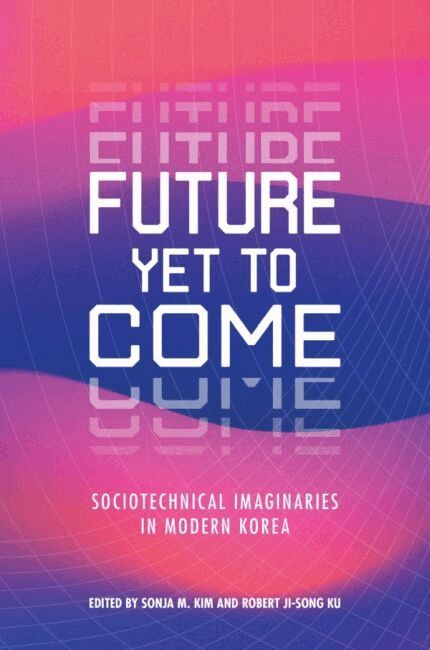
South Korea is home to cutting-edge electronics, state-of-the-art medical facilities, and ubiquitous high-speed internet. The country’s meteoric rise from the ashes of the Korean War (1950–1953) to rank among the world’s most technologically advanced societies is often attributed to state-led promotion of science and technology in nation-building projects. With chapters that discuss Korea’s dynastic past, foreign occupations, Cold War geopolitics, postwar rehabilitation in the twentieth century, and the contemporary neoliberal moment, Future Yet to Come argues that a longer historical arc and broader disciplinary approach better elucidate these transformations. The book’s contributors illuminate the "sociotechnical imaginaries" that promoted, sustained, and contested Korea’s scientific, medical, and technological projects in realizing desired futures.Focusing special attention on visual culture and the life sciences, the essays present competing visions held by individuals and institutions of power in the use and purpose of scientific engagements. They demonstrate Korean specificities in culture and language, and the myriad social, political, spatial, and symbolic arrangements that shaped incorporations of and changes to existing systems of knowledge and material practices. Whether discussing moral epistemologies, imperialist or developmentalist thrusts in public health regimes, or new configurations of the "self" enabled by bio industries and media technologies, the book expands both the regional and global understanding of translation, accommodation, and transfer. Tracing imaginaries across the vicissitudes of Korea’s past recalls their history and makes visible their shifts and resilience in dynamic political economies.Future Yet to Come reminds us how deeply intertwined science, medicine, and technology are to not only our polities, corporations, and societies but also the human condition. Bridging histories of science and medicine with anthropologies of technology and the arts, the book will appeal to students and scholars of Korean and East Asian studies as well as those with interests in the comparative history of medicine, STS (society and technology studies), art history, media studies, transnationalism, diaspora, and postcolonialism.