Sotiris Mitralexis - Böcker
Visar alla böcker från författaren Sotiris Mitralexis. Handla med fri frakt och snabb leverans.
13 produkter
13 produkter
1 341 kr
Skickas inom 11-20 vardagar
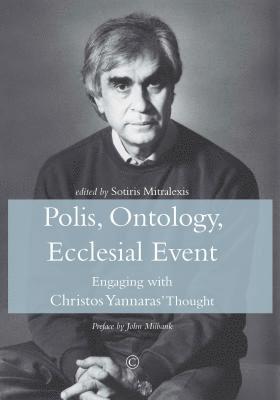
Christos Yannaras (born 1935 in Athens, Greece) has been proclaimed 'without doubt the most important living Greek Orthodox theologian' (Andrew Louth), 'contemporary Greece's greatest thinker' (Olivier Clément), 'one of the most significant Christian philosophers in Europe' (Rowan Williams). However, until recently the English-speaking scholar did not have first-hand access to the main bulk of his work: in spite of the relatively early English translation of his The Freedom of Morality (1984), most of his books appeared in English fairly recently - such as Person and Eros (2007), Orthodoxy and the West (2006), Relational Ontology (2011) or The Schism in Philosophy (2015). In this volume, chapters shall examine numerous aspects of Yannaras' contributions to Orthodox theology, philosophy and political thought, based on his relational ontology of the person, later popularised in the Anglophone sphere by John Zizioulas. From political theology to Heidegger and the philosophy of language, from Yannaras' critique of religion to the patristic grounding of the theology of the person and from Orthodoxy to the West, this volume comprises a panorama of Christos Yannaras' transdisciplinary contributions.
631 kr
Skickas inom 10-15 vardagar
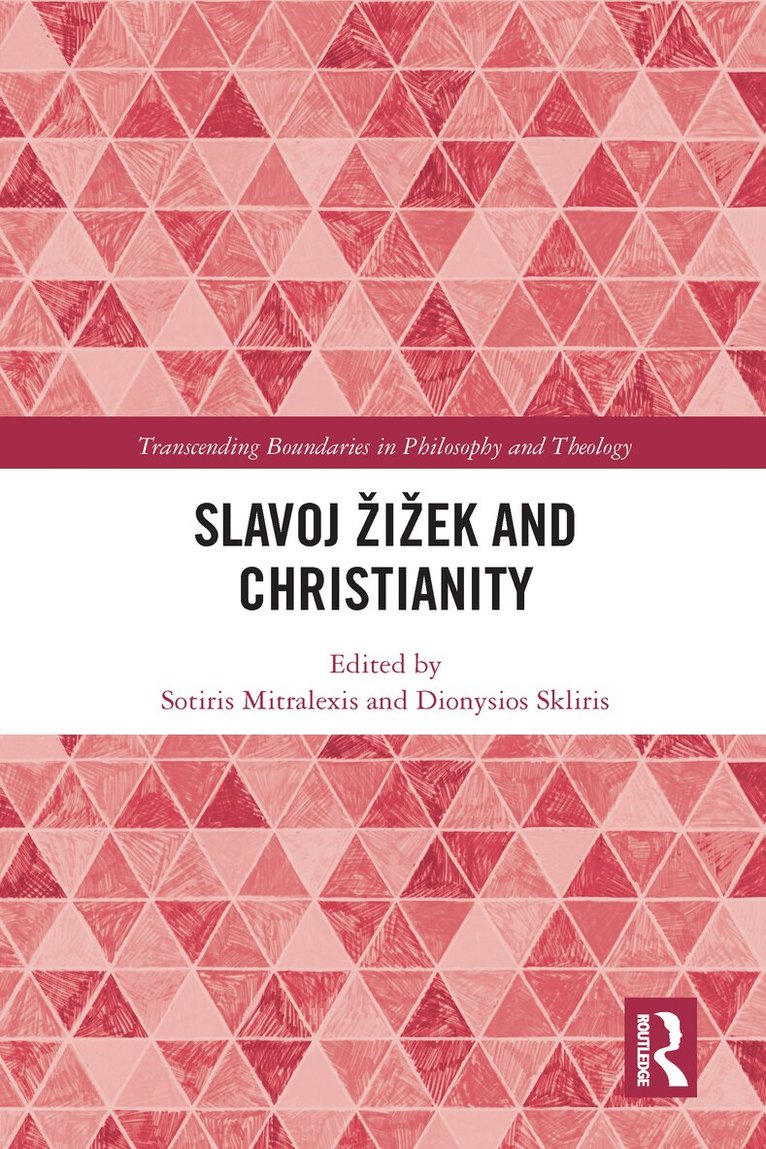
Slavoj Žižek’s critical engagement with Christian theology goes much further than his seminal The Fragile Absolute (2000), or his The Puppet and the Dwarf (2003), or even his discussion with noted theologian John Milbank in The Monstrosity of Christ (2009). His reading of Christianity, utilising his signature elements of Lacanian psychoanalysis and Hegelian philosophy with modern philosophical currents, can be seen as a genuinely original contribution to the philosophy of religion. This book focuses on these aspects of Žižek’s thought with either philosophy and cultural theory, or Christian theology, serving as starting points of enquiry. Written by a panel of international contributors, each chapter teases out various strands of Žižek’s thought concerning Christianity and religion and brings them into a wider conversation about the nature of faith. These essays show that far from being an outright rejection of Christian thought and intellectual heritage, Žižek’s work could be seen as a perverse affirmation thereof. Thus, what he has to say should be of direct interest to Christian theology itself.Touching on thinkers such as Badiou, Lacan, Chesterton and Schelling, this collection is a dynamic reading and re-reading of Žižek’s relationship to Christianity. As such, scholars of theology, the philosophy of religion and Žižek more generally will all find this book to be of great interest.
2 088 kr
Skickas inom 10-15 vardagar
Slavoj Žižek’s critical engagement with Christian theology goes much further than his seminal The Fragile Absolute (2000), or his The Puppet and the Dwarf (2003), or even his discussion with noted theologian John Milbank in The Monstrosity of Christ (2009). His reading of Christianity, utilising his signature elements of Lacanian psychoanalysis and Hegelian philosophy with modern philosophical currents, can be seen as a genuinely original contribution to the philosophy of religion. This book focuses on these aspects of Žižek’s thought with either philosophy and cultural theory, or Christian theology, serving as starting points of enquiry. Written by a panel of international contributors, each chapter teases out various strands of Žižek’s thought concerning Christianity and religion and brings them into a wider conversation about the nature of faith. These essays show that far from being an outright rejection of Christian thought and intellectual heritage, Žižek’s work could be seen as a perverse affirmation thereof. Thus, what he has to say should be of direct interest to Christian theology itself.Touching on thinkers such as Badiou, Lacan, Chesterton and Schelling, this collection is a dynamic reading and re-reading of Žižek’s relationship to Christianity. As such, scholars of theology, the philosophy of religion and Žižek more generally will all find this book to be of great interest.
412 kr
Skickas inom 5-8 vardagar
633 kr
Skickas inom 5-8 vardagar
Del 24 - Veritas
Ever-Moving Repose
A Contemporary Reading of Maximus the Confessor's Theory of Time
Häftad, Engelska, 2017
313 kr
Skickas inom 5-8 vardagar
Del 24 - Veritas
Ever-Moving Repose
A Contemporary Reading of Maximus the Confessor's Theory of Time
Inbunden, Engelska, 2017
489 kr
Skickas inom 5-8 vardagar
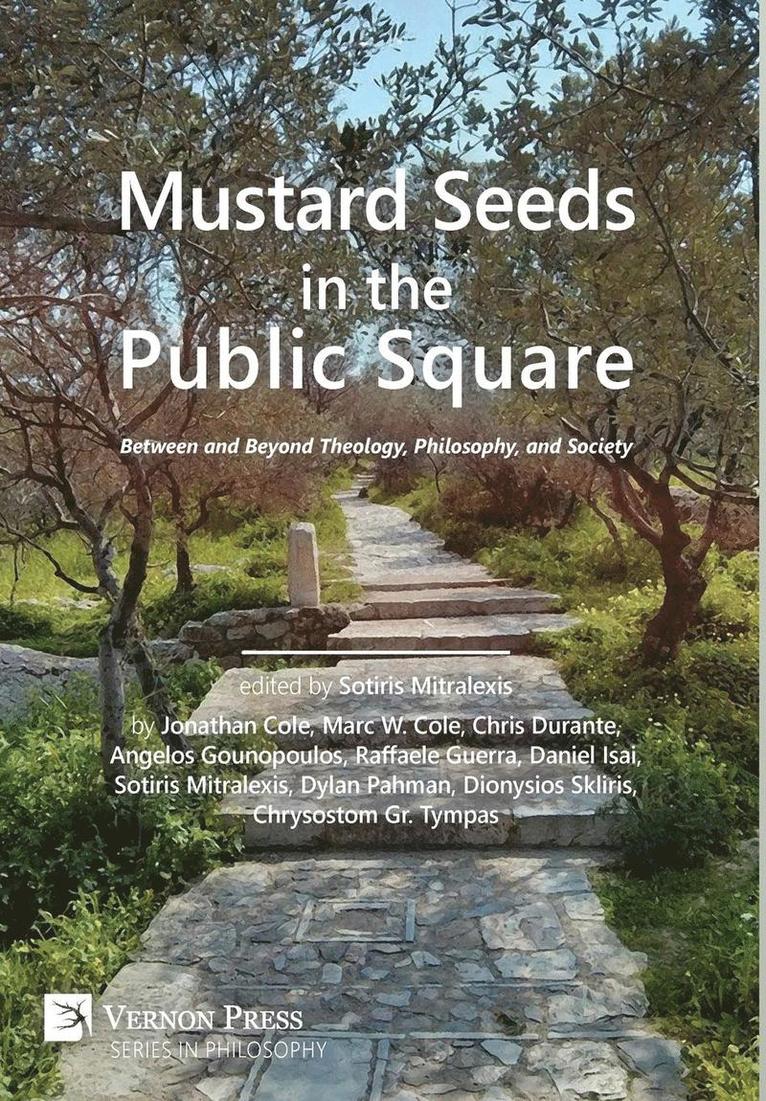
Mustard Seeds in the Public Square
Between and Beyond Theology, Philosophy, and Society
Inbunden, Engelska, 2017
730 kr
Skickas inom 5-8 vardagar
Mustard Seeds in the Public Square
Between and Beyond Theology, Philosophy, and Society
Häftad, Engelska, 2017
633 kr
Skickas inom 5-8 vardagar
795 kr
Skickas inom 5-8 vardagar
682 kr
Skickas inom 5-8 vardagar
1 572 kr
Skickas inom 10-15 vardagar
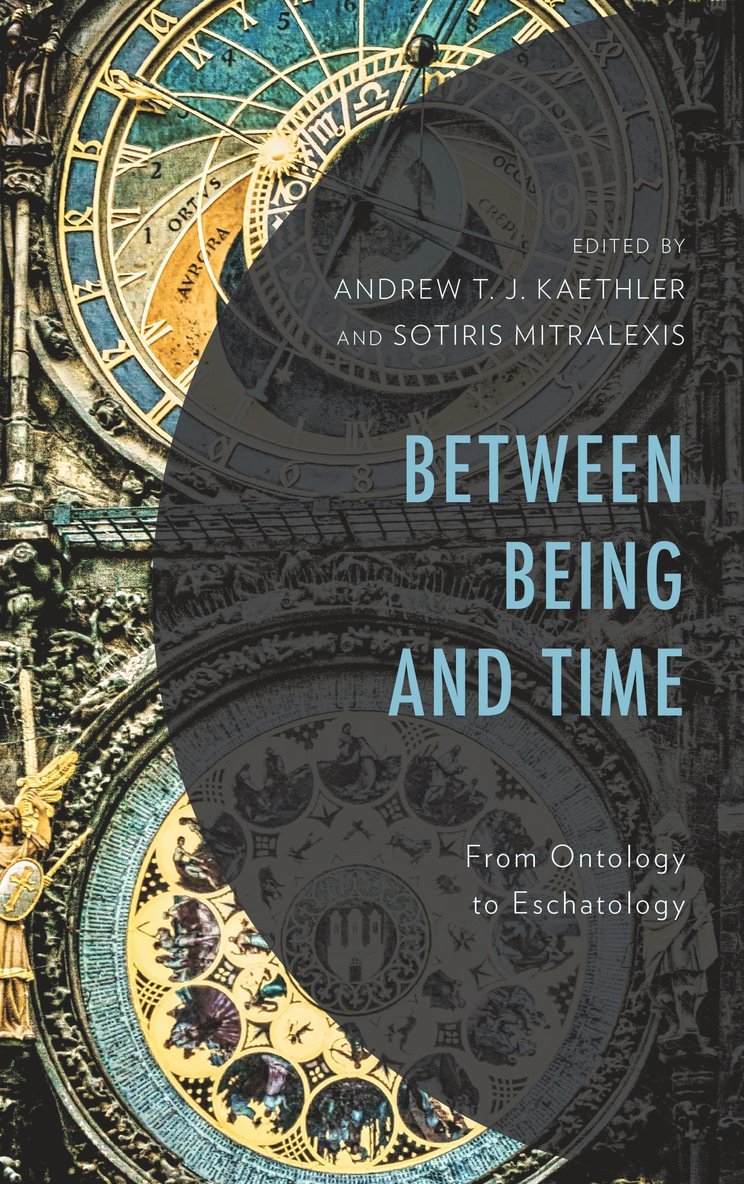
This book explores the relationship between being and time —between ontology and history— in the context of both Christian theology and philosophical inquiry. Each chapter tests the limits of this multifaceted thematic vis-à-vis a wide variety of sources: from patristics (Maximus the Confessor, Gregory of Nyssa) to philosophy (Kant, Kierkegaard, Heidegger) to modern theology (Berdyaev, Ratzinger, Fagerberg, Zizioulas, Yannaras, Loudovikos); from incarnation to eschatology; and from liturgy and ecclesiology to political theology. Among other topics, time and eternity, protology and eschatology, personhood and relation, and ontology and responsibility within history form core areas of inquiry. Between Being and Time facilitates an auspicious dialogue between philosophy and theology and, within the latter, between Catholic and Orthodox thought. It will be of considerable interest to scholars of Christian theology and philosophy of religion.
488 kr
Skickas inom 10-15 vardagar
This book explores the relationship between being and time —between ontology and history— in the context of both Christian theology and philosophical inquiry. Each chapter tests the limits of this multifaceted thematic vis-à-vis a wide variety of sources: from patristics (Maximus the Confessor, Gregory of Nyssa) to philosophy (Kant, Kierkegaard, Heidegger) to modern theology (Berdyaev, Ratzinger, Fagerberg, Zizioulas, Yannaras, Loudovikos); from incarnation to eschatology; and from liturgy and ecclesiology to political theology. Among other topics, time and eternity, protology and eschatology, personhood and relation, and ontology and responsibility within history form core areas of inquiry. Between Being and Time facilitates an auspicious dialogue between philosophy and theology and, within the latter, between Catholic and Orthodox thought. It will be of considerable interest to scholars of Christian theology and philosophy of religion.