Soumita Seth – författare
Visar alla böcker från författaren Soumita Seth. Handla med fri frakt och snabb leverans.
4 produkter
4 produkter
1 845 kr
Skickas inom 10-15 vardagar
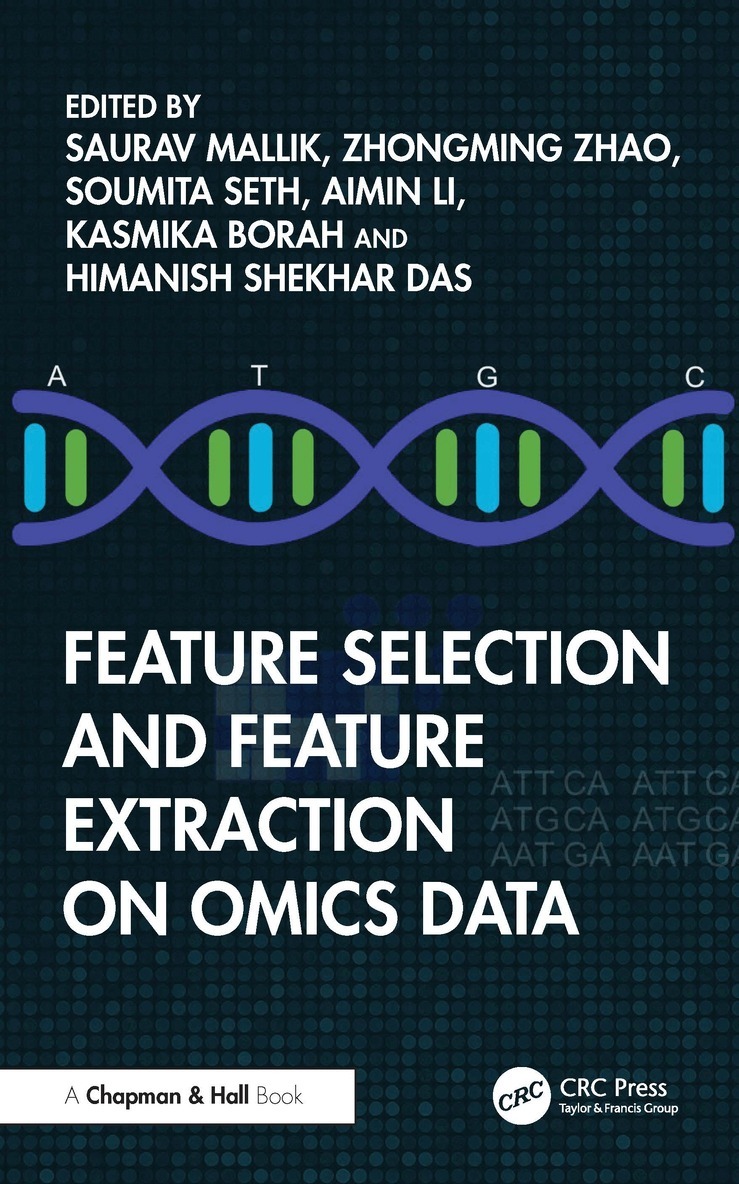
In today’s data-driven world, biology and medicine are being transformed by the power of big data. Making sense of large, complicated biological datasets is a crucial problem that underlies every medical advancement and gene discovery. Feature Selection and Feature Extraction on Omics Data provides insight into this innovative area where biological science and computational science collide. This book, which is written in an approachable manner, explains the methods researchers employ to sort through vast amounts of multi-omics data to find insights that may result in better treatments, early disease diagnosis, and a greater comprehension of life at the molecular level. This volume provides a unique look at the technologies influencing the future of biological discovery and customized medicine, making it the perfect choice for anyone interested in learning more about how AI and data science are transforming biology and health.This collection explores cutting-edge feature selection and extraction methods across a broad range of omics data formats, such as metagenomics, genomics, transcriptomics, epigenomics, and datasets. Readers will learn how these techniques can be used to improve disease classification, find promising biomarkers, uncover significant biological patterns, and aid in early diagnosis. The chapters discuss techniques designed to regulate sparsity, minimize dimensionality, and preserve biological interpretability while fusing fundamental ideas with practical applications. Case studies and real-world applications show how these methods enhance computational models’ performance in tasks like disease prediction and gene identification. This book is a great resource whether you’re new to omics data analysis or looking to improve your current workflows using sophisticated feature engineering techniques. It connects theory and application with contributions from subject matter experts to assist readers in converting unprocessed data into biologically significant insights, making it an essential resource in contemporary computational biology and precision medicine.This book offers a comprehensive exploration of cutting-edge methodologies designed to address the complexities of high-dimensional biological datasets. This book serves as a practical and theoretical guide for researchers, data scientists, and students working at the intersection of bioinformatics and machine learning.This book is a comprehensive and application-focused approach to one of the most pressing challenges in modern bioinformatics: making sense of high-dimensional omics data. While many resources touch on machine learning or biological datasets in isolation, this book bridges the two, offering a unified, practical guide that combines theoretical depth with real-world implementation across diverse omics domains—including genomics, metagenomics, transcriptomics, and epigenomics data.
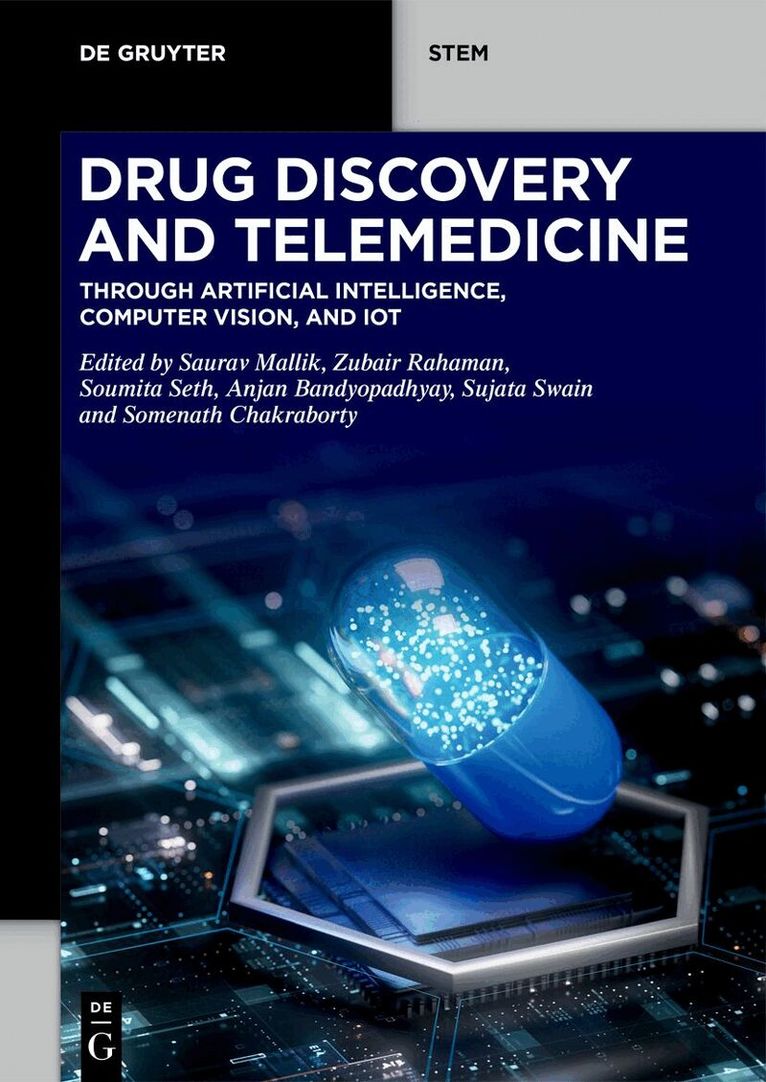
Drug Discovery and Telemedicine
Through Artificial Intelligence, Computer Vision, and IoT
Häftad, Engelska, 2025
1 087 kr
Skickas inom 3-6 vardagar
Our proposed book emerges in response to the critical need for an interdisciplinary resource that encapsulates the burgeoning role of artificial intelligence (AI) in reshaping drug discovery and telemedicine. As these sectors witness transformative changes driven by AI technologies, there's a pressing demand for a comprehensive guide that navigates through these advancements, offering insights, methodologies, and practical applications to professionals at the forefront of healthcare and pharmaceutical research. At its core, the book delves into the intricate ways in which AI and machine learning algorithms are being harnessed to streamline the drug development process, from initial discovery through to clinical trials, and how these technologies are concurrently revolutionizing the delivery of healthcare services via telemedicine. Specific focus areas include the application of deep learning in identifying novel drug candidates, AI-driven predictive models for pharmacokinetics and pharmacodynamics, automation in laboratory research, and the integration of AI in diagnostic processes, personalized medicine, and patient monitoring systems. Each chapter not only explores current state-of-the-art methodologies and case studies but also critically examines challenges, such as data privacy, ethical considerations, and the need for robust, interpretable models that can be trusted by healthcare professionals and patients alike. Furthermore, the book places a strong emphasis on the synergistic potential of combining AI with telemedicine, illustrating how these technologies can expand access to healthcare, improve the accuracy of remote diagnoses, and enable continuous, data-driven patient care. By providing a panoramic view of current trends, technological innovations, and future directions, the book aims to serve as a pivotal reference for scientists, researchers, clinicians, and policymakers involved in drug discovery and healthcare delivery. In conclusion, this book stands as an essential compendium for specialists seeking to navigate the complexities and harness the opportunities presented by AI in the pharmaceutical and healthcare industries. It offers a critical, in-depth exploration of the transformative impact of AI technologies, underscoring their relevance and potential to dramatically enhance drug discovery and telemedicine practices. This publication not only equips its target audience with the knowledge to lead innovation in their fields but also engages with the broader ethical, social, and practical implications of AI, making it an invaluable resource for advancing towards more effective, efficient, and accessible healthcare solutions. The book is significant for several reasons: Interdisciplinary Appeal: It serves as a critical resource for professionals and researchers across the fields of computer science, pharmaceutical sciences, and healthcare, facilitating a deeper understanding of AI's potential and fostering interdisciplinary collaborations. Innovation in Drug Discovery: By highlighting novel AI methodologies in drug discovery, the book offers insights into how these technologies can shorten the development timelines, reduce costs, and increase the success rates of new therapies, which is crucial for addressing unmet medical needs. Revolutionizing Telemedicine: The detailed discussion on AI's role in telemedicine illustrates how these advancements can enhance access to healthcare, improve the quality of care, and make healthcare systems more efficient, especially in remote and underserved areas. Ethical and Regulatory Considerations: It likely addresses the ethical, privacy, and regulatory challenges associated with implementing AI in healthcare, offering guidelines for navigating these complexities while maximizing patient benefits. Future Directions: By exploring current trends and future possibilities, the book not only serves as a repository of current knowledge but also as a beacon for future research and development efforts in these rapidly evolving fields.
HealthTech Horizons: Charting the Future of Smart Healthcare Innovations, Deepfake and Metaverse
Biomedical Engineering
Inbunden, Engelska, 2026
1 717 kr
Kommande
HealthTech Horizons provides a concise yet comprehensive view of how cutting-edge technologies are transforming healthcare. Covering AI and machine learning in diagnostics, deep learning architectures (CNNs, RNNs, GANs) for genomics and imaging, synthetic data augmentation, and optimization algorithms (MRMR, EHO, HHWO) for complex biomedical datasets, this book bridges research with real-world applications.It also examines the disruptive rise of deepfake technologies and the metaverse in telemedicine, surgical training, and immersive patient care, while addressing the ethical and computational challenges of integrating these tools responsibly. Designed for researchers, clinicians, and innovators, HealthTech Horizons is both a technical reference and a roadmap for the next era of smart, ethical, and intelligent healthcare systems.The digital revolution in healthcare is no longer on the horizon—it’s here. HealthTech Horizons dives deep into the convergence of biomedical science and advanced computational techniques, offering a research-driven perspective on how technology is redefining modern medicine. This book explores:- Artificial intelligence and machine learning in diagnostics, treatment planning, and personalized medicine.- Deep learning architectures (CNNs, RNNs, GANs) applied to genomics, medical imaging, and biomarker discovery.- Synthetic data augmentation and generative adversarial networks (GANs) for enhancing predictive accuracy.- Feature selection and optimization algorithms (e.g., MRMR, EHO, HHWO) for high-dimensional biomedical datasets.- Deepfake technologies and their dual role in healthcare innovations and security threats.- Metaverse applications in telemedicine, surgical simulation, and immersive patient care.- Ethical and computational challenges in deploying AI responsibly in clinical practice.Bridging research and practice, this book is an indispensable resource for data scientists, bioinformaticians, clinicians, and healthcare innovators seeking to understand—and shape—the next frontier of smart healthcare systems. HealthTech Horizons is not just about the future; it is a roadmap for leveraging algorithms, data, and virtual ecosystems to create resilient, ethical, and intelligent healthcare solutions.
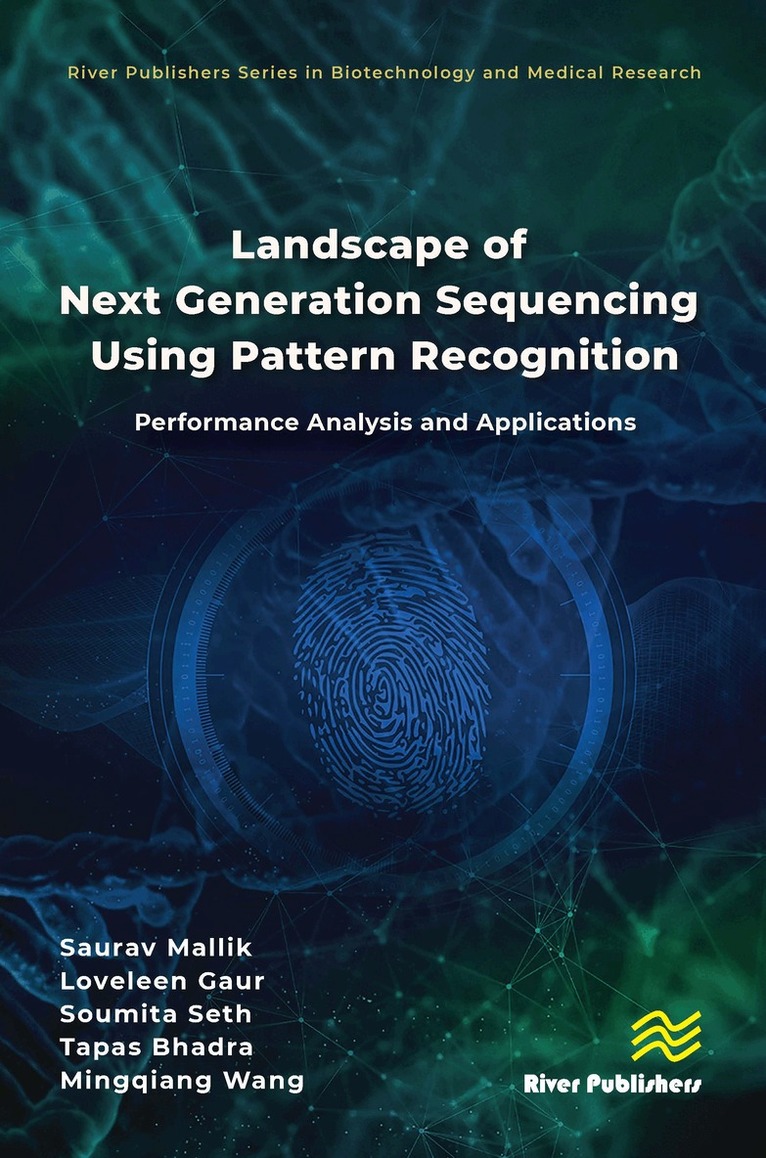
Landscape of Next Generation Sequencing Using Pattern Recognition
Performance Analysis and Applications
Inbunden, Engelska, 2024
1 378 kr
Skickas inom 10-15 vardagar
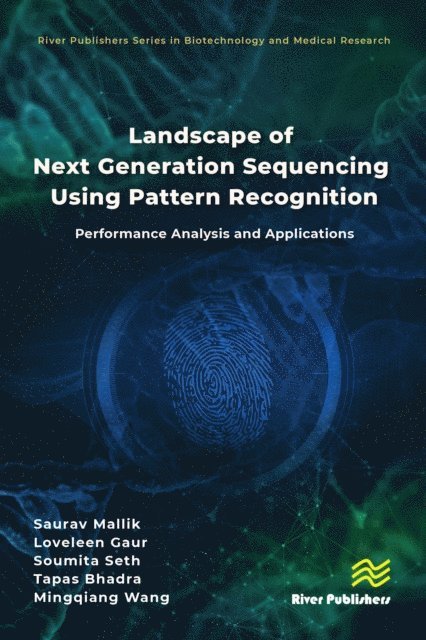
This book focuses on an eminent technology called next generation sequencing (NGS) which has entirely changed the procedure of examining organisms and will have a great impact on biomedical research and disease diagnosis. Numerous computational challenges have been brought on by the rapid advancement of large-scale next-generation sequencing (NGS) technologies and their application. The term ""biomedical imaging"" refers to the use of a variety of imaging techniques (such as X-rays, CT scans, MRIs, ultrasounds, etc.) to get images of the interior organs of a human being for potential diagnostic, treatment planning, follow-up, and surgical purposes. In these circumstances, deep learning, a new learning method that uses multi-layered artificial neural networks (ANNs) for unsupervised, supervised, and semi-supervised learning, has attracted a lot of interest for applications to NGS and imaging, even when both of these data are used for the same group of patients.The three main research phenomena in biomedical research are disease classification, feature dimension reduction, and heterogeneity. AI approaches are used by clinical researchers to efficiently analyse extremely complicated biomedical datasets (e.g., multi-omic datasets. With the use of NGS data and biomedical imaging of various human organs, researchers may predict diseases using a variety of deep learning models. Unparalleled prospects to improve the work of radiologists, clinicians, and biomedical researchers, speed up disease detection and diagnosis, reduce treatment costs, and improve public health are presented by using deep learning models in disease prediction using NGS and biomedical imaging. This book influences a variety of critical disease data and medical images.