Zhongming Zhao - Böcker
Visar alla böcker från författaren Zhongming Zhao. Handla med fri frakt och snabb leverans.
3 produkter
3 produkter
2 021 kr
Skickas inom 10-15 vardagar
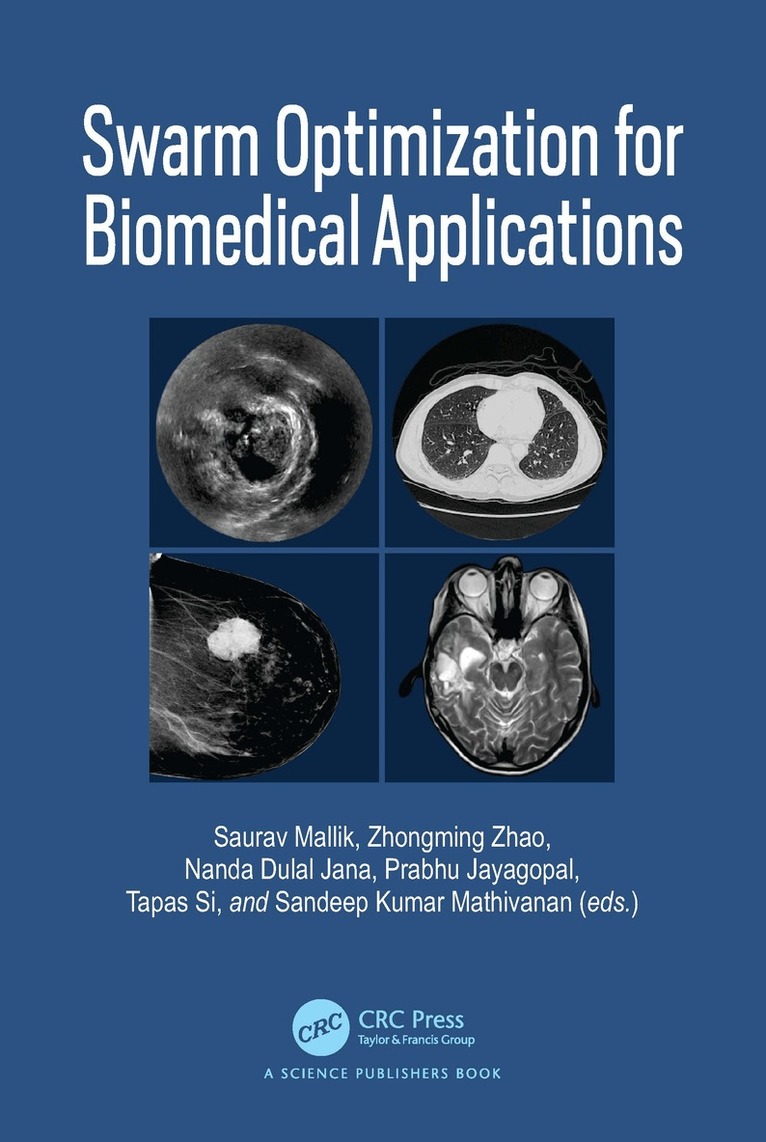
Biomedical engineering is a rapidly growing interdisciplinary area that is providing solutions to biological and medical problems and improving the healthcare system. It is connected to various applications like protein structure prediction, computer-aided drug design, and computerized medical diagnosis based on image and signal data, which accomplish low-cost, accurate, and reliable solutions for improving healthcare services. With the recent advancements, machine learning (ML) and deep learning (DL) techniques are widely used in biomedical engineering to develop intelligent decision-making healthcare systems in real-time. However, accuracy and reliability in model performance can be a concern in tackling data generated from medical images and signals, making it challenging for researchers and practitioners. Therefore, optimized models can produce quality healthcare services to handle the complexities involved in biomedical research.Various optimization techniques have been employed to optimize parameters, hyper-parameters, and architectural information of ML/DL models explicitly applied to biological, medical, and signal data. The swarm intelligence approach has the potential to solve complex non-linear optimization problems. It mimics the collective behavior of social swarms such as ant colonies, honey bees, and bird flocks. The cooperative nature of swarms can search global settings of ML/DL models, which efficiently provide the solution to biomedical engineering applications. Finally, the book aims to provide the utility of swarm optimization and similar optimization techniques to design ML/DL models to improve the solutions related to biomedical engineering.
1 804 kr
Skickas inom 10-15 vardagar
In today’s data-driven world, biology and medicine are being transformed by the power of big data. Making sense of large, complicated biological datasets is a crucial problem that underlies every medical advancement and gene discovery. Feature Selection and Feature Extraction on Omics Data provides insight into this innovative area where biological science and computational science collide. This book, which is written in an approachable manner, explains the methods researchers employ to sort through vast amounts of multi-omics data to find insights that may result in better treatments, early disease diagnosis, and a greater comprehension of life at the molecular level. This volume provides a unique look at the technologies influencing the future of biological discovery and customized medicine, making it the perfect choice for anyone interested in learning more about how AI and data science are transforming biology and health.This collection explores cutting-edge feature selection and extraction methods across a broad range of omics data formats, such as metagenomics, genomics, transcriptomics, epigenomics, and datasets. Readers will learn how these techniques can be used to improve disease classification, find promising biomarkers, uncover significant biological patterns, and aid in early diagnosis. The chapters discuss techniques designed to regulate sparsity, minimize dimensionality, and preserve biological interpretability while fusing fundamental ideas with practical applications. Case studies and real-world applications show how these methods enhance computational models’ performance in tasks like disease prediction and gene identification. This book is a great resource whether you’re new to omics data analysis or looking to improve your current workflows using sophisticated feature engineering techniques. It connects theory and application with contributions from subject matter experts to assist readers in converting unprocessed data into biologically significant insights, making it an essential resource in contemporary computational biology and precision medicine.This book offers a comprehensive exploration of cutting-edge methodologies designed to address the complexities of high-dimensional biological datasets. This book serves as a practical and theoretical guide for researchers, data scientists, and students working at the intersection of bioinformatics and machine learning.This book is a comprehensive and application-focused approach to one of the most pressing challenges in modern bioinformatics: making sense of high-dimensional omics data. While many resources touch on machine learning or biological datasets in isolation, this book bridges the two, offering a unified, practical guide that combines theoretical depth with real-world implementation across diverse omics domains—including genomics, metagenomics, transcriptomics, and epigenomics data.
Advanced Intelligent Computing Theories and Applications
6th International Conference on Intelligent Computing, ICIC 2010, Changsha, China, August 18-21, 2010, Proceedings
Häftad, Engelska, 2010
1 096 kr
Skickas inom 10-15 vardagar
The International Conference on Intelligent Computing (ICIC) was formed to provide an annual forum dedicated to the emerging and challenging topics in artificial intel- gence, machine learning, pattern recognition, image processing, bioinformatics, and computational biology. It aims to bring together researchers and practitioners from both academia and industry to share ideas, problems, and solutions related to the m- tifaceted aspects of intelligent computing. ICIC 2010, held in Changsha, China, August 18-21, 2010, constituted the 6th - ternational Conference on Intelligent Computing. It built upon the success of ICIC 2009, ICIC 2008, ICIC 2007, ICIC 2006, and ICIC 2005 that were held in Ulsan, Korea, Shanghai, Qingdao, Kunming and Hefei, China, respectively. This year, the conference concentrated mainly on the theories and methodologies as well as the emerging applications of intelligent computing. Its aim was to unify the picture of contemporary intelligent computing techniques as an integral concept that highlights the trends in advanced computational intelligence and bridges theoretical research with applications. Therefore, the theme for this conference was “Advanced Intelligent Computing Technology and Applications”. Papers focusing on this theme were solicited, addressing theories, methodologies, and applications in science and technology.