Spencer D. Bakich - Böcker
Visar alla böcker från författaren Spencer D. Bakich. Handla med fri frakt och snabb leverans.
6 produkter
6 produkter
Success and Failure in Limited War
Information and Strategy in the Korean, Vietnam, Persian Gulf, and Iraq Wars
Inbunden, Engelska, 2014
850 kr
Skickas inom 7-10 vardagar
Common and destructive, limited wars are significant international events that pose a number of challenges to the states involved beyond simple victory or defeat. Chief among these challenges is the risk of escalation - be it in the scale, scope, cost, or duration of the conflict. In this book, Spencer D. Bakich investigates a crucial and heretofore ignored factor in determining the nature and direction of limited war: information institutions. Traditional assessments of wartime strategy focus on the relationship between the military and civilians, but Bakich argues that we must also take into account the information flow patterns among top policy makers and all national security organizations. By examining the fate of American military and diplomatic strategy in four limited wars, Bakich demonstrates how not only the availability and quality of information, but also the ways in which information is gathered, managed, analyzed, and used, shape a state's ability to wield power effectively in dynamic and complex international systems.Utilizing a range of primary and secondary source materials, Success and Failure in Limited War makes a timely case for the power of information in war, with crucial implications for international relations theory and statecraft.
Success and Failure in Limited War
Information and Strategy in the Korean, Vietnam, Persian Gulf, and Iraq Wars
Häftad, Engelska, 2014
339 kr
Skickas inom 7-10 vardagar
Common and destructive, limited wars are significant international events that pose a number of challenges to the states involved beyond simple victory or defeat. Chief among these challenges is the risk of escalation - be it in the scale, scope, cost, or duration of the conflict. In this book, Spencer D. Bakich investigates a crucial and heretofore ignored factor in determining the nature and direction of limited war: information institutions. Traditional assessments of wartime strategy focus on the relationship between the military and civilians, but Bakich argues that we must also take into account the information flow patterns among top policy makers and all national security organizations. By examining the fate of American military and diplomatic strategy in four limited wars, Bakich demonstrates how not only the availability and quality of information, but also the ways in which information is gathered, managed, analyzed, and used, shape a state's ability to wield power effectively in dynamic and complex international systems.Utilizing a range of primary and secondary source materials, Success and Failure in Limited War makes a timely case for the power of information in war, with crucial implications for international relations theory and statecraft.
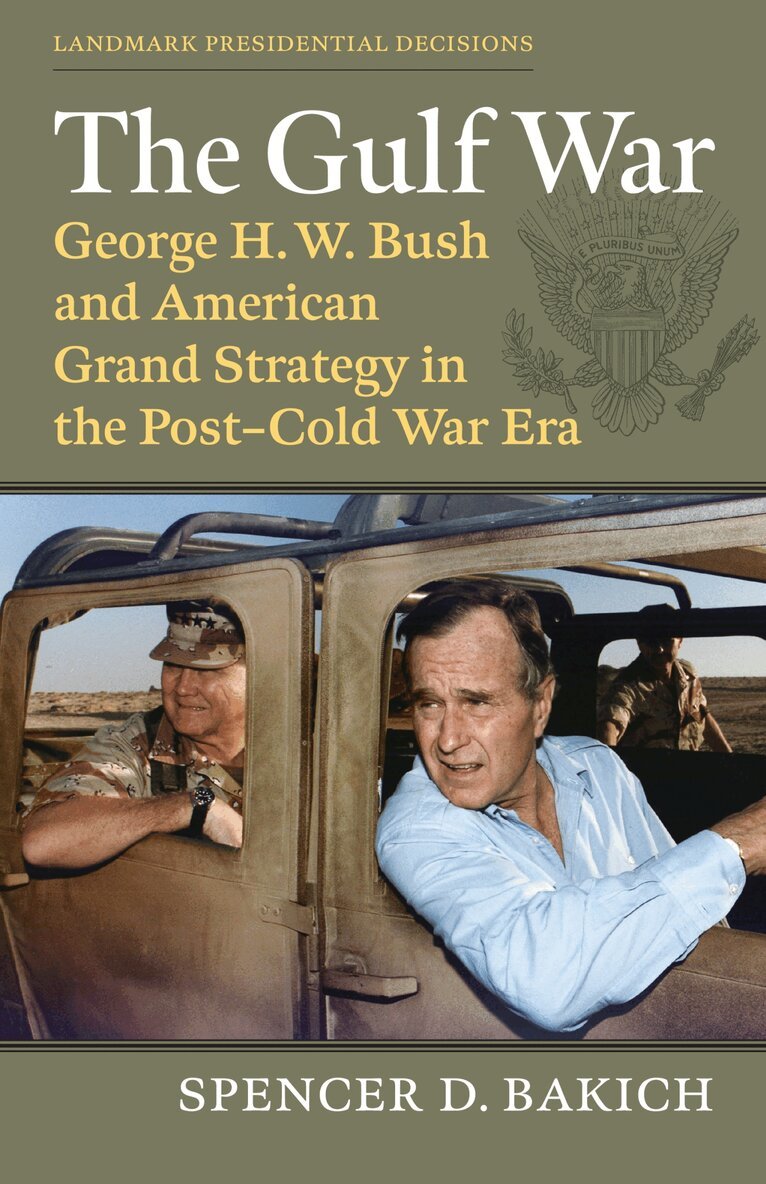
Gulf War
George H. W. Bush and American Grand Strategy in the Post-Cold War Era
Inbunden, Engelska, 2024
1 002 kr
Skickas inom 5-8 vardagar
President George H. W. Bush assumed office at a critical juncture, as the Cold War came to an end and the world shifted to a new era of international relations. In The Gulf War, Spencer Bakich argues that Bush fashioned a grand strategy to bring about a New World Order designed to transform international politics by focusing on great power cooperation through the United Nations. The Persian Gulf War became the chance for Bush to put his strategy into action. This latest volume in the Landmark Presidential Decision series offers a fresh and concise look at President Bush’s strategic decision making and his choice to wage war against Iraq.Bakich, an expert in wartime strategy, traces the ideas and actions of Bush’s new world order strategy between 1989 and 1991, which had a profound impact on the diplomacy of Desert Shield and the warfighting of Desert Storm. Bush’s strategic beliefs contained core elements of Wilsonian internationalism—specifically its goals of promoting democracy, conducting multilateral diplomacy through international institutions, and transforming the United Nations into the collective security institution that its founders envisioned. His “New World Order” was not mere political sloganeering intended to bolster support for the Persian Gulf War among a skeptical American public. Rather, Bush intended the Gulf War to exercise and firmly establish the UN’s collective security function in the post–Cold War era.In this bold new interpretation of George H. W. Bush’s foreign policy, Bakich challenges conventional wisdom, arguing that Bush’s New World Order was carefully defined and had a comprehensive logic. He shows how Bush’s strategic beliefs oriented American statecraft in peace and war. Bush’s grand strategy was remarkably coherent, powerfully affecting how his administration decided to go to war to evict Iraq from Kuwait, how it waged war in the Persian Gulf, and ultimately the reasons why the fighting was terminated before the coalition’s war aims were completely achieved. In the end, the Gulf War’s outcome exposed faulty assumptions about the international system that underpinned the strategy, weakening the president’s fidelity to his own approach. Ultimately, the Gulf War did usher in a New World Order, but not the one Bush had envisioned.
Gulf War
George H. W. Bush and American Grand Strategy in the Post-Cold War Era
Häftad, Engelska, 2024
268 kr
Skickas inom 10-15 vardagar
President George H. W. Bush assumed office at a critical juncture, as the Cold War came to an end and the world shifted to a new era of international relations. In The Gulf War, Spencer Bakich argues that Bush fashioned a grand strategy to bring about a New World Order designed to transform international politics by focusing on great power cooperation through the United Nations. The Persian Gulf War became the chance for Bush to put his strategy into action. This latest volume in the Landmark Presidential Decision series offers a fresh and concise look at President Bush’s strategic decision making and his choice to wage war against Iraq.Bakich, an expert in wartime strategy, traces the ideas and actions of Bush’s new world order strategy between 1989 and 1991, which had a profound impact on the diplomacy of Desert Shield and the warfighting of Desert Storm. Bush’s strategic beliefs contained core elements of Wilsonian internationalism—specifically its goals of promoting democracy, conducting multilateral diplomacy through international institutions, and transforming the United Nations into the collective security institution that its founders envisioned. His “New World Order” was not mere political sloganeering intended to bolster support for the Persian Gulf War among a skeptical American public. Rather, Bush intended the Gulf War to exercise and firmly establish the UN’s collective security function in the post–Cold War era.In this bold new interpretation of George H. W. Bush’s foreign policy, Bakich challenges conventional wisdom, arguing that Bush’s New World Order was carefully defined and had a comprehensive logic. He shows how Bush’s strategic beliefs oriented American statecraft in peace and war. Bush’s grand strategy was remarkably coherent, powerfully affecting how his administration decided to go to war to evict Iraq from Kuwait, how it waged war in the Persian Gulf, and ultimately the reasons why the fighting was terminated before the coalition’s war aims were completely achieved. In the end, the Gulf War’s outcome exposed faulty assumptions about the international system that underpinned the strategy, weakening the president’s fidelity to his own approach. Ultimately, the Gulf War did usher in a New World Order, but not the one Bush had envisioned.
Sources of Great Power Competition
Rising Powers, Grand Strategy, and System Dynamics
Inbunden, Engelska, 2024
1 953 kr
Skickas inom 10-15 vardagar
This volume explores the determinants of state power, the strategic options of rising powers, the drivers of conflict in dynamic international systems, and American grand strategy past and present to achieve a more comprehensive understanding of the current era of great power competition.Leveraging insights from international relations, history, economics, and political demography, it offers rich perspectives on the competition among newly rising powers and long-dominant leaders in the international system. This book presents novel theories and innovative empirical investigations into the economic and demographic challenges confronting rising powers, along with new inquiries into these countries’ capacity to mobilize both their citizens and their militaries. While China’s grand strategy has attracted significant attention in recent years, these authors look beyond U.S.–PRC relations by considering the war proneness and strategic repertoires of rising regional powers, including India and Russia. Yet, the possibility of great power war remains a justifiable concern. This book examines the so-called Thucydides’s Trap by exploring both its explanatory power in the conflict that inspired its name, the Peloponnesian War, and the possible mechanisms for averting war between the two most powerful countries in the current era. Finally, several challenges confronting the United States are discussed, including climate change, competition over the interpretation of the international Women, Peace, and Security agenda, and the durability of America’s commitment to upholding the liberal international order.The Sources of Great Power Competition brings together many of the most influential scholars to engage in lively debates about the current and future international system. It will be of interest to foreign policy practitioners and scholars of grand strategy, the causes of war, alliance politics, norms and narratives in foreign policy, power transitions, and international hierarchy.
Sources of Great Power Competition
Rising Powers, Grand Strategy, and System Dynamics
Häftad, Engelska, 2026
675 kr
Kommande
This volume explores the determinants of state power, the strategic options of rising powers, the drivers of conflict in dynamic international systems, and American grand strategy past and present to achieve a more comprehensive understanding of the current era of great power competition.Leveraging insights from international relations, history, economics, and political demography, it offers rich perspectives on the competition among newly rising powers and long-dominant leaders in the international system. This book presents novel theories and innovative empirical investigations into the economic and demographic challenges confronting rising powers, along with new inquiries into these countries’ capacity to mobilize both their citizens and their militaries. While China’s grand strategy has attracted significant attention in recent years, these authors look beyond U.S.–PRC relations by considering the war proneness and strategic repertoires of rising regional powers, including India and Russia. Yet, the possibility of great power war remains a justifiable concern. This book examines the so-called Thucydides’s Trap by exploring both its explanatory power in the conflict that inspired its name, the Peloponnesian War, and the possible mechanisms for averting war between the two most powerful countries in the current era. Finally, several challenges confronting the United States are discussed, including climate change, competition over the interpretation of the international Women, Peace, and Security agenda, and the durability of America’s commitment to upholding the liberal international order.The Sources of Great Power Competition brings together many of the most influential scholars to engage in lively debates about the current and future international system. It will be of interest to foreign policy practitioners and scholars of grand strategy, the causes of war, alliance politics, norms and narratives in foreign policy, power transitions, and international hierarchy.