J. Patrick Rhamey Jr. - Böcker
Visar alla böcker från författaren J. Patrick Rhamey Jr.. Handla med fri frakt och snabb leverans.
6 produkter
6 produkter
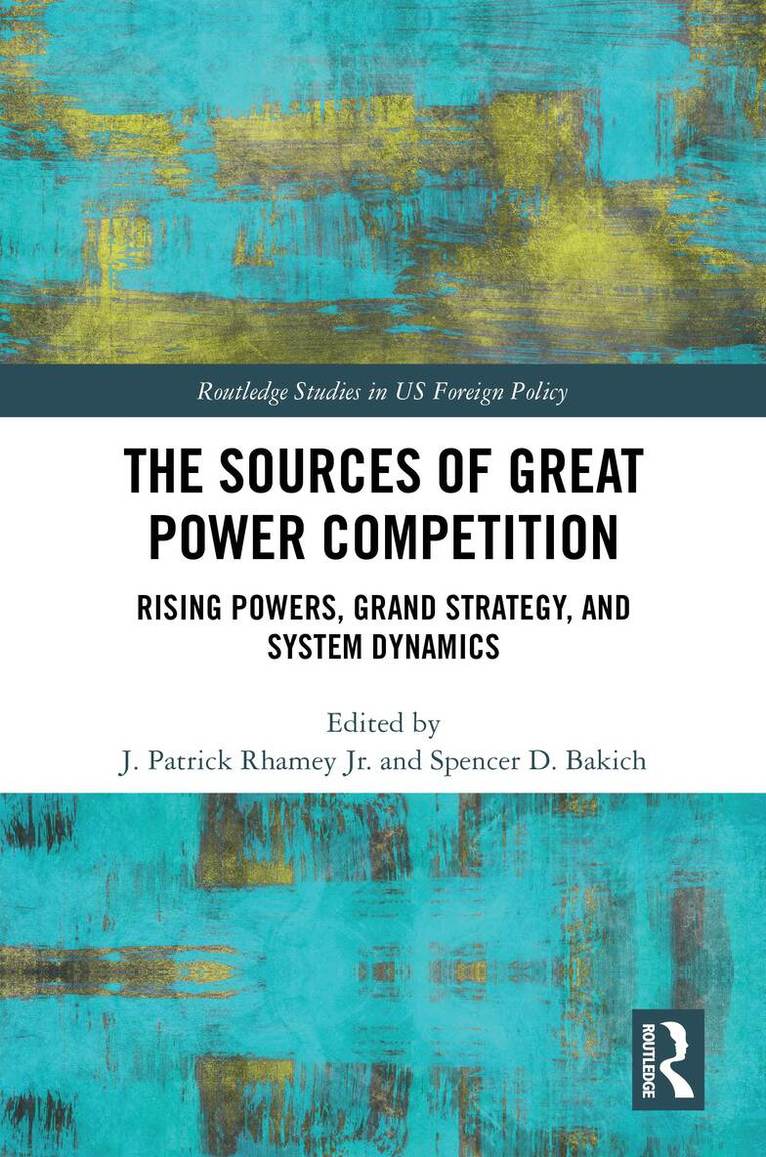
Sources of Great Power Competition
Rising Powers, Grand Strategy, and System Dynamics
Inbunden, Engelska, 2024
1 968 kr
Skickas inom 10-15 vardagar
This volume explores the determinants of state power, the strategic options of rising powers, the drivers of conflict in dynamic international systems, and American grand strategy past and present to achieve a more comprehensive understanding of the current era of great power competition.Leveraging insights from international relations, history, economics, and political demography, it offers rich perspectives on the competition among newly rising powers and long-dominant leaders in the international system. This book presents novel theories and innovative empirical investigations into the economic and demographic challenges confronting rising powers, along with new inquiries into these countries’ capacity to mobilize both their citizens and their militaries. While China’s grand strategy has attracted significant attention in recent years, these authors look beyond U.S.–PRC relations by considering the war proneness and strategic repertoires of rising regional powers, including India and Russia. Yet, the possibility of great power war remains a justifiable concern. This book examines the so-called Thucydides’s Trap by exploring both its explanatory power in the conflict that inspired its name, the Peloponnesian War, and the possible mechanisms for averting war between the two most powerful countries in the current era. Finally, several challenges confronting the United States are discussed, including climate change, competition over the interpretation of the international Women, Peace, and Security agenda, and the durability of America’s commitment to upholding the liberal international order.The Sources of Great Power Competition brings together many of the most influential scholars to engage in lively debates about the current and future international system. It will be of interest to foreign policy practitioners and scholars of grand strategy, the causes of war, alliance politics, norms and narratives in foreign policy, power transitions, and international hierarchy.
Sources of Great Power Competition
Rising Powers, Grand Strategy, and System Dynamics
Häftad, Engelska, 2026
675 kr
Kommande
This volume explores the determinants of state power, the strategic options of rising powers, the drivers of conflict in dynamic international systems, and American grand strategy past and present to achieve a more comprehensive understanding of the current era of great power competition.Leveraging insights from international relations, history, economics, and political demography, it offers rich perspectives on the competition among newly rising powers and long-dominant leaders in the international system. This book presents novel theories and innovative empirical investigations into the economic and demographic challenges confronting rising powers, along with new inquiries into these countries’ capacity to mobilize both their citizens and their militaries. While China’s grand strategy has attracted significant attention in recent years, these authors look beyond U.S.–PRC relations by considering the war proneness and strategic repertoires of rising regional powers, including India and Russia. Yet, the possibility of great power war remains a justifiable concern. This book examines the so-called Thucydides’s Trap by exploring both its explanatory power in the conflict that inspired its name, the Peloponnesian War, and the possible mechanisms for averting war between the two most powerful countries in the current era. Finally, several challenges confronting the United States are discussed, including climate change, competition over the interpretation of the international Women, Peace, and Security agenda, and the durability of America’s commitment to upholding the liberal international order.The Sources of Great Power Competition brings together many of the most influential scholars to engage in lively debates about the current and future international system. It will be of interest to foreign policy practitioners and scholars of grand strategy, the causes of war, alliance politics, norms and narratives in foreign policy, power transitions, and international hierarchy.
991 kr
Skickas inom 7-10 vardagar
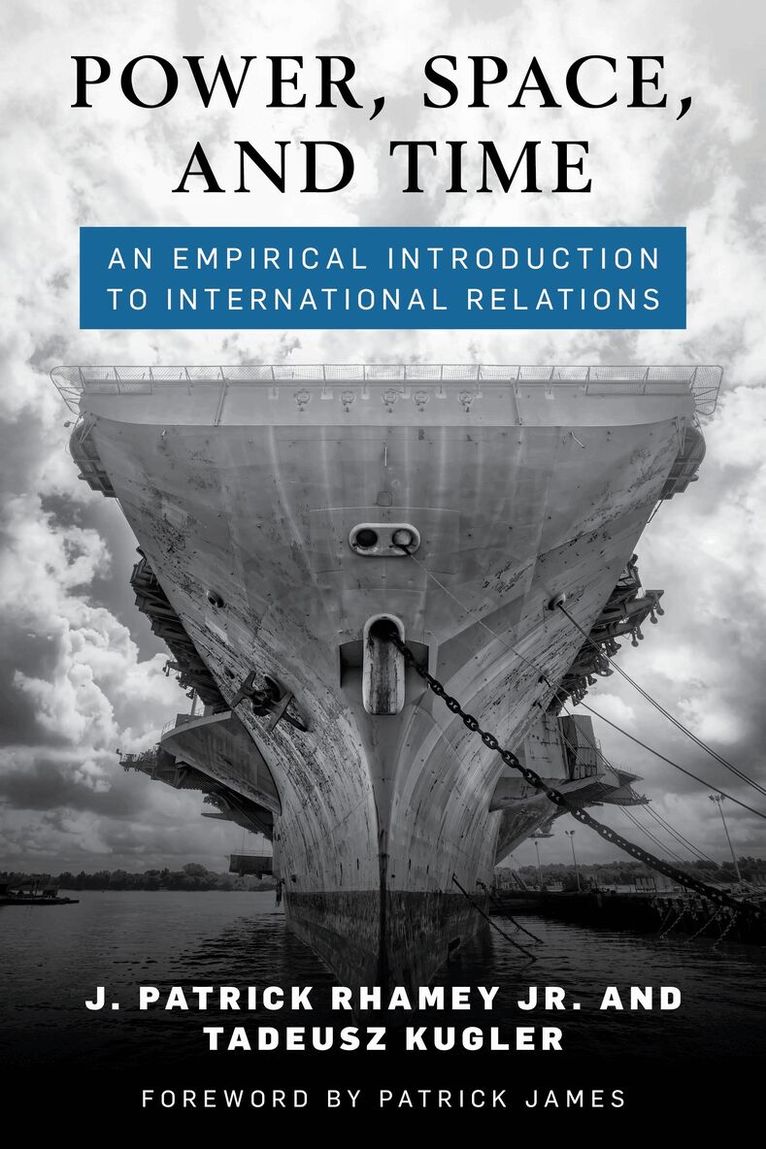
Undergraduate students in most preliminary courses in international politics are introduced to realist, liberal, and constructivist approaches, supplementing this theoretical introduction with conceptual discussions of the state, international system, and/or decision-making and policy formation. By the end of their college experience, undergraduate IR majors will engage coursework more narrowly focused on an empirical outcome, such as war, economic integration, development, or migration. These advanced courses are directly linked to modern research agendas and graduate level course material, usually with few references to the theoretical paradigms taught in introductory classes. This volume seeks to bridge the gap between what is taught in early undergraduate education and what is created by scholars, uniting abstract theoretical principles with practical contemporary policy and testable empirical questions.
427 kr
Skickas inom 7-10 vardagar
Undergraduate students in most preliminary courses in international politics are introduced to realist, liberal, and constructivist approaches, supplementing this theoretical introduction with conceptual discussions of the state, international system, and/or decision-making and policy formation. By the end of their college experience, undergraduate IR majors will engage coursework more narrowly focused on an empirical outcome, such as war, economic integration, development, or migration. These advanced courses are directly linked to modern research agendas and graduate level course material, usually with few references to the theoretical paradigms taught in introductory classes. This volume seeks to bridge the gap between what is taught in early undergraduate education and what is created by scholars, uniting abstract theoretical principles with practical contemporary policy and testable empirical questions.
Del 6 - Evidence-Based Approaches to Peace and Conflict Studies
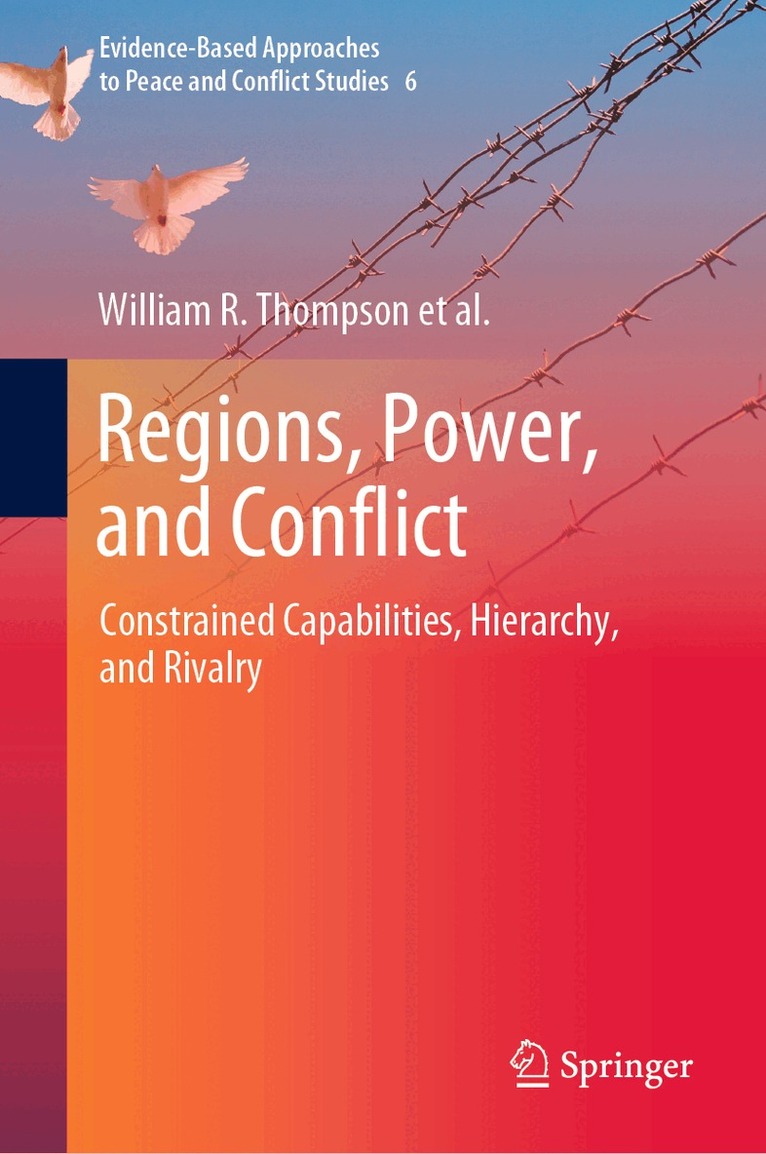
Regions, Power, and Conflict
Constrained Capabilities, Hierarchy, and Rivalry
Inbunden, Engelska, 2022
1 593 kr
Skickas inom 10-15 vardagar
The three main levels of analysis in international relations have been the systemic, the national, and the individual. A fourth level that falls between the systemic and the national is the region. It is woefully underdeveloped in comparison to the attention afforded the other three. Yet regions tend to be distinctive theaters for international politics. Otherwise, we would not recognize that Middle Eastern interstate politics somehow does not resemble Latin American interstate politics or interstate politics in Southern Africa (although once the Middle East and Southern Africa may have seemed more similar in their mutual fixation with opposition to domestic policies in Israel and South Africa, respectively). This book, divided into three parts, first makes a case for studying regional politics even though it must also be appreciated that regional boundaries are also hazy and not always easy to pin down empirically. The second part examines power distributions within regions as an important entry point to studying regional similarities and differences. Two emphases are stressed. One is that regional power assessments need to be conditioned by controlling for weak states which are more common in some regions than they are in others. The other emphasis is on regional power hierarchies. Some regions have strong regional hierarchies while others do not. Regions with strong hierarchies operate much differently from those without them in the sense that the former are more pacific than the latter. The third part of the book focuses on regional differences in terms of conflict behavior, order preferences, rivalries, and rivalry termination.
Del 6 - Evidence-Based Approaches to Peace and Conflict Studies
Regions, Power, and Conflict
Constrained Capabilities, Hierarchy, and Rivalry
Häftad, Engelska, 2023
1 593 kr
Skickas inom 10-15 vardagar
The three main levels of analysis in international relations have been the systemic, the national, and the individual. A fourth level that falls between the systemic and the national is the region. It is woefully underdeveloped in comparison to the attention afforded the other three. Yet regions tend to be distinctive theaters for international politics. Otherwise, we would not recognize that Middle Eastern interstate politics somehow does not resemble Latin American interstate politics or interstate politics in Southern Africa (although once the Middle East and Southern Africa may have seemed more similar in their mutual fixation with opposition to domestic policies in Israel and South Africa, respectively). This book, divided into three parts, first makes a case for studying regional politics even though it must also be appreciated that regional boundaries are also hazy and not always easy to pin down empirically. The second part examines power distributions within regions as an important entry point to studying regional similarities and differences. Two emphases are stressed. One is that regional power assessments need to be conditioned by controlling for weak states which are more common in some regions than they are in others. The other emphasis is on regional power hierarchies. Some regions have strong regional hierarchies while others do not. Regions with strong hierarchies operate much differently from those without them in the sense that the former are more pacific than the latter. The third part of the book focuses on regional differences in terms of conflict behavior, order preferences, rivalries, and rivalry termination.