Spencer R. Weart - Böcker
Visar alla böcker från författaren Spencer R. Weart. Handla med fri frakt och snabb leverans.
3 produkter
3 produkter
625 kr
Skickas inom 5-8 vardagar
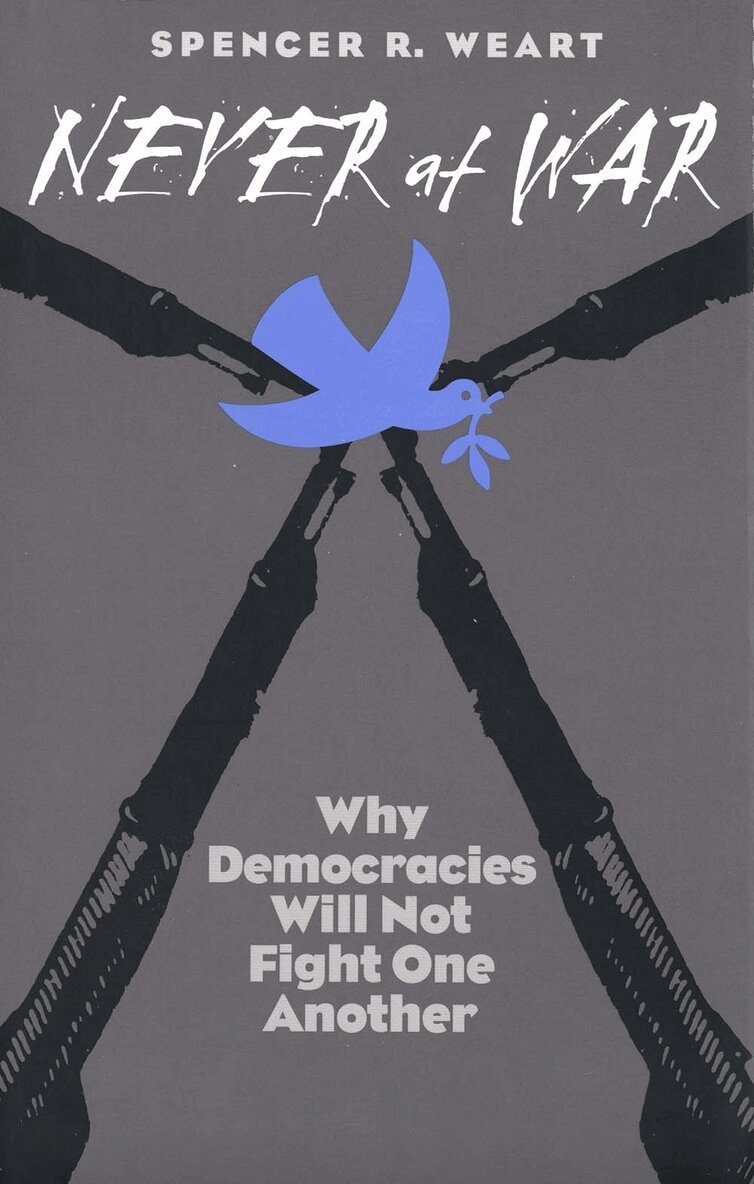
This lively survey of the history of conflict between democracies reveals a remarkable—and tremendously important—finding: fully democratic nations have never made war on other democracies. Furthermore, historian Spencer R. Weart concludes in this thought-provoking book, they probably never will. Building his argument on some forty case studies ranging through history from ancient Athens to Renaissance Italy to modern America, the author analyzes for the first time every instance in which democracies or regimes like democracies have confronted each other with military force. Weart establishes a consistent set of definitions of democracy and other key terms, then draws on an array of international sources to demonstrate the absence of war among states of a particular democratic type. His survey also reveals the new and unexpected finding of a still broader zone of peace among oligarchic republics, even though there are more of such minority-controlled governments than democracies in history. In addition, Weart discovers that peaceful leagues and confederations—the converse of war—endure only when member states are democracies or oligarchies. With the help of related findings in political science, anthropology, and social psychology, the author explores how the political culture of democratic leaders prevents them from warring against others who are recognized as fellow democrats and how certain beliefs and behaviors lead to peace or war. Weart identifies danger points for democracies, and he offers crucial, practical information to help safeguard peace in the future.
Del 13 - New Histories of Science, Technology, and Medicine
Discovery of Global Warming
Revised and Expanded Edition
Häftad, Engelska, 2008
255 kr
Skickas inom 10-15 vardagar
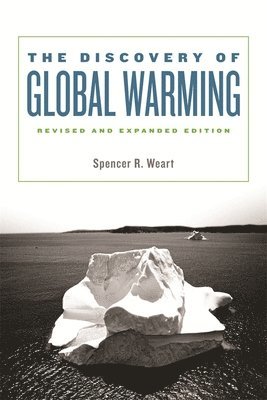
The award-winning book is now revised and expanded.In 2001 an international panel of distinguished climate scientists announced that the world was warming at a rate without precedent during at least the last ten millennia, and that warming was caused by the buildup of greenhouse gases from human activity. The story of how scientists reached that conclusion—by way of unexpected twists and turns—was the story Spencer Weart told in The Discovery of Global Warming. Now he brings his award-winning account up to date, revised throughout to reflect the latest science and with a new conclusion that shows how the scientific consensus caught fire among the general world public, and how a new understanding of the human meaning of climate change spurred individuals and governments to action.
260 kr
Skickas inom 7-10 vardagar
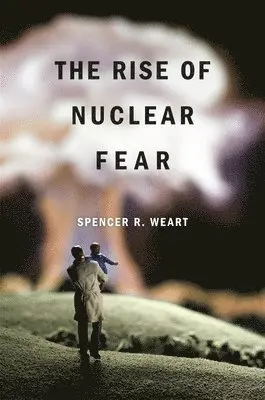
After a tsunami destroyed the cooling system at Japan’s Fukushima Nuclear Power Plant, triggering a meltdown, protesters around the world challenged the use of nuclear power. Germany announced it would close its plants by 2022. Although the ills of fossil fuels are better understood than ever, the threat of climate change has never aroused the same visceral dread or swift action. Spencer Weart dissects this paradox, demonstrating that a powerful web of images surrounding nuclear energy holds us captive, allowing fear, rather than facts, to drive our thinking and public policy.Building on his classic, Nuclear Fear, Weart follows nuclear imagery from its origins in the symbolism of medieval alchemy to its appearance in film and fiction. Long before nuclear fission was discovered, fantasies of the destroyed planet, the transforming ray, and the white city of the future took root in the popular imagination. At the turn of the twentieth century when limited facts about radioactivity became known, they produced a blurred picture upon which scientists and the public projected their hopes and fears. These fears were magnified during the Cold War, when mushroom clouds no longer needed to be imagined; they appeared on the evening news. Weart examines nuclear anxiety in sources as diverse as Alain Resnais’s film Hiroshima Mon Amour, Cormac McCarthy’s novel The Road, and the television show The Simpsons.Recognizing how much we remain in thrall to these setpieces of the imagination, Weart hopes, will help us resist manipulation from both sides of the nuclear debate.