Staffan Schmidt - Böcker
Visar alla böcker från författaren Staffan Schmidt. Handla med fri frakt och snabb leverans.
2 produkter
2 produkter
273 kr
Skickas inom 7-10 vardagar
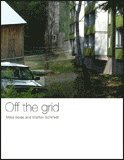
Off the grid is an artistic research thesis which puts a Swedish housing estate in a video interview dialogue with homeowners in the Northeastern US through focusing on three topics: travel, self-definition, and community. Based on the situated, visual and conceptual image the project merges seemingly incompatible experiences: eight residents in Husby, an immigrant community outside Stockholm, and eight households not connected to the utility grid, in upstate areas of New England and New York State and two artistic researchers at University of Gothenburg. The interviewees are paired together and handed unedited copies of each others reflections. We asked them for their comments, elucidating the practical and metaphorical consequences of travel, self-definition, and community. Even though backgrounds, stories and current conditions differ, an understanding of common interests and similarities are clearly identified. Among the three questions discussed the right to self-definition stands out as central: it is opposed, delayed in its implementation, violated or threatened still, all participants individually and/or collectively struggle to uphold it. In thinking with the visual and conceptual image Off the grid also offers new perspectives on the significance of artistic research, contributing to its further contextualization.
287 kr
Skickas
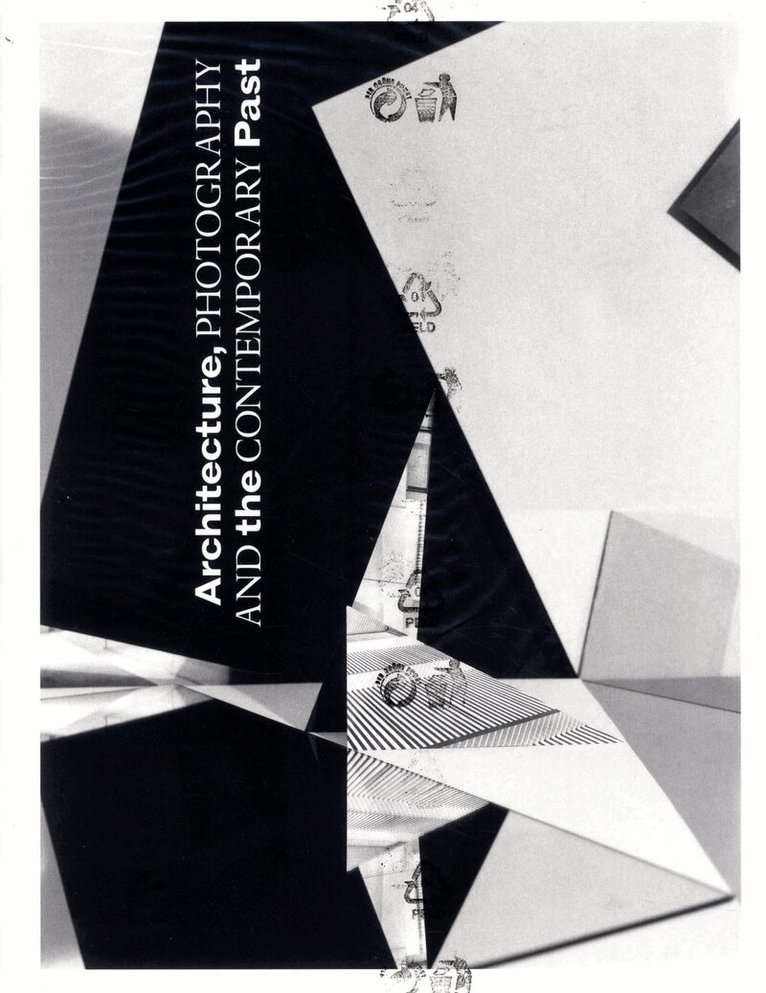
As traces left behind by the last two hundred years of profound historical change, architecture and photography contribute both to our contemporary skyline and to our image of the past. Their common history thus provides an indispensable background to every discussion of what has been called the contemporary past - that is, to modernity considered as an open problem rather than a closed historical period. Architecture can be seen as a kind of macromodernity, a social scope where the diverse discourses of modernity have assumed their most large-scale form. In analogy, photographic media constitute a micromodernity, where the underside of modern society has been registered, identified, classified, and archived. In both cases, we trace out the irregular borderline between the discursive and its opposite, the material. At this point of intersection, an interesting confrontation between traditional academic historiography and an artistic application of historical perspectives might be staged. What contribution can architecture and photography make to the exploration of our contemporary past? Victor Buchli, in his afterword, underlines the potential of such confrontations: Translation always betrays the original intention, but what might be described as the infelicities of the translation that are inherently treacherous are precisely what constitute its productive capacities.