Stan Wagon – författare
Visar alla böcker från författaren Stan Wagon. Handla med fri frakt och snabb leverans.
17 produkter
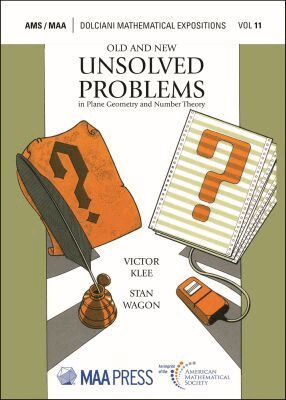
Old and New Unsolved Problems in Plane Geometry and Number Theory
Häftad, 1991
425 kr
Lägg i varukorg
Victor Klee and Stan Wagon discuss some of the unsolved problems in number theory and geometry, many of which can be understood by readers with a very modest mathematical background. The presentation is organized around 24 central problems, many of which are accompanied by other, related problems. …
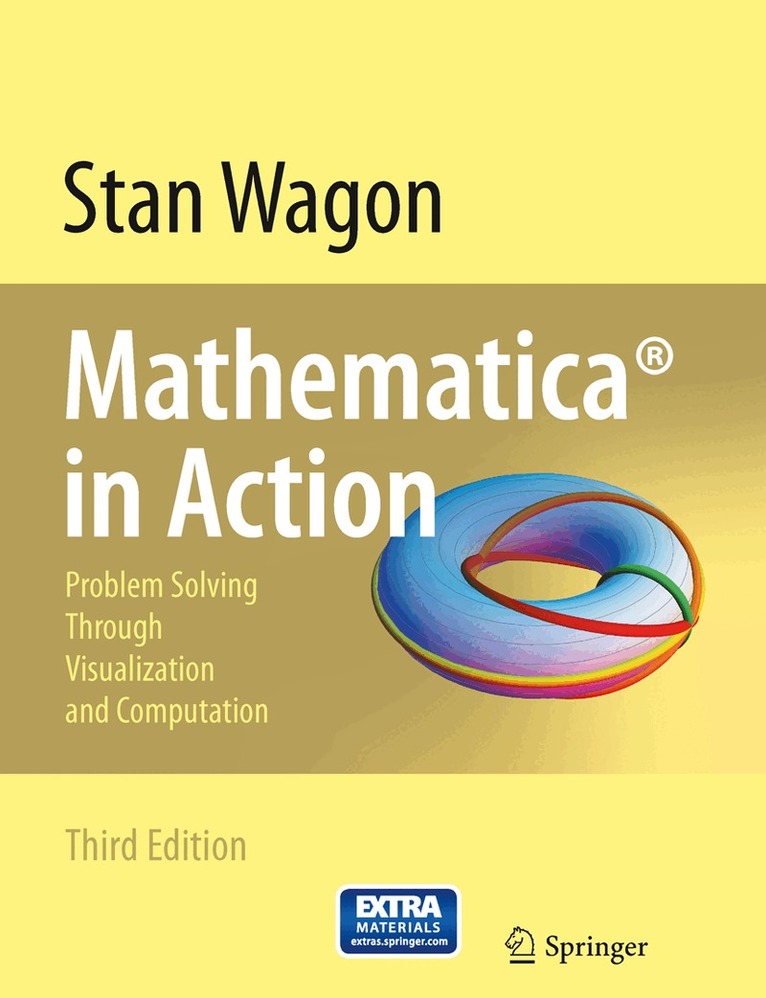
Mathematica® in Action
Problem Solving Through Visualization and Computation
Av Stan Wagon
Häftad, 2010
960 kr
Lägg i varukorg
This book is an example-based introduction to techniques, from elementary to advanced, of using Mathematica, a revolutionary tool for mathematical computation and exploration. By integrating the basic functions of mathematics with a powerful and easy-to-use programming language, Mathematica allows …
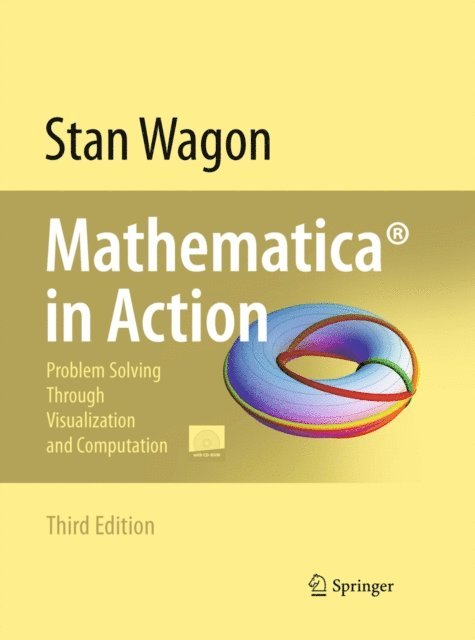
Mathematica(R) in Action
Problem Solving Through Visualization and Computation
Av Stan Wagon
E-bok, 2010
1116 kr
Lägg i varukorg
This book is an example-based introduction to techniques, from elementary to advanced, of using Mathematica, a revolutionary tool for mathematical computation and exploration. By integrating the basic functions of mathematics with a powerful and easy-to-use programming language, Mathematica allows …
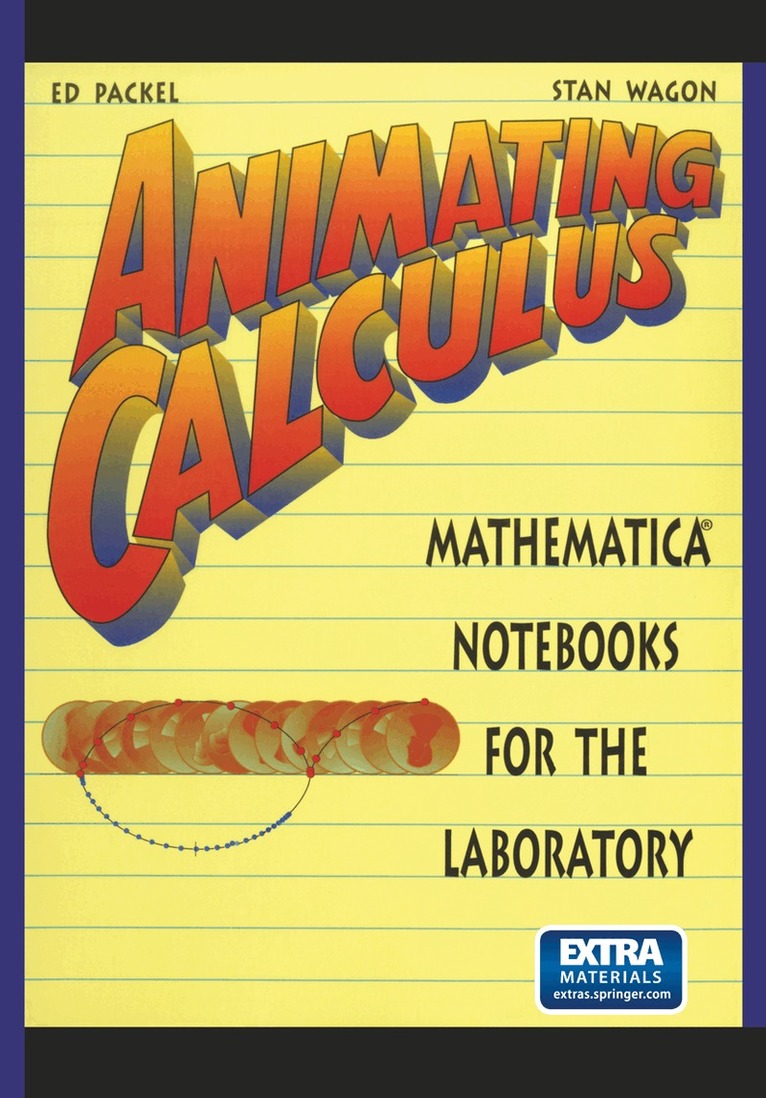
Animating Calculus
Mathematica® Notebooks for the Laboratory
Av Ed Packel, Stan Wagon m. fl.
1996
1034 kr
Lägg i varukorg
Calculus and change. The two words go together. Calculus is about change, and approaches to teaching calculus are changing dramatically. Thus it is both timely and appropriate to apply techniques of animation to the varied and important graphical aspects of calculus. AB a computer algebra system, …
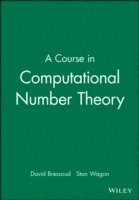
Course in Computational Number Theory
Inbunden, 2008
2018 kr
Lägg i varukorg
A Course in Computational Number Theory uses the computer as a tool for motivation and explanation. The book is designed for the reader to quickly access a computer and begin doing personal experiments with the patterns of the integers. It presents and explains many of the fastest algorithms for …
SIAM 100-Digit Challenges
A Study in High-Accuracy Numerical Computing
Av Folkmar Bornemann, Dirk Laurie m. fl.
Häftad, 2004
998 kr
Lägg i varukorg
This book takes readers on a thrilling tour of some of the most important and powerful areas of contemporary numerical mathematics. The tour is organized along the 10 problems of the SIAM 100-Digit Challenge, a contest posed by Nick Trefethen of Oxford University in the January/February 2002 issue …
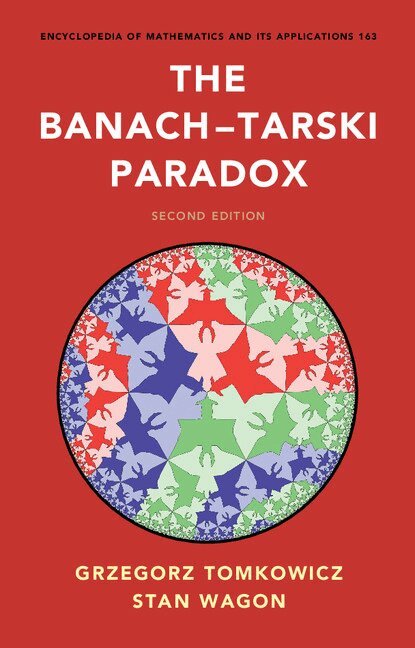
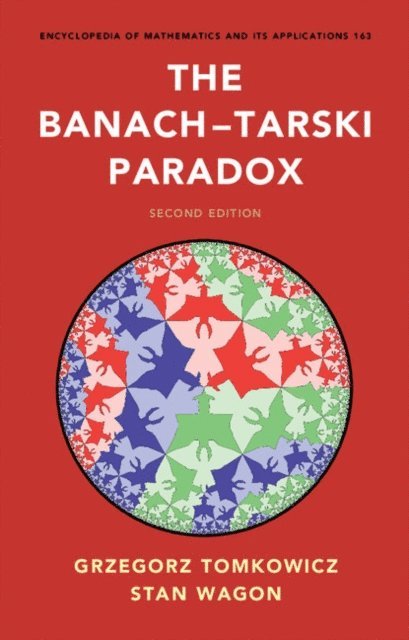
The Banach-Tarski Paradox
Av Grzegorz Tomkowicz, Stan Wagon
Inbunden, 2016
1661 kr
Lägg i varukorg
The Banach-Tarski Paradox is a most striking mathematical construction: it asserts that a solid ball can be taken apart into finitely many pieces that can be rearranged using rigid motions to form a ball twice as large. This volume explores the consequences of the paradox for measure theory and its …
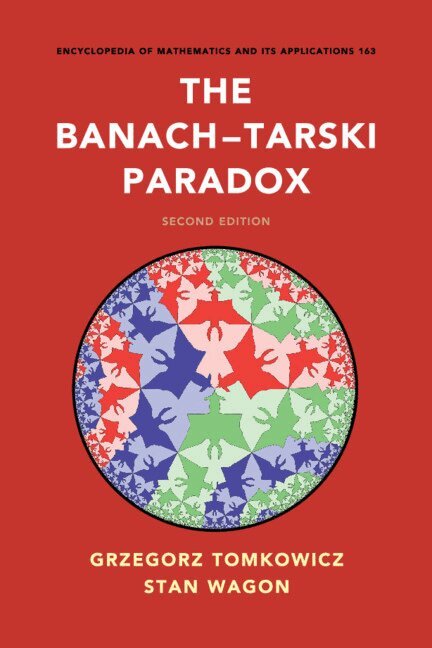
The Banach-Tarski Paradox
Av Grzegorz Tomkowicz, Stan Wagon
Häftad, 2019
716 kr
Lägg i varukorg
The Banach-Tarski Paradox is a most striking mathematical construction: it asserts that a solid ball can be taken apart into finitely many pieces that can be rearranged using rigid motions to form a ball twice as large. This volume explores the consequences of the paradox for measure theory and its …
Banach-Tarski Paradox
Av Stan Wagon, Grzegorz Tomkowicz
E-bok, 2016
701 kr
Lägg i varukorg
The Banach–Tarski Paradox is a most striking mathematical construction: it asserts that a solid ball can be taken apart into finitely many pieces that can be rearranged using rigid motions to form a ball twice as large. This volume explores the consequences of the paradox for measure theory and its …
Banach-Tarski Paradox
Av Stan Wagon, Grzegorz Tomkowicz
E-bok, 2016
686 kr
Lägg i varukorg
The Banach–Tarski Paradox is a most striking mathematical construction: it asserts that a solid ball can be taken apart into finitely many pieces that can be rearranged using rigid motions to form a ball twice as large. This volume explores the consequences of the paradox for measure theory and its …
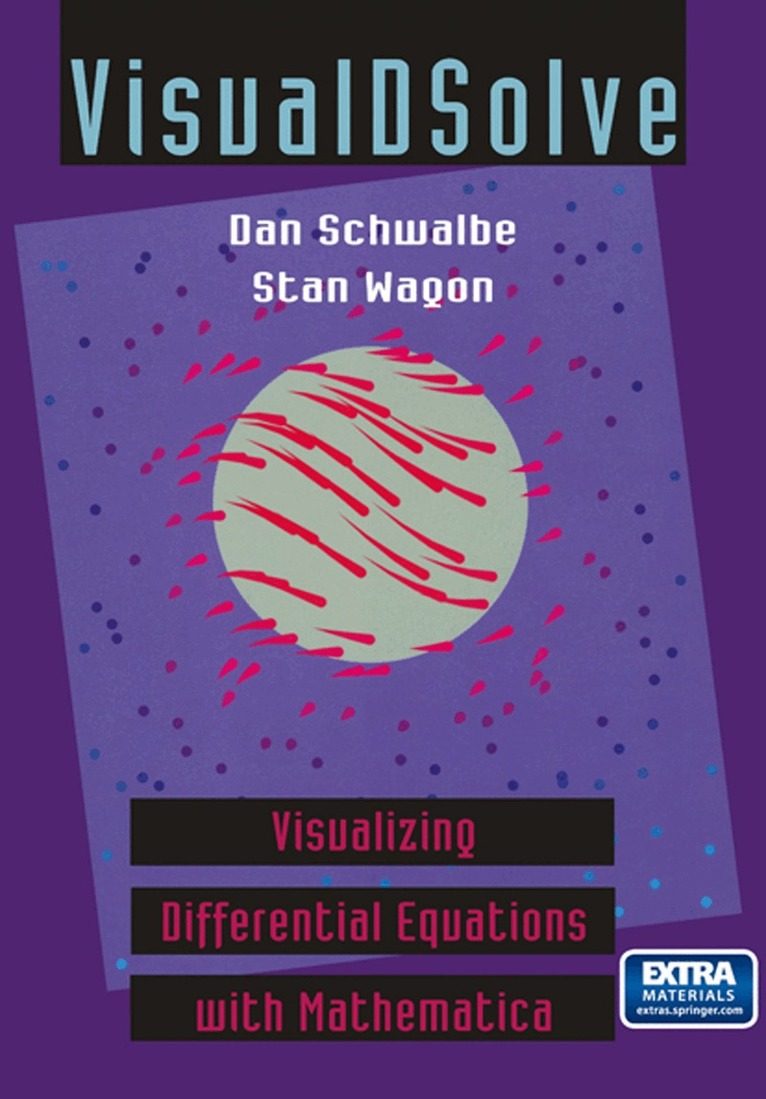
VisualDSolve
Visualizing Differential Equations with Mathematica®
Av Dan Schwalbe, Stan Wagon m. fl.
Häftad, 2011
1095 kr
Lägg i varukorg
This title presents new ideas on the visualization of differential equations with user-configurable tools. The authors use the widely-used computer algebra system, Mathematica, to provide an integrated environment for programming, visualizing graphics, and running commentary for learning and …
Bicycle or Unicycle?
A Collection of Intriguing Mathematical Puzzles
Av Daniel J. Velleman, Stan Wagon
Häftad, 2020
703 kr
Lägg i varukorg
Bicycle or Unicycle? is a collection of 105 mathematical puzzles whose defining characteristic is the surprise encountered in their solutions. Solvers will be surprised, even occasionally shocked, at those solutions. The problems unfold into levels of depth and generality very unusual in the types …
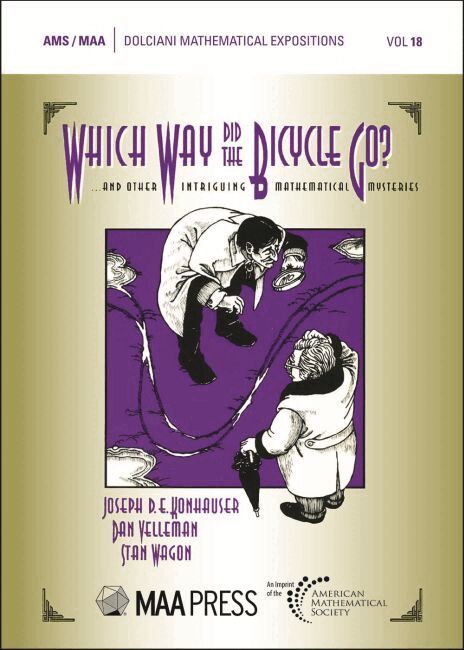
Which Way Did the Bicycle Go?
And Other Intriguing Mathematical Mysteries
Av Joseph D. E. Konhauser, Dan Velleman m. fl.
Häftad, 1996
465 kr
Lägg i varukorg
This collection will give students (high school or beyond), teachers, and university professors a chance to experience the pleasure of wrestling with some beautiful problems of elementary mathematics. Readers can compare their sleuthing talents with those of Sherlock Holmes, who made a bad mistake …
Alte und neue ungelöste Probleme in der Zahlentheorie und Geometrie der Ebene
E-bok, 2013
462 kr
Lägg i varukorg
Vom Lösen numerischer Probleme
Ein Streifzug entlang der "SIAM 10x10-Digit Challenge"
Av Folkmar Bornemann, Dirk Laurie m. fl.
Häftad, 2006
190 kr
Lägg i varukorg
Dieses Buch führt seine Leser auf einen packenden Streifzug durch die wichtigsten und leistungsfähigsten Bereiche zeitgenössischer numerischer Mathematik. Die Route orientiert sich an den 10 Wettbewerbsaufgaben der "SIAM 10 x 10-Digit Challenge", mit der Nick Trefethen aus Oxford im Frühjahr 2002 …
Vom Lösen numerischer Probleme
Ein Streifzug entlang der "SIAM 10x10-Digit Challenge"
Av Jorg Waldvogel, Stan Wagon m. fl.
E-bok, 2007
109 kr
Lägg i varukorg
Dieses Buch führt seine Leser auf einen packenden Streifzug durch die wichtigsten und leistungsfähigsten Bereiche zeitgenössischer numerischer Mathematik. Die Route orientiert sich an den 10 Wettbewerbsaufgaben der "SIAM 10 x 10-Digit Challenge", mit der Nick Trefethen aus Oxford im Frühjahr 2002 …
Alte und neue ungelöste Probleme in der Zahlentheorie und Geometrie der Ebene
Häftad, 1997
465 kr
Lägg i varukorg