Stanley J. Tambiah - Böcker
Visar alla böcker från författaren Stanley J. Tambiah. Handla med fri frakt och snabb leverans.
6 produkter
6 produkter
Del 10 - Comparative Studies in Religion and Society
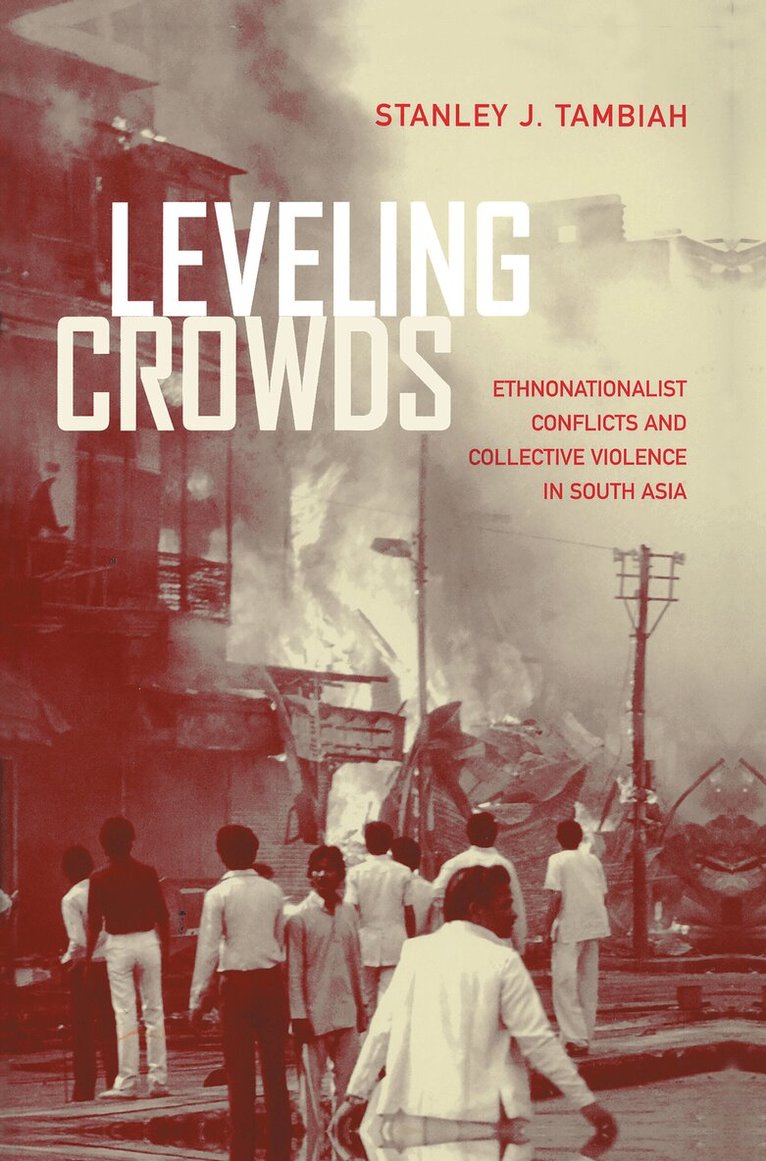
Leveling Crowds
Ethnonationalist Conflicts and Collective Violence in South Asia
Häftad, Engelska, 1997
621 kr
Skickas inom 3-6 vardagar
Ethno-nationalist conflicts are rampant today, causing immense human loss. Stanley J. Tambiah is concerned with the nature of the ethno-nationalist explosions that have disfigured so many regions of the world in recent years. He focuses primarily on collective violence in the form of civilian "riots" in South Asia, using selected instances in Sri Lanka, Pakistan, and India. He situates these riots in the larger political, economic, and religious contexts in which they took place and also examines the strategic actions and motivations of their principal agents. In applying a wide range of social theory to the problems of ethnic and religious violence, Tambiah pays close attention to the history and culture of the region. On one level this provocative book is a scrupulously detailed anthropological and historical study, but on another it is an attempt to understand the social and political changes needed for a more humane order, not just in South Asia, but throughout the world.
718 kr
Skickas inom 7-10 vardagar
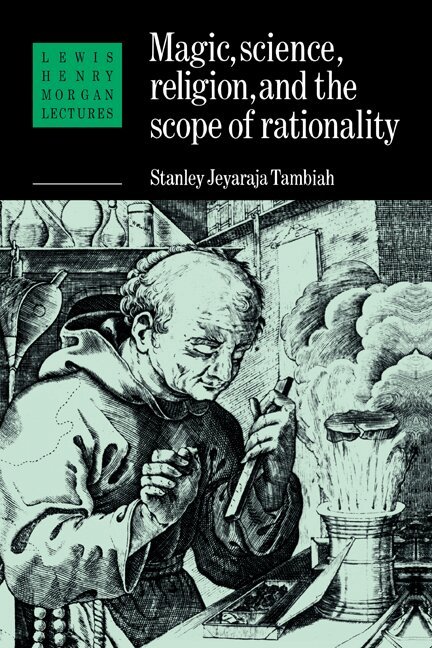
Professor Tambiah, one of today's leading anthropologists, is known particularly for his penetrating and scholarly studies of Buddhism. In this accessible and illuminating book he deals with the classical opposition between magic, science and religion. He reviews the great debates in classical Judaism, early Greek science, Renaissance philosophy, the Protestant Reformation, and the scientific revolution, and then reconsiders the three major interpretive approaches to magic in anthropology: the intellectualist and evolutionary theories of Tylor and Frazer, Malinowski's functionalism, and Levy Bruhl's philosophical anthropology, which posited a distinction between mystical and logical mentalities. There follows a wide-ranging and suggestive discussion of rationality and relativism. The book concludes with a discussion of thinking in the history and philosophy of science, which suggests interesting perspectives on the classical opposition between science and magic.
246 kr
Skickas inom 7-10 vardagar
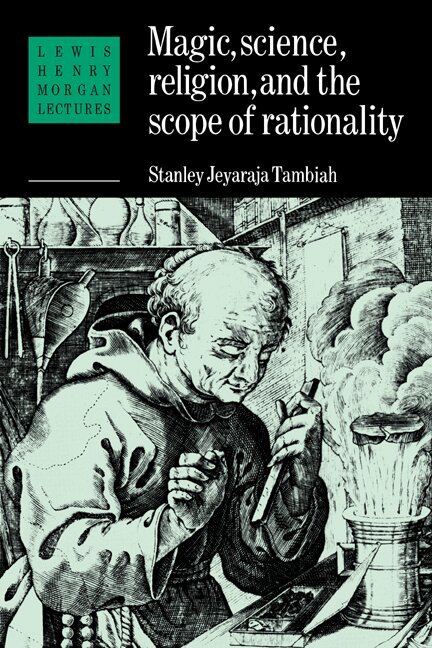
Professor Tambiah, one of today's leading anthropologists, is known particularly for his penetrating and scholarly studies of Buddhism. In this accessible and illuminating book he deals with the classical opposition between magic, science and religion. He reviews the great debates in classical Judaism, early Greek science, Renaissance philosophy, the Protestant Reformation, and the scientific revolution, and then reconsiders the three major interpretive approaches to magic in anthropology: the intellectualist and evolutionary theories of Tylor and Frazer, Malinowski's functionalism, and Levy Bruhl's philosophical anthropology, which posited a distinction between mystical and logical mentalities. There follows a wide-ranging and suggestive discussion of rationality and relativism. The book concludes with a discussion of thinking in the history and philosophy of science, which suggests interesting perspectives on the classical opposition between science and magic.
515 kr
Skickas inom 7-10 vardagar
Stanley J. Tambiah discusses the life of Edmund Leach (1910-1989), one of Britain's foremost social and cultural anthropologists, and a man of extraordinary versatility, originality and intellectual breadth. His substantial contributions to anthropology deal with topics including kinship and social organization, hill tribes and valley peoples, tenure and peasant economy, aesthetics, British structural-functional methodology, the structuralism of Levi-Strauss, biblical narratives and the myths of Classical Greece. Leach was not wedded to any settled orthodoxy: what makes his work exciting is his experimentation with new ideas, and his expansions of the horizons of the discipline. His distinctive view of the comparative method allows him to transcend the stale dichotomy between 'them primitives' and 'us moderns', finding instead a dialectic between 'us' and 'them' which opens up the possibility for illuminating common human propensities and capacities.
861 kr
Skickas inom 10-15 vardagar
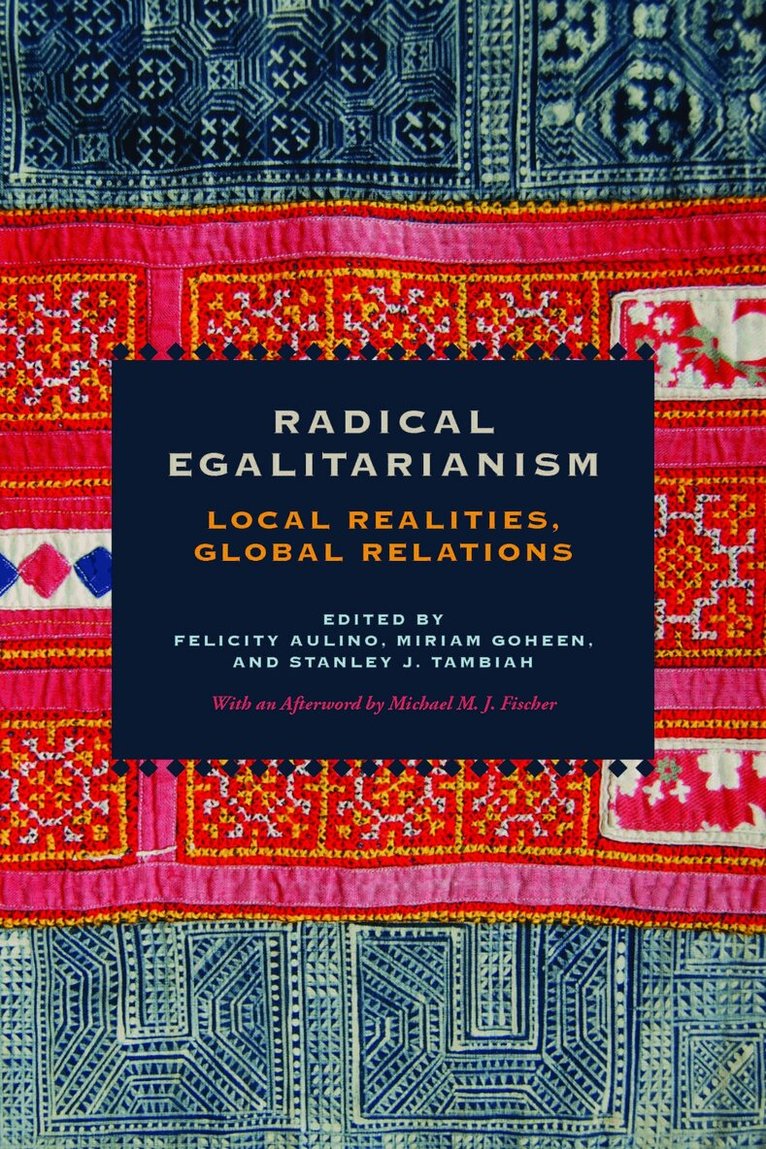
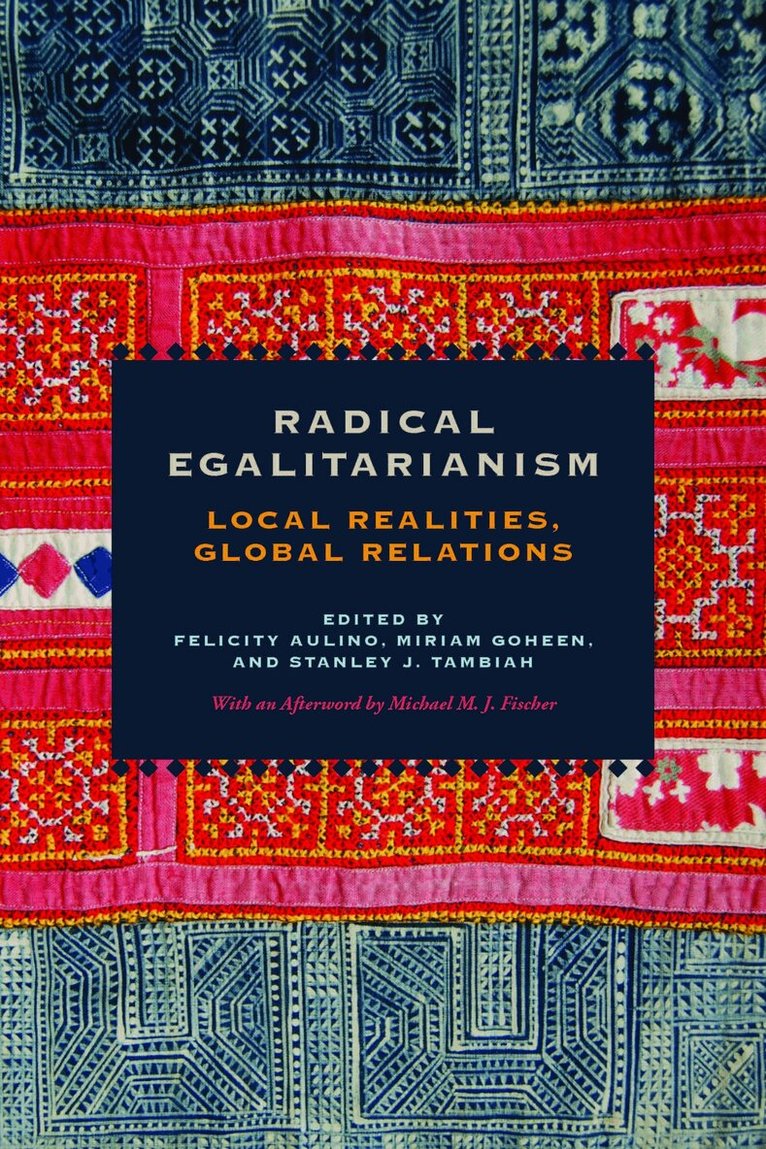
In this volume, leading scholars in anthropology, religion, and area studies engage global and local perspectives dialectically to develop a historically grounded, ethnographically driven social science.The book's chapters, drawing on research in East and Southeast Asia, Africa, Europe, and the Americas, are also in conversation with the extensive work of editor and contributor Stanley J. Tambiah: They all investigate some aspect of what Tambiah has called "multiple orientations to the world." The implicit focus throughout is on human cultural differences and the historically constituted nature of the political potentialities (both positive and negative) that stem from these. As a whole, then, the volume promotes an approach to scholarship that actively avoids privileging any one conceptual framework or cultural form at the expense of recognizing another—a style of inquiry that the editors call "radical egalitarianism."Together, these scholars encourage a comparative examination of contemporary societies, provide insights into the historical development of social scientific and sociopolitical categories, and raise vital questions about the possibilities for achieving equality and justice in the presence of competing realities in the global world today. Michael M.J. Fischer's Afterword provides a brilliant exegesis of Tambiah's multifaceted oeuvre, outlining the primary themes that inform his scholarship and, by extension, all the chapters in this book.
367 kr
Skickas inom 10-15 vardagar
In this volume, leading scholars in anthropology, religion, and area studies engage global and local perspectives dialectically to develop a historically grounded, ethnographically driven social science.The book's chapters, drawing on research in East and Southeast Asia, Africa, Europe, and the Americas, are also in conversation with the extensive work of editor and contributor Stanley J. Tambiah: They all investigate some aspect of what Tambiah has called "multiple orientations to the world." The implicit focus throughout is on human cultural differences and the historically constituted nature of the political potentialities (both positive and negative) that stem from these. As a whole, then, the volume promotes an approach to scholarship that actively avoids privileging any one conceptual framework or cultural form at the expense of recognizing another—a style of inquiry that the editors call "radical egalitarianism."Together, these scholars encourage a comparative examination of contemporary societies, provide insights into the historical development of social scientific and sociopolitical categories, and raise vital questions about the possibilities for achieving equality and justice in the presence of competing realities in the global world today. Michael M.J. Fischer's Afterword provides a brilliant exegesis of Tambiah's multifaceted oeuvre, outlining the primary themes that inform his scholarship and, by extension, all the chapters in this book.