Stefaan Blancke - Böcker
Visar alla böcker från författaren Stefaan Blancke. Handla med fri frakt och snabb leverans.
2 produkter
2 produkter
458 kr
Skickas inom 7-10 vardagar
For decades, the creationist movement was primarily situated in the United States. Then, in the 1970s, American creationists found their ideas welcomed abroad, first in Australia and New Zealand, then in Korea, India, South Africa, Brazil, and elsewhere - including Europe, where creationism plays an expanding role in public debates about science policy and school curricula. In this, the first comprehensive history of creationism in Europe, leading historians, philosophers, and scientists narrate the rise of - and response to - scientific creationism, creation science, intelligent design, and organized antievolutionism in countries and religions throughout Europe. Providing a unique map of creationism in Europe, the authors chart the surprising history of creationist activities and strategies there. Over the past forty years, creationism has spread swiftly among European Catholics, Protestants, Jews, Hindus, and Muslims, even as anti-creationists sought to smother its flames.Antievolution messages gained such widespread approval, in fact, that in 2007 the Parliamentary Assembly of the Council of Europe passed a resolution advising member states to "defend and promote scientific knowledge" and "firmly oppose the teaching of creationism as a scientific discipline on an equal footing with the theory of evolution." Creationism in Europe offers a discerning introduction to the cultural history of modern Europe, the variety of worldviews in Europe, and the interplay of science and religion in a global context. It will be of interest to students and scholars in the history and philosophy of science, religious studies, and evolutionary theory, as well as policy makers and educators concerned about the spread of creationism in our time.
448 kr
Skickas inom 11-20 vardagar
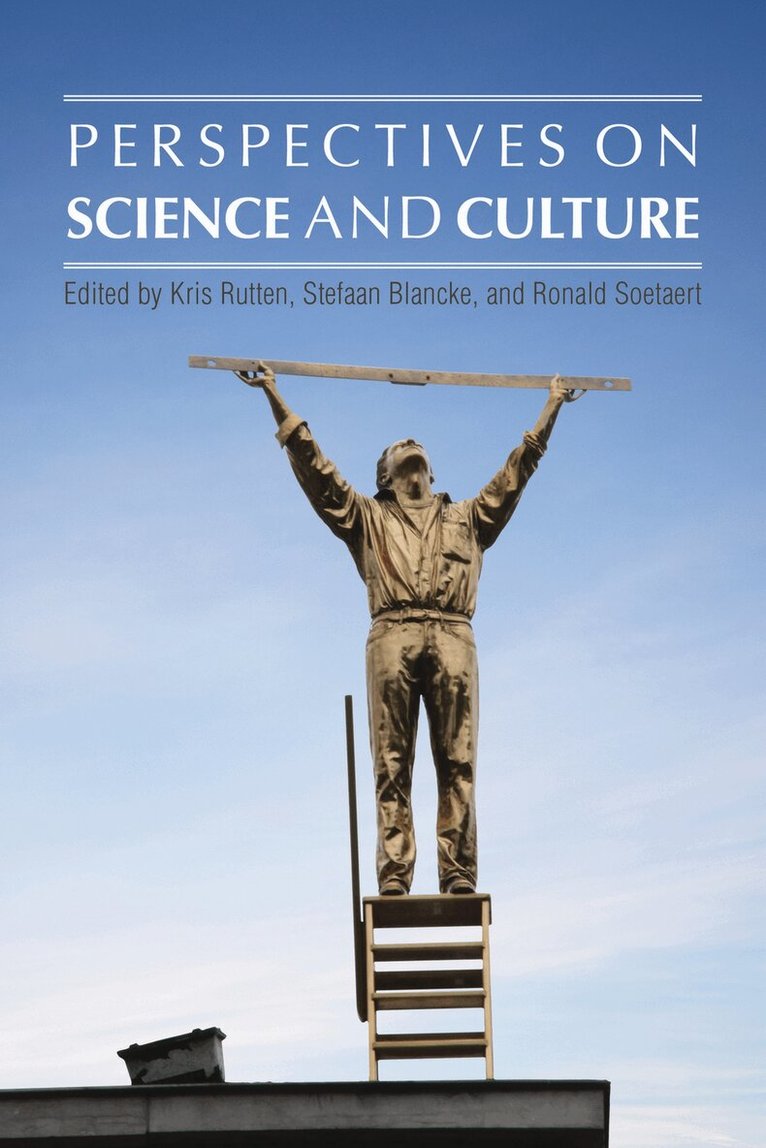
Edited by Kris Rutten, Stefaan Blancke, and Ronald Soetaert, Perspectives on Science and Culture explores the intersection between scientific understanding and cultural representation from an interdisciplinary perspective.Contributors to the volume analyze representations of science and scientific discourse from the perspectives of rhetorical criticism, comparative cultural studies, narratology, educational studies, discourse analysis, naturalized epistemology, and the cognitive sciences. The main objective of the volume is to explore how particular cognitive predispositions and cultural representations both shape and distort the public debate about scientific controversies, the teaching and learning of science, and the development of science itself. The theoretical background of the articles in the volume integrates C. P. Snow's concept of the two cultures (science and the humanities) and Jerome Bruner's confrontation between narrative and logico-scientific modes of thinking (i.e., the cognitive and the evolutionary approaches to human cognition). The intellectual trajectory of the volume is located in comparative cultural studies, a framework with paradigms of the empirical and systems approaches whereby attention is paid to the interrelationships between science and culture.