Stefan Brönnimann - Böcker
Visar alla böcker från författaren Stefan Brönnimann. Handla med fri frakt och snabb leverans.
6 produkter
6 produkter
1 578 kr
Skickas inom 10-15 vardagar
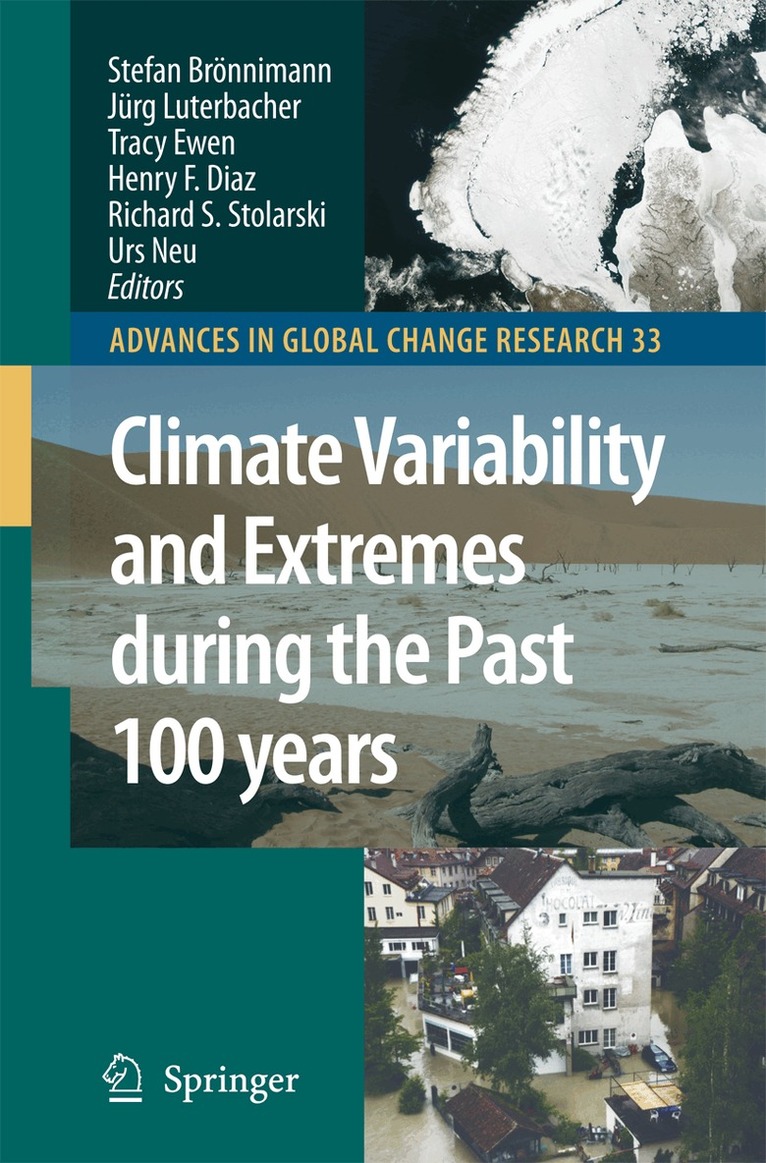
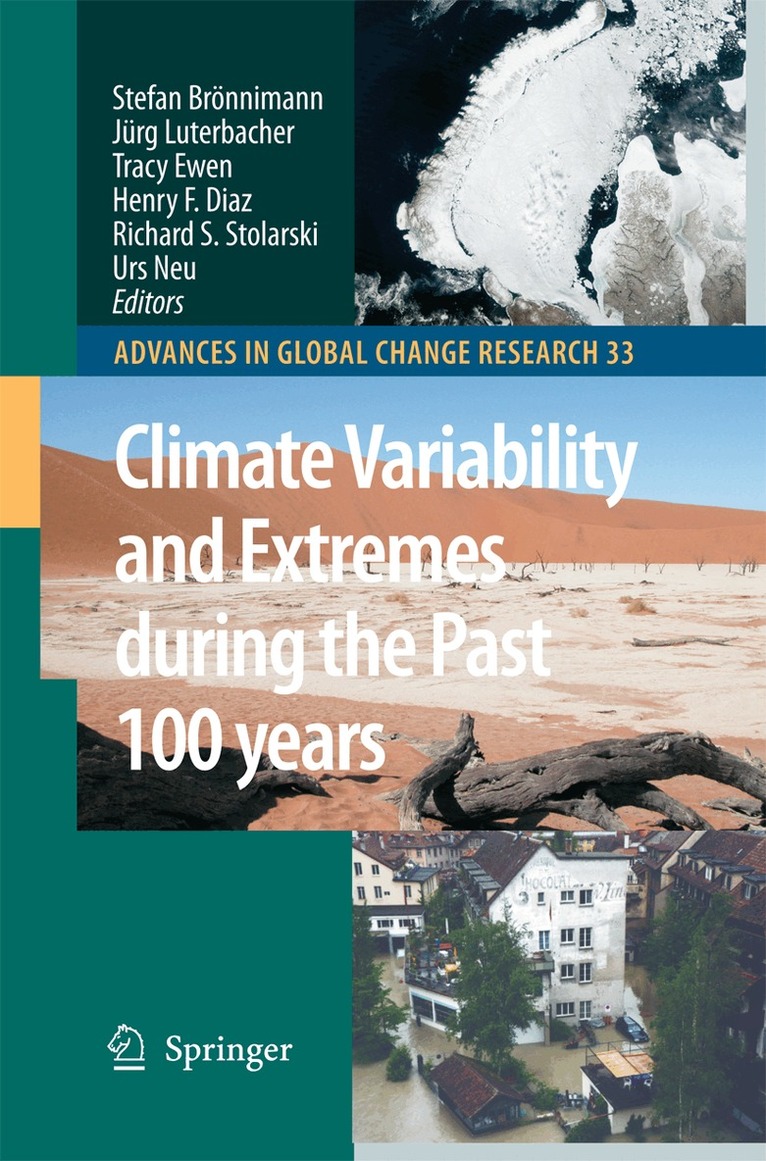
Large progress has been made in the past few years towards quantifying and understanding climate variability during past centuries. At the same time, present-day climate has been studied using state-of-the-art data sets and tools with respect to the physical and chemical mechanisms governing climate variability. Both the understanding of the past and the knowledge of the processes are important for assessing and attributing the anthropogenic effect on present and future climate. The most important time period in this context is the past approximately 100 years, which comprises large natural variations and extremes (such as long droughts) as well as anthropogenic influences, most pronounced in the past few decades. Recent and ongoing research efforts steadily improve the observational record of the 20th century, while atmospheric circulation models are used to underpin the mechanisms behind large climatic variations. Atmospheric chemistry and composition are important for understanding climate variability and change, and considerable progress has been made in the past few years in this field. The evolving integration of these research areas in a more comprehensive analysis of recent climate variability was reflected in the organisation of a workshop “Climate variability and extremes in the past 100 years” in Gwatt near Thun (Switzerland), 24–26 July 2006. The aim of this workshop was to bring together scientists working on data issues together with statistical climatologists, modellers, and atmospheric chemists to discuss gaps in our understanding of climate variability during the past approximately 100 years.
247 kr
Skickas inom 3-6 vardagar
1 064 kr
Skickas inom 10-15 vardagar
The proposed book is not only a tribute to the work of Brückner (and indeed also a personal tribute, since Brückner wrote his book at the Institute of Geography of the University of Bern), but references to Brückner’s book are also a conceptual tool in the proposed book, though used sparingly and thoughtfully. Apart from providing historical context, references may facilitate introducing some complex topics, for instance by first presenting Brückner’s view and then complementing the picture with today’s understanding. References can be used for contrast: Comparing Brückner’s methods and data with today’s research concepts makes the progress in the field easily understandable. The enormous growth of information since Brükner’s time allows a much more detailed perspective on some scientific problems. Or references can be used to highlight similarity. Some aspects have not changed over time. Finally, the book complements Brückner’s studies by adding the arguably most interesting and certainly most relevant period, the past 120 years.
1 193 kr
Skickas inom 10-15 vardagar
The proposed book is not only a tribute to the work of Brückner (and indeed also a personal tribute, since Brückner wrote his book at the Institute of Geography of the University of Bern), but references to Brückner’s book are also a conceptual tool in the proposed book, though used sparingly and thoughtfully.
307 kr
Skickas inom 3-6 vardagar
1 593 kr
Skickas inom 10-15 vardagar
Large progress has been made in the past few years towards quantifying and understanding climate variability during past centuries. At the same time, present-day climate has been studied using state-of-the-art data sets and tools with respect to the physical and chemical mechanisms governing climate variability. Both the understanding of the past and the knowledge of the processes are important for assessing and attributing the anthropogenic effect on present and future climate. The most important time period in this context is the past approximately 100 years, which comprises large natural variations and extremes (such as long droughts) as well as anthropogenic influences, most pronounced in the past few decades. Recent and ongoing research efforts steadily improve the observational record of the 20th century, while atmospheric circulation models are used to underpin the mechanisms behind large climatic variations. Atmospheric chemistry and composition are important for understanding climate variability and change, and considerable progress has been made in the past few years in this field. The evolving integration of these research areas in a more comprehensive analysis of recent climate variability was reflected in the organisation of a workshop “Climate variability and extremes in the past 100 years” in Gwatt near Thun (Switzerland), 24–26 July 2006. The aim of this workshop was to bring together scientists working on data issues together with statistical climatologists, modellers, and atmospheric chemists to discuss gaps in our understanding of climate variability during the past approximately 100 years.