Stefan Seeber – författare
Visar alla böcker från författaren Stefan Seeber. Handla med fri frakt och snabb leverans.
8 produkter
Teaching World Epics
Av Atefeh Akbari Shahmirzadi, Brenda E. F. Beck m. fl.
Häftad, 2023
523 kr
Lägg i varukorg
Essays for teaching ancient and recent epic narratives from around the world.Cultures across the globe have embraced epics: stories of memorable deeds by heroic characters whose actions have significant consequences for their lives and their communities. Incorporating narrative elements also found …
Teaching World Epics
Av Atefeh Akbari Shahmirzadi, Brenda E. F. Beck m. fl.
Inbunden, 2023
1359 kr
Lägg i varukorg
Essays for teaching ancient and recent epic narratives from around the world.Cultures across the globe have embraced epics: stories of memorable deeds by heroic characters whose actions have significant consequences for their lives and their communities. Incorporating narrative elements also found …
Poetik des Lachens
Inbunden, 2010
2134 kr
Lägg i varukorg
Die ablehnende Haltung der Kirche dem Lachen gegenüber wirkt sich auch auf die Poetik und Rhetorik um 1200 aus: Es fehlen Überlegungen zur Wirkmacht des Lachens, die als Leitfaden für die Betrachtung mittelhochdeutscher Epik dienen könnten. Gemeinhin behilft sich die Komikforschung angesichts …
Schriften zur geistlichen Literatur und zur Frömmigkeitskultur des Mittelalters
Av Hans-Jochen Schiewer, Regina D. Schiewer m. fl.
Inbunden, 2022
1420 kr
Lägg i varukorg
Der deutschsprachige Raum verfügt über eine volkssprachliche Predigtüberlieferung, wie sie sich vor der Reformation in keinem anderen europäischen Land findet. Die in ca. 10.000 Handschriften erhaltenen Predigten in deutscher Sprache sind als ein entscheidender Faktor für den Erfolg der Reformation …
Heliodorus redivivus
Vernetzung und interkultureller Kontext in der europäischen "Aithiopika"-Rezeption der Frühen Neuzeit
Av Stefan Seeber, Christian Rivoletti
E-bok, 2019
679 kr
Lägg i varukorg
Heliodor ist der Begründer des modernen Romans: Seine Aithiopika, die die Liebesgeschichte von Chariklea und Theagenes erzählen und die im 16. Jahrhundert wiederentdeckt werden, sind Vorbild für Generationen europäischer Autoren, die sich in imitatio und aemulatio üben. Dadurch ebnen die Aithiopika …
Parodie und Verkehrung
Formen und Funktionen spielerischer Verfremdung und spöttischer Verzerrung in Texten des Mittelalters und der Frühen Neuzeit
Av Stefan Seeber, Seraina Plotke
E-bok, 2016
670 kr
Lägg i varukorg
Der Band versammelt Studien zu mittellateinischen, deutschen und englischen Texten, die Techniken und Strategien der Parodie in der Vormoderne beleuchten. Die Bandbreite der analysierten Beispiele reicht von den ›Carmina Burana‹ bis zur ›Aithiopika‹-Rezeption des 16. Jahrhunderts, umfasst …
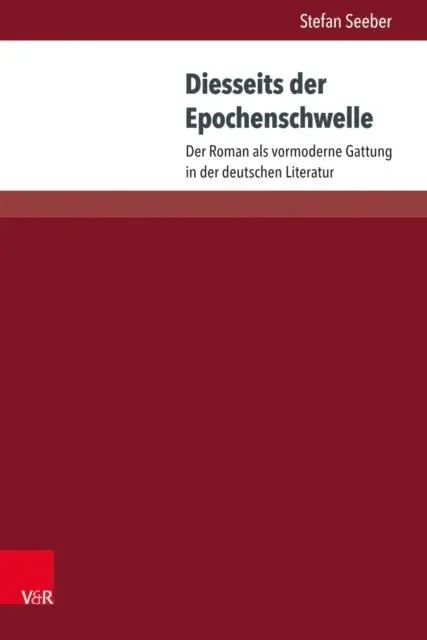
Diesseits der Epochenschwelle
Der Roman als vormoderne Gattung in der deutschen Literatur
E-bok, 2017
725 kr
Lägg i varukorg
Der Band analysiert Strategien der Rezipientenbindung im deutschsprachigen Roman der Zeit vor 1600 im Übergang von der Handschrift zum Druck und vom Vers zur Prosa. Herausgearbeitet werden das Zusammenspiel von kognitiven und emotionalen Anreizen der Texte und ihre darauf aufbauende Wirkungspoetik. …
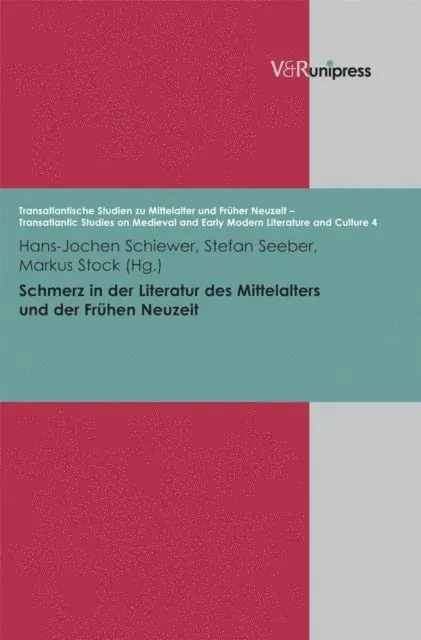
Schmerz in der Literatur des Mittelalters
Av Markus Stock, Stefan Seeber m. fl.
E-bok, 2010
948 kr
Lägg i varukorg
Ausgehend vom neuen kulturwissenschaftlichen Interesse am Schmerz und seiner Codiertheit untersuchen die Beiträge dieses Bandes das Phänomen Schmerz in seiner spezifisch literarischen Verfasstheit in Texten des 12. bis 17. Jahrhunderts. Dabei liegen Schwerpunkte besonders auf der Frage nach der …